Deuteronomy 9
Bib La · Tap a verse to see its cross-references.
1Koute byen, nou menm pèp Izrayèl! Lè a rive, jòdi a nou pral janbe lòt bò larivyè Jouden an pou n' al anvayi peyi ki pou nasyon ki gen plis moun pase nou, nasyon ki pi fò pase nou. Nou pral pran yon bann gwo lavil ki gen ranpa wotè syèl la pou pwoteje yo. 2Moun peyi a se yon bann moun ki gwonèg, ki bèl wotè tankou moun Anak yo. Nou konn tande yo di pa gen moun ki ka kenbe tèt ak moun sa yo. 3Enben, koulye a, nou pral konnen se Seyè a, Bondye nou an, ki pral pran devan nou. Tankou yon gwo dife k'ap boule tou sa li kontre, li pral disparèt yo chak fwa n'a jwenn yo sou wout nou. Li pral fè yo bese tèt devan nou. Se konsa n'a pran peyi a nan men yo, n'a disparèt yo la pou la jan Seyè a te di l' la. 4Lè Seyè a, Bondye nou an, va fin chase moun sa yo devan nou, piga nou di nan kè nou se paske nou merite kifè Seyè a te fè n' antre pran peyi a pou nou. Non. Se paske moun sa yo mechan kifè Seyè a te mete yo deyò ban nou plas yo. 5Non! Se pa paske nou te merite, ni paske nou te mennen bak nou dwat kifè Seyè a pral fè nou pran peyi a pou nou. Se paske moun sa yo mechan kifè Seyè a, Bondye nou an, pral disparèt yo sou tout wout nou. Epitou, se pou l' te ka kenbe pawòl li te sèmante bay zansèt nou yo, Abraram, Izarak ak Jakòb. 6Se pou nou konnen se pa paske nou merite anyen kifè Seyè a, Bondye nou an, ap ban nou bon peyi sa a pou rele nou pa nou. Non! Paske se yon pèp ki gen tèt di anpil nou ye. 7Pa janm bliye jan ou te fè Seyè a, Bondye nou an, fache anpil nan dezè a. Depi lè nou te soti nan peyi Lejip jouk nou rive isit la, n'ap fè wòklò devan Seyè a. 8Lè nou te sou mòn Orèb la, nou te eksite kòlè Seyè a. Li te sitèlman fache lè sa a, li te fè lide detwi nou tout. 9Mwen te moute sou mòn lan pou m' te al resevwa de wòch plat yo, wòch ki te gen kontra Seyè a te fè ak nou an ekri sou yo. Mwen rete la, mwen pase karant jou, karant nwit, san manje, san bwè anyen sou mòn lan. 10Se lè sa a Seyè a te ban mwen de wòch plat yo. Se sou yo li te ekri avèk pwòp men l' tou sa li di nou, antan li te nan mitan gwo dife a, jou nou tout te reyini nan pye mòn lan. 11Wi, apre karant jou ak karant nwit, Seyè a ban mwen de wòch plat yo avèk kontra a ekri sou yo. 12Epi li di m' konsa: Leve non, desann mòn lan byen vit, paske pèp ou a, pèp ou te mennen soti kite peyi Lejip la, lage kò l' nan fè sa ki mal. Yo pa tann lontan pou yo kite chemen mwen te mete devan yo pou yo swiv la. Yo gen tan fonn metal, yo fè yon zidòl pou tèt pa yo. 13Apre sa, Seyè a di m' ankò: mwen gade pèp la, mwen wè se yon pèp ki gen tèt di anpil. 14Kite m' fè sa m'ap fè a non! Mwen pral disparèt yo nèt pou pesonn sou latè pa janm chonje te gen moun sa yo. Men ou menm, m'ap ba ou pitit ki va vin zansèt yon nasyon k'ap pi gran, k'ap pi fò pase yo. 15Mwen desann soti nan mòn lan ki te plen flanm dife: mwen te gen de wòch kontra yo nan men m'. 16Lè mwen wè nou te gen tan dezobeyi Seyè a, Bondye nou an, nou te gen tan kite chemen Seyè a te mete devan nou, nou te fonn metal, nou te fè estati yon ti towo, 17mwen pran de wòch plat ki te nan men m' yo, mwen voye yo jete, mwen kraze yo devan nou tout. 18Apre sa, mwen lage kò m' fas atè devan Seyè a. Tankou premye fwa a, mwen pase karant jou ak karant nwit, san manje, san bwè anyen. Tou sa, paske nou te fè sa ki mal devan Seyè a, nou pa t' fè l' plezi, nou te fè l' fache anpil. 19Mwen menm, mwen te pè anpil lè m' wè jan Seyè a te fache, paske li te fache kont pou l' te disparèt nou nèt. Men, fwa sa a ankò, Seyè a koute m'. 20Lè sa a, li te fache anpil tou sou Arawon jouk li te vle touye l'. Men, mwen te lapriyè nan pye l' pou Arawon. 21Mwen te pran estati ti towo bèf nou te fè ak move lide nan tèt nou an, mwen jete l' nan dife. Mwen mete l' nan yon pilon, mwen kraze l' an myèt moso, mwen fè l' tounen pousyè. Lèfini, mwen te jete pousyè a nan dlo larivyè ki desann soti nan mòn lan. 22Nou te eksite kòlè Seyè a tou lè nou te Tabera, lè nou te Masa ak lè nou te Simityè Grangou. 23Le Seyè a te ban nou lòd pati kite Kadès-Banea pou n' al pran pou nou peyi li te di l'ap ban nou an, nou t'ap fè wòklò ak Seyè a, Bondye nou an. Nou pa t' kwè nan li, nou te derefize tande l'. 24Depi mwen konnen nou, se wòklò n'ap plede fè ak Bondye! 25Se konsa mwen lage kò m' fas atè devan Seyè a, pandan karant jou ak karant nwit, paske Seyè a te di l'ap disparèt nou. 26mwen te lapriyè Seyè a pou nou, mwen di l' konsa: O Seyè, Bondye mwen, tanpri! Pa detwi pèp ou a, pèp ki rele ou pa ou la, pèp ou te delivre ak pouvwa ou la, pèp ou te fè soti kite peyi Lejip ak fòs ponyèt ou a. 27Chonje sèvitè ou yo, Abraram, Izarak ak Jakòb! Pa gade sou tèt di pèp la, ni sou mechanste ak sou peche l'ap fè. 28Mwen pa ta vle pou nan peyi kote ou fè nou soti a moun yo ta di: Wi, Seyè a pa t' ka mennen yo nan peyi li te pwomèt l'ap ba yo a. Se rayi li rayi yo kifè li fè yo soti kite peyi Lejip la pou l' touye yo nan dezè a. 29Men, se pèp ou yo ye! Yo rele ou pa ou! Se avèk gwo pouvwa ou, avèk fòs ponyèt ou ou te fè yo soti kite peyi Lejip.
Did you know?
Not by Israel's Righteousness
- Moses warns Israel that their entry into Canaan is not earned through moral uprightness, directly calling them a stubborn or stiff-necked people. Instead, their conquest is attributed to the moral corruption of the resident nations and God's faithfulness to the covenant sworn to Abraham, Isaac, and Jacob.Sources: the Bible text itself · Abraham · Isaac · Jacob (Israel)
- The passage refers to the Anakim, descendants of Anak renowned for their great height and strength, who occupied heavily fortified cities in Canaan. Their reputation had previously intimidated the Israelites from attempting to enter the land.Sources: the Bible text itself · Anak
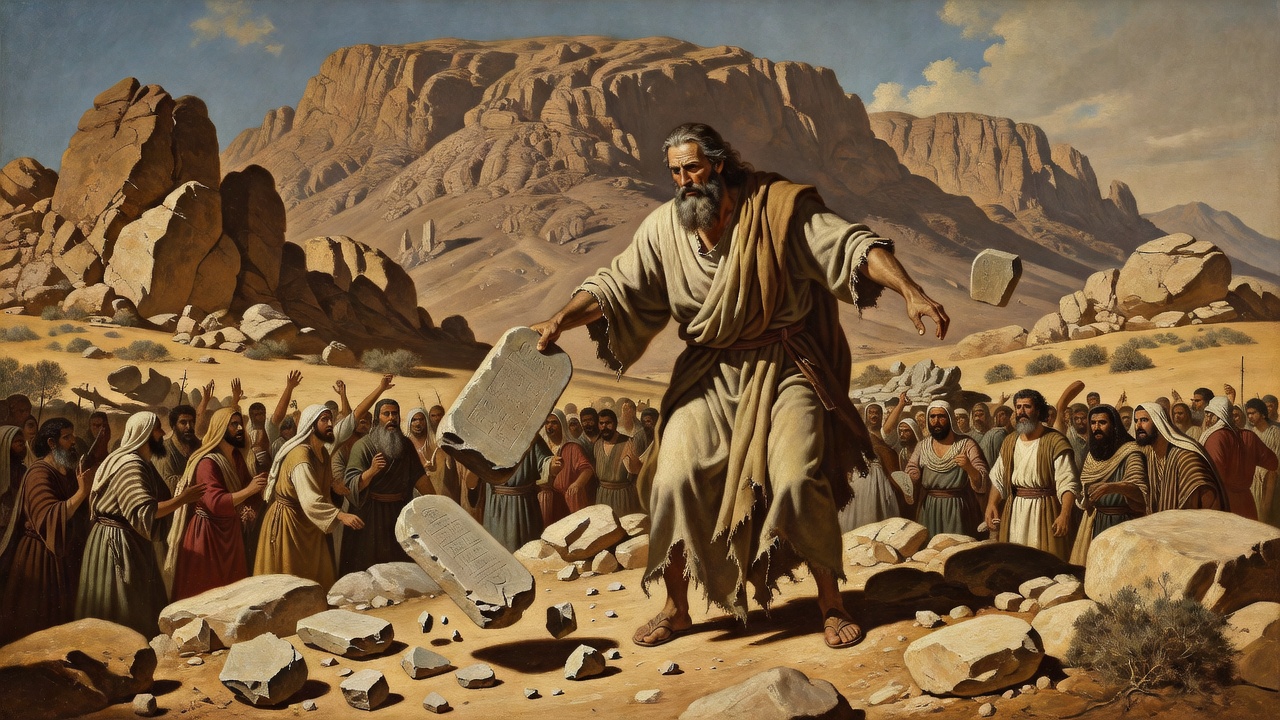
- To emphasize Israel's history of rebellion, Moses recounts the golden calf at Horeb where he shattered the two stone tablets and interceded for the people and Aaron. He also highlights repeated crises during the wilderness journey, including incidents at Taberah, Massah, and Kibroth-hattaavah.Sources: the Bible text itself · Horeb · Aaron · Taberah
Notes written with AI assistance from open sources (Theographic Bible Metadata, CC BY-SA 4.0; Easton’s Bible Dictionary, public domain) and reviewed before publishing.
Places in this chapter
- Jordan · Today: Jordan River · 31.761, 35.558 · verse 1
- Egypt · 30.129, 31.308 · verses 7, 12, 26, 29
- Mount Horeb · Today: Jebel Musa · 28.540, 33.973 · verse 8
Only places identified with high confidence are shown (90% or more according to the scholarly sources compiled by OpenBible). Period map: DARE (Digital Atlas of the Roman Empire), CC BY 4.0; modern map: © OpenStreetMap contributors; places: OpenBible.info (CC BY 4.0).
Credits and license for this translation
Bib La
The Holy Bible in Haitian Creole
Public Domain
Language: Kreyòl Ayisyen (Haitian)
In the Public Domain due to publication without copyright notice in 1985, and without subsequent registration within 5 years.
2020-03-10
Source: http://ebible.org/hat/ · eBible.org