1 Samuel 3
Bib La · Tap a verse to see its cross-references.
1Lè sa a, Samyèl te timoun toujou, li t'ap sèvi Seyè a sou zòd Eli. Nan tan sa a se pa t' fasil pou Seyè a te pale ak moun. Se bagay ki te ra anpil pou Seyè a te fè moun wè l'. 2Je Eli yo te fin bese, li pa t' ka wè ladan yo ankò. Yon jou lannwit, Eli te kouche nan chanm li ap dòmi. 3Samyèl menm te kouche nan Tanp Seyè a, nan pyès kote Bwat Kontra Bondye a te ye a. Lanp lan te limen toujou. 4Seyè a rele Samyèl. Samyèl reponn: -Men mwen wi! 5Epi li leve, l' al jwenn Eli, li di l': -Men mwen wi! M' tande ou rele m'! Eli reponn li: -Mwen pa rele ou non! Tounen nan kabann ou. Samyèl ale, li kouche. 6Seyè a rele l' ankò. Samyèl leve, l' al jwenn Eli, li di l': -Men mwen wi! Mwen tande ou rele m'! Men, Eli reponn li: -Pitit mwen, mwen pa rele ou. Al kouche tande! 7Samyèl pa t' ankò konnen Seyè a paske Seyè a pa t' ankò janm pale avè l' anvan sa. 8Seyè a rele Samyèl yon twazyèm fwa. Samyèl leve, l' al jwenn Eli, epi li di l': -Mwen tande ou rele m'. Men mwen wi! Fwa sa a, Eli vin konprann se Seyè a ki t'ap rele ti gason an. 9Li di Samyèl konsa: -Al kouche tande! Si ou tande yo rele ou ankò, w'a reponn: Pale non, Seyè! Sèvitè ou la ap koute ou! Samyèl ale, li kouche nan kabann li. 10Seyè a vini, li kanpe, epi li rele l' jan l' te fè l' anvan an: -Samyèl! Samyèl! Samyèl reponn: -Pale non! Sèvitè ou la ap koute ou! 11Seyè a di l' konsa: -Mwen pral fè yon gwo bagay nan mitan pèp Izrayèl la. Lè moun va tande sa, yo pral sezi. 12Jou sa a, tout malè mwen te di Eli ki pou te rive fanmi l' yo pral rive vre san manke yonn. 13Mwen te di l' mwen tapral pini fanmi l' lan yon sèl kou pou m' fini ak yo poutèt pitit gason l' yo. Li konnen yo t'ap fè sa ki mal, yo t'ap pale Bondye mal, epi li pa di yo anyen. 14Se poutèt sa mwen te fè moun fanmi Eli yo konnen mwen sèmante pa gen ankenn bèt yo ka touye ni ankenn ofrann ki ka fè m' padonnen peche yo fè a. 15Samyèl rete nan kabann li jouk denmen maten. Li leve granmaten, li louvri tout pòt nan Tanp Seyè a. Men, li te pè al rakonte Eli vizyon li te fè a. 16Men Eli rele l': -Samyèl, pitit mwen! Samyèl reponn li: -Men mwen wi! 17Eli mande l': -Kisa Seyè a di ou konsa? Tanpri pa kache m' anyen. Se pou Bondye ba ou pi gwo pinisyon ki genyen si ou kache m' anyen nan sa li di ou la. 18Se konsa Samyèl rapòte l' tout pawòl Seyè a san kache l' anyen. Epi Eli di l': -Se Seyè a li ye, l'a fè tou sa li wè ki bon. 19Samyèl t'ap grandi, Seyè a te avèk li. Li te fè tout pawòl ki te soti nan bouch Samyèl rive vre. 20Konsa, tout pèp Izrayèl la, depi moun ki te rete nan peyi Dann lan jouk sa ki rete lavil Bècheba, te vin rekonèt Samyèl tankou yon bon pwofèt k'ap pale pawòl Seyè a. 21Seyè a menm te toujou ap parèt lavil Silo, paske se la li te konn fè Samyèl wè li, se la li te konn pale ak li.
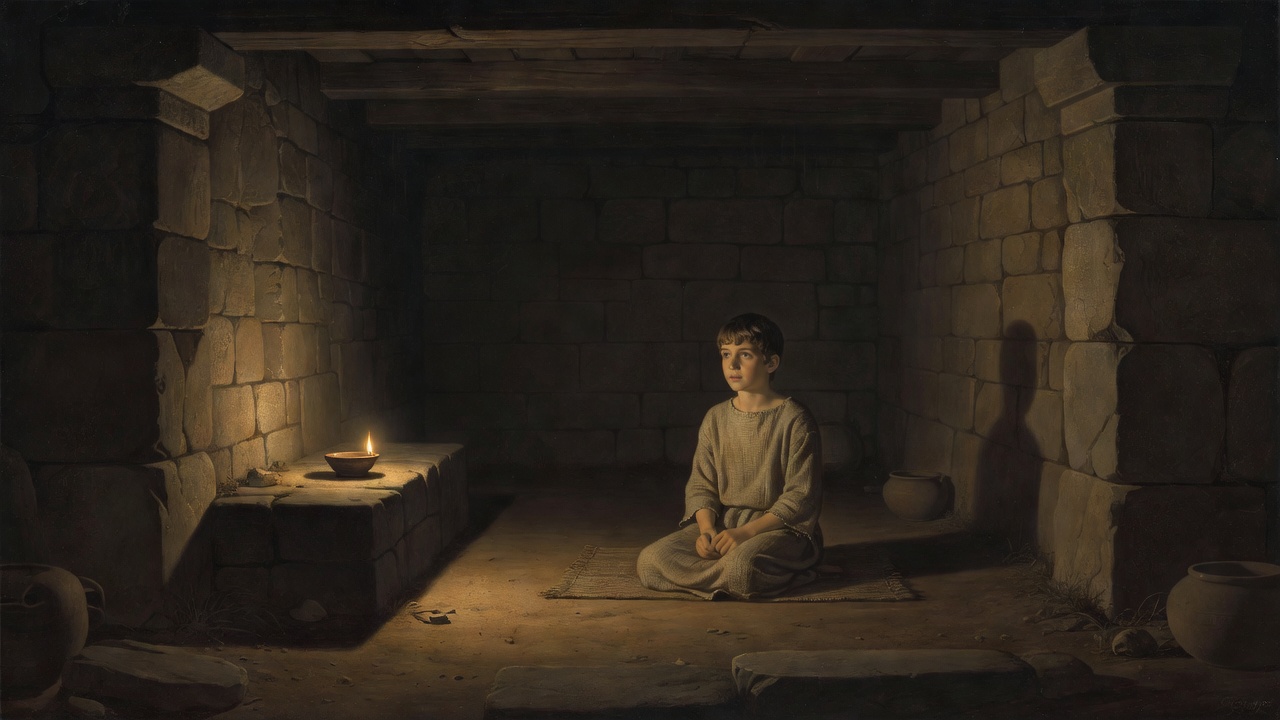
Did you know?
The Calling of Samuel
- The sanctuary housing the ark of God was located at Shiloh, where the young Samuel ministered under the high priest Eli. The text notes that direct divine revelations and visions were rare in those days, prior to the Lord revealing Himself to Samuel at Shiloh.Sources: the Bible text itself · Shiloh · Eli
- Eli served as high priest and judged Israel for forty years, but his failure to sternly reprove his corrupt sons, Hophni and Phinehas, brought a divine sentence of judgment against his household. The priestly office remained in Eli's lineage until King Solomon later removed Abiathar and installed Zadok.Sources: Eli · the Bible text itself
- The phrase from Dan to Beersheba designates the entire territory of the Promised Land, from its northern boundary at Dan to its southern limit at Beersheba, a distance of about 144 miles. Its mention emphasizes that the whole nation recognized Samuel as an established prophet.Sources: Beersheba · the Bible text itself
Notes written with AI assistance from open sources (Theographic Bible Metadata, CC BY-SA 4.0; Easton’s Bible Dictionary, public domain) and reviewed before publishing.
Places in this chapter
- Dan · Today: Tel Dan · 33.249, 35.652 · verse 20
- Shiloh · Today: Khirbet Seilun · 32.056, 35.290 · verse 21
Only places identified with high confidence are shown (90% or more according to the scholarly sources compiled by OpenBible). Period map: DARE (Digital Atlas of the Roman Empire), CC BY 4.0; modern map: © OpenStreetMap contributors; places: OpenBible.info (CC BY 4.0).
Credits and license for this translation
Bib La
The Holy Bible in Haitian Creole
Public Domain
Language: Kreyòl Ayisyen (Haitian)
In the Public Domain due to publication without copyright notice in 1985, and without subsequent registration within 5 years.
2020-03-10
Source: http://ebible.org/hat/ · eBible.org