Matthew 7
Tũpa Ñehengagüer · Tap a verse to see its cross-references.
Aní, “Oyavɨ mbahe” peye voi ambuae upe
1“Ndiyai, ‘Oyavɨ ité mbahe’ peye voiño tẽi ambuae ava upe; evocoiyase Tũpa, ‘Oyavɨ mbahe’ ndehi chira pẽu. 2Esepia, inungar pe ambuae ava upe peico, ẽgüe ehi aveira niha Tũpa pẽu. 3¡Mahera ambuae ava rembiavɨmi rese tẽi pemahe! ¡Iya rumo peyese rane mbahe tuvichá catu vahe pesepia! 4Ndiyai pẽu, ‘Che toropɨ̃tɨvɨi mbahe nde rembiavɨ rese’ peye vaherã chupe. Esepia, ¡pe peyavɨ guasu catu mbahe ichui! 5¡Pe Tũpa reroyasar angahu tẽi peico vahe! Penose uca rane mbahe pe rembiavɨ tuvichá catu vahe peyesui, ahese ramo ambuae ava rembiavɨ tahɨmi vahe moingatu peicatura.
6“Pemondo eme mbahe maranehɨ ava cave nungar tẽi upe, iyavei ndapemondoi chira mbahe porañete vahe ava cuchi nungar tẽi upe. Avɨyeteramo oyemboyerera mbahe-mbahe tẽi apo yuvɨreco pẽu” ehi.
Peporandu Tũpa upe pẽu mbahe ipane vahe rese
7“Peporandu mbahe rese Tũpa upe, ahese omboura pẽu; peseca ahe mbahe, ahese peyosura; inungar pemota oquenda, ẽgüe peyera pe yeroquɨsa pɨpe Tũpa upe, ahese imbousara pe porandusa pẽu. 8Esepia, acoi oporandu vahe mbahe rese, ahe mbahe oipɨsɨra; acoi mbahe oseca vahe, oyosura, iyavei acoi oyeroquɨsa pɨpe omota vahe oquenda Tũpa upe, chupe imboisara.
9“Ndipoi eté revo que ñepei pe pãhu pendar omondo vaherã ita tẽi guahɨr upe pan rese oyeupe poranduse. 10Que pira rese oyeupe poranduse revo, ndomondoi chiaveira mboi tẽi chupe. 11Yepe ava ndaseco põrai vahe peico viña, pe rahɨr upe rumo pemondoño ité mbahe avɨye vahe. ¡Tahetru pe Ru ɨva pendar oipota catu mbahe avɨye vahe mondo ãgua acoi ava mbahe rese oporandu vahe upe!
12“Acoi mbahe peipota vahe ambuae ava oyapo vaherã pẽu, ahe tuprɨ avei peyapora chupe. Ahe niha Moisés porocuaita iyavei Tũpa ñehe mombehusareta porombohesa” ehi.
Oime perɨ icãhimi vahe ava recocuer upe nara
13“Peique oquendɨpɨ icãhimi vahe rupi. Esepia, oquendɨpɨ guasu iyavei perɨ guasu cañɨ tẽisave oso vahe. Ahe supi setá catu ava yuvɨraso; 14teco apɨrẽhɨsave oso vahe rumo oquendɨpɨ, perɨ reseve icãhimi. Supi guata ãgua yavai eté; movɨromi tẽi ava oseca yuvɨreco” ehi.
Ɨvɨra avɨye vahe icuasa iha rese
15“Coiye yugüerura ava Tũpa Ñehengagüer mombehusar angahu tẽi pe pãhuve. Ahe ndoyavɨi chira ovesa ndaseco marai vahe yuvɨreco. Ipɨha pɨpe rumo secocuer avɨye mahembiar oñaro ai vahe. Sese peicua catu evocoi nungar sui. 16Ava recocuer icuasa sembiapo rese. Esepia, ndahipohosai yu sui uva, ndipohosai avei higuera ha ɨvɨra sãchi atɨ vahe sui. 17Evocoiyase ɨvɨra avɨye vahe, iha avɨye avei; ɨvɨra naporai vahe, iha naporai avei no. 18Esepia, ɨvɨra avɨye vahe ndovɨrecoi oha naporai vahe, iyavei ɨvɨra naporai vahe ndovɨrecoi oha avɨye vahe. 19Sese opacatu ɨvɨra iha naporai vahe yasɨasa yepi. Ichui imondosapa tatave. 20Na peyera ava recocuer cua sembiapo rese” ehi.
Ndahei chira opacatu ava yuvɨroique Tũpa mborerecuasave
21“Ndahei opacatu ava ‘che Yar, che Yar’ ehi vahe yuvɨreco cheu yuvɨroiquera che Ru Tũpa mborerecuasave. Che Ru ɨva pendar remimbotar aposar año tuprɨ rumo yuvɨroiquera aheve. 22Arɨ cañɨ pɨpe setá tẽi ava aipo ehira yuvɨreco cheu: ‘Ore Yar, nde ñehe mombehusar niha ore oroico cuese, setá avei oromombo caruguar ava sui nde rer pɨpe, setá poromondɨisa oroyapo’ ehi tẽira yuvɨreco cheu. 23Che rumo, ‘¡Aní, ndopocuai! ¡Pe mbahe tẽi peico vahe, peyepepɨ che sui!’ aheñora aipo nungar upe” ehi.
Ñuvɨrío oɨ apoprɨ
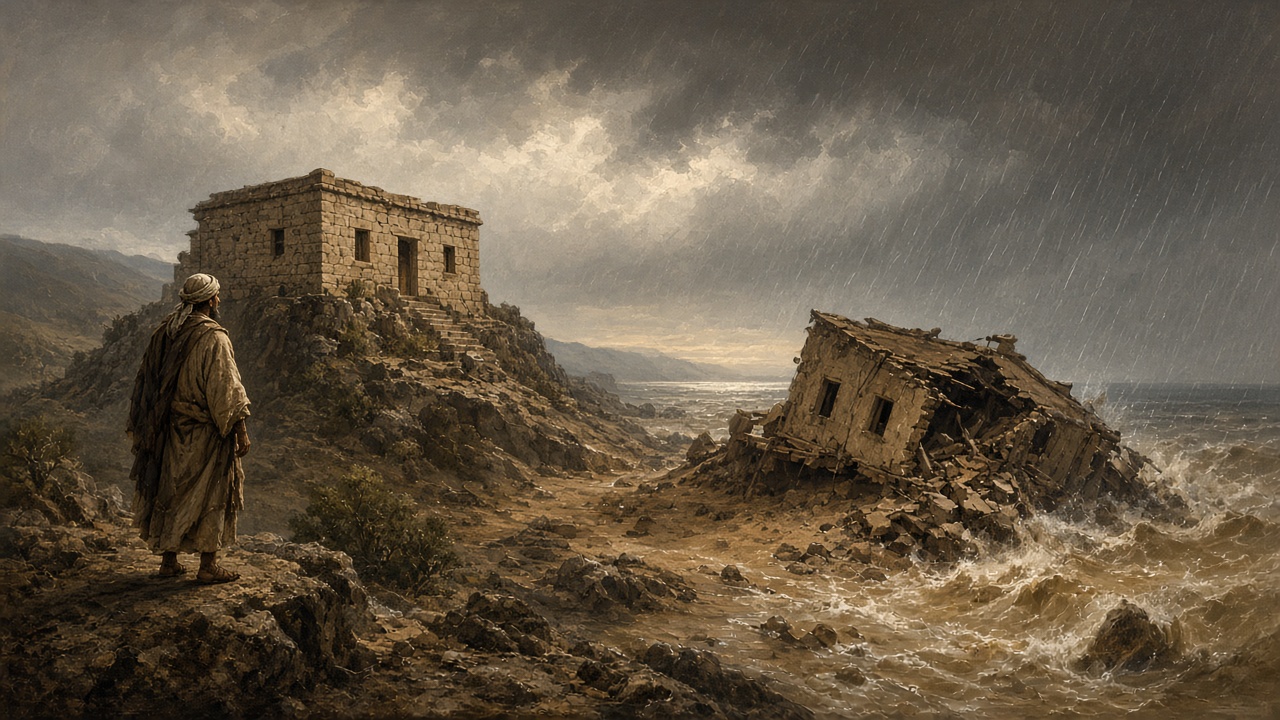
24“Iyavei que ava osendu vahe che ñehengagüer, omboavɨye vahe avei, ahe inungar ava ipɨhañemoñeta tuprɨ vahe omopuha ita harɨve güẽtarã. 25Yepe ahe oɨ upe oyepota tẽi ɨvɨtu ai, amarusu reseve, ichui oyeapo tẽi avei ɨai chupe, oɨ rumo ndovɨapi eté. Esepia, ita harɨve ité yaposa. 26Acoi ava che ñehengagüer rese ndoyapɨsacai vahe rumo, ahe inungar ava opɨhañemoñeta tuprɨẽhɨsa pɨpe omopuha vahe ɨvɨ cuhi harɨve tẽi güẽtarã. 27Ipare rumo oyepotase ɨvɨtu ai amarusu reseve chupe, ndaracaheimi ahe oɨ omondurupa” ehi Jesús ava rehɨi upe.
28Iñehe renduse ava rehɨi, “¿Mara ehi rutei?” ehi tẽi yuvɨreco chupe. 29Esepia, ndahei Moisés porocuaita rese oporombohe vahe nungar; ahe rumo oporombohe güeco pĩratasa pɨpe.
Did you know?
Judgment, the narrow way, and a firm foundation
- The event record dates the start of the Sermon on the Mount to AD 28 and its duration to one day. This chapter ends as the crowds are astonished at Jesus’ teaching, because he taught as one who had authority, and not as their scribes.Sources: Sermon on the Mount · the Bible text itself
- Jesus warns that the judgment a person pronounces, and the measure that person uses, will be turned back on them. He pictures someone who notices a speck in a brother’s eye yet misses a beam in their own, and he says the beam must be removed first.Sources: the Bible text itself
- The chapter calls doing to others as you would have them do to you the essence of the Law and the Prophets. It contrasts a wide gate and broad way that leads to destruction, which many enter, with a small gate and narrow way that leads to life, which few find, and it compares hearing these words and acting on them to a house built on rock rather than on sand.Sources: the Bible text itself
Notes written with AI assistance from open sources (Theographic Bible Metadata, CC BY-SA 4.0; Easton’s Bible Dictionary, public domain) and reviewed before publishing.
Credits and license for this translation
Tũpa Ñehengagüer
New Testament in Guarayu (BL:gyr:Guarayu)
copyright © 2011 Wycliffe Bible Translators, Inc.
Language: Guarayu
Translation by: Wycliffe Bible Translators, Inc.
Guarayu [gyr], Bolivia
Copyright Information
© 2011, Wycliffe Bible Translators, Inc. All rights reserved.
This translation text is made available to you under the
terms of the Creative Commons License: Attribution-Noncommercial-No Derivative Works.
( http://creativecommons.org/licenses/by-nc-nd/3.0/ )
In addition, you have permission to port the text to different file formats, as long as you
do not change any of the text or punctuation of the Bible.
You may share, copy, distribute, transmit, and extract portions
or quotations from this work, provided that you include the above copyright
information:
You must give Attribution to the work.
You do not sell this work for a profit.
You do not make any derivative works that change any of the actual words or punctuation of the Scriptures.
Permissions beyond the scope of this license may be
available if you contact
us with your request.
The New Testament
in Guarayu
© 2011, Wycliffe Bible Translators, Inc. All rights reserved.
This translation is made available to you under the terms of the
Creative Commons Attribution-Noncommercial-No Derivatives license 4.0.
You may share and redistribute this Bible translation or extracts from it in any format, provided that:
You include the above copyright and source information.
You do not sell this work for a profit.
You do not change any of the words or punctuation of the Scriptures.
Pictures included with Scriptures and other documents on this site are licensed just for use with those Scriptures and documents.
For other uses, please contact the respective copyright owners.
2014-04-25
Source: http://ebible.org/gyrNT/ · eBible.org