Matthew 12
Tũpa Ñehengagüer · Tap a verse to see its cross-references.
Mbɨtuhusa arɨ pɨpe Jesús remimbohe oipoho trigo yuvɨreco
1Mbɨtuhusa arɨ pɨpe Jesús yuvɨraso güemimbohe rese, oguata mbahe mitɨ pãhu rupi. Ahese semimbohe ndasɨepoi. Evocoiyase trigo rãhɨi oipoho-pohomi güemihura yuvɨreco. 2Fariseo yuvɨrecoi vahe osepiase, aipo ehi Jesús upe:
—Esepia nde remimbohe. Oporavɨquɨño mbɨtuhusa arɨ pɨpe yuvɨreco —ehi yuvɨreco chupe.
3Ahe rumo omboyevɨ ahe fariseo upe:
—Peicua tẽi niha icuachiaprɨ aracahendar mborerecuar guasu David rembiapogüer resendar ñehesa ondugüer reseve ndasɨepoise yuvɨreco. 4Ahe niha yuvɨroique ité tũparo pɨpe pan imboeteiprɨ Tũpa upendar hu ãgua ondugüer reseve. Ahe chupe acoi ndipotasai ihu ãgua yuvɨreco viña. Judío pahi yuvɨrecoi vahe upeño ité niha ipotasa ihu ãgua yepi. 5¿Ndapeyeroquɨi vo Moisés porocuaita resendar pɨpe? Esepia, judío pahi tũparo rese hañecosar ndopɨtuhui eté tũparo pɨpe yuvɨreco mbɨtuhusa arɨ pɨpe yepi. Ndahei rumo oyemboangaipa ipɨpe yuvɨreco. 6Cũritei cohave oime ava ɨvate catu vahe tũparo sui. 7Evocoiyase pe ndapesenducuai eté Tũpa Ñehengagüer aipo ehi vahe: ‘Che aipota peporoparaɨsuereco, aní chira peropovẽhepa porerecosa mbahe mɨmba tẽi cheu’ ehi vahe. Pesenducuase viña, ahese, “Oyavɨ mbahe” ndapeye voi chira che remimbohe mbahe ndoyavɨi vahe upe viña. 8Esepia, Ava Rɨquehɨr mbɨtuhusa arɨ rerecuar ité secoi —ehi fariseo eta upe.
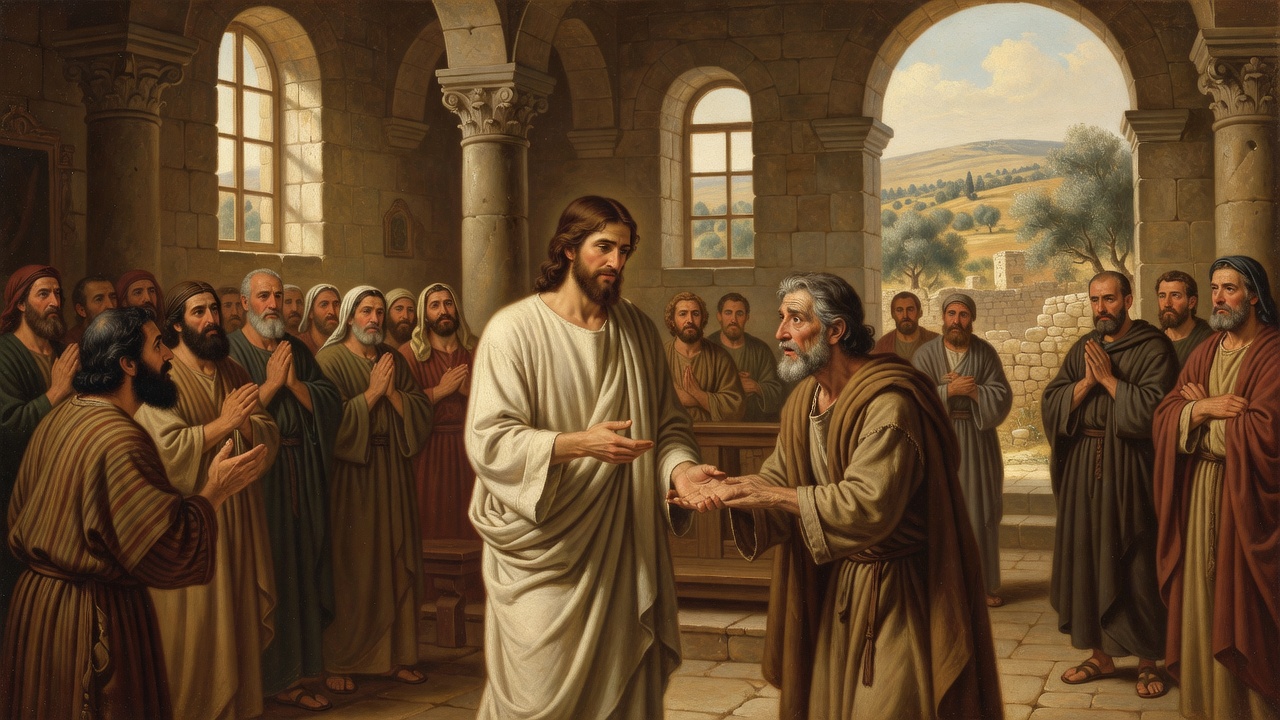
Mbɨa ipo nomɨi vahe Jesús ombogüera
9Ichui osose Jesús, oique judío tũparove. 10Aheve oime mbɨa ipo co cotɨgüer nomɨi vahe. Aheve avei fariseo, “Yaiñehengapo angahu Jesús” ehi yuvɨreco viña. Sese,
—¿Iyaño pĩha mbɨtuhusa arɨ pɨpe ava imbogüerasa yepi’ —ehi yuvɨreco chupe.
11Evocoiyase Jesús aipo ehi imboyevɨ:
—¿Ava vo pe pãhu pendar acoi mbɨtuhusa arɨ pɨpe ovɨapise seimba ovesa ɨvɨcuarve ndosoi chira senose viña? 12¡Ava niha avɨye catu ovesa sui! Sese iyacatu yande yayapo mbahe avɨye vahe mbɨtuhusa arɨ pɨpe yepi —ehi.
13Ahese aipo ehi aipo mbɨa upe:
—Eichoho nde yɨva —ehi.
Evocoiyase oichohose oyɨva, ocuera tuprɨ voi inungar ambuae iyɨva. 14Evocoiyase fariseo opa yuvɨnose yuvɨraso oyemoingatu Jesús yuca ãgua yuvɨreco.
Yavɨye aracahendar imombehuprɨ Jesús recocuer resendar
15Evocoiyase Jesús oicuase fariseo pɨhañemoñetasa, osẽ oso, ava rehɨi avei yuvɨraso supi. Setá avei imbaheasɨ vahe ombogüera, 16iyavei, “Che mombehui rene ava upe peyé” ehi. 17Ẽgüe ehi yavɨyepa Tũpa ñehe mombehusar Isaías remimombehugüer:
18“Co ité che mboyeroyasar che rembiporavo.
Ahe asaɨsu eteprɨ.
Sese ité ayembovɨha.
Amondora che Espíritu chupe.
Ahe omombehu aveira mbahe ihɨ̃vi vahe opacatu ava ɨvɨ pɨpendar upe.
19Noiñehepoepɨ-epɨi chira ava, nasase-sasei tẽi chiaveira; iyavei ndosendui chietera ava iñehe ocar rupi.
20Iyavei nomopei chietera que ñepei patavɨimi oyeapa vahe; nombogüei chiaveira tataendɨ sãtachiñomi tẽi vahe.
Ẽgüe ehira mbahe ihɨ̃vi vahe pɨpe opacatu secopɨpa.
21Evocoiyase opacatu tecua pendar ava ndahei vahe judío oyeroyara yuvɨreco sese’ ehi
Isaías aracahe.
“Jesús vɨreco caruguar pĩratasa oyese” ehi tẽi ava yuvɨreco
22Ichui ava ndasesapɨsoi vahe, noñehei vahe caruguar rerecosar vɨraso Jesús upe yuvɨreco. Evocoiyase Jesús ombogüera. Ahese osareco, oñehe avei. 23Evocoiyase opacatu ava oyepɨhamondɨisave aipo ehi yuvɨreco: “¿Tũpa Rembiporavo David suindar pĩha co?” ehi yuvɨreco chupe.
24Osenduse rumo fariseo, “Co mbɨa caruguar rerecuar Beelzebú pĩratasa pɨpe tẽi omboyepepɨ caruguar ava sui” ehi yuvɨreco.
25Oicuaño rumo ipɨhañemoñetasa. Sese aipo ehi: “Que mborerecuar guasu povrɨ pendar ovava-vavase oyeupe oyeamotarẽhɨsave yuvɨreco, ahese evocoi mborerecuar pĩratasa ocañɨ tẽira. Iyavei que tecua pendar, anise, que ava omu rese ovavase oyeupe, oyoya oyemocañɨ tẽira yuvɨreco. 26Ẽgüe ehi avei caruguar. Esepia, serecuar omboyepepɨse opovrɨ pendar, ovavara oyeupe yuvɨreco viña. Evocoiyase ahe oyemocañɨ tẽira yuvɨreco. 27Iyavei pe, ‘Beelzebú pĩratasa pɨpe sui tẽi omboyepepɨ caruguar ava sui’ peye tẽi cheu. Evocoiyase, ¿ava pĩratasa pɨpe vo pe voya eta omboyepepɨ caruguar ava sui yuvɨreco? Tũpa pĩratasa pɨpese, che avei evocoiyase ayapo evocoi nungar ipĩratasa pɨpe. Pe voya ae omboyecuara pe ñehe pe rembiavɨ yuvɨreco pẽu. 28Che rumo Tũpa Espíritu pĩratasa pɨpe amboyepepɨ caruguar ava sui. Sese cũritei pesepia ité Tũpa mborerecuasa.
29“Iyavei no, que ava oique potase ambuae ava ipĩrata eteprɨ vahe rẽtave imbahe rerocua ãgua ichui viña, yɨpɨndar opa rane itera oñapɨchi-pɨchi. Ipare voi opara vɨrocua imbahe ichui.
30“Iyavei acoi ava ndache mboyoyai vahe, ahe che amotarẽhɨmbar yuvɨrecoi; acoi ava ndosecai vahe ava cheu nara, ahe omosai tẽi yuvɨreco che sui.
31“Sese ava upe oimera ñeroisa opacatu angaipa rese iyavei iñehe mara-mara tẽi vahe upe avei. Co catu acoi iñehe-ñehe tẽi vahe Tũpa Espíritu upe, ahe chupe ndipoi chietera ñeroisa. 32Iyavei acoi ava oñehe-ñehe tẽi vahe che, Ava Rɨquehɨr rese, ahe chupe oimeño ñeroisa; acoi oñehe-ñehe tẽi vahe rumo Espíritu amotarẽhɨsave, ahe chupe ndipoi chira ñeroisa co ɨvɨ pɨpe iyavei ɨvave” ehi Jesús fariseo eta upe.
Ava recocuer icuasa sembiapo rese
33“Emoatɨro tuprɨ ɨvɨra, ahe iha avɨyera; nderemoatɨro tuprɨise ɨvɨra, ahe evocoiyase vɨrecora oha naporai vahe. Esepia, ɨvɨra icuasa iha rese. 34¡Evocoiyase pe, mboi nungar tẽi peico vahe, pe recocuer naporaise, ndapeicatui chira mbahe avɨye vahe rese pe ñehe ãgua! Esepia, pe pɨha pɨpe sui tẽi osẽ pe ñehe ãgua. 35Iyavei acoi ava avɨye vahe oñehe tuprɨ opɨhañemoñeta catuprɨsa pɨpe; acoi ava recocuer naporai vahe rumo, opɨhañemoñeta raisa pɨpe tẽi oñehe. 36Sese arɨ cañɨ pɨpe opacatu ava opara omombehu oñehe-ñehe tẽisa Tũpa rovai yuvɨreco. 37Esepia, pe ñehe avɨye vahe reprɨ peipɨsɨra, pe ñehe naporai vahe reprɨ peipɨsɨ aveira” ehi Jesús.
Ava eta ndaseco põrai vahe oporandu poromondɨisa rese yuvɨreco
38Evocoiyase fariseo iyavei Moisés porocuaita rese oporombohe vahe aipo ehi yuvɨreco Jesús upe:
—Porombohesar, ore orosepia pota mbahe nde rembiapo poromondɨisa nde recocuer cua ãgua —ehi yuvɨreco.
39Jesús rumo omboyevɨ iñehe:
—Pe ava ndaseco põrai vahe, ndiporeroyai vahe, peporandu tẽi poromondɨisa tecocuer cua ãgua rese. Che rumo namboyecuai chira ambuae poromondɨisa; Jonás recocuer rese güeraño opomomahenduhara. 40Esepia, inungar Jonás secoi mbosapɨ arɨ pira guasu avɨterve aracahe, ẽgüe ehi aveira Ava Rɨquehɨr mbosapɨ arɨ ɨvɨvrɨve tuira omano vahe pãhuve. 41Evocoiyase arɨ cañɨ pɨpe ava tecua Nínive pendar porandusave omombehura ava cũriteindar cañɨpa ãgua. Esepia, Nínive pendar niha omboasɨse oangaipa, oyevɨ Tũpa upe yuvɨreco Jonás omombehuse Tũpa Ñehengagüer chupe. Cũritei rumo oime Jonás sui avɨye catu vahe pe pãhuve. 42Iyavei arɨ cañɨ pɨpe cuña mborerecuar guasu irohɨ cotɨ secua vahe porandusave, omombehura cũriteindar ava cañɨpa ãgua. Esepia, ahe ou amombrɨ sui Salomón mbahecuasa rendu ãgua. Cũritei rumo oime ɨvate catu vahe Salomón sui —ehi fariseo eta upe.
Caruguar oyevɨ iri ava güeco agüerve
43“Iyavei caruguar osẽse ava sui, oguata tẽi ɨvɨ ipiru vahe rupi opɨtuhu ãgua reca. Ipare rumo ndoyosuise, ipɨhañemoñeta, 44‘Ayevɨ irira che reco agüerve vicho’ ehi. Aheve oyevɨse, osepia iri secocuer inungar oɨ ndiporusai vahe, sahuvaprɨ tuprɨ. 45Sepiase, oso siete caruguar naporai catu vahe reca. Ichui güeruse, oyoya guasu yuvɨroique co mbɨa pɨha pɨpe. Sese mbahe tẽi catu ité secocuer yɨpɨndar güeco agüer sui. Ẽgüe ehi aveira ava cũriteindar ndaseco põrai vahe upe” ehi.
Jesús sɨ, tɨvɨreta avei
46Jesús oñehe vɨteseve ava upe, ahese ichɨ, tɨvɨreta reseve ocarve yuvɨnohai. Ahe oñehe pota yuvɨreco chupe. 47Evocoiyase mbɨa omombehu Jesús upe:
—Nde sɨ, nde rɨvɨreta reseve co ocarve yuvɨnohai. Ahe oñehe pota yuvɨreco ndeu —ehi.
48Ahe rumo,
—¿Ava pĩha che sɨ; ava pĩha che rɨvrɨ? —ehi ahe mbɨa upe.
49Evocoiyase omboyecua opo pɨpe güemimbohe eta aipo ehi:
—Co che sɨ eta, co che rɨvɨreta. 50Esepia, acoi che Ru ɨva pendar remimbotar oyapo vahe, ahe che rɨvrɨ, che reindrɨ iyavei ahe che sɨ yuvɨrecoi —ehi.
Did you know?
Lord of the Sabbath and Signs of the Kingdom
- When challenged by the Pharisees for plucking grain on the Sabbath, Jesus cited the Old Testament account of David eating the consecrated bread when he was hungry. He argued that human need and doing good take precedence over ritual regulations, declaring himself Lord of the Sabbath.Sources: the Bible text itself · David
- After casting out a demon from a blind and mute man, Jesus was accused of operating through Beelzebul, the prince of demons. Jesus rejected the charge, explaining that a divided kingdom or household cannot stand and that casting out demons by the Spirit of God demonstrates the arrival of God's kingdom.Sources: the Bible text itself · Satan
- In response to requests for a miraculous sign, Jesus pointed to the prophet Jonah, comparing Jonah's three days in the fish's belly to his own impending death and burial. He warned that the citizens of Nineveh and the Queen of the South would judge his generation because they responded to Jonah and Solomon, whereas someone greater was now present.Sources: the Bible text itself · Jonah · Nineveh · Solomon
Notes written with AI assistance from open sources (Theographic Bible Metadata, CC BY-SA 4.0; Easton’s Bible Dictionary, public domain) and reviewed before publishing.
Places in this chapter
Only places identified with high confidence are shown (90% or more according to the scholarly sources compiled by OpenBible). Period map: DARE (Digital Atlas of the Roman Empire), CC BY 4.0; modern map: © OpenStreetMap contributors; places: OpenBible.info (CC BY 4.0).
Credits and license for this translation
Tũpa Ñehengagüer
New Testament in Guarayu (BL:gyr:Guarayu)
copyright © 2011 Wycliffe Bible Translators, Inc.
Language: Guarayu
Translation by: Wycliffe Bible Translators, Inc.
Guarayu [gyr], Bolivia
Copyright Information
© 2011, Wycliffe Bible Translators, Inc. All rights reserved.
This translation text is made available to you under the
terms of the Creative Commons License: Attribution-Noncommercial-No Derivative Works.
( http://creativecommons.org/licenses/by-nc-nd/3.0/ )
In addition, you have permission to port the text to different file formats, as long as you
do not change any of the text or punctuation of the Bible.
You may share, copy, distribute, transmit, and extract portions
or quotations from this work, provided that you include the above copyright
information:
You must give Attribution to the work.
You do not sell this work for a profit.
You do not make any derivative works that change any of the actual words or punctuation of the Scriptures.
Permissions beyond the scope of this license may be
available if you contact
us with your request.
The New Testament
in Guarayu
© 2011, Wycliffe Bible Translators, Inc. All rights reserved.
This translation is made available to you under the terms of the
Creative Commons Attribution-Noncommercial-No Derivatives license 4.0.
You may share and redistribute this Bible translation or extracts from it in any format, provided that:
You include the above copyright and source information.
You do not sell this work for a profit.
You do not change any of the words or punctuation of the Scriptures.
Pictures included with Scriptures and other documents on this site are licensed just for use with those Scriptures and documents.
For other uses, please contact the respective copyright owners.
2014-04-25
Source: http://ebible.org/gyrNT/ · eBible.org