John 4
Tũpa Ñehengagüer · Tap a verse to see its cross-references.
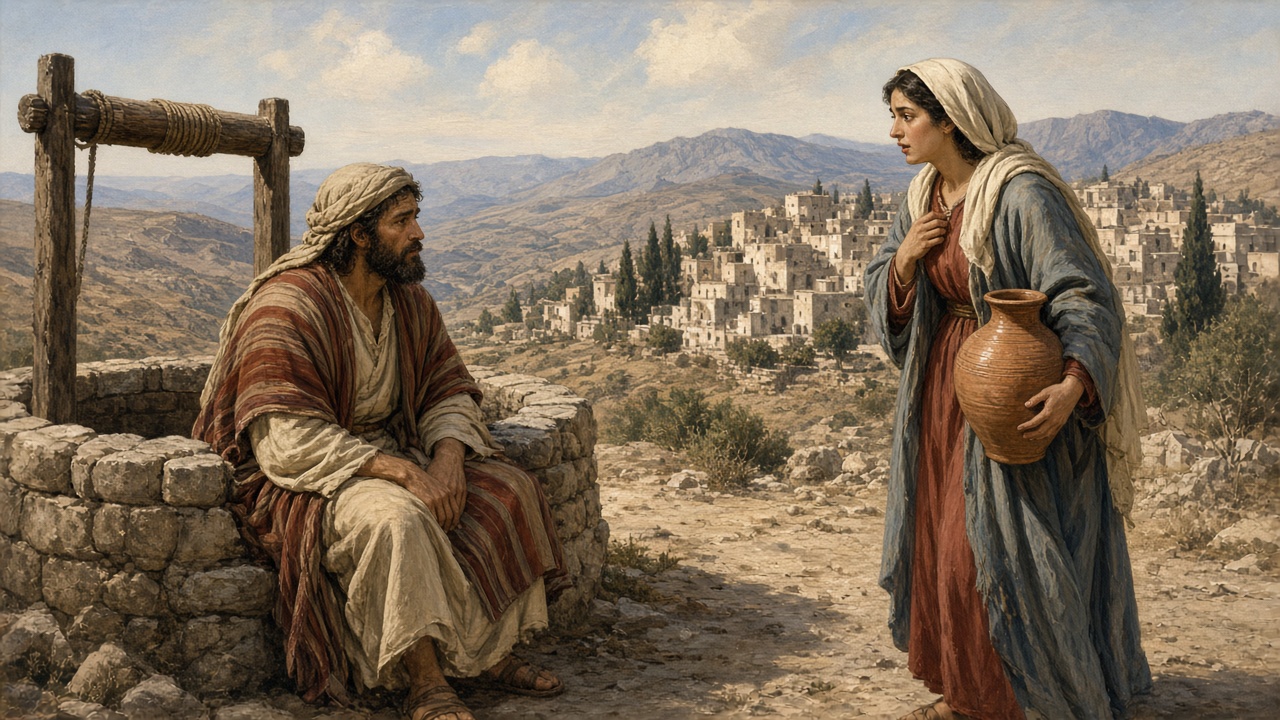
Jesús oñehe Samaria pendar cuña upe
1Fariseo eta oyandu yuvɨreco Jesús vɨreco catuse ava oyeupi oguata vahe iyavei oporoãpiramo catuse avei Juan sui 2(ndahei eté rumo Jesús oporoãpiramo; semimbohe tẽi rumo ẽgüe ehi yuvɨreco). 3Jesús oicuase aipo nungar, osẽ Judea sui, oyevɨ iri ɨvɨ Samaria rupi, Galilea ve yuvɨraso.
5Aheve Samaria ɨvɨ rese oyepota tecua Sicar serer vaheve yuvɨreco. Ahe tecua rerovɨcave oime ɨvɨ Jacob omondo vahecuer guahɨr José upe aracahe. 6Aheve oime ɨvɨcuar, chupe, “Jacob ɨguagüer” ehi yuvɨreco. Ahe ɨgua rembe rese Jesús oguapɨ mbɨter arɨ potase ocueraise oĩ. 7Semimbohe eta rumo opacatu yuvɨraso tecuave mbahe tembihu rerocua. Aheseve cuña, Samaria pendar, oyepota ɨguave ɨ renose. Ahese Jesús aipo ehi chupe:
—Emboumi chĩhi nde ɨ taɨhu —ehi.
9Cuña, Samaria pendar, rumo omboyevɨ chupe:
—¿Mahera vo, “Embou ɨ taɨhu” ere cheu? Nde rumo judío; che cuña coha pendar aico —ehi chupe. (Esepia, judío noñehei vahe ité ava Samaria pendar upe yuvɨreco yepi.)
10Evocoiyase omboyevɨ cuña upe:
—Ereicuase Tũpa porerecosa ndeundar viña iyavei ereicuase ahe ava ndeu ɨ rese oporandu vahe, nde evocoiyase ereporandura sese chupe. Ahe evocoiyase omondora ɨ ndopai vahe ndeu viña —ehi cuña upe.
11—Ndererecoi rumo ɨ renose ãgua. Esepia, co ɨgua ipɨcucú ité. ¿Que sui vo aipo evocoiyase eremboura ɨ ndopai vahe cheu viña? —ehi cuña chupe—. 12Esepia, co ɨgua ore ramoi Jacob oseya oreu. Cohave suiño ité niha ahe oɨhu, tahɨr avei oɨhu yuvɨreco ichui iyavei opacatu seimba. ¿Nde pĩha ɨvate catu ereico ichui? —ehi cuña chupe.
13—Opacatu ava oɨhu vahe co ɨ, ihuseiño itera yepi, —ehi cuña upe—. 14Acoi ava oɨhu vahe rumo ɨ che remimondo, ndihusei iri chietera. Esepia, che amondo vahe ɨ ndopai vaherã ité. Ahe omboura tecovesa ndopai vahe ava upe —ehi cuña upe.
15—Nde ava, emboumi ahe ɨ taɨhu che husei iriẽhɨ ãgua, tanose iri eme ɨ cohave sui —ehi.
16—Eso rane nde mer reca, seseve peyu cohave —ehi cuña upe.
17—Ndarecoi rumo che mer —ehiño cuña chupe.
—Supi eté aipo ere, ndererecoi eté nde mer. 18Esepia, cinco tuprɨ erereco nde mer iyavei cũritei erereco vahe nde resendar tẽi. Supi eté aipo ere: “Ndarecoi che mer” ere cheu —ehi cuña upe.
19—Nde ava avɨye moco Tũpa ñehe mombehusar ereico cheu —ehi—. 20Ore ramoi eta omboetei Tũpa co ɨvɨtrɨ rese yuvɨreco. Pe rumo, judío peico vahe, “Jerusalén ve yamboeteira Tũpa yepi” peye —ehi.
21—Che reroya eve cuña, vɨrovɨ arɨ pẽu peso iriẽhɨ ãgua Tũpa mboetei co ɨvɨtrɨ rese iyavei Jerusalén ve. 22Pe Samaria pendar peico vahe pemboetei tẽi pe rembiguaẽhɨ. Ore rumo oroicua oromboetei vahe. Esepia, ñepɨsɨrosa ou judío sui. 23Oyepota rumo arɨ cute, ahe ité co cũritei co pɨpe suive supi eté Tũpa omboetei vahe, Tũpa Espíritu pɨpe omboeteira yuvɨreco. Supi eté Tũpa, “Ẽgüe tehi che mboetei yuvɨreco” ehi. 24Esepia, Tũpa niha Espíritu secoi. Sese acoi omboetei vahe oyapora Espíritu pɨpe supi tuprɨ vahe ité yuvɨreco —ehi cuña upe.
25Cuña evocoiyase aipo ehi chupe:
—Che aicua Poropɨ̃sɨrosar yu ãgua (ahe ‘Cristo’). Acoi ahe ouse, omombehu tuprɨra opacatu mbahe yandeu —ehi cuña chupe.
26—Che niha ahe aico añehe vahe ndeu —ehi cuña upe.
27Aheseve semimbohe eta oyevɨ yuvɨreco, nombovɨhaiprɨ güemimbohe cuña rese oñemoñetase. Ndipoi eté rumo que “¿mbahe rese vo peñemoñeta?” ehi vahe, que “¿mahera vo ereñehe co cuña upe?” ehi vahe yuvɨreco chupe. 28Ahese cuña oseya tuprɨño ocambuchi, oso güecuave aipo ehi ava eta upe:
29—Perio, tapesepia pe ava omombehupa tuprɨ vahe che recocuer cheu. ¿Ndahei pĩha ahe Poropɨ̃sɨrosar? —ehi omu eta upe.
30Evocoiyase ava rehɨi yuvɨnose tecua sui, yuvɨraso Jesús recosave sepia. 31Ava yepotaẽhɨ vɨteseve, semimbohe eta,
—Ore mbohesar, ecarumi —ehi tẽi yuvɨreco chupe.
32—Oimera rumo ambuae mbahe cheu che movɨracua ãgua. Ahe ndapeicuai vahe —ehi güemimbohe eta upe.
33Semimbohe aipo hese oporandu-randu tẽi oyeupe yuvɨreco:
—¿Oime pĩha que ava güeru vahe mbahe semihura? —ehi tẽi yuvɨreco.
34Güemimbohe upe rumo aipo ehi:
—Che movɨracuasa rumo che mbousar porocuaita, ahe ayapora iyavei amboavɨye rane itera iporavɨquɨ —ehi—. 35Esepia, pe aipo peye: ‘Ipane vɨte irungatu yasɨ mbahe mitɨ ha monuha ãgua’ peye yepi; che rumo aipo ahe pẽu: pemahe pe ɨvɨrindar ava eta rese. Opa ité opɨha omoingatu yuvɨreco, ahe inungar mbahe mitɨ ha yavɨye vahe. 36Acoi oporavɨquɨ vahe Tũpa upe ava hã pɨsɨ ãgua rese, ahe oipɨsɨra seprɨ yuvɨreco iyavei semimonuha tecovesa ndopai vaheve nara ité yuvɨrecoira. Evocoiyase ava upe oñehe vahe iyavei oipɨsɨ vahe ava hã ɨvave nara, oyoya guasu ovɨharetera ipɨsɨprɨ rese yuvɨreco. 37Supi eté co ñehesa aipo ehi vahe: ‘Ñepei eté omahetɨ vahe; imonuhasar rumo ambuae ité’ ehi. 38Che opocuai ava hã pɨsɨ ãgua ambuae ava poravɨquɨsave; yɨpɨndar rumo ambuae oporavɨquɨ́ ité yuvɨreco sese. Pe evocoiyase peique iporavɨquɨ agüer rupi —ehi güemimbohe eta upe.
39Setá ava tecua Sicar pendar Samaria pɨpe vɨroya cuña ñehe sui yuvɨreco, “Opacatu mbahe che rembiapo omombehu cheu” ihesa sui. 40Evocoiyase ava rehɨi Samaria pendar yuvɨraso chupe ‘epɨtami ore pɨri’ oya. Evocoiyase opɨta ipɨri ñuvɨrío arɨ rupi. 41Setá catu iri ava vɨroya yuvɨreco iñehe ité renduse. 42Evocoiyase ava eta aipo ehi cuña upe yuvɨreco:
—Cũritei orovɨroya ité cute, ndahei nde ñehe suiño orovɨroya. Esepia, ore ité orosendu iñehe cute, oroicua avei ahe supi eté opacatu ava pɨ̃sɨrosar ou vahe —ehi ava eta cuña upe yuvɨreco.
Jesús ombogüera mborerecuar rahɨr
43Ñuvɨrío arɨ pare, Jesús osẽ ɨvɨ Samaria sui, osoño ɨvɨ Galilea ve. 44Ahe ae ité aipo ehi: “Tũpa ñehe mombehusar ndasaɨsusai iɨvɨ rese yuvɨreco yepi” ehi. 45Oyepotase oɨvɨ Galilea ve, ahe pendar ava oipɨsɨ tuprɨ yuvɨreco. Esepia, setá osepia opacatu mbahe sembiapo Pascua pietase Jerusalén ve.
46Evocoiyase oyevɨ iri tecua Caná ve Galilea ɨvɨ rese, aheve acoi ɨ tẽi oyapo uva rɨcuer. Tecua Capernaum ve oime mbɨa mborerecuar guasu ɨvɨrindar. Ahe vɨreco guahɨr imbaheasɨ vahe. 47Oyanduse co mbɨa mborerecuar Jesús yepota Judea sui ɨvɨ Galilea ve, ahe ramoseve oso voi seca ‘toso che rẽtave, tombogüerami che rahɨr omano pota vahe cheu’ oya. 48Evocoiyase aipo ehi ahe mborerecuar upe:
—Pe ndache reroyai eté peye ndapesepiaise mbahe poromondɨisa che rembiapo —ehi.
49—Che Yar, eyu poyavañomi tẽi che rahɨr mano vɨteẽhɨseve —ehi mborerecuar chupe.
50—Eyevɨ nde rẽtave; nde rahɨr oicove —ehi mborerecuar upe.
Ahese vɨroya voi oyeupe ñehesa. Sese oyevɨ voi eté güẽtave. 51Amombrɨ seco vɨteseve, yuvɨnoña voi sovaĩchi sembiguai imombehu:
—¡Nde rahɨr oicove! —ehi yuvɨreco chupe.
52Evocoiyase oporandu: “¿Mbahe hora pɨpe tuprɨ ocuera?” ehi.
—Irapɨpe caharuse, la una pɨpe, ndasohɨ iri —ehi yuvɨreco chupe.
53Ahese mborerecuar ipɨhañemoñeta: “Ahe hora pɨpe tuprɨ niha Jesús aipo ehi cheu: ‘Nde rahɨr oicove’ ehi” ehi. Evocoiyase ahe iyavei opacatu imu eta vɨroya Jesús yuvɨreco.
54Co imoñuvɨriosa poromondɨisa oyapo Jesús güecocuer cua uca ãgua ɨvɨ Judea sui oyevɨse Galilea ve.
Did you know?
Living Water in Samaria
- Jesus left Judea to return to Galilee, and the Gospel says he had to pass through Samaria. Under the Romans in Jesus' time, Judea was the southernmost of Palestine's three divisions, distinguished from Samaria and Galilee, and the narrative notes that Jews did not associate with Samaritans.Sources: the Bible text itself · Judea
- He came to Sychar, near the plot of ground that Jacob had given his son Joseph, and, weary from the journey, sat down by Jacob's well. Easton's Bible Dictionary (1897) records that from the time of the Crusaders Sychar was usually identified with Shechem, but that explorations had identified it with 'Askar, a small Samaritan town on the southern base of Ebal, about a mile north of the well.Sources: the Bible text itself · Sychar
- The woman contrasted worship on this mountain with the Jewish claim that one must worship in Jerusalem, and she spoke of a coming Messiah, called Christ. When the disciples returned from buying food in the town, they were surprised that Jesus was speaking with a woman.Sources: the Bible text itself
Notes written with AI assistance from open sources (Theographic Bible Metadata, CC BY-SA 4.0; Easton’s Bible Dictionary, public domain) and reviewed before publishing.
Places in this chapter
- Galilee · 32.760, 35.527 · verses 3, 43, 45, 46, 47, 54
- Judea · Today: Judea 1 · 31.777, 35.234 · verses 3, 47, 54
- Samaria · Today: Samaria 2 · 32.276, 35.195 · verses 4, 5, 7, 9
- Jerusalem · 31.777, 35.234 · verses 20, 21, 45
- Mount Gerizim · 32.199, 35.273 · verse 20
Only places identified with high confidence are shown (90% or more according to the scholarly sources compiled by OpenBible). Period map: DARE (Digital Atlas of the Roman Empire), CC BY 4.0; modern map: © OpenStreetMap contributors; places: OpenBible.info (CC BY 4.0).
Credits and license for this translation
Tũpa Ñehengagüer
New Testament in Guarayu (BL:gyr:Guarayu)
copyright © 2011 Wycliffe Bible Translators, Inc.
Language: Guarayu
Translation by: Wycliffe Bible Translators, Inc.
Guarayu [gyr], Bolivia
Copyright Information
© 2011, Wycliffe Bible Translators, Inc. All rights reserved.
This translation text is made available to you under the
terms of the Creative Commons License: Attribution-Noncommercial-No Derivative Works.
( http://creativecommons.org/licenses/by-nc-nd/3.0/ )
In addition, you have permission to port the text to different file formats, as long as you
do not change any of the text or punctuation of the Bible.
You may share, copy, distribute, transmit, and extract portions
or quotations from this work, provided that you include the above copyright
information:
You must give Attribution to the work.
You do not sell this work for a profit.
You do not make any derivative works that change any of the actual words or punctuation of the Scriptures.
Permissions beyond the scope of this license may be
available if you contact
us with your request.
The New Testament
in Guarayu
© 2011, Wycliffe Bible Translators, Inc. All rights reserved.
This translation is made available to you under the terms of the
Creative Commons Attribution-Noncommercial-No Derivatives license 4.0.
You may share and redistribute this Bible translation or extracts from it in any format, provided that:
You include the above copyright and source information.
You do not sell this work for a profit.
You do not change any of the words or punctuation of the Scriptures.
Pictures included with Scriptures and other documents on this site are licensed just for use with those Scriptures and documents.
For other uses, please contact the respective copyright owners.
2014-04-25
Source: http://ebible.org/gyrNT/ · eBible.org