Galatians 2
Tũpa Ñehengagüer · Tap a verse to see its cross-references.
Ambuae apóstol, “Avɨye ité Pablo porombohesa” ehi yuvɨreco
1Coiye catorce aravɨter pare, Tũpa omboyecua cheu Jerusalén ve che yevɨ ãgua. Evocoiyase aso iri aheve. Ahese oroso Bernabé rese, Tito avei orovɨraso oreyeupi. Aheve yɨpɨndar opacatu Jesús reroyasar rerecuar reseño rane oroñemonuha. Esepia, ndaipotai che rembiapo opɨtara ẽgüe ehi tẽi vaherã. Evocoiyase amombehu co ñehesa poropɨ̃sɨrosa resendar chupe yuvɨreco acoi amombehu vahe ava eta ndahei vahe judío pãhuve. 3Oime rumo amove yande rɨvrɨ angahu tẽi, ahe yuvɨroique mbegüe vahe ore pãhuve ‘yasecoepia rane, ¿supi eté ndovɨroyai Moisés porocuaita Jesucristo reroyasa pɨpe yuvɨreco?’ oyapave. Oipota ahe ore reroyevɨ iri Moisés porocuaitavrɨve tẽi yuvɨreco viña. Ahese che ndugüer Tito upe, “¡Eyembocircuncida Moisés porocuaita rupi!” ehi yuvɨreco. Esepia, ahe ndahei vahe judío secoi. 5Ore rumo ndoroipotai eté semimbotar apo ãgua yuvɨreco chupe. Esepia, ‘tovɨreco vɨteño oyese co ñehesa pɨ̃sɨrosa resendar supi tuprɨ vahe yuvɨreco’ ore yapave pẽu.
6Co rumo acoi icuaprɨ ité Jesús reroyasar rerecuar, nomombehui eté yembohesa ambuae vahe yuvɨreco cheu, oyoyaño ité che porombohesa rese. (Yepe ocuaita vɨrecora ɨvate yuvɨreco viña. Che rumo nañecuñaroi chietera che recocuer sui. Esepia niha, Tũpa ndahei ava rete tẽi osepia.) 7Ahe rumo oicua yuvɨreco Tũpa che cuai oñehengagüer poropɨ̃sɨrosa resendar mombehu ãgua ndahei vahe judío yuvɨrecoi vahe upe, inungar omondo Pedro oñehengagüer poropɨ̃sɨrosa resendar mombehu ãgua judío upe. 8Esepia, inungar Tũpa omondo Pedro upe apóstol seco ãgua ava judío upe nara, ẽgüe ehi avei imbou apóstol che reco ãgua ava ndahei vahe judío upe nara.
9Sese Santiago, Pedro iyavei Juan, ahe chupe, “Oyemovɨracua vahe Jesús reroyasar pãhuve” ehi yuvɨreco, ahe oicua yuvɨreco Tũpa ombou vahe oporovasasa cheu. Ahese imboetasa ore recosa pɨpe che po pɨsɨ yuvɨreco, Bernabé upe avei ẽgüe ehi yuvɨreco. Iyavei ipɨha rupi eté ore oroporavɨquɨ vaherã ava ndahei vahe judío pãhuve oroico, inungar ahe oporavɨquɨ judío pãhuve yuvɨreco. 10Co reseño oporandu yuvɨreco oreu: “Peyemomahenduhami ava iparaɨsu vahe pɨ̃tɨvɨi ãgua rese” ehi. Yɨpɨve ité rumo che ẽgüe ahe pota vichico yepi.
Pablo oñehe pĩrata Pedro upe sembiavɨ rese Antioquía ve
11Iyavei osose Pedro tecua Antioquía ve. Aheve oyavɨ güecocuer. Evocoiyase añehe pĩrata sovai eté chupe mbahe sembiavɨ rese. 12Esepia, yɨpɨndar ahe ocaru ndahei vahe judío pɨri viña. Ipare rumo, oyepotase ambuae judío Jesús reroyasar Santiago mboetasa yuvɨreco, ahese Pedro osɨrɨño ichui osɨquɨyepave. Iyavei ndocaru iri ipɨri. Esepia, ahe Jesús reroyasar judío yugüeru vahe “judío recocuer rupi yaguatara yande ñepɨsɨro ãgua” ehi vahe ité yuvɨreco viña. 13Evocoiyase ambuae Jesús reroyasar judío avei osɨrɨpaño tẽi supive yuvɨreco. Bernabé avei eté supive ẽgüe ehiño tẽi. 14Che asepiase rumo, ndahoyoyai secocuer yuvɨreco co ñehesa poropɨ̃sɨrosa resendar supi tuprɨ vahe rese. Ichui Pedro upe añehe opacatu Jesús reroyasar rovaque: “Nde niha judío, ereico rumo inungar ndahei vahe judío. Cũritei rumo erembohe tẽi nde rembiapo pɨpe evocoi ava ndahei vahe judío Jesús reroyasar judío rereco uca ãgua” ahe chupe.
Judío, ndahei vahe judío oyoya oñepɨsɨro yuvɨreco Cristo rese oyeroyasa pɨpe
15Yande niha judío yande hasa suive yaico, ndahei ava ndahei vahe judío nungar yangaipa vahe yaico. 16Cũritei rumo yaicua, ndipoi eté que ava seco catuprɨ vahe Tũpa rovaque Moisés porocuaita mboavɨyesa pɨpe. Jesucristo rese yeroyasa pɨpeño ité rumo yande reco catuprɨ. Sese yande yayeroya ité Jesucristo rese, “Co seco catuprɨ vahe” Tũpa he ãgua yandeu. Ẽgüe ehi eté seroya pɨpe, ndahei acoi porocuaita tẽi reroyasa pɨpe. Esepia, ndipoi chietera que ñepei ava seco catuprɨ vahe Tũpa rovaque evocoi porocuaita tẽi aposa pɨpe.
17Yasecase yande reco catuprɨ ãgua Cristo rese yande yeroyasa pɨpe, ipɨpe yaicuase angaipa viyar yande reco, ¿Cristo pĩha evocoiyase yande mboangaipa? ¡Aní eté! 18Che amocañɨse mbahe, ipare rumo amopuha irise, che evocoiyase ayemboangaipa ipɨpe. 19Esepia, ndaicatuise Moisés porocuaita reroya tuprɨ che ñepɨsɨro ãgua, ahese ocañɨ tẽi vahe aico ipɨpe. Ichui rumo Jesucristo reroyasa pɨpe asupitɨ Tũpa upe nara che recove ãgua. Esepia, che avɨye yatɨcaprɨ aico Cristo rese. 20Sese ndahe iri che ité aicove; Tũpa Rahɨr Cristo rumo che rese secoi. Sese ité ayeroya che retecuer pɨpe che recove ãgua. Ahe niha oyemondo omano ãgua che raɨsupave. 21Naroɨroi eté co Tũpa porovasasa. Esepia, ava seco catuprɨra Tũpa rovaque porocuaita tẽi reroya pɨpe viña, evocoiyase Cristo mano agüer ẽgüe ehi tẽi etera viña.
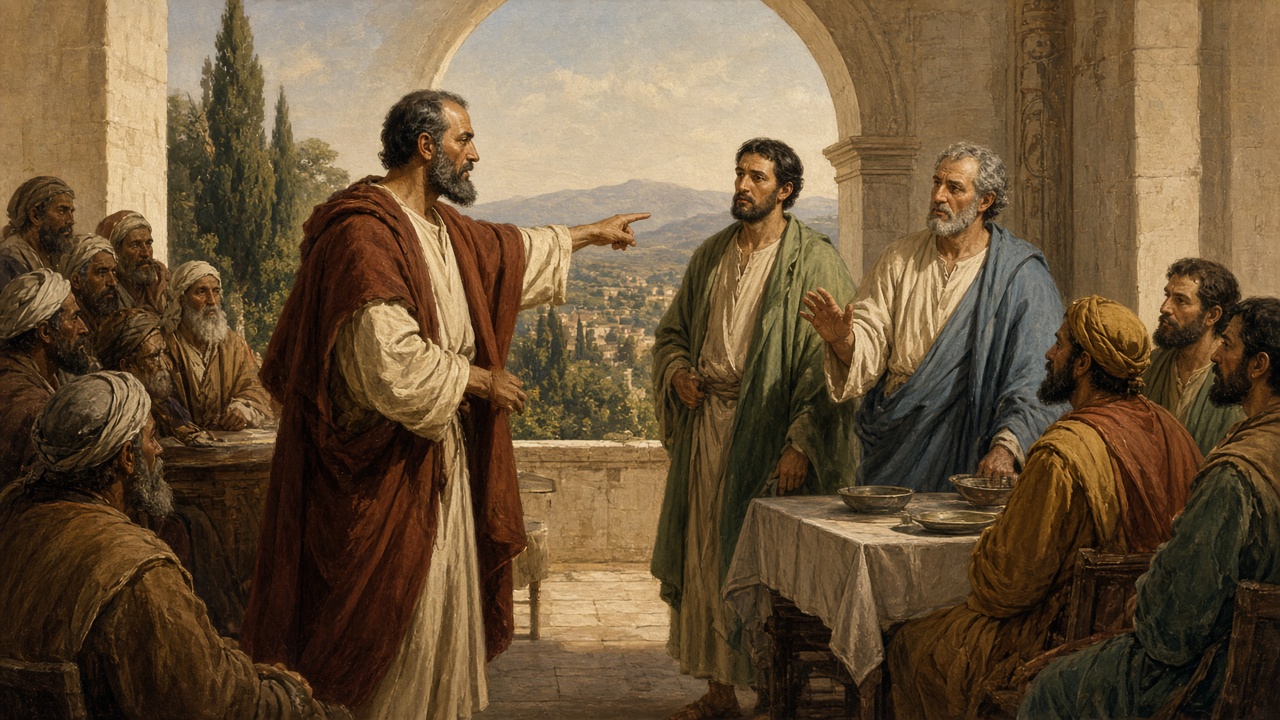
Did you know?
Gentiles, Fellowship, and a Clash at Antioch
- Titus went with Paul and Barnabas to Jerusalem. Easton's Bible Dictionary (1897) says he appears to have been a Gentile and that his name never appears in Acts. Paul writes that Titus, though a Greek, was not compelled to be circumcised.Sources: Titus · the Bible text itself
- The later clash took place at Antioch in Syria, on the Orontes, some three hundred miles north of Jerusalem. The city ranked third among the cities of the Roman Empire, after Rome and Alexandria, and it was there that believers were first called Christians.Sources: Antioch (Syria) · the Bible text itself
- Easton's Bible Dictionary (1897) describes James, named with Cephas and John as one of the pillars, as head of the church at Jerusalem, where he presided at the council on the Gentiles. Paul says that before certain men came from James, Cephas used to eat with the Gentiles, but then drew back for fear of the circumcision group.Sources: James (Brother of Jesus) · the Bible text itself
Notes written with AI assistance from open sources (Theographic Bible Metadata, CC BY-SA 4.0; Easton’s Bible Dictionary, public domain) and reviewed before publishing.
Places in this chapter
- Jerusalem · 31.777, 35.234 · verse 1
- Antioch · Today: Antioch on the Orontes · 36.227, 36.172 · verse 11
Only places identified with high confidence are shown (90% or more according to the scholarly sources compiled by OpenBible). Period map: DARE (Digital Atlas of the Roman Empire), CC BY 4.0; modern map: © OpenStreetMap contributors; places: OpenBible.info (CC BY 4.0).
Credits and license for this translation
Tũpa Ñehengagüer
New Testament in Guarayu (BL:gyr:Guarayu)
copyright © 2011 Wycliffe Bible Translators, Inc.
Language: Guarayu
Translation by: Wycliffe Bible Translators, Inc.
Guarayu [gyr], Bolivia
Copyright Information
© 2011, Wycliffe Bible Translators, Inc. All rights reserved.
This translation text is made available to you under the
terms of the Creative Commons License: Attribution-Noncommercial-No Derivative Works.
( http://creativecommons.org/licenses/by-nc-nd/3.0/ )
In addition, you have permission to port the text to different file formats, as long as you
do not change any of the text or punctuation of the Bible.
You may share, copy, distribute, transmit, and extract portions
or quotations from this work, provided that you include the above copyright
information:
You must give Attribution to the work.
You do not sell this work for a profit.
You do not make any derivative works that change any of the actual words or punctuation of the Scriptures.
Permissions beyond the scope of this license may be
available if you contact
us with your request.
The New Testament
in Guarayu
© 2011, Wycliffe Bible Translators, Inc. All rights reserved.
This translation is made available to you under the terms of the
Creative Commons Attribution-Noncommercial-No Derivatives license 4.0.
You may share and redistribute this Bible translation or extracts from it in any format, provided that:
You include the above copyright and source information.
You do not sell this work for a profit.
You do not change any of the words or punctuation of the Scriptures.
Pictures included with Scriptures and other documents on this site are licensed just for use with those Scriptures and documents.
For other uses, please contact the respective copyright owners.
2014-04-25
Source: http://ebible.org/gyrNT/ · eBible.org