Acts 3
Tũpa Ñehengagüer · Tap a verse to see its cross-references.
Ndoguatai vahe cuerasa
1Ñepei arɨ aipo, caharuse las tres pɨpe, Pedro, Juan reseve oyoya yuvɨraso judío tũparove. Ahe hora pɨpe judío oyeroquɨ yuvɨreco yepi. 2Ahe tũparo roquendɨpɨ rer Porañete. Aheve arɨ yacatu rupi vɨraso ñepei ava oyesu suive ndoguatai vahe ‘tomondo guarepochi ava tũparove yuvɨroique vahe yuvɨreco chupe’ oyapave. 3Ahe ndoguatai vahe omahe Pedro, Juan rese tũparove seique potase, oporandu guarepochi rese chupe. 4Pedro, Juan avei rumo omahengatu yuvɨreco sese. Pedro aipo ehi chupe:
—Emahe ore rese —ehi.
5Evocoiyase ahe mbɨa omahengatu sese ‘omboura revo que mbahe cheu’ oya viña. 6Aipo ehi rumo ndoguatai vahe upe:
—Che ndarecoi guarepochi, oro avei. Co areco vahe rumo amondora ndeu: Jesucristo, Nazaret pendar, rer pɨpe epũha, eguata —ehi chupe.
7Evocoiyase oipɨsɨ ipo yasu cotɨndar imopuha. Ahe ramoseve opa tuprɨ ipɨ, ipɨñuha avei ovɨ̃racua. 8Evocoiyase opũha, opo, oguata; oique oso tũparove supi. Opo-opo vorɨvetesave iyavei osapucai Tũpa upe. 9Opacatu ava osepia yuvɨreco iguatase iyavei Tũpa upe isapucaise. 10Omahecuase sese, “¡Too!” ehi tẽi yuvɨreco. Iyavei ndoyembovɨhai avɨyeteramo tẽi icuerase yuvɨreco. Esepia, evocoi ava oicuapa tũparo roquendɨpɨ Porañete serer vahesave chinise mbahe rese iporanduse yuvɨreco yepi.
Pedro oñehe ava rehɨi upe tũparo Corero Salomón serer vahevrɨve
11Ndoguatai vahecuer ndoyepepɨ potai Pedro, Juan sui. Yuvɨnoña atɨ, oyepɨhamondɨi ava sepia tũparo Corero Salomón serer vaheve yuvɨrecoise. 12Pedro evocoiyase aipo ehi ava upe: “Che mu, ¿mahera vo peyemondɨi? ¿Mahera vo ore repia atɨ peye? Ndoyavɨi co ore pĩratasa pɨpe tẽi iyavei Tũpa rese ore pɨhañemoñeta tuprɨsa pɨpe tẽi orombogüera vahe co mbɨa pẽu viña. 13Tũpa, ahe acoi Abraham, Isaac iyavei Jacob vɨroya yuvɨreco aracahe iyavei opacatu yande ramoi eta avei no, ahe niha omondo güeco pĩratasa tuvicha catu vahe Guahɨr Jesús upe. Pe rumo acoi pemondoño mborerecuar Pilato povrɨve. Acoi omose potase, pe evocoiyase ndapeipotaiño imose ãgua chupe. 14Ahe seco maranehɨ vahe, seco ɨ̃vi vahe renose rãgüer pɨpe, peporandu: ‘Tosẽ oporapichi vahe’ peye. 15Ẽgüe peye acoi tecovesa ombou vahe yuca. Tũpa rumo ombogüerayevɨ omano vahe pãhu sui. Ahe niha ore oromombehu oroico pẽu. 16Co Jesús rer rese yeroya pɨpe ité niha oipɨsɨ pĩratasa co mbɨa ndoguatai vahecuer opacatu pe pesepia vahe iyavei peicua vahe. Jesús rese yeroyasa pɨpe ité niha co pe rembiepiave ocuera tuprɨ” ehi ava upe.
17“Che mu eta, che aicua acoi pe peipɨ̃tɨvɨi vahe pe rerecuar Jesús yuca uca ãgua pe icua tuprɨẽhɨ pɨpe cuese. 18Ẽgüe ehi Tũpa imboavɨye aracahendar opacatu oñehe mombehusar upe güemimombehugüer: ‘Che Rembiporavo Poropɨ̃sɨrosar oiporarara mbahe-mbahe tẽi rasɨcuer omano’ ehi vahe. 19Sese pemboasɨ pe angaipa; peyevɨ Tũpa upe. Ipɨpe sui tomocañɨ pe angaipa pe sui. Avɨyeteramo co sui omboura yande Yar pe reco morohɨsa ãgua, 20ombou aveira Jesús, ahe yɨpɨsuive iporavoprɨ pe pɨ̃sɨro ãgua. 21Cũritei rumo Jesucristo ɨvave vɨte secoi acoi Tũpa opase voi omoingatu opacatu mbahe iyevɨ ãgua. Aipo ehi acoi imoñehe uca aracahendar oñehe mombehusar ndaseco marai vahe. 22Moisés yande ramoi yuvɨrecoi vahe upe aipo ehi imombehu aracahe: ‘Yande Yar Tũpa omopuhara ñepei oñehe mombehusar pe pãhuve che nungar. Ahe iñehe pesendura, pemboyeroya catu aveira. 23Opacatu ndovɨroyai vahe iñehe Tũpa omocañɨra güembiporavo pãhu sui’ ehi.
24“Ẽgüe ehi opacatu Tũpa ñehe mombehusar Samuel suive aracahe omombehu avei co arɨ cũritei yasepia vahe yuvɨreco. 25Pẽu nara niha Tũpa ñehe mombehusar remimombehugüer aracahendar. Pẽu nara avei acoi Tũpa omombehu vahe güemimbotar yande ramoi eta upe. Esepia, aipo ehi Abraham upe aracahe: ‘Opacatu ava co ɨvɨ pɨpendar ahe sovasaprɨ yuvɨrecoira nde suindar sui’ ehi. 26Acoi Tũpa Guahɨr ombogüerayevɨse, pẽu rane ombou pe rovasa ãgua ‘toseyapa ñepei-pei güecocuerai yuvɨreco’ oya” ehi Pedro ava rehɨi upe.
Did you know?
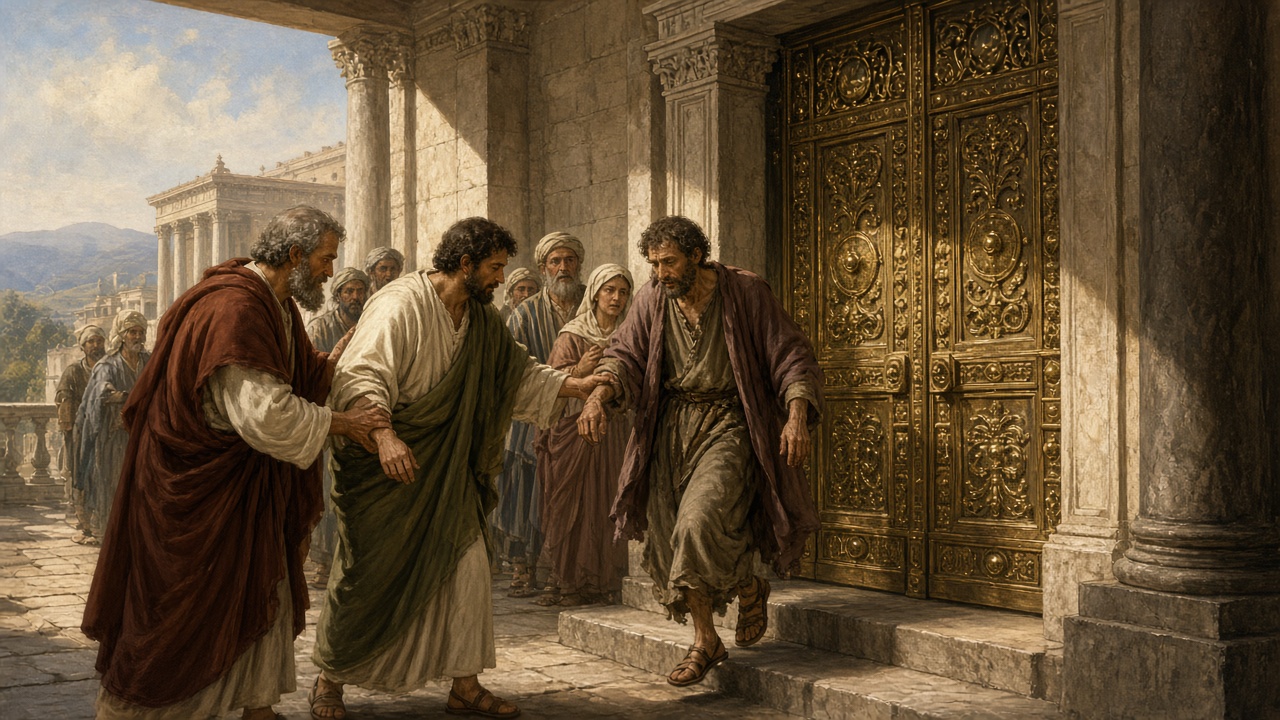
Healing and Preaching at the Temple
- The temple gate called Beautiful, where a man lame from birth was placed each day to beg, is named in this chapter. It is supposed to have been the door from the court of the Gentiles into the court of the women, and it was massive, covered with plates of Corinthian brass.Sources: Beautiful Gate · the Bible text itself
- After the healing, the astonished crowd ran to Peter and John in the walkway called Solomon’s Colonnade. This was a colonnade, or cloister, probably on the eastern side of the temple; it is not mentioned with the first temple, but Josephus mentions a porch of that name in Herod’s temple.Sources: Solomon's Portico · the Bible text itself
- In his address there, Peter said the people had handed Jesus over and rejected him before Pilate, although Pilate had decided to release him. A dictionary entry identifies Pontius Pilate as the sixth Roman procurator of Judea, from A.D. 26 to 36, with headquarters at Caesarea, though he frequently went up to Jerusalem; his name comes into prominent notice in connection with the trial of Jesus.Sources: Pontius Pilate · the Bible text itself
Notes written with AI assistance from open sources (Theographic Bible Metadata, CC BY-SA 4.0; Easton’s Bible Dictionary, public domain) and reviewed before publishing.
Places in this chapter
- Beautiful Gate · Today: in Jerusalem · 31.777, 35.234 · verses 2, 10
- Nazareth · 32.702, 35.298 · verse 6
- Solomon’s Portico · Today: in Jerusalem · 31.777, 35.234 · verse 11
Only places identified with high confidence are shown (90% or more according to the scholarly sources compiled by OpenBible). Period map: DARE (Digital Atlas of the Roman Empire), CC BY 4.0; modern map: © OpenStreetMap contributors; places: OpenBible.info (CC BY 4.0).
Credits and license for this translation
Tũpa Ñehengagüer
New Testament in Guarayu (BL:gyr:Guarayu)
copyright © 2011 Wycliffe Bible Translators, Inc.
Language: Guarayu
Translation by: Wycliffe Bible Translators, Inc.
Guarayu [gyr], Bolivia
Copyright Information
© 2011, Wycliffe Bible Translators, Inc. All rights reserved.
This translation text is made available to you under the
terms of the Creative Commons License: Attribution-Noncommercial-No Derivative Works.
( http://creativecommons.org/licenses/by-nc-nd/3.0/ )
In addition, you have permission to port the text to different file formats, as long as you
do not change any of the text or punctuation of the Bible.
You may share, copy, distribute, transmit, and extract portions
or quotations from this work, provided that you include the above copyright
information:
You must give Attribution to the work.
You do not sell this work for a profit.
You do not make any derivative works that change any of the actual words or punctuation of the Scriptures.
Permissions beyond the scope of this license may be
available if you contact
us with your request.
The New Testament
in Guarayu
© 2011, Wycliffe Bible Translators, Inc. All rights reserved.
This translation is made available to you under the terms of the
Creative Commons Attribution-Noncommercial-No Derivatives license 4.0.
You may share and redistribute this Bible translation or extracts from it in any format, provided that:
You include the above copyright and source information.
You do not sell this work for a profit.
You do not change any of the words or punctuation of the Scriptures.
Pictures included with Scriptures and other documents on this site are licensed just for use with those Scriptures and documents.
For other uses, please contact the respective copyright owners.
2014-04-25
Source: http://ebible.org/gyrNT/ · eBible.org