Ruth 1
Buki Kimaasabaina · Tap a verse to see its cross-references.
About this book
About Ruth
- The events are set in the days of the judges. A great famine led Elimelech, a man of the tribe of Judah and a kinsman of Boaz, to leave Bethlehem with his wife Naomi and their sons Mahlon and Chilion and settle in Moab, east of the Jordan and the Dead Sea. There Elimelech and both sons died.Sources: Elimelech · Moab · Mahlon · Chilion
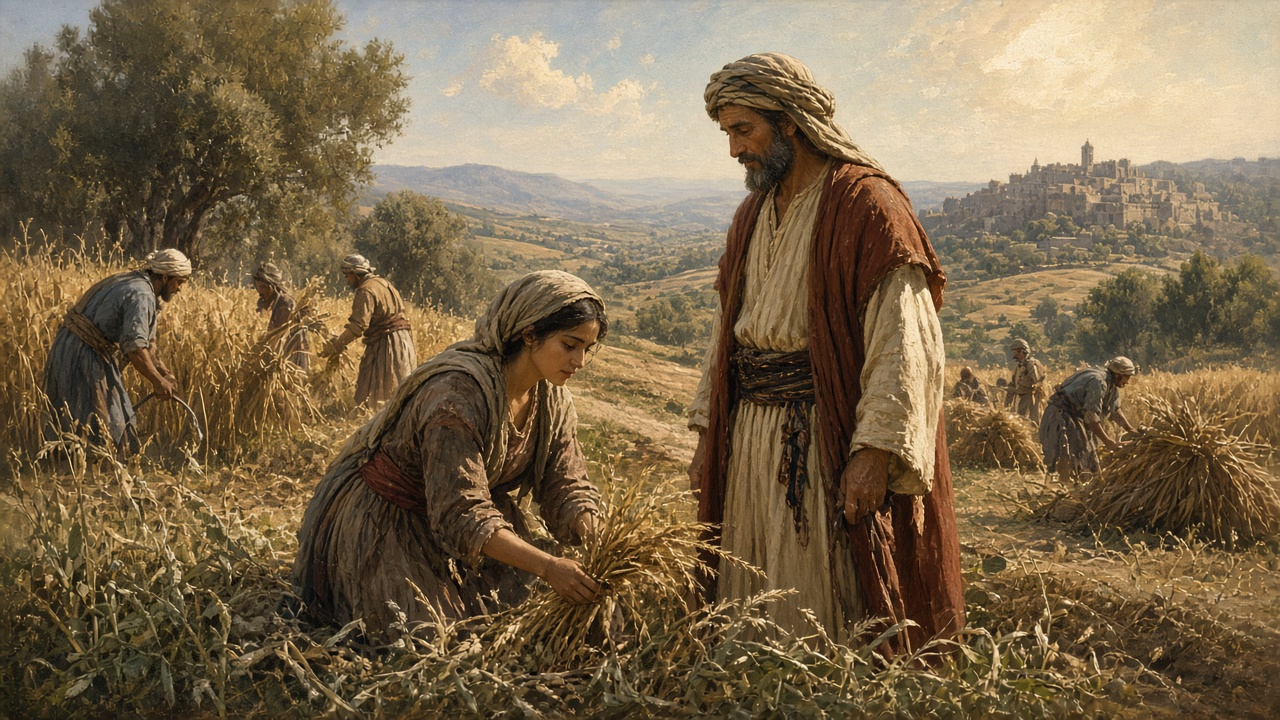
- Naomi then returned to Bethlehem with Ruth, a Moabite and the widow of Mahlon, who refused to leave her. Orpah, Chilion's widow, accompanied Naomi part of the way and then returned to Moab. In the valley east of the town, Ruth gleaned in the fields and was eventually married to Boaz, a wealthy relative.Sources: Easton: Ruth · Orpah · Bethlehem · Boaz
- Easton's Bible Dictionary (1897) says the story of the gleaner Ruth illustrates friendly relations between Boaz and his reapers, the land system, the way property was transferred, and the working of the Mosaic law for the relief of ruined families. By the levirate law, Boaz, a kinsman of Mahlon, took on the duty of marrying Ruth.Sources: Easton: Ruth · Boaz
- Ruth became the mother of Obed, the grandfather of David. The genealogy in Ruth 4:18-22 traces that line, and Matthew 1:5 includes Ruth, a Gentile, among the ancestors of Jesus. Easton also compares her with Tamar and Rahab, who likewise became ancestors of David.Sources: Easton: Ruth · Obed · Ruth
- Bethlehem, in the hill country of Judah, was originally called Ephrath; Ruth 1:2 calls it Bethlehem-Judah and its people Ephrathites. Easton's Bible Dictionary (1897) explains Ruth as meaning a friend, and Naomi as bitter or sad, a symbolic name she gave herself because of her misfortunes.Sources: Bethlehem · Ephrathah · Ruth · Naomi
Notes written with AI assistance from open sources (Theographic Bible Metadata, CC BY-SA 4.0; Easton’s Bible Dictionary, public domain) and reviewed before publishing.
Naomi ina kaiyakomou tetelina
Naomi monena be natunao Moabe goi sikámasa tetelina
1E koroto tayamo yoina Elimeleka go, monena Naomi taiyao Bedeliyema goi sikaaiyaka. Bedeliyemayana moe Yuda dadavina sinaena. Ma natuudiyao koroto adi taiyuwo; tayamo yoina Maloni, tayamo yoina Kiliyoni go, adi nunu yoina Eparati.
E tutayana Isileli idi totaligavayao siilovina, Isileli sinaena loga gagaina isowóduwo losiye pasina. Tuwo Elimeleka monena natunao adi taiyuwo taiyao sitáoya, sina asa Moabe goi sikaaiyaka. 3Sikaaiyaka aaa, Naomi monena Elimelekayana ikámasa. Tuwo Naomi natunao adi taiyuwo taiyao aditava sikaaiyaka. 4Sikaaiyaka, natunaoyadi Moabe vevinaidi sinaidi, tayamo yoina Opa, tayamo yoina Ruti. Amoko goi sikaaiyaka tala ana badabada yawou 5go, Maloni be Kiliyoni adi taiyuwokova nakae sikámasa. Tuwo Naomi monena be natunao bogina sikámasa, tauna anetava ikaaiyaka.
Ruti ina kasala ivagiitakoe Naomi yaina tetelina
6E Naomi livala tayamo inove bego Yauwe ina bodao Yuda goi ivaaitedi; adi máliya bogina ivinidi. Tauna yaonao adi taiyuwo taiyao sitáoya, sikatubayasi bego Moabe sikalave go, sikaluvila sina Yuda. 7Sikatubayasi ikavava, asayana sikaaiyaka goi sikalave go, siketoiya bego sina Yuda. 8Sinonoina go, Naomi idigo kana,
‘Yaogowo, kokaluvilāmna kōna sinamiyao taiyao kokaaiyāka. Guna kawanoi bego Yauwe ilokatemi nakae komi bogina kolokategu be nakae boi natugowo kolokatedi. 9Aiyuwoina, guna kawanoi bego Yauwe itagona konaimna bei monemiyao taiyao kokaaiyaka imi vada.’
Tuwo, tauyana iyowoiidi go, kidi sitáiya. 10Sitáiya, sidigo kadi,
‘Yaoma, geya latuwoma kakalavem. Latuwoma bego kakitaum bei taiyao tana im bodayao yaidi.’
11E kina go Naomiyana idigo kana,
‘Yaogowo, kokaluvilāmna kōna imi kasa. ¿Kaga pasina latuwomi kokitaugu? Yau geya itoboineguta bei avaitemi. Nakae geya itoboineguta bei natugowo koroto avenatunidi bei monemiyao. 12Tuwo, kokaluvīla kōna imi kasa. Yau bogina akainamoya, tauna geya itoboineguta anaimna. ¿Go neta sabamgo ame yau koroto tayamo bei anai, taiyao kamasisi akéuwama be natugowo koroto avenatunidi, 13manakae? ¿Bei kotuyaosidi, e sibíbina gagaidi baige konaidi? ¿Bei nai kototo? Geya, yaogowo, geya itoboinemita. Yaubada bogina itugavilegu, tauna moumou ivakaigaga yaigu namliyeta komi. Bogina koyagoi. Komi itoboinemi konaimna go, yau geya.’
14E tuwo ina livala sinove, sitaiyamna. E Opa yaona iyowoi ikavava, ikaluvila ina ina kasa go, kina Ruti yaona imatakanikaniye, e ivalabilabine. 15E tuwo, Naomi idigo kana,
‘Kunōve. Tuwowom ikaluvilamna ina ina bodao be ina basaleliuyao yaidi. E kom taiyao kokaluvīla.’
16Go kina Rutiyana idigo kana,
‘Taabu kukaawanōi yau yaigu bego akalavem, go sem neta kutagonegu bei akitaum.
Nako goi kuna,
yau taiyao tana.
Nako goi kwaaiyaka,
yau taiyao takaaiyaka.
Im bodao moe kita ida bodao.
Im Yaubada moe kita ida Yaubada.
17Nako goi kukámasa,
yau taiyao takámasa,
e moeko goi bei sivaliwogegu.
Bei ámasa tauna ikupoida go,
geya, bei Yauwe liuna gagaina ivinigu.’
18E Ruti ibóbwara ikavava, Naomi bogina iyagoi bego Ruti latuwona toina taiyao sina. Tauna itugau. 19E tuwo adi taiyuwokova siketoiya sinonoina Bedeliyema manuna.
Naomi ikaluvilamna ina Bedeliyema tetelina
19Tutayana sisowóduwo Bedeliyema goi sisiu, asa butukaona iyata, e vevina liliudi sima adi taiyuwokova sigitedi, sidigo kadi,
‘¡Iyaa! ¿Amo Naomi ae?’
20Go kina Naomiyana idigo kana,
‘Tokalika ikitaitaiyegu, tauna taabu koduuduwēgu Naomi, go sem koduduwēgu Mara. 21Boi akalavemi maa konagu go, ame tutayana Yauwe ikaluvilemneigu nima kaka. ¿Kaga ana dedevina koduduwegu Naomi? Geya. Yauwe Tokalika itugavilegu be nakae ikitaitaiyegu.’
22Tauna nakae Naomi Moabe goi itáoya yaona Ruti guma Moabe taiyao sina Bedeliyema. Ego tutayana sisowóduwo Bedeliyema goi, moe bali ana tuta dibayoya ana kaba vatowo. Bali kutukutuna tolobudi sipodi goi|src="lb00102b.tif" size="col" ref="1:22"
Did you know?
Naomi and Ruth Return to Bethlehem
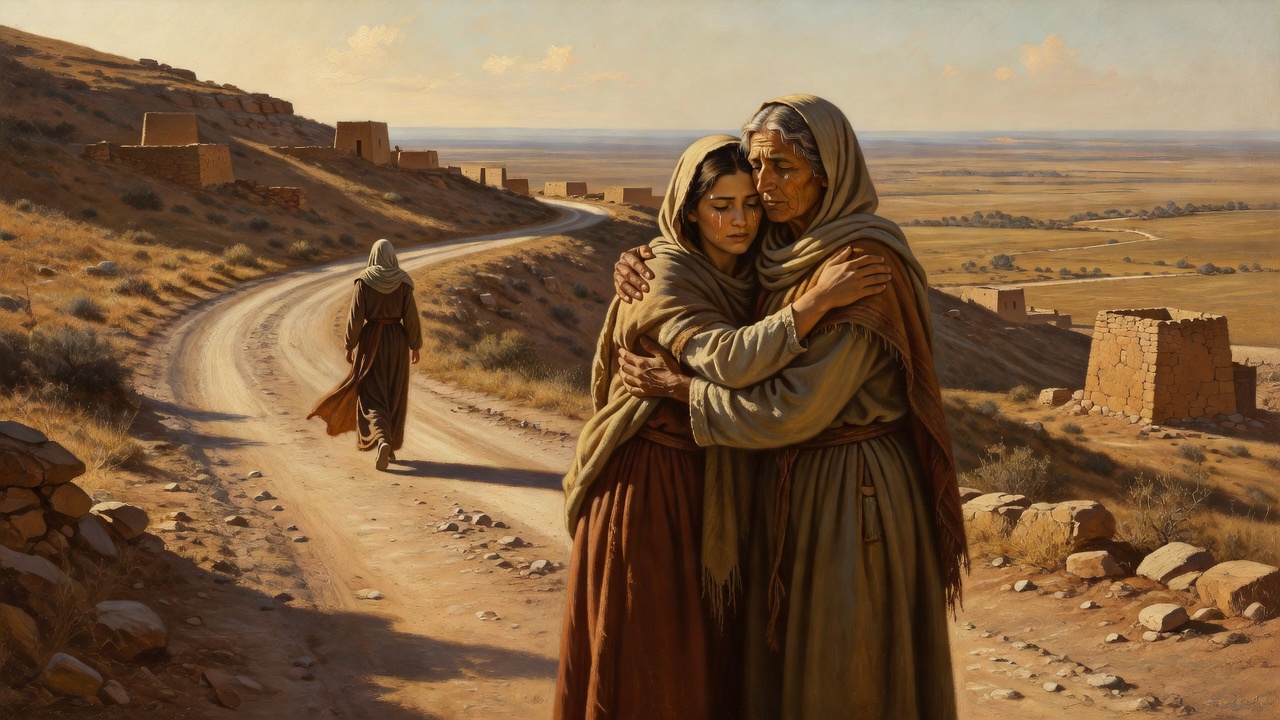
- In the days when the judges ruled, famine forced Elimelech and his family from Bethlehem in the hill country of Judah to migrate to the land of Moab, east of the Dead Sea. After the deaths of Elimelech and her two sons, Naomi decided to return to Bethlehem when she heard that food was once again available in Judah.Sources: the Bible text itself · Bethlehem · Moab · Elimelech
- While Orpah returned to her people and gods in Moab, Ruth clung to her mother-in-law and pledged loyalty to Naomi and her God. Ruth, a Moabite woman, traveled to Bethlehem and would later become an ancestor of King David.Sources: the Bible text itself · Ruth · Orpah
- Upon arriving in Bethlehem at the beginning of the barley harvest, Naomi asked the women of the city to call her Mara, meaning bitter, because she felt the Almighty had dealt bitterly with her. She had departed full with a husband and two sons, but returned empty after their deaths.Sources: the Bible text itself · Naomi
Notes written with AI assistance from open sources (Theographic Bible Metadata, CC BY-SA 4.0; Easton’s Bible Dictionary, public domain) and reviewed before publishing.
Places in this chapter
- Bethlehem · 31.704, 35.208 · verses 1, 2, 19, 22
- Moab · Today: Moab 1 · 31.181, 35.701 · verses 1, 2, 4, 6, 22
Only places identified with high confidence are shown (90% or more according to the scholarly sources compiled by OpenBible). Period map: DARE (Digital Atlas of the Roman Empire), CC BY 4.0; modern map: © OpenStreetMap contributors; places: OpenBible.info (CC BY 4.0).
Credits and license for this translation
Buki Kimaasabaina
The New Testament and part of the Old Testament of the Holy Bible in the Gumawana language of Papua New Guinea
Buk Baibel long tokples Gumawana long Niugini
copyright © 2019 Wycliffe Bible Translators, Inc.
Language: Gumawana
This translation is made available to you under the terms of the
Creative Commons Attribution-Noncommercial-No Derivatives license 4.0.
You may share and redistribute this Bible translation or extracts from it in any format, provided that:
You include the above copyright and source information.
You do not sell this work for a profit.
You do not change any of the words or punctuation of the Scriptures.
Pictures included with Scriptures and other documents on this site are licensed just for use with those Scriptures and documents.
For other uses, please contact the respective copyright owners.
2026-10-02
Source: http://png.bible/gvs/ · eBible.org