Genesis 44
Buki Kimaasabaina · Tap a verse to see its cross-references.
Iyosepa tuwowonao ikatuubaudi tetelina
1Tuwo sikáika ikavava, e Iyosepa ina vada ana tovakumgo ilatuwoko idigo kana,
‘Ame tauyadi idi baiki witi goi kuvakayaodēidi nakonakae idi ase itoboinedi sikavaledi. Ikavava, koroto tamo tamo idi mani nakae idi baiki tobudi goi kuvadodoimnēidi. 2Moe ikavava, guna vedi kukābi. Vediyana moe siriba kukābi go, bogomane ina baiki goi kudodōi ina mani taiyao.’
Tuwo iguinuwe nakae Iyosepa idige.
3Simasisi vanuwo itomo, konadi idi ase goi sikailagasidi, e sivaduduwedi sina. 4E kidi asa goi sisowóduwo siiketoiya ivatabaledi go, kina Iyosepa itáoya ina vada ana tovakumgo ilatuwoko kana,
‘Woilīm kutāoya, kūna amo korotoyadi kosabokuliyēdi. Tutayana kusakavatedi, kulatuwokōidi kam,
“Manakae? Bego ima guinuwa dedevina goyo goi kokatumapu? 5Kaga unana guna tomoya ina vedi kovainao? Vediyana moe aba kinana, tauna moe vediyana goi itoboine itokokósala. Moe imi guinuwayana, guinuwa goyogoyoina toina.” ’
6E tuwo tovakumgoyana itáoya, woilina ina. Tutayana isakavatedi, e ilatuwokoidi nakae ina tomoya idige. 7Go kidi silawoiwoi sidigo kadi,
‘Ima tomoya, kaga unana nakae kudige? Iyagoida! Kai im pakonayao nakae geya kaguinuweyeta. 8Kunōve! Boi Kenani goi maniyadi kagitebaabanedi ima baiki sinaedi goi bogina kakaluvilemneidi. Tauna manakae? Bego im tomoya ina goura o ina siriba kavainaoidi? Geya! 9Ava koroto yaima goi neta im tomoya ina vedi ivainao, e itoboine ikámasa go, madabokima im pakonayao nakae.’
10Go kina tovakumgoyana kana,
‘Kobóbwara moitamo. Tovaináwana itoboine ina liuna ibabane go, ina liunayana ame nakae: Avatau vediyana ivainao, tauyana anetava bei yau guna pákwana go, madabokimi tutubeso, e itoboinemi kona.’
11Tuwo koroto tamo tamo idi baiki sikaisobuyedi, sikatupaevedi. 12E tovakumgoyana baiki tamo tamo goi ilusala go, ina lusalayana adi bíbina goi ame nakae: Botomoya ina baiki goi ivatowo go, bonauyayana tamo tamo idi baiki goi ilusala. Ame ikavava, bogomane ina baiki goi ilusala. Ilusala, moitamo vediyana Beniyamina ina baiki goi ibabane. 13Tuwo vediyana sigite, nuwodi imou gagaina, tuwo adi kwama giyaina sikiisedi. Sikiisedi ikavava, madabokidi konadi sikatubayasidi, idi ase yatana goi sikailagasidi, e sikaluvilamna sina Iyosepa ina kasa goi.
14E tutayana Yuda ma senao sima Iyosepa ina vada, tauyana nava ikaaiyaka vada sinaena. Tuwo sisiu Iyosepayana matana goi aedi sivatugúyala. 15E tauyana idigo kana,
‘Ame kaga koguinuwe yaigu! Manakae? Geya koyagoiyeta bego yau itoboinegu atokokósala, tauna itoboinegu akinane vediyana nako ina?’
16E kina Yuda idigo kana,
‘Ima tomoya, manakaema kabóbwara? Manakaema kavatulukoim bego kai geya tayaamo goyo kaguinuwe? Geya ae? Ima goyo Yaubada bogina ikaiwoduwe. Ame tutayana kai im pakonayao nakae, madabokima nakae korotoyana im vedi ivainao.’
17Go kina Iyosepayana idigo kana,
‘Moe nakae geya! Tovaináwana anetava bei guna pákwana. Komi madabokimi sem mami dedevina kokaluvīla kōna tamami yaina.’
18Go kina Yuda idigo kana,
‘Guna tomoya, yau im pákwana kutagonēgu giyaina abóbwara. Kom Pero kovavasa nakae go, tuwo taabu kuegamogamooguyēgu. 19Guna tomoya, boi kai im pakonayao kulumadadema kam,
“Komi ma tamami be nakae mami gómana?”
20Tuwo kai kama,
“U, tamama ikaaiyaka, bogina ikaitomoya go, ama gómana tayamo amoni tamama taiyao sikaaiyaka. Ago gomanayana tuwowona toina bogina ikámasa, tauna sinana natuna tayamo toito ikaaiyaka go, gomanayana tamama ina kakaya.”
21E kom kam,
“Kotūko kōna gomanayana kokābi kosōuye kōme agite.”
22Go kai kama,
“Gomanayana geya itoboineyeta tamama ikalave, govila bei tamama mana nuwomou ikámasa.”
23Go kom kudigo kam,
“Neta gomanayana geya kosouye komeyeta, e geya tuwaina bei kogitegu bego ami witi kogimona.”
24Tuwo kai kakaluvila kana tamama goi kaga liliuna kulatuuwokoima tamama kalatuwoko. 25E niga tamama idigo kana,
“Natugowo, kokaluvīla kōna ada witi tuwaina kogimōna, e kōma.”
26Go kai kadigo kama,
“Geya itoboinemeta kasou kana, go sem neta kutagona bego ama gómana taiyao kana, bei kasou kana. Neta gomanayana taiyao geya, korotoyana bei geya igitemeta bego ada witi kagimona.”
27E tuwo tamagu im pákwana idigo kana,
“Komi bogina koyagoi bego monegu natugowo adi taiyuwo ivenatunidi. 28Tayamo bogina ikalavegu, kagu, ‘Moitamo nakona woiwoi sikayapesapesagii.’ Tuwo geya tuwaina bei maisina agite. 29Tauna neta natugu konavenave kenao goi ivailai, e komi guna nuwomou koyato, tauna magu nuwomou ana kadókana akámasa asou Saola goi.”
30E tauna neta gomanayana ameko kakalave go, ametava kakaluvila kana tamama yaina, e tutayana igite natuna geya kai taiyao geya, bei ikámasa. Bogina kuyagoi. Gomanayana moe ina kakaya. Moeko goi ina nuwomou bogina kayato, tauna bei mana nuwomou ana kadókana ikámasa isou Saola goi. 32Moe moitamo. Boi tamagu yaina akatótula bei gomanayana arugwausi. Tauyana alatuwoko kagu,
“Neta ama gomanayana geya akaluvileyeta, moe bei yau guna puwoya yawoigu ana madabokina goi.”
33E tauna guna tomoya, kutagōna bego yau akaaiyaka im pákwana nakae go, guna gomanayana ikaluvilamna tuwowonao taiyao. 34Moitamo. Manakaegu bei akaluvila ana tamagu yaina neta gomanayana geya taiyao? Geya. Yau geya anoita, govila bei tamagu ina kategeda agite.’
Did you know?
The Hidden Cup and Judah's Plea
- Judah, Jacob's fourth son by Leah, speaks for the brothers and offers to remain as a slave in the boy's place so that Benjamin may return with his brothers. Easton's Bible Dictionary (1897) notes that Judah had earlier intervened to spare Joseph's life, and that he took the lead in the family's affairs, including in the appeal recorded in this chapter.Sources: Judah (patriarch) · the Bible text itself
- Benjamin was the younger of Jacob's two sons by Rachel; she died giving birth to him and called him Ben-oni, "son of my pain," before his father named him Benjamin. The brothers tell Joseph that the boy is the only son of his mother still living, and that their father believes the other was torn to pieces. They say this to Joseph himself—Rachel's elder son, loved by Jacob as the child of his old age—while still speaking to him as a lord equal to Pharaoh.Sources: Benjamin (patriarch) · Joseph (son of Jacob) · the Bible text itself
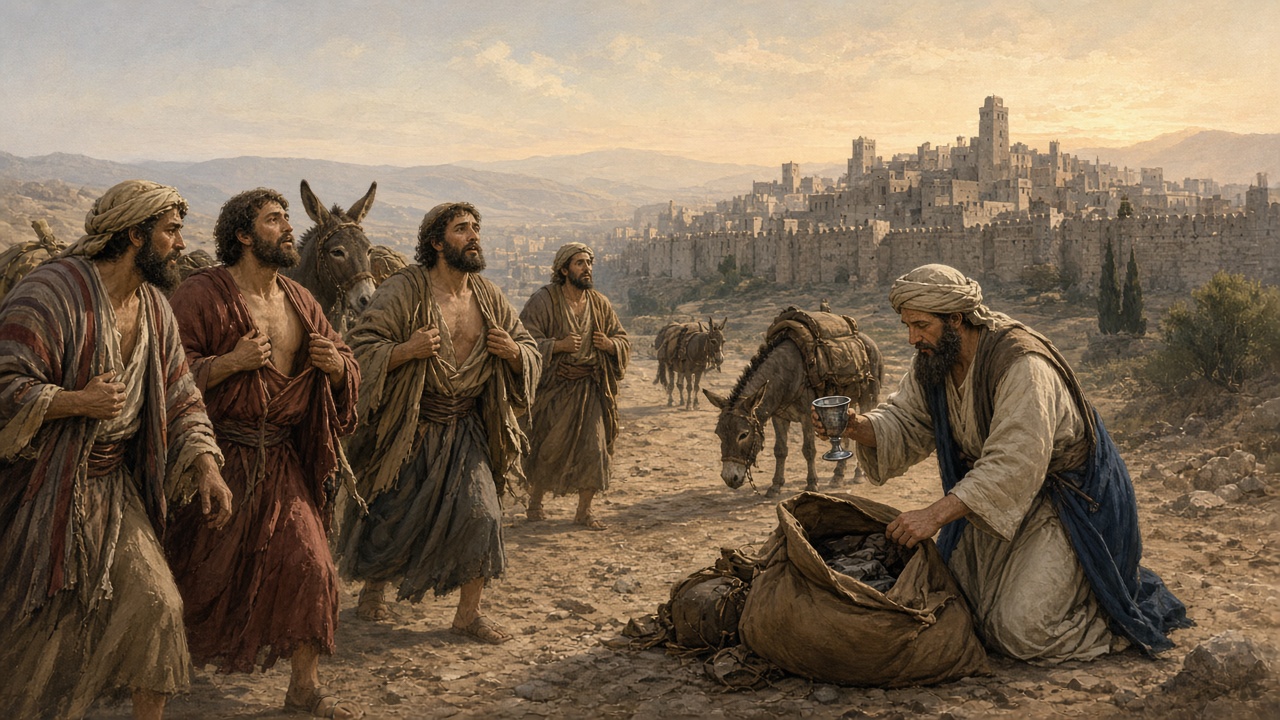
- On Joseph's orders, the steward hid Joseph's silver cup—the cup he drank from and used for divination—in Benjamin's sack, along with the silver paid for the grain. When it was found, the brothers tore their clothes and returned to the city. Joseph then asked whether they did not know that a man like him could divine the truth, although the narrative shows that he had arranged for the cup to be found.Sources: the Bible text itself
Notes written with AI assistance from open sources (Theographic Bible Metadata, CC BY-SA 4.0; Easton’s Bible Dictionary, public domain) and reviewed before publishing.
Places in this chapter
- Canaan · 32.767, 35.333 · verse 8
Only places identified with high confidence are shown (90% or more according to the scholarly sources compiled by OpenBible). Period map: DARE (Digital Atlas of the Roman Empire), CC BY 4.0; modern map: © OpenStreetMap contributors; places: OpenBible.info (CC BY 4.0).
Credits and license for this translation
Buki Kimaasabaina
The New Testament and part of the Old Testament of the Holy Bible in the Gumawana language of Papua New Guinea
Buk Baibel long tokples Gumawana long Niugini
copyright © 2019 Wycliffe Bible Translators, Inc.
Language: Gumawana
This translation is made available to you under the terms of the
Creative Commons Attribution-Noncommercial-No Derivatives license 4.0.
You may share and redistribute this Bible translation or extracts from it in any format, provided that:
You include the above copyright and source information.
You do not sell this work for a profit.
You do not change any of the words or punctuation of the Scriptures.
Pictures included with Scriptures and other documents on this site are licensed just for use with those Scriptures and documents.
For other uses, please contact the respective copyright owners.
2026-10-02
Source: http://png.bible/gvs/ · eBible.org