Genesis 25
Buki Kimaasabaina · Tap a verse to see its cross-references.
Eberamo ina kámasa tetelina
1E Eberamo inaimna, monena yoina Ketura. 2Keturayana goi Eberamo natunao koroto ame nakae: Simirani, Iyokisani, Medani, Midiyani, Isibaki be Suwaka. 3Iyokisaniyana natunao koroto adi taiyuwo, tayamo yoina Siba, tayamo yoina Dedani. Dedaniyana tubunao adi bodao yoidi ame nakae: Asuri, Letusi be nakae Leuma. 4Midiyaniyana natunao koroto Epa, Eperi, Enoki, Abida be Elideya. Ame tauna Ketura natunao be tubunao.
5E Eberamo ina lotówana ilotowo, e konana madabokina natuna Aisake ivini. 6Ego Eberamo moneyuwoinao natudiyao nakae konadi ivinidi go, ivalilivedi sina aduwanau bomatu dadavina. Geya latuwona Aisake taiyao sikaaiyaka.
7E Eberamo yawoina ana madabokina moe tala ana badabada tayamo andedi seventipaibi (175). 8Tauyana bogina ikaitomoya toina, e yawoina ikavava, namliyeta ina tamana be tubunao yaidi goi. Yawoina maanawena be nakae ina kaiyaka madabokina dedevina. 9Yawoina ikavava, tuwo natunao adi taiyuwo, moe Aisake be Isimaeli, tamadi wowona sikabi, sinave Makipela goi go, valiwoga tukubu sinaena goi sivaliwoge. Makipelayana ikaaiyaka asa Mamre go, bomatu dadavina goi boi Epironi ina poyapoya sinaena. Epironiyana tamana Sokara, tauyana tubuna moe Eta. 10Eta tubunaoyadi yaidi goi boi poyapoya Eberamo igimone. Amoko goi monena Sera ivaliwoge go, Eberamo nakae sivaliwoge. 11E ina kámasa mlina, natuna Aisake Bera Lakai Roi goi ilokasa ikaaiyaka go, ina kaiyakayana goi kina Yaubada ikaipakuye.
Isimaeli mana bodao adi liliu
12Ame Eberamo natuna Isimaeli mana bodao adi liliu: Sera ina pákwana Ega guma Itipita go, kina Egayana Eberamo natuna Isimaeli ivenatuni.
13Isimaeliyana natunao koroto adi bíbina goi ame nakae: Botomoya yoina Nibayote. Bonauyayana yoidi Kedari, Adebaeli, Mibisam, 14Misema, Duma, Mase, 15Kadadi, Tema, Yetura be Napisi. Bogomane yoina Kedema. 16Ame taudi Isimaeli natunao yawou aiyuwo sietolovina idi bodao yaidi goi. Ame yoidiyadi moe idi bodaoyadi tamo tamo adi dala yawou aiyuwo yoidi nakae. Aiyuwoina tubudiyao idi kasa yoidi nakae. 17Isimaeli yawoina ana madabokina moe tala ana badabada 137 ibabane, e yawoina ikavava namliyeta ina tamana be tubunao yaidi goi. 18E tauyadi natunao be tubunao silokasa Abila be Sura nauyayanaidi goi, moe Itipita idi túwana kikina neta kunonoina bego Asiriya. Ago Isimaeli natunao Aisake natunao sivakaleyedi.
Aisake mana bodao tetelidi
Yakobo be Iso adi bíbina tetelidi
19E ame Eberamo natuna Aisake mana bodao tetelidi. 20E tutayana Aisake ana tala poti, Ribeka inai. Ribekayana tamana yoina Betuweli guma Aram, ina kasa Padani Aram. Niuna yoina Lebani.
21E Ribeka ikágala, tauna Aisake ikawanoi Yauwe yaina bego natuna ivini. Tuwo Yauwe inove, e Ribekayana ikéuwama. 22Ikéuwama go, gamona goi gogómana lalavi sivadidídina, tuwo Ribekayana ina nuwonúwana kana,
‘¿Kaga unana ame isowóduwo yau yaigu?’
Tuwo Yauwe inoko vaita manuna; latuwona bego iyagoi. 23E Yauweyana idigo kana,
‘Gamom goi boda aiyuwo sikaaiyaka go,
bodayadi idi bíbina goi bei silivisi.
Boda tayamo bei sitogaga,
nakae sediyao bei sitogagasavedi.
Bogomane bei ietolovina botomoya yaina goi.’
24Tuwo moitamo Ribeka ina tuta ibabane, e gamona goi lalavi koroto sikaaiyaka. 25Ina venatunayana goi gómana igimibíbina okayakaya go, wowona unuunu kaka, tauna sivayou Iso. 26Ego tutayana Iso isowóduwo, siyana ivámliya ibisibala tuwowona aegedugeduna iyoisi, tauna sivayou Yakobo. E Aisake ana tala siksti (60) tutayana Ribeka natunao ivenatunidi.
27E gogomanayadi bogina sibíbina gagaidi. Iso togivakauko; aitowo nuwona ikabi. E kina go Yakobo ituli; tauyana koroto sakuululuna nakae tuwowoonuwaina, tauna tuta liliuna yoyou parai goi ikaaiyaka. 28Aisake yoguyogu woiwoi ana tokáika, tauna natuna Iso imatakoiye. E kina go Ribeka natuna Yakobo imatakoiye.
Yakobo tuwowona Iso ina lovina ikabi tetelina
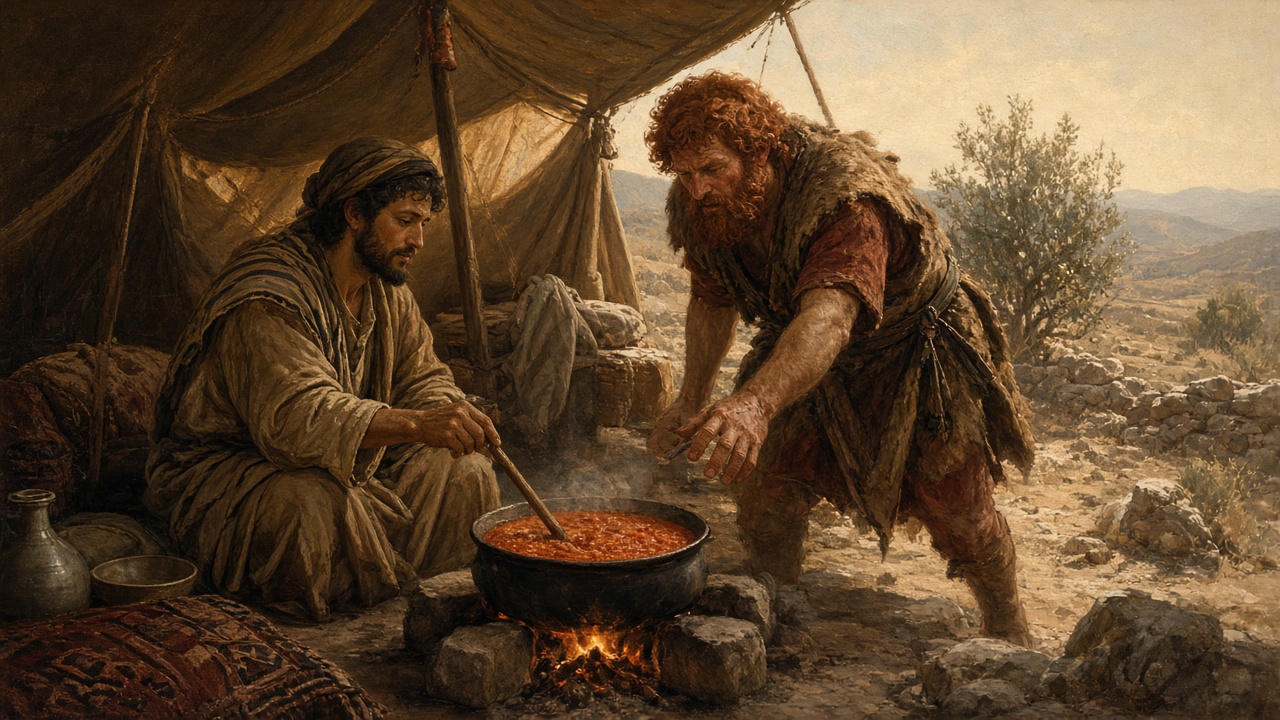
29E sikaaiyaka, tuta tayamo Yakobo bini kayakayaidi ivaaipoludi go, tuwowona Iso vakauko goi ima, e loga ikámasa toina. 30Siyana Yakobo igite ivaaipolu, tuwo ilatuwoko idigo kana,
‘¡Loga akámasa! Tauna siyagu, am bini kayakayaidi giyaina kuvinīgu akáika.’
Moe pasina Iso youyuwoina moe Idom. 31Go kina Yakoboyana idigo kana,
‘Tatalamāpu. Mainao kom botomoya im lovina kuvinīgu namliyeta biniyadi avinim.’
32Isoyana idigo kana,
‘¡Loga akámasa go! ¿Guna lovina kaga ana dedevina neta yau akámasa?’
33Go Yakoboyana idigo kana,
‘Ame tuta Yaubada matana goi kukatōtula bei im lovina kuvinigu.’
Tauna Iso ikatótula idigo kana,
‘Yaubada matana goi kom botomoya nakae mam lovina.’ Yakobo tuwowona Iso bini ivini|src="C019psgr.tif" size="col" ref="25:29-33"
34Ikatótula ikavava, Yakobo beredi be nakae bini ikabidi, tuwowona ivini. Tuwo Isoyana ikáika be inim. Ikáika ikavava, itáoya ina.
Tauna Iso ina lovina áika goi italamapuye. Tuwo lovinayana ikibesobesoe.
Did you know?
Abraham’s heirs and the twin brothers
- Keturah, whose name Easton's Bible Dictionary (1897) explains as “incense,” is introduced here as another wife of Abraham. That dictionary says he probably married her after Sarah’s death, though her nationality is unknown, and notes that 1 Chronicles calls her a concubine. She bore him six sons, including Jokshan and Midian, the father of the Midianites; while Abraham was still alive he gave gifts to the sons of his concubines and sent them away from Isaac to the land of the east.Sources: Keturah · Midian · the Bible text itself
- Isaac and Ishmael together buried Abraham in the cave of Machpelah near Mamre, in the field Abraham had bought from Ephron the Hittite, where Sarah already lay. Easton's Bible Dictionary (1897) explains Machpelah as “portion” or “double cave,” set on a hillside east of Hebron and facing Mamre, a place called the oaks—or, in a margin, the terebinths—of Mamre.Sources: Machpelah · Mamre · the Bible text itself
- Esau, Rebekah’s firstborn twin, was born red and covered with hair like a fur coat. Easton's Bible Dictionary (1897) links the further name Edom, “red,” to the red lentil stew for which he sold his birthright, and explains Jacob as “one who follows on another’s heels” or “supplanter,” matching the report that Jacob was born grasping Esau’s heel. Esau grew up as a skillful hunter and a man of the field, while Jacob was a quiet man who stayed at home.Sources: Esau (Edom) · Jacob (Israel) · the Bible text itself
Notes written with AI assistance from open sources (Theographic Bible Metadata, CC BY-SA 4.0; Easton’s Bible Dictionary, public domain) and reviewed before publishing.
Places in this chapter
- East · Today: region around Amman · 31.955, 35.934 · verse 6
- Machpelah · Today: Cave of the Patriarchs · 31.525, 35.111 · verse 9
- Negeb · 31.245, 34.841 · verse 11
- Assyria · 36.359, 43.153 · verse 18
- Egypt · 30.129, 31.308 · verse 18
Only places identified with high confidence are shown (90% or more according to the scholarly sources compiled by OpenBible). Period map: DARE (Digital Atlas of the Roman Empire), CC BY 4.0; modern map: © OpenStreetMap contributors; places: OpenBible.info (CC BY 4.0).
Credits and license for this translation
Buki Kimaasabaina
The New Testament and part of the Old Testament of the Holy Bible in the Gumawana language of Papua New Guinea
Buk Baibel long tokples Gumawana long Niugini
copyright © 2019 Wycliffe Bible Translators, Inc.
Language: Gumawana
This translation is made available to you under the terms of the
Creative Commons Attribution-Noncommercial-No Derivatives license 4.0.
You may share and redistribute this Bible translation or extracts from it in any format, provided that:
You include the above copyright and source information.
You do not sell this work for a profit.
You do not change any of the words or punctuation of the Scriptures.
Pictures included with Scriptures and other documents on this site are licensed just for use with those Scriptures and documents.
For other uses, please contact the respective copyright owners.
2026-10-02
Source: http://png.bible/gvs/ · eBible.org