Genesis 21
Buki Kimaasabaina · Tap a verse to see its cross-references.
Aisake ina bíbina tetelina
1Tuwo sikaaiyaka, sikaaiyaka, Yauwe ina Sera yaina goi iguinuwe nakae boi ikatotule, tauna Serayana boi ikágala go, bogina itoboine ikéuwama. 2Tuwo ikéuwama go, Eberamo bogina ikaitomoya, e natuna koroto kina Sera ivenatuni. Ago natudiyana ina bíbina ana tuta nakae Yaubada boi ikatotule. 3Natudiyana kina Sera iveenatuni, e Eberamo ivayou Aisake. 4Niga Aisakeyana ana maliyalina ainima aitonina ibabane, e kina Eberamoyana natuna ikabi, sakavaina ikupo nakae Yaubada boi ilovina. 5Ego Eberamoyana bogina ikaitomoya nakae ana tala 100 tutayana natuna Aisake ibíbina. 6E gomanayana ina bíbina mlina Sera idigo kana,
‘Yaubada gómana ivinigu, tauna auyáwana be avanama. Avatauwa neta livala ame sinove, e nakae bei sivanama yau taiyao.’
7Kana,
‘Geya vatau tayaamo inuwonúwana bego itoboinegu Eberamo natuna avenatuni. Tauyana bogina ikaitomoya go, tuwo natuna avenatuni.’
Eberamo Ega ma natuna // Isimaeli ivaliilivedi tetelina
8E gomanayana ibíbina gagaina, sinana ikatusase. Tuwo amo tutayana Eberamo áika gagaina iguinuwe. 9Ago Sera ikandobala Ega guma Itipita natuna Isimaeli igite Aisakeyana ikaiwotete. Tuwo Serayana gamona igoyo, 10e ina Eberamo ilatuwoko idigo kana,
‘Amo pakoninayana maa natuna kuvatapiyēdi sina. Pakoninayana natuna konam bei geya ikabidita tutayana kukámasa, go sem konamyadi madabokidi natugu Aisake anetava bei ikabidi.’
11Go livalayana Eberamo inove, atena igeda unana Isimaeli nakae natuna. 12Go kina Yaubada idigo kana,
‘Eberamo, atem taabu igedagēda natum be im pákwana pasidi. Guna katótula tubumowo manudi Aisake goi bei imalatomota. Aiyuwoina kina Isimaeliyana natum, tauna bei akisaili, e bei tubunao boda tayamo gagaina. Tauna kaga liliuna Sera ilatuwokoim kuguinuwēdi, e sopana kwabikaōne be kuguinuwēdi.’
14E tuwo vanuwo itomo nobuyana giyaina Eberamo itáoya, bwae giyaina itege be nakae awoinu ikabi, Ega ivini ivabe. E natuna taiyao ivaduduwedi kana,
‘E kōna ae.’
Tuwo tauyadi sina Bera Siva yoyowoina goi siketoiya beso. 15E siiketoiya go, bwae sinimnim, sinimsave. Sinimsave, gómana maena isayasaya, itáiya. Tuwo sinana ikabi, alova nugonina goi iyato, iwaiwasi. 16Ago kina sinanayana ibala ina masigava tupwana aduwanau itusobu, nakae itaitáiya. Ina nuwonúwana kana,
‘Bwae ikavava, tauna natugu bei ikámasa. Geya latuwogu gómana matagu goi go, ivailai.’ Ega natuna Isimaeli maena isayasaya, tuwo sinana itáiya|src="CO00659B.TIF" size="col" ref="21:15-16"
17Ago gomanayana ina táiya Yaubada inove, tuwo ina anerose yábana goi itumasobu idigo kana,
‘¿Ega, kaga kutaiyae? Taabu kuumatōita. Gomanayana amoko goi iitusobu ina táiya Yaubada bogina inove. 18¡Kutāoya! Kūna gomanayana kuvatāoe be kukipaiwōle. Tauyana bei akisaili tubunao boda tayamo gagaina.’
19Yaubada ibóbwara ikavava, vavinayana nuwona isanayato, e ikandobala doelu igite. Tuwo ibala ina bwae itege, gomanayana ivanim.
20E tuwo gomanayana ibibíbina go, kina Yaubada ivakitau. Parani yoyowoina goi ikaaiyaka, e tauyana sau ana togipalu. 21Yoyowoyana goi sikaaiyaka, sinana inuwonúwana kana,
‘Vavina tayamo guma Itipita akabi, natugu monena.’
Tuwo vavina tayamo ikabi ime, natunayana monena.
Abimeleka be Eberamo siikatótula tetelina
22E amo tutayana da Garara adi tolovina Abimeleka ina tovayaviyayao adi tovakumgo yoina Pikoli taiyao sina Eberamo silatuwoko sidigo kadi,
‘Eberamo, im guinuwa liliudi goi Yaubada ivakitaum bogina kagite. 23Tauna ame tuta Yaubada matana goi kukatōtula yaima bego geya kuguinuwa goyogoyo yaima, yau be nakae natugowo be tubugowo, go sem kom ogaoga ameko goi go, nakonakae bogina alokatem, e nakae guna lokateyana kulolāse yau yaigu be nakae ida kanasíuna kuyoisikavāte.’
24Eberamoyana idigo kana,
‘Yaubada matana goi bogina akatótula. Kaga liliuna kuudigedi nakae bei aguinuwedi.’
25Eberamoyana itagona go, Abimeleka ikamatanako kana,
‘Go im pakonayao guna doelu situugagale. ¿Go bei kaga kuguinuwe?’
26Go kina Abimelekayana idigo kana,
‘Geya ayagoiyeta avatauwa nakae siguinuwe. Go boi geya kulatuwokoiguta. Moe livalayana makaitaga anove.’
27Tuwo Eberamo ina sipi be ina bulumakau ikabidi, Abimelekayana ivini, e adi taiyuwo sikanasíuna. 28Ego Eberamoyana lami bovavina ana badabada ainima aiyuwo ikabidi, ivatumasabedi aditava goi. 29Go Abimelekayana igitedi, idigo kana,
‘¿Ame kaga ana lami kuvatumasabedi aditava goi?’
30Eberamoyana idigo kana,
‘Ame lamiyadi kukabīdi, e moe ada kiyakiyaya bego doeluyana yau atavi, tauna yau guna kaba lovina.’
31Ame pasina asayana ivayou Bera Siva unana amoko goi adi taiyuwo sikatótula, tauna yoina Berasiva.
32E Bera Siva goi sikanasíuna ikavava, Abimelekayana be nakae ina tokalikumatana Pikoli sitáoya, sikaluvila sina da Palisiti idi kasa. 33Ago kina Eberamoyana Bera Siva goi alova tayamo ibaguli, alovayana yoina tamarisika. E amoko goi Yauwe Yaubada aiyako vaatayaina yaina Eberamo isaakululu. 34E Eberamoyana tuta maanawena da Palisiti idi kasa goi isuvadavada.
Did you know?
Isaac’s birth, Hagar’s departure, and Beersheba
- Abraham was a hundred years old when Sarah bore him Isaac, their only son together, and he circumcised the child at eight days old, as God had commanded. Sarah said that God had made her laugh, and that everyone who heard of this would laugh with her. Easton's Bible Dictionary (1897) notes that a great feast was held when Isaac was weaned, probably when he was about two years old.Sources: the Bible text itself · Isaac
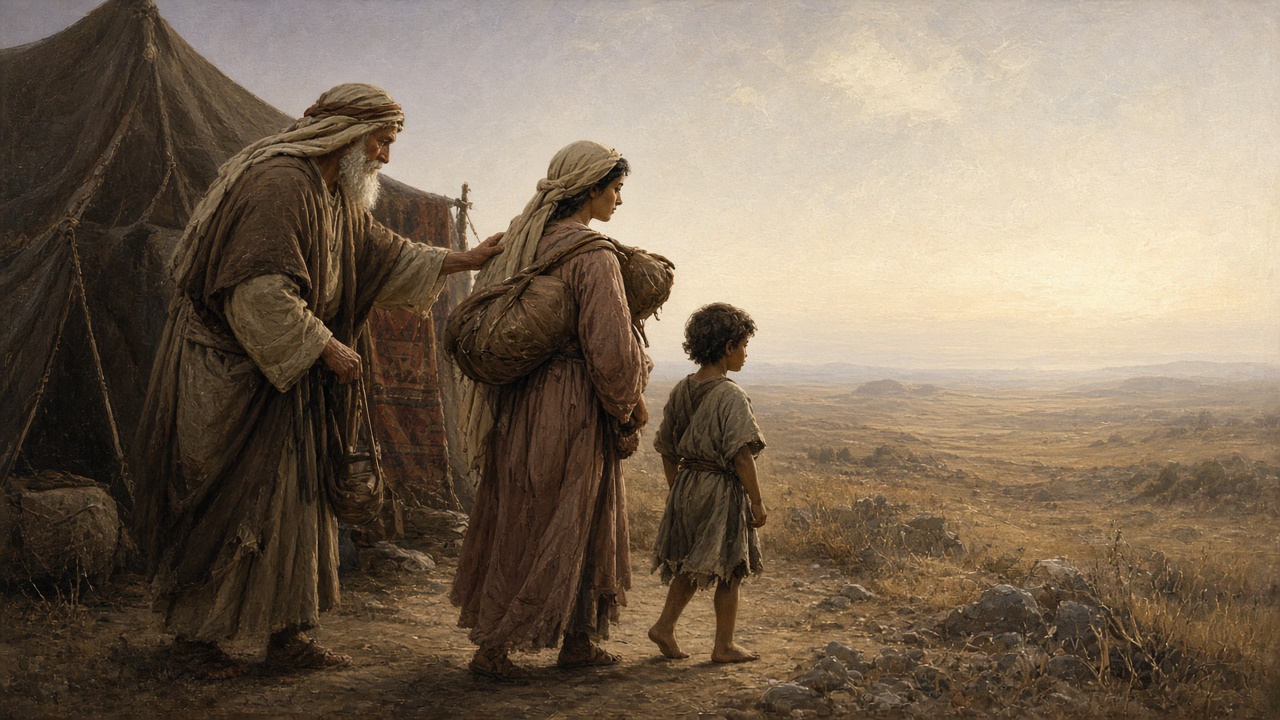
- Hagar, whose name is explained as “flight” or, according to others, “stranger,” was an Egyptian and Sarah’s handmaid, whom Sarah gave to Abraham as a secondary wife. After Isaac’s birth, Abraham sent Hagar and their son Ishmael into the Wilderness of Beersheba with bread and a skin of water. Ishmael later settled in the Wilderness of Paran, a desert tract in the northeastern Sinai Peninsula between the Arabah on the east and the wilderness of Shur on the west, became a great archer, and his mother got him a wife from Egypt.Sources: the Bible text itself · Hagar · Paran
- Beersheba, “well of the oath” or “well of seven,” was named when Abraham and Abimelech swore an oath there over a well that Abraham said he had dug; he set apart seven ewe lambs as a witness, and the two made a covenant. Phicol, chief captain of the army of Abimelech, the Philistine king of Gerar, entered that alliance with Abraham. Abraham then planted a tamarisk at Beersheba and lived for a long time in the land of the Philistines.Sources: the Bible text itself · Beersheba · Phichol
Notes written with AI assistance from open sources (Theographic Bible Metadata, CC BY-SA 4.0; Easton’s Bible Dictionary, public domain) and reviewed before publishing.
Places in this chapter
Only places identified with high confidence are shown (90% or more according to the scholarly sources compiled by OpenBible). Period map: DARE (Digital Atlas of the Roman Empire), CC BY 4.0; modern map: © OpenStreetMap contributors; places: OpenBible.info (CC BY 4.0).
Credits and license for this translation
Buki Kimaasabaina
The New Testament and part of the Old Testament of the Holy Bible in the Gumawana language of Papua New Guinea
Buk Baibel long tokples Gumawana long Niugini
copyright © 2019 Wycliffe Bible Translators, Inc.
Language: Gumawana
This translation is made available to you under the terms of the
Creative Commons Attribution-Noncommercial-No Derivatives license 4.0.
You may share and redistribute this Bible translation or extracts from it in any format, provided that:
You include the above copyright and source information.
You do not sell this work for a profit.
You do not change any of the words or punctuation of the Scriptures.
Pictures included with Scriptures and other documents on this site are licensed just for use with those Scriptures and documents.
For other uses, please contact the respective copyright owners.
2026-10-02
Source: http://png.bible/gvs/ · eBible.org