Exodus 13
Buki Kimaasabaina · Tap a verse to see its cross-references.
Vatulúkwana botomoya ana kasala manuna
1E Yauwe ilatuwokoigu idigo kana,
2‘Botomoya koroto liliudi kukimasabēdi yau umagu. Tomota idi botomoyayao liliudi be yoguyogu idi botomoyayao liliudi moe yau guna kaba lovina.’
3E ana tomotayadi alatuwokoidi adigo kagu,
‘Maliyalina ame tanuwokavāte. Ame Itipita goi tasowóduwo. Boi komi da Itipita idi pakonayao go, ame ataligeimi. Moitamo. Yauwe ina togaga goi ikabida Itipita goi imeda. Ame maliyalinayana goi beredi mana isti taabu takakāika. 4Ame tuta tukówana Abib goi Itipita bei takalave.
5E Yauwe bei inaveda kidi Kenani tubunao, Eta tubunao, Emori tubunao, Ivai tubunao be nakae Iyebusi tubunao idi poyapoya goi. Boi tubudao yaidi Yauwe ikatotule bego ivinidi. Poyapoyayana maaliina be lobooinina. E tutayana inaveda tana poyapoyayana goi, tala tamo tamo tukówana ame Abib goi ame tapwaroro ana sinapuyana taguuinūwe. 6Sinapuyana ame nakae: Maliyalina ana badabada ainima aiyuwo goi beredi pokaka takakāika go, maliyalina ainima aiyuwoina goi uyáwana aikanina taodūgu Yauwe yaina. 7Beredi pokaka maliyalina ainima aiyuwo goi takakāika. Taabu beredi mana isti yaida goi ikaaiyāka, e nakae ida kaba lovina goi isti geya. 8Amo tutayana natudao koroto talatuwokoidi kada,
“Ame sinapuyana takabikaone unana boi Yauwe ina vaita goi kai Itipita goi kasowóduwo.”
9Ame sinapuyana aba kinana tayamo o aba nuwokavata tayamo yaida nimada goi o dabada goi tasiko bego Yauwe ina Katukeda sopada goi ikaaiyaka. Aba nuwokavatayana pasina Yauwe nimana toogagaina goi ikabida be Itipita goi imeda bei konuwokavāte. 10Tauna tala tamo tamo ame lovinayana takabikaonevatāe.
11E Yauwe bei inaveda Kenani tubunao idi poyapoya goi nakae boi ikatótula kita be nakae tubudao yaida. Tutayana poyapoyayana ivinida, 12ida botomoyayao koroto liliudi be nakae ida yoguyoguyao idi botomoyayao bolamo liliudi bei takimasabēdi Yauwe umana. Botomoyayadi moe Yauwe ina kaba lovina. 13E ida ase adi botomoyayao bolamo lami ana kasala goi tatatetēdi go, neta geya tatatetedita, e nukotodi takiguyalīdi. Go ida botomoyayao koroto, e liliudi tatatetēdi. 14E tutayana natudao silumadadeda kadi, “Moe sinapuyana kaga ana yagoina?” e kita kada,
“Boi Itipita goi kai da Itipita idi pakonayao go, Yauwe ina togaga gagaina goi ikabima, Itipita goi imema. 15E boi Itipita goi Pero dabana ikasa, tauna geya italigeimeta bei kasowóduwo, tauna Yauwe ima da Itipita idi botomoyayao koroto be yoguyogu bolamo ikaumatedi. Moe pasina kita ida yoguyoguyao bolamo liliudi takasaledi Yauwe yaina go, ida botomoyayao koroto tatatetedi.”
16Ame aba kinana yaida nimada o dabada goi tasikosiko bego tanuwokavate Yauwe manakaena nimana toogagaina goi ikabida, Itipita goi imeda.’
Isileli tubunao adi yava tetelina
Isileli tubunao sinonoina Kalavaitou Negosina goi tetelina
17E tutayana tomotayama kina Pero italigeima, e Yaubada ivakedema kana go, geya da Palisiti idi kenao goi geya. Ame yomana go, ina nuwonúwana kana,
‘Govila bei yaviya sibabane, e simatoita. Novala bei nuwodi sikatuvilavila go, sikaluvila sina Itipita.’
18Tuwo ivakedema kana enao yoyowo goi kavanibisi kana Kalavaitou Negosina goi. E mama katubayasi yaviya manuna Itipita goi kasowóduwo katukotuko. 19E yau ana Iyosepa luluna akabi anave. Boi Iyosepa Isileli natunao ilatuwokoidi kana,
‘Moitamo Yaubada bei iwo ivaitemi go, ame tuta kokatōtula yaigu bego tutayana Yaubada ikabimi, e lulugu kokabidi konavedi Kenani goi kovaliwogedi.’
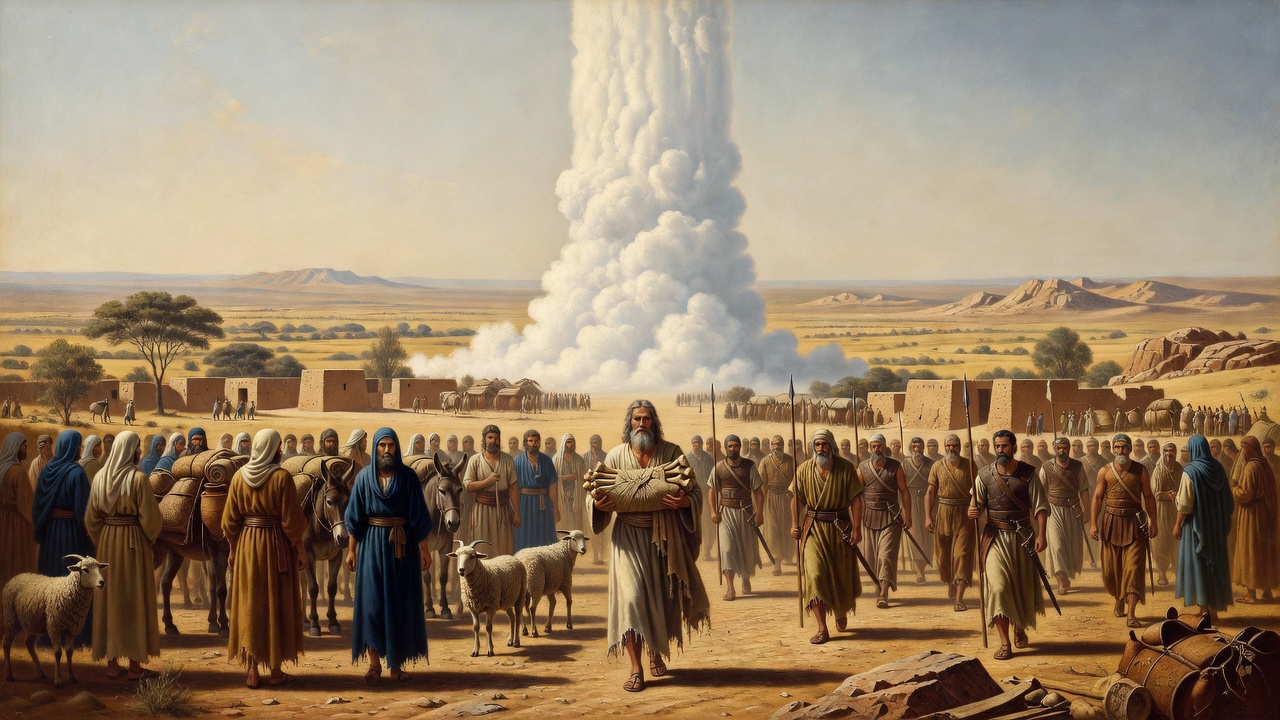
20E tuwo Sukota goi katáoya, kana Etam goi katunagu. Moe yoyowo kikina. 21E kina go Yauweyana ivakumgooiyema enao ivakedema. Maliyalina goi Tauyana gaota taaoyaina sinaena ivakedema. Go sabamgo goi Tauyana yeu sabeninimina taaoyaina sinaena ivakedema bei imavadema, e bei itoboinema maliyalina be sabamgo kaaketoiya. 22Gaota taoyainayana maliyalina goi, e yeu taoyainayana sabamgo goi, aiyuwokova geya sikalavemeta. Maliyalina goi Yaubada gaota taaoyaina sinaena Isileli tubunao ivaakededi|src="CO00814B.TIF" size="col" ref="13:17-22"
Did you know?
The Firstborn and the Departure from Egypt
- God did not lead them by the shorter road through the land of the Philistines, lest war make them return to Egypt, but by the wilderness toward the Red Sea, which separates Asia from Africa. They set out from Succoth, the first encampment after leaving Ramesses and also the civil name of Pithom, and made their third camp at Etham, on the edge of the wilderness. Etham is perhaps another name for Khetam, or “fortress,” on the wall of Shur, which ran from the Mediterranean to the Gulf of Suez, and the camp was probably a little west of modern Ismailia.Sources: the Bible text itself · Succoth · Etham · Red Sea
- Moses took the bones of Joseph with him, because Joseph had made the sons of Israel swear that, when God attended to them, they must carry his bones from that place. Joseph was the elder of the two sons of Jacob by Rachel.Sources: the Bible text itself · Joseph (son of Jacob)
- The LORD told Moses to consecrate every firstborn male; the firstborn from every womb among the Israelites, both of people and of animals, belonged to him. Every firstborn donkey was to be redeemed with a lamb, or else have its neck broken, and every firstborn son was to be redeemed. When a son asked what this meant, he was to be told that Pharaoh had stubbornly refused to let them go, so the LORD killed every firstborn in Egypt, of people and of animals, and brought them out of the house of slavery.Sources: the Bible text itself
Notes written with AI assistance from open sources (Theographic Bible Metadata, CC BY-SA 4.0; Easton’s Bible Dictionary, public domain) and reviewed before publishing.
Places in this chapter
Only places identified with high confidence are shown (90% or more according to the scholarly sources compiled by OpenBible). Period map: DARE (Digital Atlas of the Roman Empire), CC BY 4.0; modern map: © OpenStreetMap contributors; places: OpenBible.info (CC BY 4.0).
Credits and license for this translation
Buki Kimaasabaina
The New Testament and part of the Old Testament of the Holy Bible in the Gumawana language of Papua New Guinea
Buk Baibel long tokples Gumawana long Niugini
copyright © 2019 Wycliffe Bible Translators, Inc.
Language: Gumawana
This translation is made available to you under the terms of the
Creative Commons Attribution-Noncommercial-No Derivatives license 4.0.
You may share and redistribute this Bible translation or extracts from it in any format, provided that:
You include the above copyright and source information.
You do not sell this work for a profit.
You do not change any of the words or punctuation of the Scriptures.
Pictures included with Scriptures and other documents on this site are licensed just for use with those Scriptures and documents.
For other uses, please contact the respective copyright owners.
2026-10-02
Source: http://png.bible/gvs/ · eBible.org