Revelation 7
Bible Gourmantche · Tap a verse to see its cross-references.
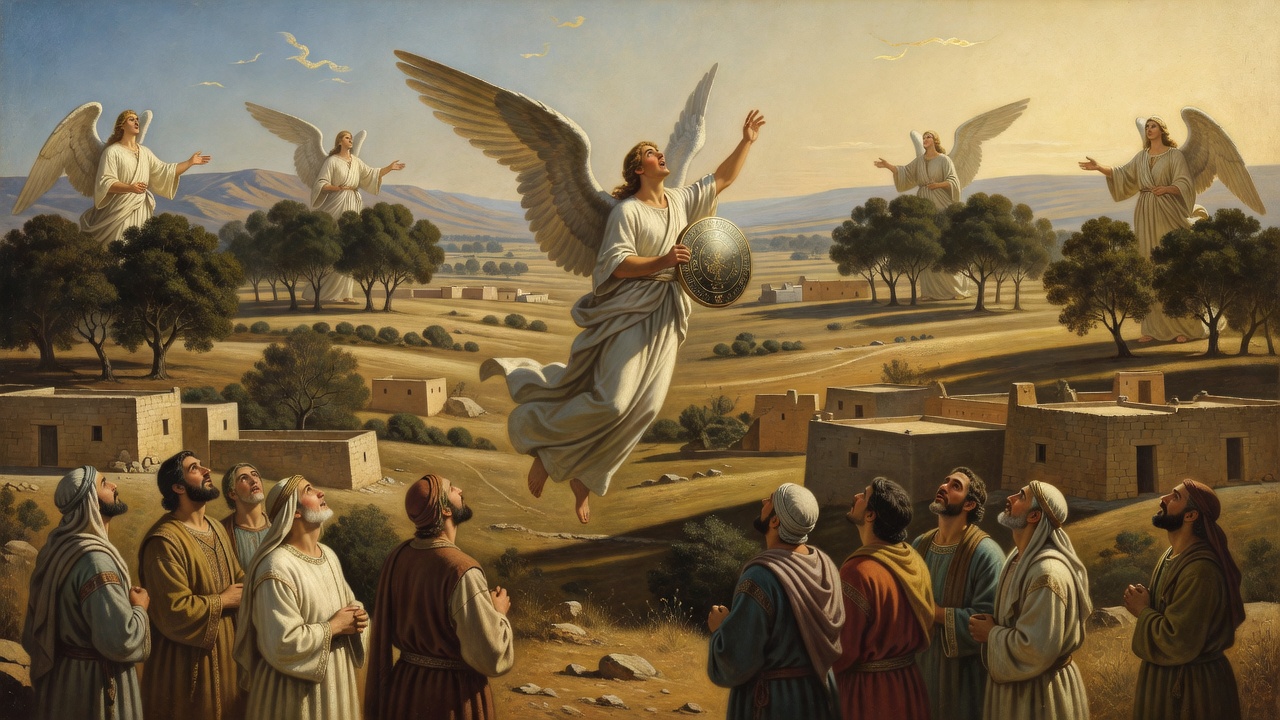
1Lani ń pendi, ke i la ke malekinba bina se i tinkunnaadi kani, ki cuo ki tinga faama ki kubi, ke mi kan fidi ki figi ki tinga po, mi ñincianma po, bii i tiidi po. 2N den la maleki tiano, ke o ñani puoli, ki kubi U Tienu yua n fo tanpɔn. Ke o tandi yeni u paalu, ki maadi yeni malekinba bina yaaba ke bi puni u sanu ke ban waani ki tinga yeni mi ñincianma fala, ki yedi ba: 3“Dá da waani mani ki tinga, mi ñincianma yeni i tiidi fala hali mi ba tieni tanpɔn maalma U Tienu tuonsɔnla yutuna po.” 4N den gbadi ban den tieni tanpɔn maalma yaaba ya yutuna po cɔli ń dɔa maama: Israyeli nibuoli kuli niba kobga n piina n tuda na (144.000) n den baa tanpɔn maalma: 5niba piiga n tude lie (12.000) den ñani Juda buolu nni, ki baa li maalma piiga n tude lie (12.000) den ñani Rubeni buolu nni, piiga n tude lie den ñani Gaadi buolu nni, 6piiga n tude lie den ñani Aseri buolu nni, piiga n tude lie den ñani Nefitali buolu nni, piiga n tude lie den ñani Manase buolu nni, 7piiga n tude lie den ñani Simeyɔn buolu nni, piiga n tude lie den ñani Lefi buolu nni, piiga n tude lie den ñani Isakaari buolu nni, 8piiga n tude lie den ñani Sabulɔn buolu nni, piiga n tude lie den ñani Josefi buolu nni, piiga n tude lie den ñani Benjamini buolu nni, bani n den baa tanpɔn maalma bi yutuna po. 9Lanya bona ń pendi, ya niwulgu ke bi kan fidi ki cɔdi bi niba ń dɔa maama - bi den ñani ŋanduna diema nni kuli, i dogi kuli, nibuoli kuli yeni maalanbuoli - Ki se ti badigbandi kani, ki pebiga nintuali. Bi den laá liadfagdipiena, ki kubi ti biadi bi nui nni, 10ki tandi yeni u paalu ki tua, “Mi faabma tie U Tienu yua n kaa ti badigbandi po yeni ki pebiga yaama i!” 11Malekinba kuli den se ki lindi ti badigbandi yeni bi nikpelba yeni a bonfuodnaada, bi den baa ki labni ti badigbandi nintuali, ki pugi U Tienu, 12ki tua, “Ami! Ti Tienu n die ti kpiagdi, ti yudandi, mi yanfuoma, balga, li seli, u paaciamu yeni u fidu hali ya yogu n ki pia gbenma! Ami!” 13Bi nikpelba yeni siiga, yendo den buali nni, “Bile n laá a liadpiena ne, bi ñani le i?” 14Ke n jiini o, “Canbáa fini wani nan bani.” Ke o maadi nni, “Bi tie yaaba n ñani falaciamo janjanma nni. Bi ŋuudi bi tialakaadi ke ti péndi ki pebiga sɔma nni i. 15Lanyapo i ke bi bi seé U tienu badigbandi kani, ki pugi o yienu yeni ñiagu kuli o diegu nni. Yua n kaa ti badigbandi po ba caani o badciagu, ki kuani ba ku niinni. 16Koma ji kan cuo ba ki buali ñuñuunu. U yienu kan sia ba ki buali wulgu bakuli. 17Kelima ki pebiga yua n ye ti badigbandi sinsiiga nni baa tie bi gobdika, o baa gobdi ba li miali ñinbunli kani, U Tienu ba fiadi bi ninsiidi, ki yendi bi nunga.”
Did you know?
The sealed tribes and the great multitude
- Revelation 7 numbers the sealed as 144,000, twelve thousand from each of the tribes of Israel named in the chapter. Israel was another name for Jacob, the second-born of the twin sons of Isaac and Rebekah; Easton's Bible Dictionary (1897) explains Jacob's name as someone who follows on another's heels, or a supplanter.Sources: the Bible text itself · Jacob (Israel)
- Although Reuben was the eldest son of Jacob and Leah, the list of the sealed begins with Judah and then names Reuben. The list also includes both Joseph and Manasseh; Manasseh was Joseph's elder son, and Jacob adopted him and his brother Ephraim as his own sons.Sources: the Bible text itself · Reuben · Manasseh (son of Joseph)
- After the sealing, the vision shows a multitude too large to count, from every nation, tribe, people, and tongue, standing before the throne and the Lamb, wearing white robes and holding palm branches. One of the elders says they have come out of the great tribulation and have washed their robes and made them white in the blood of the Lamb.Sources: the Bible text itself
Notes written with AI assistance from open sources (Theographic Bible Metadata, CC BY-SA 4.0; Easton’s Bible Dictionary, public domain) and reviewed before publishing.
Credits and license for this translation
Bible Gourmantche
The New Testament in the Gourmantche language of Togo
Le Nouveau Testament en langue Gourmantche du Togo
copyright © 2020 Door 43 world-wide mission community
Language: Gourmantche (Gourmanchéma)
Dialect: Gormantche
Translation by: Door 43 world-wide mission community
Contributor: Andrew Rice, Gourmantche, Gux, Parfait, Parfait-Ayanou
This translation is made available to you under the terms of the
Creative Commons Attribution Share-Alike license 4.0.
You have permission to share and redistribute this Bible translation in any format and to make reasonable revisions and adaptations of this translation, provided that:
You include the above copyright and source information.
If you make any changes to the text, you must indicate that you did so in a way that makes it clear that the original licensor is not necessarily endorsing your changes.
If you redistribute this text, you must distribute your contributions under the same license as the original.
Pictures included with Scriptures and other documents on this site are licensed just for use with those Scriptures and documents.
For other uses, please contact the respective copyright owners.
Note that in addition to the rules above, revising and adapting God's Word involves a great responsibility to be true to God's Word. See Revelation 22:18-19.
2020-08-13
Source: http://ebible.org/guxg/ · eBible.org