Exodus 7
God Nuye Kunwok · Tap a verse to see its cross-references.
Yawey Biwokrayekwong Moses
Exodus 7:1-7
1Wanjh nunganwali Yawey bimarneyimeng Moses, yimeng, “Yina, ngaye marnbun ngudda ba bu yiyimerran yiman God rerrih bu yire kore Pharaoh, dja Aaron nawu ngunedanginj ngamarnbom ba bu kayimerran yiman prophet ke rerrih, wanjh nungka ngunwokmulewan kore Pharaoh. 2Ngudda kaluk yiwokdin kunwok rowk nawu ngaye wokrayekwon, dja Aaron nawu ngunedanginj, nungka wanjh kabimarneyime Pharaoh kabenmunkewe bininj nawu Israel benkebmawahmeng kabirrimarnebolkbawon kubolkwarlah nuye. 3Dja kunu bonj. Ngaye wanjh ngadjalmarnbun Pharaoh kakangerayekmen. Dja djamku ngaye ngawernwon nawu ngabukkan kundulkarre dorrengh kondah kore kubolkwarlah Egypt, dja ngabenkangebarrhke. 4Djal bonj, Pharaoh minj ngunbenewokmarrkmang. Wanjh kunmekbe ngayime ngabendjadme duninjh bininj nawu Egyptbeh dja ngabenbun. Dja ngaye ngabenmirndeyibebme ngardduk bininj nawu Israel benkebmawahmeng, kabirribebme Egyptbeh. 5Bu kunmekbe ngayime ngakurduyime rowk ngabidyirriyo ngaye ba ngarrulkarrebukkarren bedberre bininj nawu Egyptbeh dja ngabenbebke bininj nawu Israel benkebmawahmeng kore kunred bedberre kabirridjarrknibeh, wanjh kunu bininj nawu Egyptbeh kaluk kabirriburrbun bu ngaye wanjh Yawey.” Kuhni bu yimeng Yawey.
6Wanjh Moses dja Aaron kuhni benekurduyimeng rowk nawu Yawey benbenewokrayekwong. 7Dja bu Pharaoh birriwokdi wanjh Moses mandjewk nuye wanjh 80, dja Aaron 83.
Kundulk Dulkyimerranj Nayin
Exodus 7:8-13
8Wanjh Yawey benbenemarneyimeng Moses dja Aaron, yimeng, 9“Kaluk bu Pharaoh ngunbenemarneyime, wanjh kayime, ‘Mah, ngunekurduyimen kunmakmak kundulkarre dorrengh, ba bu ngaye ngaburrbun bu ngudda ngunemulewarren bu ngunewoybuk.’ Bu kuhni Pharaoh ngunbenemarneyime, wanjh kunu ngudda Moses yimarneyimen Aaron karrulkmang kundulk nuye karrulkburriwe kore Pharaoh kumirrk nuye, wanjh karrulkyimerran nayin.”
10Wanjh kunu Moses dja Aaron benewam kore Pharaoh dja benekurduyimeng nawu Yawey benbenewokrayekwong. Aaron dulkburriweng kundulk nuye kumirrk bedberre Pharaoh dja bininj nuye nawu birrimarnedurrkmirri, wanjh dulkyimerranj nayin. 11Wanjh Pharaoh benkayhmeng bininj nawu birrimayaliwernni dja mak nawu birrimarrkidjbuni nawu birrikang kumekbe Egypt, dja bedda warridj kumekbe rerrih birrimarnbom kunkurdang. 12Bedda rowk birribebbehdulkburriweng kundulk bedberre wanjh dulkyimerranj nayin. Dja kundulk manbu Aaron nuye wanjh benkuknguneng benkukyakwong kundulk bedberreni manbu nayin birrikukyimerranj.
13Yimankek djamku, dja Pharaoh djalkangerayekminj munguyh kore Yawey yingkihyimeng, dja nungka Pharaoh minj benbenewokmarrkmayi Moses dja Aaron.
Kukku Boyimerranj Kunkurlba
Exodus 7:14-25
14Wanjh Yawey bimarneyimeng Moses, yimeng, “Pharaoh kangerayekminj ngundahme, minj kabenmunkewe bininj nawu Israel benkebmawahmeng. 15Kaluk bu malamalaywi nungka Pharaoh kare kore mankabo, wanjh yirrulkkan kundulk manbu yimerranj nayin, dja yimadbun Pharaoh kore kurrid ngarre mankabo. 16Wanjh yimarneyimen nungka nawu Pharaoh, kanwokmulewa bu ngayime nuye, wanjh yiyimen, ‘Yawey nawu God ngadberre nawu Hebrew bininj, wanjh nganmunkeweng kore ngudda Pharaoh ba marneyime kanmunkewe ngad nawu bininj nuye ba ngarrimarnedi yiwarrudj kore kubolkdarleh. Dja yina, ngudda minj yibangmewokmarrkmayi. 17Mah, wanjh yina, mahni kundulk manbu ngahdulkarrme wanjh ngabobarrhmang mankabo, wanjh manekke kukku kaboyimerran kunkurlba. Dja nawu djenj kore mankabo nakka karrowerren rowk dja mankabo kaluk kabonudbanjmen bulkkidj, dja bininj nawu Egyptbeh kabirribowirrihme minj kabirribongun. Wanjh kuhni kayime nungka nawu Yawey, bu nungka kaluk kakurduyime ba bu yiburrbun bu nungka Yawey.’ Kuhni yimarneyime nawu Pharaoh.” Kuhni kunwok bu Yawey God biwokwong Moses bu kabimarneyime Pharaoh.
19Wanjh Yawey bimarneyimeng Moses, “Yimarneyimen Aaron karrulkmang manekke kundulk nuye dja kabidwayhme kore kukku manbu kaborri kore kubolkwarlah Egypt. Kaluk mankabowern dja mak manlabbarlwern, ba bu kabokurlbamen rowk. Kore kubolkwarlah rowk Egypt kukku kadjalbokurlbamen rowk manbu kukku kaboyo njilhmi rowk kore karrulkmirnderri dja mak kore manwarddebarrarn, manekke warridj kaboyimerran kunkurlba.”
20Moses dja Aaron benekurduyimeng rowk kore Yawey benbenewokrayekwong. Wanjh Aaron dulkwayhkeng kundulk nuye bu Pharaoh dja bininj nuye nawu birrimarnedurrkmirri birrinang, wanjh bobarrhmey manbu mankabo, dja kukku rowk kumekbe kore mankabo wanjh boyimerranj kunkurlba. 21Dja djenj kore mankabo wanjh birridowerrinj, dja bonudminj bulkkidj wanjh kunu bininj nawu Egyptbeh minj birribonguyi kukku kore manekke mankabobeh. Wanjh kukku bokurlbahminj rowk kore kumekbe kubolkwarlah Egypt.
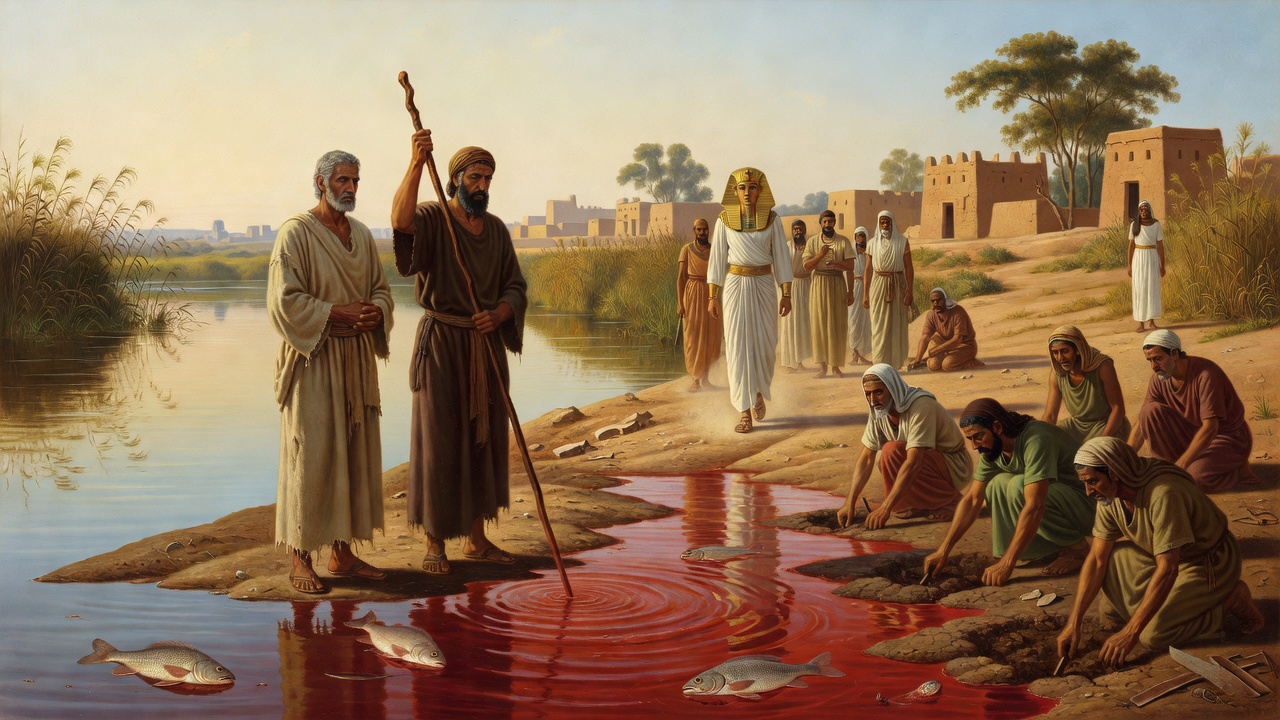
22Dja birrikurdang nawu birrikang Egypt, wanjh kunmekbe kunkudjiwi birrikurduyimeng bu mankurdang bedberre, wanjh kunu Pharaoh djalkangerayekni munguyh bu Yawey yingkihyimeng, minj benbenemarrkmayi Moses dja Aaron. 23Wanjh Pharaoh balborledmeng ngimeng kore kunrurrk nuye, dja minj kuhni mak balwohburrbuyi. 24Dja bininj rowk nawu Egyptbeh wanjh bu minj birribonguyi kukku kore mankabobeh, wanjh kunu birribolkkarungi birringadkarungi kore mankabo darnkih birriboyawani bu kabirribongunkenh.
25Bu Yawey boborledkeng rowk manbu mankabo wanjh kaluk yerrekah wanjh seven kunkodjke.
Did you know?
Moses and Aaron before Pharaoh
- Moses was eighty years old and Aaron eighty-three when they spoke to Pharaoh. Easton's Bible Dictionary (1897) notes that Aaron, the eldest son of Amram and Jochebed, was born in Egypt three years before his brother Moses. In this chapter the LORD says he has made Moses "like God to Pharaoh," with Aaron as his prophet: Moses is to speak all that he is commanded, and Aaron is to tell Pharaoh to let the Israelites leave his land.Sources: the Bible text itself · Aaron
- Easton's Bible Dictionary (1897) notes that the name Nile is not found in Scripture; the Old Testament calls that river Sihor, "the black stream," or simply "the river," and also "the flood of Egypt." The Nile is formed by the White Nile and the Blue Nile, which meet at Khartoum, and it is the water Aaron strikes in this chapter. The fish died, the river stank, the Egyptians could not drink it and dug around the Nile for water, and seven full days passed.Sources: Nile · the Bible text itself
- Easton's Bible Dictionary (1897) says the Pharaoh of the Exodus was probably Menephtah I, the fourteenth and eldest surviving son of Rameses II, and that he resided at Zoan, where he had the interviews with Moses and Aaron recorded in Exodus. The same entry leaves the identification open: it is still a question whether Seti II or his father Menephtah was that Pharaoh, and some think the evidence favors Seti II.Sources: Pharaoh (of the Exodus) · the Bible text itself
Notes written with AI assistance from open sources (Theographic Bible Metadata, CC BY-SA 4.0; Easton’s Bible Dictionary, public domain) and reviewed before publishing.
Places in this chapter
- Egypt · 30.129, 31.308 · verses 3, 4, 5, 11, 19, 21, 22
- Nile · Today: Nile River · 31.465, 30.367 · verses 15, 17, 18, 20, 21, 24, 25
Only places identified with high confidence are shown (90% or more according to the scholarly sources compiled by OpenBible). Period map: DARE (Digital Atlas of the Roman Empire), CC BY 4.0; modern map: © OpenStreetMap contributors; places: OpenBible.info (CC BY 4.0).
Credits and license for this translation
God Nuye Kunwok
The Holy Bible in the Kunwinjku language of Australia
copyright © 2018 Bible Society of Australia
Language: Kunwinjku (Gunwinggu)
This translation is made available to you under the terms of the
Creative Commons Attribution-Noncommercial-No Derivatives license 4.0.
You may share and redistribute this Bible translation or extracts from it in any format, provided that:
You include the above copyright and source information.
You do not sell this work for a profit.
You do not change any of the words or punctuation of the Scriptures.
Pictures included with Scriptures and other documents on this site are licensed just for use with those Scriptures and documents.
For other uses, please contact the respective copyright owners.
2026-04-02
Source: http://ebible.org/gup/ · eBible.org