Psalms 74
Nhanderuete ayvu iky'a e'ỹ va'e · Tap a verse to see its cross-references.
1Oreruete, mba'e re tu orereja raka'e rã peve?
Mba'e re tu ndepoxy nerymba vexa'i kuery ndeyvy regua ae orekuai va'e pe?
2Nema'endu'a ke ndevygua orekuai va'e re,
yvy itui ypy'i guive ndejeupe guarã orejogua rire.
Orejogua raka'e ndevy guarã orekuai aguã.
Nema'endu'a ke Sião yvyty py reikoague re.
3Eju ke ndevygua oo ivaipa are ma va'e py,
henda iky'a e'ỹ va'e nderovaigua kuery opa marã omongy'apaague py.
4Mba'eta ronhemboatyague py nderovaigua kuery hevovo rei okuapy,
ha'e ojeupegua ra'angaa rive ju omopu'ã imo'amy.
5Ha'e kuery ma ka'aguy re haxa oiporu va'e rami avi ombovaipa.
6Ha'e gui aỹ yvyrape ombojegua pyre ha'e javi
ha'e kuery omopẽmba va'ekue haxa ha'e karavo mbotaa py.
7Ndevygua henda iky'a e'ỹ va'e re omboja tata,
yvy peve oapy aguã nderery oĩague.
8Ha'e kuery opy'a py “Aỹ ma nhamomba vyvoi”, he'i okuapy.
Ha'e rami vy oreyvy jave re oapypa Nhanderuete pegua henda iky'a e'ỹ va'ekue ha'e javi.
9Ha'e rami rire ndoroexavei ma orevy guarã oikuaa uka pyre.
Jipovei ma profeta,
orembyte ndoikoi guive raka'e peve 'rã paa oikuaa va'erã.
10Oreruete, raka'e peve 'rã tu nderovaigua kuery orere opu'ã rei?
Raka'e peve nda'u nderovaigua kuery ijayvu vaikue rei 'rã nderery re?
11Mba'e re tu ndereupivei ri ndepo reiporu kuaa regua,
ndepexo yvýry remboapu'a va'ekue?
12Ha'e gui Xeruete Xeruvixave ma yvy itui ypy'i guive oiko.
Ha'e ae ojapo raka'e oo jepe aguã rami yvy mbyte.
13Ndee ma ndepo'akaa rupi remboja'o raka'e ye'ẽ.
Ha'e gui yy re ae ju remou'ũ va'ekue ypo akã,
14jakare akã rembovopa,
ha'e hetekue reme'ẽ vixo tekoa e'ỹa rupigua ho'u aguã.
15Ndee reipe'a va'ekue yvurã ha'e yakã ikuai va'erã,
ha'e rã yakã guaxu ma remboypa va'ekue.
16Ára ha'e pytũ voi ndevygua.
Jaxy ha'e kuaray guive ndee rejapo va'ekue meme.
17Remoĩ avi yvy apy peve guarã.
Kuaray puku-a ha'e yro'ya ndee ae rejapo va'ekue.
18Eikuaa pota ke pova'e nunga re:
ndee Senhor re nderovaigua kuery ijayvu rei okuapy,
hi'arandu e'ỹ va'e regua ijayvu vaikue-ikue nderery re.
19Emboaxa eme nerymba pyku'i kuery ho'u va'erã pe,
nderexarai eme ndevygua kuery rojexavai rokuapy va'e re.
20Nema'endu'a ke ndereve guarã rejapo va'ekue re,
mba'eta yvy re nda'evei etea py heko vai va'e anho ikuai.
21Ojexavai va'e toxĩmba rei eme.
Ojexavai va'e ha'e iporiaukue'i togueroporaei nho nderery.
22Xeruete, epu'ã ke, eikuaa uka porã ndereko.
Nema'endu'a heko vai va'e ko'ẽ nhavõ nembojaru reia re.
23Nderexarai eme nderovaigua kuery ojapukai rei okuapya re,
mba'eta nderovaigua kuery opa marã ijayvuve tema okuapy.
Nhanderuete nhomboayvua re ijayvua
Jogueroporaei va'e pe mboraeirã Asafe ombopara va'ekue “Xemomba eme” he'ia py oporaeia rami oporaei aguã.
Did you know?
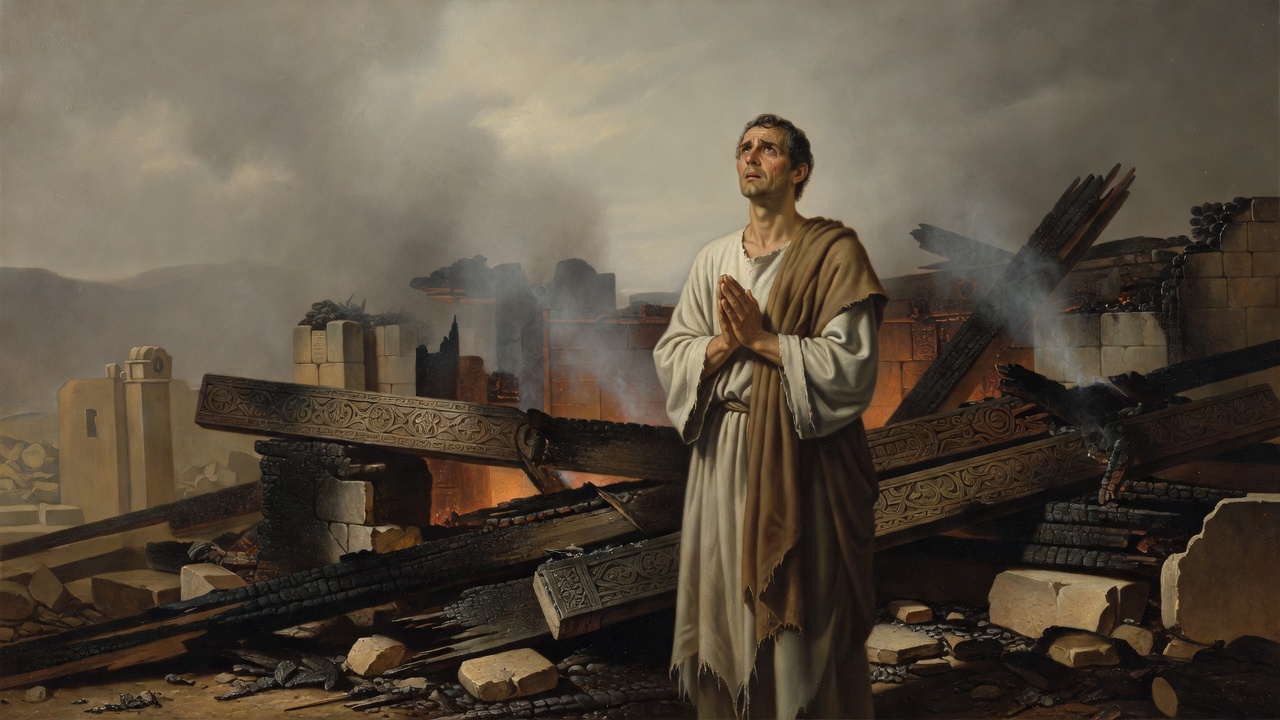
Lament over the Destroyed Sanctuary
- Psalms 73 through 83 are attributed to Asaph, a Levite musician and leader of David's choir. Because Psalm 74 laments the burning and total destruction of the sanctuary, many scholars connect it with the later "sons of Asaph," a guild of poets and singers who preserved his tradition.Sources: Asaph (Levite) · the Bible text itself
- The psalm appeals to God to remember Mount Zion, a prominent hill in Jerusalem where David established his citadel and where the sanctuary stood as the dwelling place of God's name.Sources: Mount Zion · the Bible text itself
- The destruction of the sanctuary is vividly described using the metaphor of woodcutters felling trees, as invaders smashed the intricate carved woodwork with axes and picks before burning the holy place to the ground.Sources: the Bible text itself
Notes written with AI assistance from open sources (Theographic Bible Metadata, CC BY-SA 4.0; Easton’s Bible Dictionary, public domain) and reviewed before publishing.
Places in this chapter
- Mount Zion · 31.772, 35.229 · verse 2
Only places identified with high confidence are shown (90% or more according to the scholarly sources compiled by OpenBible). Period map: DARE (Digital Atlas of the Roman Empire), CC BY 4.0; modern map: © OpenStreetMap contributors; places: OpenBible.info (CC BY 4.0).
Credits and license for this translation
Nhanderuete ayvu iky'a e'ỹ va'e
New Testament in Guaraní, Mbyá
copyright © 2004 Wycliffe Bible Translators, Inc.
Language: Mbyá Guaraní (Guaraní, Mbyá)
Translation by: Wycliffe Bible Translators, Inc.
Copyright Information
© 2004, Wycliffe Bible Translators, Inc. All rights reserved.
This translation text is made available to you under the
terms of the Creative Commons License: Attribution-Noncommercial-No Derivative Works.
( http://creativecommons.org/licenses/by-nc-nd/3.0/ )
In addition, you have permission to port the text to different file formats, as long as you
do not change any of the text or punctuation of the Bible.
You may share, copy, distribute, transmit, and extract portions
or quotations from this work, provided that you include the above copyright
information:
You must give Attribution to the work.
You do not sell this work for a profit.
You do not make any derivative works that change any of the actual words or punctuation of the Scriptures.
Permissions beyond the scope of this license may be
available if you contact
us with your request.
Printed book ISBN 853110565X
The New Testament
in Guaraní, Mbyá
© 2004, Wycliffe Bible Translators, Inc. All rights reserved.
This translation is made available to you under the terms of the
Creative Commons Attribution-Noncommercial-No Derivatives license 4.0.
You may share and redistribute this Bible translation or extracts from it in any format, provided that:
You include the above copyright and source information.
You do not sell this work for a profit.
You do not change any of the words or punctuation of the Scriptures.
Pictures included with Scriptures and other documents on this site are licensed just for use with those Scriptures and documents.
For other uses, please contact the respective copyright owners.
2014-08-06
Source: http://ebible.org/gun/ · eBible.org