Jeremiah 13
Nhanderuete ayvu iky'a e'ỹ va'e · Tap a verse to see its cross-references.
Ku'akuaa ajukue iporãve va'e guigua py mba'emo oikuaa ukaague
1Senhor aipoe'i xevy:
— Tereo, ejogua peteĩ ku'akuaa iporãve va'e. Ha'e gui ejeku'a jokua, yy py emoakỹ eme guive.
2Ha'e ramo Senhor aipoe'iague rami vy ajogua ku'akuaa, ha'e ajeku'a jokua.
3Ha'e ramo mokoĩguea ma Senhor oayvu xevy ombou vy aipoe'i:
4— Ejopy ju ku'akuaa rejogua ha'e rejeku'a jokuaague. Ha'e gui epu'ã, tereo Eufrates yakã katy, ha'e enhomi ha'e py peteĩ itakua py — he'i.
5Ha'e ramo Senhor aipoe'iague rami vy aa vy anhomi Eufrates rembe re.
6Ha'e gui kueve ma rire Senhor aipoe'i ju xevy:
— Epu'ã, tereo ju Eufrates katy, ha'e ejopy ju ku'akuaa ha'e py anhomi uka va'ekue — he'i.
7Ha'e ramo Eufrates py aa vy yvy ajo'o vy anoẽ ju ku'akuaa anhomiague gui. Ha'e rã ku'akuaa hu'ũmba ma, ndovarevei ma mba'everã.
8Ha'e ramo Senhor oayvu xevy ombou vy aipoe'i:
9“Po rami Senhor ijayvu: Nami ae avi xee ambovaipa 'rã Judá ha'e Jerusalém pygua kuery onhemboyvate rei okuapya.
10Mba'eta ha'e kuery heko vai va'e vy noenduxei okuapy xeayvu, inhakã ratãa rupi anho ikuai va'e, ha'e vy amboae ramigua tuuete kuery re ovapa, ixupe rive ikuai ha'e omboete aguã. Ha'e rami vy kova'e ku'akuaa rami 'rã ikuai mba'everã ndovarevei vy.
11Mba'eta ku'akuaa avakue ku'a re oĩa rami avi xee voi aipota teĩ Israel ha'e Judá kuery xere ikuai xevy guarã, xerery oguerovy'a ha'e xemboete pavẽ aguã, va'eri ha'e kuery ma ndojapyxakai okuapy”, he'i Senhor.
Hyru omboa'ypaa py mba'emo oikuaa ukaague
12“Ha'e kuery pe emombe'u pova'e ayvu. Senhor Israel kuery Ruete aipoe'i: ‘Peteĩ-teĩ hyru tynyẽmba 'rã vinho’, 'ere. Ha'e rã ha'e kuery aipoe'i 'rã ndevy: ‘Ore kuery ndoroikuaa porãi ri ty'y hyru ikuai va'e vinho tynyẽmba aguã?’ he'i 'rã okuapy.
13Ha'e rã ndee ju aipo're 'rã ha'e kuery pe: ‘ Senhor aipoe'i: “Ne'exa, kova'e yvy re ikuai va'e ha'e javi xee amonga'upa 'rã, huvixa kuery Davi renda openaaty py oguapy va'e, sacerdote, profeta kuery ha'e Jerusalém py ikuai va'e ha'e javi.
14Amboa'ypa 'rã joe-joe amombo vy, tuu ha'e ta'y kuery voi. Ndaraa jepei 'rã, amboaxya naendui 'rã, namboaxyi 'rã guive amokanhy e'ỹ aguã”, he'i Senhor.’ ”
Ojeko rerova ha'e ombopagaa aguã re ijayvuague
15Pendu ke, ha'e peikuaa pota. Penhemboyvate rei eme, mba'eta Senhor ae ijayvu.
16Pemboete na Senhor Penderuete, pytũ ombou e'ỹ aguã, ha'e yvy'ã vaikuea re pejeapi e'ỹ aguã, ha'e hexakãa pearõ 'rãgue py manoa 'ã ha'e pytũ reia anho ombou e'ỹ aguã.
17Mba'eta napendu potai ri ramo xepy'a py ajae'o nhemi 'rã penhemboyvate reia re. Xerexa ojae'o vaipa ete 'rã, xerexay vaipa ete 'rã, peẽ Senhor rymba vexa'i kuery escravo-rã pendereraapaa rire.
18“Aipo'ere huvixa ha'e ixy pe: ‘Penhemo'yvyĩ'i ke, ha'e peĩ yvy py, mba'eta peneakã gui ho'a ma coroa penemboyvateague.
19Mba'eta kuaray puku-a katy tetã ikuai va'e tynyẽmba ma mba'emo ra'ykue, ipe'aarã ndoikoi guive. Judá kuery voi escravo-rã ogueraapaa ma, oipokuapaa heravy.
20Pema'ẽ kuaray ijapu'a'ia katy pexa aguã ou va'e. Aỹ ma mamo tu ikuai vexa'i kuery ndevy apena uka va'ekue, iporãgue anho rereko va'ekue?
21Mba'e 're 'rã tu neirũ kuery ikuai va'ekue ndere ipo'aka va'erã omoĩa ramo? Ndere haxy va'e nda'ipo'akai 'rã teve, kunha oikuavã'i ta va'e rami?
22Ndejeupe ae ndeayvu vy “Mba'e re tu ha'e nunga ou xere?” 're 'rã. Ha'e rami vy reikuaa 'rã rejejavypaaty re ae ndeao oupia, ha'e rejexavai ete aguã rami reikoa.
23Etiópia pygua kuery nda'u omboekovia kuaa 'rã ri opire, e'ỹ vy xivi voi nda'u omboekovia kuaa 'rã ri oparaa? Ha'e rami aguã nda'evei ramo ae peẽ kuery voi mba'emo vai pejapo va'ety vy ndapejapo kuaai 'rã iporã va'e.
24Ha'e nunga rupi ha'e kuery amoaĩ 'rã mba'emo pirukue yvytu tekoa e'ỹa guigua ogueraa va'e rami.
25Ha'e nunga ae oiko 'rã pendere, pendevy guarã amoĩ 'rã, xegui penderexarai vy apu rive perovia rire’, he'i Senhor.
26‘Ha'e nunga rupi pendeao aupi uka 'rã peneakã áry peve, pexĩmbaa ojekuaapa aguã.
27Mba'eta aexa ma yvy'ã ikuai va'e ha'e nhuũndy rupi ojeguarupy pejapo pekuapya. Ha'e va'e ma pendetavy reia, penhomoaruãa ha'e pendetavyxea rupi pendekuaia. Nda'evei ete 'rã pendevy, Jerusalém pygua kuery! Raka'e peve teri 'rã tu ndapejeky'a'oi?’ he'i.”
Did you know?
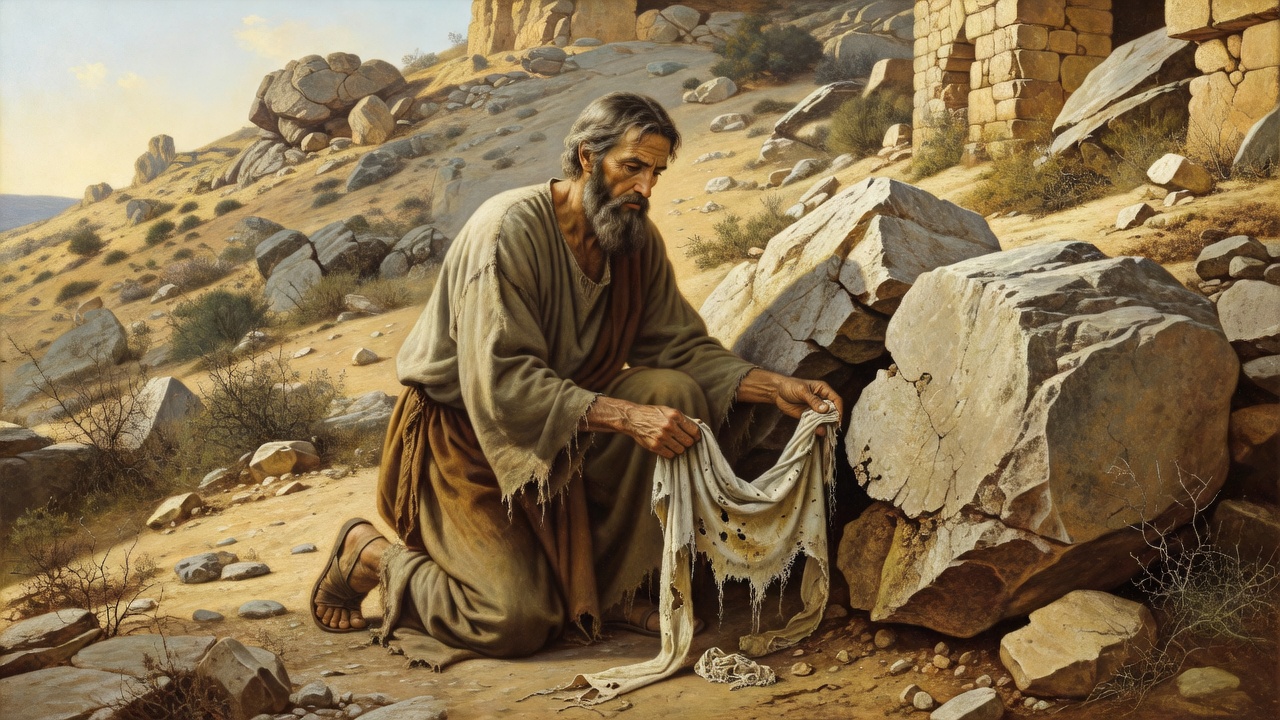
The Ruined Linen Sash and the Threat of Exile
- Jeremiah is commanded to bury a new linen loincloth in a crevice of the rocks at Perath, the Hebrew name for the Euphrates River. When retrieved after many days, the rotted, useless cloth served as a dramatic symbol of how God would ruin the pride of Judah and Jerusalem.Sources: the Bible text itself · Euphrates
- The prophecy warns that disaster would reach even the cities of the Negev, the arid region stretching across Judah's southern frontier on the route toward Egypt. The locking of these southern towns indicated that escape routes were cut off and that total exile was approaching.Sources: the Bible text itself · Negeb
Notes written with AI assistance from open sources (Theographic Bible Metadata, CC BY-SA 4.0; Easton’s Bible Dictionary, public domain) and reviewed before publishing.
Places in this chapter
- Euphrates · Today: Euphrates River · 31.004, 47.442 · verses 4, 5, 6, 7
- Jerusalem · 31.777, 35.234 · verses 9, 13, 20, 27
- Negeb · 31.245, 34.841 · verse 19
Only places identified with high confidence are shown (90% or more according to the scholarly sources compiled by OpenBible). Period map: DARE (Digital Atlas of the Roman Empire), CC BY 4.0; modern map: © OpenStreetMap contributors; places: OpenBible.info (CC BY 4.0).
Credits and license for this translation
Nhanderuete ayvu iky'a e'ỹ va'e
New Testament in Guaraní, Mbyá
copyright © 2004 Wycliffe Bible Translators, Inc.
Language: Mbyá Guaraní (Guaraní, Mbyá)
Translation by: Wycliffe Bible Translators, Inc.
Copyright Information
© 2004, Wycliffe Bible Translators, Inc. All rights reserved.
This translation text is made available to you under the
terms of the Creative Commons License: Attribution-Noncommercial-No Derivative Works.
( http://creativecommons.org/licenses/by-nc-nd/3.0/ )
In addition, you have permission to port the text to different file formats, as long as you
do not change any of the text or punctuation of the Bible.
You may share, copy, distribute, transmit, and extract portions
or quotations from this work, provided that you include the above copyright
information:
You must give Attribution to the work.
You do not sell this work for a profit.
You do not make any derivative works that change any of the actual words or punctuation of the Scriptures.
Permissions beyond the scope of this license may be
available if you contact
us with your request.
Printed book ISBN 853110565X
The New Testament
in Guaraní, Mbyá
© 2004, Wycliffe Bible Translators, Inc. All rights reserved.
This translation is made available to you under the terms of the
Creative Commons Attribution-Noncommercial-No Derivatives license 4.0.
You may share and redistribute this Bible translation or extracts from it in any format, provided that:
You include the above copyright and source information.
You do not sell this work for a profit.
You do not change any of the words or punctuation of the Scriptures.
Pictures included with Scriptures and other documents on this site are licensed just for use with those Scriptures and documents.
For other uses, please contact the respective copyright owners.
2014-08-06
Source: http://ebible.org/gun/ · eBible.org