Isaiah 5
Nhanderuete ayvu iky'a e'ỹ va'e · Tap a verse to see its cross-references.
Senhor mba'e uvaty re ijayvuague
1Aỹ ma aporaei ta xerembiayvu pe, ixupegua uvaty re 'rã aporaei. Mba'eta xerembiayvu ma peteĩ uvatyrã onhotỹ raka'e yvy porãa py.
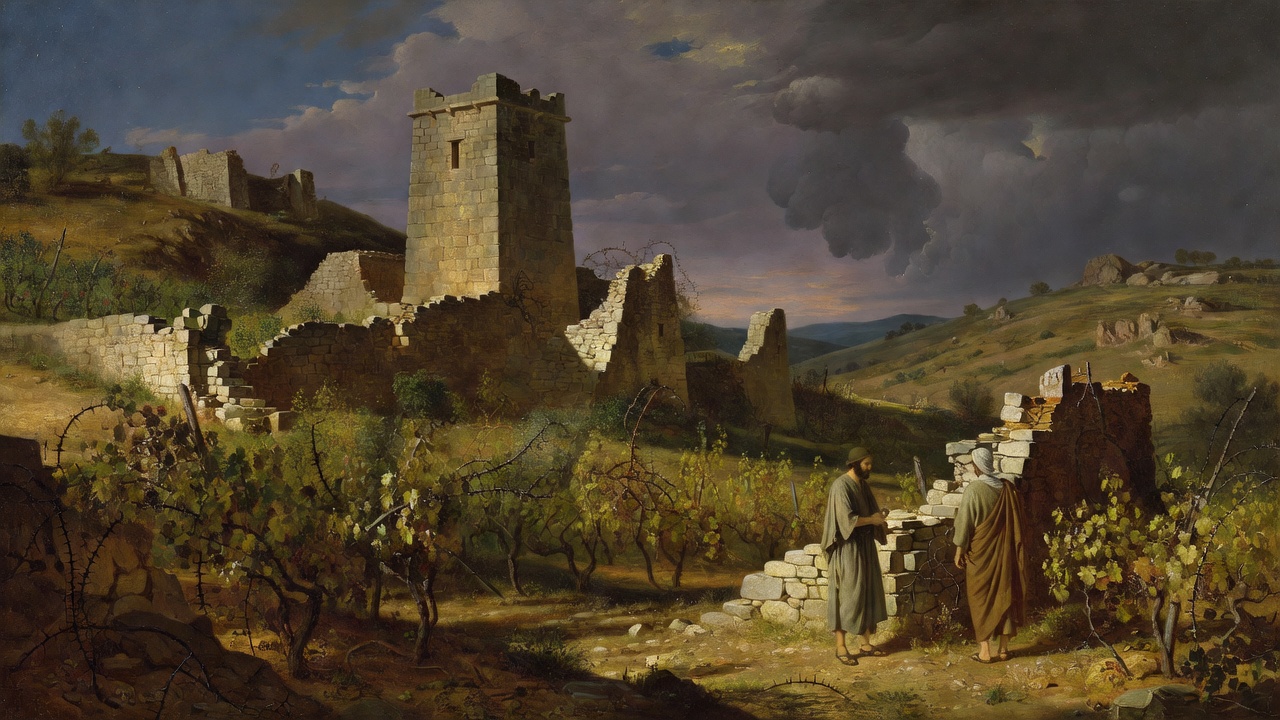
2Ha'e rami vy ojo'o yvy, oguenoẽmba ita ikuai va'ekue, ha'e gui uva yky porãgueve anho onhotỹ. Uvaty mbyte ojapo torre yvate va'e oma'ẽ jepi atyrã, ojapo avi oja guaxu uva'a oumbiri atyrã. Ha'e gui ma oarõ oikovy onhotỹ va'ekue hi'a porã aguã. Ha'e rami teĩ ha'e va'e 'rãgue py iro va'e anho oiko hi'a.
3Ha'e rire aipoe'i: “Aỹ ma Jerusalém ha'e Judá py pendekoa va'e, ajerure pẽvy: Peikuaa pota xere ha'e xe'uvaty re.
4Mba'e nunga tu anhotỹ va'ekue re ajapove aguã ha'eve 'rãgue ajapoague áryve? Ha'e mba'e re tu iporã va'e arõ va'e 'rãgue py iro va'e anho oiko?
5Aỹ ma xee amombe'u ta pẽvy xe'uvaty re ajapo aguã. Aipe'apa 'rã ikorarã juu anhotỹ va'ekue, xe'uvaty opyta aguã mymba okaru atyrã rive. Aity 'rã ikora mymba kuery opyrõmba aguã.
6Ajapo 'rã opyta rive aguã rami. Ha'e ramo uva rembypy nomoatyrõavei 'rã, neĩ yvy voi nomboa'eveavei 'rã. Ha'e rami 'rãgue py juu ha'e juu rakuaendy rive 'rã ikuai. Ha'e arai pe xeayvu 'rã hi'áry nda'okyvei aguã re”, he'i.
7Mba'eta uvaty ojeupe guarã Senhor onhotỹ va'ekue ma Israel kuery ae, uva rembypy oguerovy'a va'ekue ma Judá kuery. Ha'e oarõ oikovy teĩ ha'e kuery teko porã rupi ikuai aguã oexaxe vy. Ha'e rami teĩ lei rovai rupi rive ikuai ra'e. Teko porã 'rãgue py haxẽ reia rupi anho ikuai.
“Heko vai va'e pe nda'evei ete 'rã” he'iague
8Nda'evei ete 'rã peẽ kuery penderorã pejapo-japove va'e ha'e pendeyvyrã pejou-jouve va'e pe, amboae kuery oĩ aguã nda'evevei peve. Ha'e rami vy peẽ kuery anho peiko pendeyvy mbyte rupi.
9Ha'e gui Senhor ixondaro reta va'e aipoe'i xevy: “Anhetẽ heta oo opyta rei 'rã, tuvixakueve ha'e iporãgueve voi, avave rei noĩavei rã.
10Ha'e va'e jave peteĩ alqueire uvaty rape ome'ẽ 'rã vinte litro ete'i, ha'e dez voxa trigo ra'yĩgue gui ma teĩ dez quilo ete'i 'rã ome'ẽ”, he'i.
11Nda'evei ete 'rã oka'u va'e kuery pe. Ha'e va'e kuery ma ko'ẽ'i ramove vinho oy'u aguã omboypy vy pytũ mbyte raxa peve 'rã oo, vinho py onhemboakupa peve!
12Ha'e kuery ngaru ojapoa py ogueru 'rã mbaraka, mba'epu ixã reta va'e, pandeiro ha'e mimby. Vinho heta avi 'rã oĩ oy'u va'erã. Ha'e rã Senhor ojapo va'e re ma ha'e kuery ndoikuaa potai, na'ima'endu'ai guive opo py mba'emo ojapo va'ekue re.
13Ha'e nunga rupi xevygua kuery ogueraapaa 'rã escravo-rã, mba'eve re ndoikuaa potaiague re rive. Ha'e kuery va'e regua yvatekueve teĩ oendu 'rã karuai, ha'e heta va'e kuery ojexavai 'rã okuapy ijy'uvei gui.
14Ha'e nunga rupi yvykua omokõvexe vy oipe'a vaipa 'rã ojuru, ha'e py Jerusalém pygua omboeteve pyre kuery oguejypa aguã, ovy'a vy hevovo reia rupi ikuai va'ekue, ha'e rami ikuaia rupi oguerovy'a rei va'ekue voi.
15Ha'e rami vy heta va'e kuery opa 'rã oje'oivy, avakue omo'yvyĩ'imbaa 'rã. Ojejou porã rei va'ekue voi yvy katy rive 'rã oma'ẽ okuapy.
16Ha'e rã Senhor ixondaro reta va'e ma yvate 'rã joe oikuaa potaa py. Nhanderuete iky'a e'ỹ va'e gueko porãa rupi vy oexa uka 'rã iky'a e'ỹ va'ea.
17Ha'e py ma vexa'i kuery okaru 'rã okuapy ha'e kuery ae okaruaty py rami, ha'e hoo va'e'ỹ ju 'rã ojou okuapy guembi'urã oguerekopa rei va'ekue oyvy oejaague rupi.
18Nda'evei ete 'rã teko vai rupi onhea'ã va'e kuery pe, mba'emo ixã py oguerua rami nhombotavypa vy! Ha'e kuery ma karóxa omoatãa rami omoatã 'rã heravy gueko vaia.
19Ha'e rami teĩ ha'e kuery aipoe'i 'rã: “Tove Nhanderuete tojapura, tojapopa vyvoi ojapoxe va'e, nhande kuery jaexa aguã. Tove Israel kuery ruete iky'a e'ỹ va'e onhembopy'aa toiko pojava jaikuaa aguã mba'e nunga paa”, he'i 'rã okuapy.
20Nda'evei ete 'rã iporã va'e pe “Mba'emo vai” he'i va'e kuery pe, ha'e rã mba'emo vai pe ma “Iporã” he'i va'e kuery pe. Ha'e kuery ma “Hexakãa” he'i 'rã pytũ va'e pe rive, ha'e rã hexakãa pe ma “Pytũa” he'i 'rã. He'ẽ va'e pe “Iro va'e” he'i 'rã, ha'e rã iro va'e pe ma “He'ẽ va'e” he'i 'rã.
21Nda'evei ete 'rã ojeupe ae “Hi'arandupa va'e” he'i va'e pe, mba'eta ha'e kuery anho oikuaapa va'ea rami oexa'ã teĩ.
22Nda'evei ete 'rã vinho oy'u aguã anho ipy'a guaxuve va'e pe, ha'e iro va'e joo ramigua e'ỹ-e'ỹ omoirũa rupi ojerovia ete va'e kuery pe.
23Ha'e kuery ma ome'ẽmby ojopy 'rã omboeko porã aguã otekoavypa va'e, ha'e heko porã va'e omboeko vai aguã.
24Ha'e nunga rupi ha'e kuery opa 'rã tata mba'emo pire oapya rami, tataendy nhuũ pirukue omombaa rami. Ha'e rami ae avi ha'e kuery voi okanhymba 'rã, mba'emo rapo hu'ũmbaa rami avi, ha'e ipotykue yvytu ogueraapaa rami, yvy ku'i rami rive, mba'eta ha'e kuery nda'ikuaixei rire Senhor ixondaro reta va'e guigua lei rupi, noenduxei Israel kuery ruete iky'a e'ỹ va'e ayvu.
25Ha'e nunga rupi ae Senhor poxya hendy ojeupegua kuery pe. Ha'e kuery rovai opo oupi reve ombopaga ramo yvyty ikuai va'e voi oryryipa. Ha'e ramo ha'e kuery re'õgue ma yty rami rive opyta tape rupi. Ha'e rami ete teĩ ipoxya ndoaxai teri. Opo oupi ae tema.
26Ha'e gui ma Senhor oupi 'rã peteĩ bandeira oenoĩ aguã mombyry ikuai va'e. Ha'e pygua xondaro kuery pe otuvy nhe'ẽ 'rã yvy apy re ikuaia gui ou aguã. Ha'e ramo ha'e kuery onha 'rã jogueruvy.
27Ha'e kuery va'e regua oua rupi neĩ peteĩve na'ikane'õi 'rã, nonhepyxangai 'rã guive. Neĩ peteĩve ma ndopytu'ui 'rã, neĩ ndokei 'rã. Ha'e kuery ku'akuaa voi oĩ atã porã 'rã, ixapatu xã voi ndoxo rivei 'rã.
28Hu'y voi hakua porã 'rã, guyrapa oguereko va'e xã voi oĩ atã porã va'e meme. Hymba kavaju pyapẽ voi ita rami hatã 'rã, ha'e karóxa joe opu'ãa rupi oiporu va'e ruéra ma yvytu jere rami ojere pojava 'rã.
29Ha'e kuery ma reõ rami 'rã okororõ okuapy, reõ ra'y kuery rami ete. Ha'e kuery onhendu reve guembia ombotyryry 'rã heravy mombyry, ipo gui avave rei ojoguaa e'ỹ aguã.
30Ha'e va'e ára ha'e va'e kuery ye'ẽ rami 'rã onhendu Israel kuery rovai. Ha'e ramo amongue yvy re oma'ẽ va'e oexa 'rã pytũa ha'e jexavai anho. Mba'eta arai pytũ va'e ojao'ipa ramo kuaray rexakãa ndojekuaavei 'rã.
Did you know?
The Song of the Vineyard and the Six Woes
- The opening song in Isaiah 5 describes the elaborate labor of ancient Judean viticulture: clearing rocky hillsides of stones, building a protective stone watchtower, digging out a winepress in the bedrock, and planting prime vines surrounded by a protective hedge and wall. The poem turns into a legal parable where the vineyard represents the house of Israel and the people of Judah, from whom justice was expected instead of bloodshed.Sources: the Bible text itself
- The chapter delivers a series of six prophetic laments or woes, condemning specific social and moral abuses in Judah. These include wealthy landowners consolidating real estate by adding house to house and field to field, judges taking bribes to acquit the guilty while denying justice to the innocent, and leaders indulging in lavish feasting while ignoring divine instruction.Sources: the Bible text itself
- Isaiah's prophetic ministry in Jerusalem addressed the people of Judah over an extended period beginning in the mid-eighth century BC. The chapter concludes with a warning that the Lord would signal distant, disciplined foreign armies equipped with chariots, bows, and swift horses to execute judgment on the land.Sources: Jerusalem · Prophecies of Isaiah · the Bible text itself
Notes written with AI assistance from open sources (Theographic Bible Metadata, CC BY-SA 4.0; Easton’s Bible Dictionary, public domain) and reviewed before publishing.
Places in this chapter
Only places identified with high confidence are shown (90% or more according to the scholarly sources compiled by OpenBible). Period map: DARE (Digital Atlas of the Roman Empire), CC BY 4.0; modern map: © OpenStreetMap contributors; places: OpenBible.info (CC BY 4.0).
Credits and license for this translation
Nhanderuete ayvu iky'a e'ỹ va'e
New Testament in Guaraní, Mbyá
copyright © 2004 Wycliffe Bible Translators, Inc.
Language: Mbyá Guaraní (Guaraní, Mbyá)
Translation by: Wycliffe Bible Translators, Inc.
Copyright Information
© 2004, Wycliffe Bible Translators, Inc. All rights reserved.
This translation text is made available to you under the
terms of the Creative Commons License: Attribution-Noncommercial-No Derivative Works.
( http://creativecommons.org/licenses/by-nc-nd/3.0/ )
In addition, you have permission to port the text to different file formats, as long as you
do not change any of the text or punctuation of the Bible.
You may share, copy, distribute, transmit, and extract portions
or quotations from this work, provided that you include the above copyright
information:
You must give Attribution to the work.
You do not sell this work for a profit.
You do not make any derivative works that change any of the actual words or punctuation of the Scriptures.
Permissions beyond the scope of this license may be
available if you contact
us with your request.
Printed book ISBN 853110565X
The New Testament
in Guaraní, Mbyá
© 2004, Wycliffe Bible Translators, Inc. All rights reserved.
This translation is made available to you under the terms of the
Creative Commons Attribution-Noncommercial-No Derivatives license 4.0.
You may share and redistribute this Bible translation or extracts from it in any format, provided that:
You include the above copyright and source information.
You do not sell this work for a profit.
You do not change any of the words or punctuation of the Scriptures.
Pictures included with Scriptures and other documents on this site are licensed just for use with those Scriptures and documents.
For other uses, please contact the respective copyright owners.
2014-08-06
Source: http://ebible.org/gun/ · eBible.org