Hosea 13
Nhanderuete ayvu iky'a e'ỹ va'e · Tap a verse to see its cross-references.
Nhombopaga aguã re ijayvuague
1— Efraim ijayvu ramo oryryipaa va'ekue, Israel kuery voi omboetepa va'ekue. Ha'e rami teĩ Baal ra'angaa pe oikoa rupi onhemongy'a vy omano raka'e.
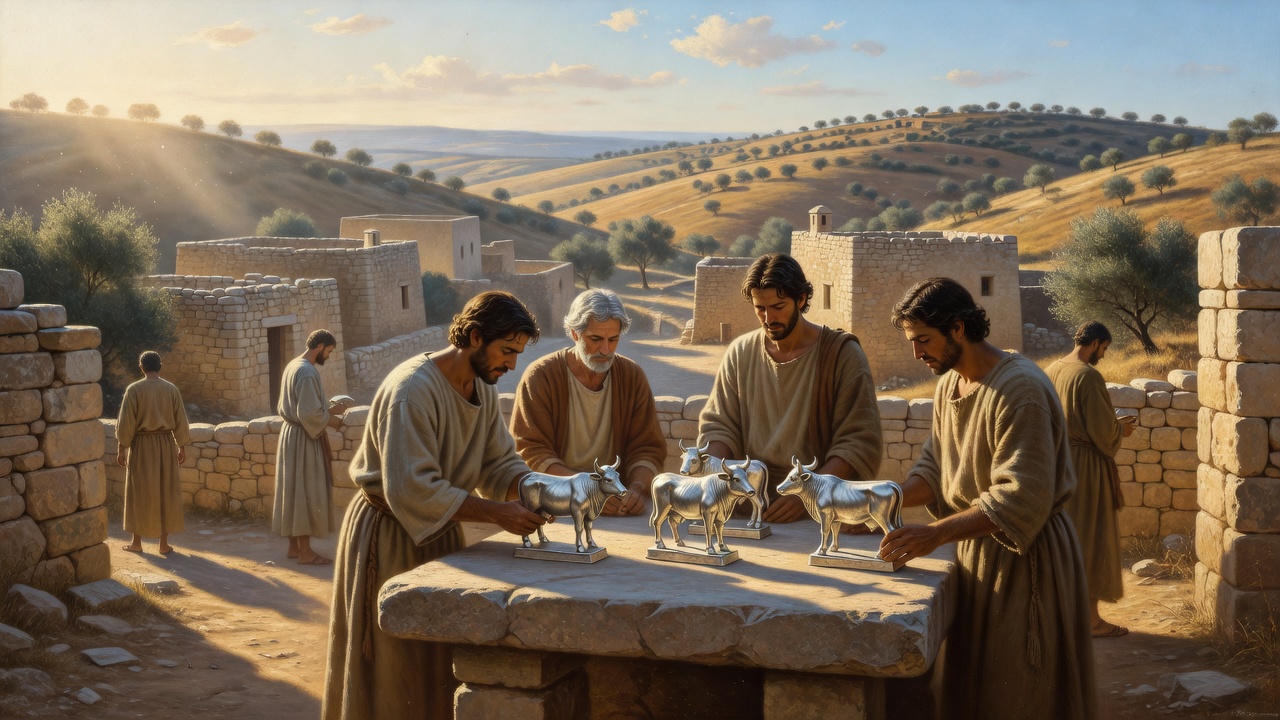
2Aỹ ma ha'e kuery ojejavyve tema oje'oivy. Ha'e rami vy prata oguereko va'e ryku gui ojapo 'rã ta'angaa, mba'emo ra'angaa ha'e kuery ojapo oikuaa rami rive. Ha'e nunga ha'e javi ma avakue ojapo kuaa va'e rembiapo rive. Ha'e gui ma joupe-upe “Peme'ẽ mba'emo ha'e nunga pe”, he'i 'rã okuapy. Ha'e ramo avakue oova rayvu 'rã okuapy vaka ra'y ra'angaa!
3Ha'e nunga rupi ha'e kuery okanhy 'rã ovy aje'ive'i arai ojekuaa va'e rami, yxapy ko'ẽmba'i ramove ipirupa vyvoi va'e rami, mba'emo pirukue oka gui omomboa rive va'ekue, ha'e hataxĩ janela rupi oẽ ovya rami.
4Ha'e rã xee ma Senhor Nderuete, Egito yvy re pendekuaia ára guive. Ha'e nunga rupi amboae tuuete ramigua ndapeikuaai 'rã xee e'ỹ vy, mba'eta xee e'ỹ vy pendereraa jepea ndoikoi.
5— Xee roikuaa raka'e tekoa e'ỹa py, yvy piru reia py.
6Nhuũ ikuaia ja ma ha'e kuery hevyatãmba. Ha'e gui hevyatãmba vy onhemboyvate opy'a py. Ha'e rami vy xegui hexaraipa okuapy.
7Ha'e rami rã xee ma guary rami 'rã ajekuaa uka ha'e kuery pe, xivi ipara va'e tape py oma'ẽ mbegue oiny va'e rami.
8Urso kunha ta'y'i re imondaa pyre rami avi xee ha'e kuery aro'a vy amondoropa 'rã ipy'a ryru guive. Guary rami amokõmba 'rã ha'e py, inharõ va'e ka'aguy rupi ikuai va'e omboa'ypaa rami avi.
9Israel kuery, pekanhy aguã ma pendegui ae ou, ha'e rã peo jepe aguã ma xeguigua anho.
10Mamo tu aỹ penderuvixa oĩ, peneretã ha'e javi rupi pendereraa jepe aguã? Ha'vy pendererekoa kuery, ha'e kuery pe “Pejou nhanderuvixaverã ha'e yvatekueve va'erã kuery” pejeague va'e?
11Ha'e ramo penderuvixaverã ma xepoxya rupi ambou raka'e, ha'e gui xepoxya rupi ae ju xee aipe'a.
12— Efraim kuery reko vaiague ma ojokuaa ma imoiny, ojejavyague regua oĩa ma omoĩ porãmbaa avi.
13Ha'e kuery re ou 'rã kunha kyrĩ va'e oguereko rai'i rã haxya ramigua. Ta'y hi'arandu e'ỹ va'e ikuai, guyru'i gui hexakãa py noẽ kuaai va'e rami avi, itui'i aguã ovaẽ ma teĩ.
14Xee araa jepe 'rã tata ogue'ỹ va'e po'akaa gui, aepy 'rã manoa gui. Ndee manogue, mamo tu oĩ renhomoingo axy aguã? Ha'vy ndee tata ogue'ỹ va'e, mamo tu oĩ renhomomba aguã? Teĩve henda py xee ndaexai anhomboaxy aguã.
15Guyvy kuery gui ha'e kuery imbaraeteve teĩ kuaray oikea katy gui ou 'rã yvytu Senhor-a guigua. Tekoa e'ỹa gui ou vy omombirupa 'rã ijyvy re yakã ikuai va'e, omombirupa 'rã yvu ha'e py. Oipe'a ukapa 'rã guive mba'emo porã omoĩ porãaty py oguereko va'ekue.
16Samaria pygua kuery re oĩ 'rã ojejavyague re opaga aguã, Nguuete rovai opu'ã rire. Ha'e kuery ho'apa 'rã kyxe py, ta'y kuery omboa'ypaa 'rã, ha'e ta'yxy kuery imemby ryru'i va'e rye oipe'ãa 'rã guive.
Did you know?
The Fall of Ephraim and Samaria
- Hosea 13 opens by recounting that Ephraim, once exalted in Israel, brought about its own ruin through the worship of Baal. Baal was the principal male deity of the Phoenicians, and his cult had long influenced the northern tribes.Sources: the Bible text itself · Baal
- The chapter recalls that God had been Israel's God ever since the land of Egypt and had known them in the arid wilderness. However, once the people had pasture and were satisfied, their hearts grew proud and they forgot their helper.Sources: the Bible text itself · Egypt
- The prophecy ends with an announcement of judgment on Samaria, the capital city established by King Omri on the hill of Shomeron. Hosea declares that Samaria will bear her guilt and suffer violent destruction for rebelling against God.Sources: the Bible text itself · Samaria
Notes written with AI assistance from open sources (Theographic Bible Metadata, CC BY-SA 4.0; Easton’s Bible Dictionary, public domain) and reviewed before publishing.
Places in this chapter
Only places identified with high confidence are shown (90% or more according to the scholarly sources compiled by OpenBible). Period map: DARE (Digital Atlas of the Roman Empire), CC BY 4.0; modern map: © OpenStreetMap contributors; places: OpenBible.info (CC BY 4.0).
Credits and license for this translation
Nhanderuete ayvu iky'a e'ỹ va'e
New Testament in Guaraní, Mbyá
copyright © 2004 Wycliffe Bible Translators, Inc.
Language: Mbyá Guaraní (Guaraní, Mbyá)
Translation by: Wycliffe Bible Translators, Inc.
Copyright Information
© 2004, Wycliffe Bible Translators, Inc. All rights reserved.
This translation text is made available to you under the
terms of the Creative Commons License: Attribution-Noncommercial-No Derivative Works.
( http://creativecommons.org/licenses/by-nc-nd/3.0/ )
In addition, you have permission to port the text to different file formats, as long as you
do not change any of the text or punctuation of the Bible.
You may share, copy, distribute, transmit, and extract portions
or quotations from this work, provided that you include the above copyright
information:
You must give Attribution to the work.
You do not sell this work for a profit.
You do not make any derivative works that change any of the actual words or punctuation of the Scriptures.
Permissions beyond the scope of this license may be
available if you contact
us with your request.
Printed book ISBN 853110565X
The New Testament
in Guaraní, Mbyá
© 2004, Wycliffe Bible Translators, Inc. All rights reserved.
This translation is made available to you under the terms of the
Creative Commons Attribution-Noncommercial-No Derivatives license 4.0.
You may share and redistribute this Bible translation or extracts from it in any format, provided that:
You include the above copyright and source information.
You do not sell this work for a profit.
You do not change any of the words or punctuation of the Scriptures.
Pictures included with Scriptures and other documents on this site are licensed just for use with those Scriptures and documents.
For other uses, please contact the respective copyright owners.
2014-08-06
Source: http://ebible.org/gun/ · eBible.org