Genesis 46
Nacom Pejume Diwesi po diwesi pena jume diwesi xua Jesucristo yabara tinatsi · Tap a verse to see its cross-references.
Jacob Nui Ureemeraba Egipto Pirausrø
1Incha Jacobpe mayeelø nøba warabeløba nui chi tøgaguiløbañau webya, yandø Beersebasrø puabe, truyu Jacobpe ushamera kweecha Isaac nui møskawei Tiuswan tranøbig køn. 2Inchen Tiusbe yem kan piab lataigu Israelwane trenchib waminchibig køn:
—Jacob, Jacob— cha
—Inchene nøbe:
—Yu pasrar— chiben,
3Tiusbe trenchibig køn:
—Nabe Tius kur cha, tru ñui møskawei. Tius. Egipto pirausrømay kørrayamig chi kørig isumøta cha. Nabe ñune ñigurri purø nørrø misag søtømera kønrrai maramønrrun cha trusrø. 4Nabe ñiba Egiptosrømay kørraarrua, katø natøwei Egiptogurri werrunrrai maramønrrun cha. Incha ñi kwabene, Josebe nøashib nui taska ñui kammeran kasrønrrun— chibig køn.
5Incha yandø Jacob Beersebagurri webibene, Israelwei nusrkaløbe nømui møskai Jacobwan køben, nømui ureemeran køben, nømui sralan køben, tru Faraón amrrunrrai carretillas nørreelø weytøga sruilø trana øriiløyu amrrab nebambingarubelø køn. 6Incha katø Canaán pirau tøgamisriilø nømui ushameran køben, chine købelan køben, tøga srua ambig købig køn. Øyamay Jacob kerrigu nui yaueløba Egipto pirausrømay yaig køn. 7Nui nusrkalø køben, nui nimbasrmera køben, nui awelu ureemera køben, nui awela ureemera køben mayeelø nuinukkurri amrrub misaamera nøba ambig køn.
8Tru israelitasmera Egipto pirau kebambubelai munchimerabe iilø køn, tru Jacob nuinukkurri amrrub misameraba:
Rubén Jacobwei mayur nusrkai.
9Katø trugurri Rubenwei nusrkaløbe iilø køn: Hanoc køben, Falu køben, Hezrón køben, Carmí købengue.
10Inchen Simeónwei nusrkaløbe Jemuel køben, Jamin køben, Ohad køben, Jaquin køben, Zohar køben, katø kan Canaánsrø ishuwei nusrkai Saúl købengue.
11Inchen Leviwei nusrkaløbe iilø køn: Gersón køben, Coat køben, Merari købengue.
12Inchen Judáwei nusrkaløbe iilø køn: Er køben, Onán køben, Sela køben, Fares køben, Zera købengue. (Inchendø Erbaba Onánbabe Canaán pirausrøndø kwaig købig køn). Inchen Fareswei nusrkaløbe Ezrónba Hamulba kuig køn.
13Inchen Isacarwei nusrkaløbe iilø kuig køn: Tola køben Fúva køben Job køben, Simrón købengue.
14Inchen Zabulónwei nusrkaløbe iilø køn: Sered køben, Elón køben, Jahleel købengue.
15Truilø kuig køn tru Padan-aramsrø warab uras Lea Jacobwei tøgagui nusrkalø, katø tru Dina nui nimbasrba. Inchawei truyugurri amrrub misaamera møguelan køben, ishumburmeran køben munchene kerrigube treinta y tres kuig køn.
16Inchen Gadwei nusrkaløbe iilø køn: Zifión køben, Hagui køben, Ezbón køben, Suni køben, Eri køben, Arodi køben, Areli købengue.
17Inchen Aserwei nusrkaløbe iilø køn: Imna køben, Isva køben, Isvi køben, Beria køben, katø nømui nuchag Sera taikkuchague. Inchen tru Beriai nusrkaløbe iilø køn: Heber køben, Malquiel købengue.
18Iilø kuig køn tru Zilpa Jacobwei tøgagui nusrkalø. Tru Zilpabe karuindiig mendig megabig kuig køn, tru Laban nui nimbasr Lean keta trani ishug. Tru Zilpainukkurri amrrub ureemerabe kerrigube dieciséis kuig køn.
19Inchen Jacobwei srai Raquelwei nusrkaløbe iilø køn: Joséba, Benjamínba.
20Inchen Joséwei nusrkalø Azenatba tøgagui ureemerabe iilø køn: Manasésba, Efrainba Egipto pirau kal-lawar. Tru Azenatbe Onsrø sacerdote Potiferai nimbasr kuig køn.
21Inchen Benjamínwei nusrkaløbe iilø køn: Bela køben, Bequer køben, Asbel køben, Gera køben, Naamán køben, Ehi køben, Ros køben, Mupim køben, Hupim køben, Ard købengue.
22Iilø køn tru Jacobweimba Raquelweinukkurrimba amrrub ureemera kerrigube catorcegue.
23Inchen Danwei nusrkaimbe Husin taig køn.
24Inchen Neftaliwei nusrkaløbe iilø køn: Jahzeel køben, Guni køben, Jezer køben, Silem købengue.
25Iilø køn tru Bilha Jacobpa tøgagui ureemera. Tru Bilhabe karuindiig mendig megabig kuig køn, tru Laban nui nimbasr Raquelwan keta trani ishug. Inchen tru Bilhainukkurri amrrub ureemerabe kerrigu trattrø y par kuig køn.
26Inchen mayeelø Jacobpa Egipto pirau nuikkurri amrrub misaamerabe pubeløbe sesenta y seis kuig køn, nui aniyugurri ureemera nusrkalai sralan munchimuben. 27Inchen Joséwei ureemerabe pagatø kuig køn, Egipto pirau kal-lawar. Inchawei Jacobwei yau misaamerabe Egiptosrømbe setenta puig købig køn.
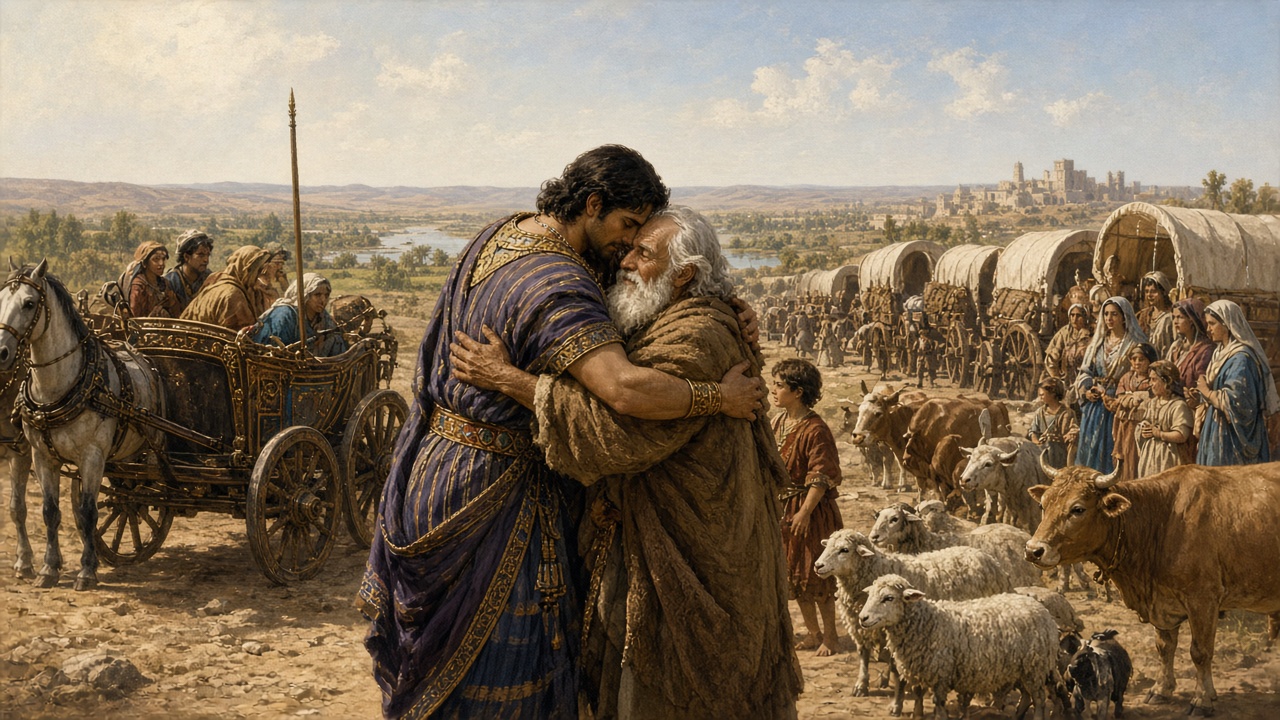
28Incha Jacobpe Judámerrig Joséweisrø merrab punrrai ørøbig køn, Joséwan eshkaben Gosénsrø nun katønrrab attrai. Incha Gosén pirausrø chab pubelø køn. 29Inchen Josébe nui møskawan utønrrab yamig niga luløb kaullimera sruigwan tamara, Israel nui møskawan Gosénsrø utønrrab webibig køn. Incha møskawan ashippe, naashiburab ira, pasramisra, truba truba yana kishibig køn.
30Inchen Israelbe Joséwane trenchibig køn:
—Møimbe ñun na ashib asha, ñi øsig ka wabig kuin kui wetørrawabe, nabe chi isumø, ka kwamønrrun— cha.
31Incha Josébe nui nunelanba nui møskawei yau misaameranba trenchibig køn:
—Na Faraónwan ashchab inrrab inchar cha, nun wammørøsrkønrrab: “Nai nuneløba, nai møskawei yau misaameraba Canaán pirausrø warabeløbe naba kørrømisra warønrrab amrrun chinrrab”. 32Pøs nømbe ubisha ashibelø waara karrøgøbelø treelø køn chinrrab. Incha nømui ubishameran køben, waarameran køben chigurrimbunø nøm tøgaguilan køben srua amrrun” cha.
33Inchawei Faraón ñimun wama: “¿Ñimbe chi marøbelø køgue?” cha payene, 34ñimbe øya løtønrrigay chibig køn: “Nam ñui karuiløbe matsøreg ureemera kurri møingatig nam lata, namui kølli misaamera lata waara karrøgøbelø ker” cha. Trumaybe ñimbe Gosén pirau warønrrabguen chibig køn. kaguende egipciomerabe ubisha ashibelane purø trømbøig kui inchibelø køn cha.
Did you know?
Israel Goes Down to Egypt
- As Israel set out for Egypt with all that he had, he stopped at Beersheba and offered sacrifices to the God of his father Isaac. Beersheba, meaning well of the oath or well of seven, was a well Abraham dug and named after a compact with Abimelech; when Isaac reopened it, he gave it the same name. It was a favorite dwelling of both patriarchs, and there that night God spoke to Jacob in a vision, telling him not to fear going down to Egypt, for he would make him a great nation there.Sources: the Bible text itself · Beersheba
- Jacob sent Judah ahead to Joseph for directions to Goshen, an Egyptian district east of the Nile, apparently near the royal residence, where the family remained until the Exodus. Easton's Bible Dictionary (1897) calls it the best of the land, now a desert, and also the land of Rameses. Joseph told his brothers to say they had raised livestock from youth, so they might settle there, because shepherds were detestable to the Egyptians; that dictionary suggests Pharaoh was probably Apopi, last of the Hyksos, who welcomed these Asiatic shepherds, while native Egyptians abhorred them, though some argue Joseph arrived later, under Thothmes III, after the Hyksos were expelled.Sources: the Bible text itself · Goshen · Pharaoh (of Joseph)
- The chapter counts sixty-six of Jacob's direct descendants who came to Egypt, not counting the wives of his sons, and seventy when Joseph's two sons already born in Egypt are included. Leah's sons and her daughter Dinah are named in that tally, although Easton's Bible Dictionary (1897) says Leah herself had died in Canaan before the journey and was buried in the cave of Machpelah; Rachel had died earlier giving birth to Benjamin and was buried on the way to Ephrath, that is, Bethlehem. Manasseh and Ephraim were born to Joseph in Egypt by Asenath, daughter of Potiphera, priest of On, a center of sun-worship that the Septuagint and Vulgate call Heliopolis.Sources: the Bible text itself · Leah · Rachel · On
Notes written with AI assistance from open sources (Theographic Bible Metadata, CC BY-SA 4.0; Easton’s Bible Dictionary, public domain) and reviewed before publishing.
Places in this chapter
- Egypt · 30.129, 31.308 · verses 1, 3, 4, 5, 6, 7, 8, 20, 26, 27
- Canaan · 32.767, 35.333 · verses 6, 12, 31
- Heliopolis · Today: Ain Shams · 30.129, 31.308 · verse 20
- Goshen · Today: Goshen 1 · 30.799, 31.834 · verses 28, 29, 34
Only places identified with high confidence are shown (90% or more according to the scholarly sources compiled by OpenBible). Period map: DARE (Digital Atlas of the Roman Empire), CC BY 4.0; modern map: © OpenStreetMap contributors; places: OpenBible.info (CC BY 4.0).
Credits and license for this translation
Nacom Pejume Diwesi po diwesi pena jume diwesi xua Jesucristo yabara tinatsi
New Testament in Guambiano
copyright © 2010 Wycliffe Bible Translators, Inc.
Language: Guambiano
Translation by: Wycliffe Bible Translators, Inc.
Copyright Information
© 2010, Wycliffe Bible Translators, Inc. All rights reserved.
This translation text is made available to you under the
terms of the Creative Commons License: Attribution-Noncommercial-No Derivative Works.
( http://creativecommons.org/licenses/by-nc-nd/3.0/ )
In addition, you have permission to port the text to different file formats, as long as you
do not change any of the text or punctuation of the Bible.
You may share, copy, distribute, transmit, and extract portions
or quotations from this work, provided that you include the above copyright
information:
You must give Attribution to the work.
You do not sell this work for a profit.
You do not make any derivative works that change any of the actual words or punctuation of the Scriptures.
Permissions beyond the scope of this license may be
available if you contact
us with your request.
The New Testament
in Guambiano
© 2010, Wycliffe Bible Translators, Inc. All rights reserved.
This translation is made available to you under the terms of the
Creative Commons Attribution-Noncommercial-No Derivatives license 4.0.
You may share and redistribute this Bible translation or extracts from it in any format, provided that:
You include the above copyright and source information.
You do not sell this work for a profit.
You do not change any of the words or punctuation of the Scriptures.
Pictures included with Scriptures and other documents on this site are licensed just for use with those Scriptures and documents.
For other uses, please contact the respective copyright owners.
2014-04-25
Source: http://ebible.org/gum/ · eBible.org