Genesis 4
Nacom Pejume Diwesi po diwesi pena jume diwesi xua Jesucristo yabara tinatsi · Tap a verse to see its cross-references.
Cainba Abelba
1Adanbe nui srai Evaba unø tøgagønrrab pailø waramisrøbelø køn. Incha Evabe kwanrriig kørrømisra, Cain kal labene, trenchibig køn: “Na unø tøgagømig Jehová treeg kønrrain køben, kan møg-unø tøgaguinatan” cha. 2Incha katø wendøbe Cainwei nuneg Abelwan tøgamisrig køn. Abelbe ubisha ashibig køben, Cainbe pirøwan kwallibig kuig køn. 3Inchen kan maya yana køsrøn puraiben, Cainbe Jehováwan ketamig nui kwaliiløyugurri srua arrubig køn. 4Inchen Abelgucha nui ubishamera ke srøsrø lluilan srua arrubig køn, sebowanba. Inchen Jehovábe Abelwanba tru nui kettrab srua arrigwanba truba tab kui ashibig køn. 5Trune Cainwane tab kui ashmuig køn, tru nø keta tranigwan chigucha. Inchen Cainbe truba trømbøig namuben, nui maløbe ke minchiptinchibig køn.
6Treenchene, Cainwane Jehovábe trenchibig køn:
—¿Chindimbarre namøgu? cha. ¿Chindimbarre ñui maløbe ke peg misrøptinnda? cha. 7Ñi sølwan isua marig kuimbe, ñibe utsøbasrmø kurraasha pasrabsruinrrun cha. Inchendø ñi sølwan isua marmuikkurrimbeh, kaigwan matrai inchabiibe ñun megambunrrab ¡katø! muniitø pasran cha. Inchen køben ñibe tru kaig marmumigwane ñi kananrrabguen— cha.
8Cainbe nui nuneg Abelwane trenchibig køn:
—Chugøben lliranrrab amun— cha. Indig yandø tru llirab amønaisrømbe Cainbe nui nuneg Abelwan namappe, kweechibig køn.
9Inchene Jehovábe Cainwane trencha payibig køn:
—¿Ñui nuneg Abelbe chu unah?— cha. Inchen nøbe trencha løtabig køn:
—Chindindøbeh cha. ¿Nagan nai nunewan ke tru ashib wendautø pasrabig kuitarru?— cha.
10Inchene Jehovábe trenchibig køn:
—¿Chi margu? cha. Ñui nunewei animbe piraugurri trashib nan wamøtan cha. 11Ñibe larrø trømbøig nebuinanrrabig kørrømisrøb, tru ñui nuneg Abelwan ñi kweechen ani lusigwan muchib piraugurri ñune webya inrrai wegutsig kørrømisrøb inchabguen cha. 12Pirøwan kwallib megaingucha, yandø mamig misrmønrrabig køn cha. Inchen ñibe piraube punø panrrø, punø panrrø ka lliraitø, lliraitø chuguen tsub tsumibe chigaig kønrrabguen— cha.
13Inchene Cainbe Jehováwan trenchibig køn:
—Nan øyeeg møra pasrønrrai mariibe purø nuig køtan cha, pasramguengaikke. 14Møi na tsuinukkurri yandø nan weguchen; ñui merrabgurrimbe møimbe trubatø unamønrrun cha, pirø muba kuimburab lliraitø, lliraitø chuguen tsub tsumig chigaikke. Inchen mugøben nan ashibiibe nane kwetchautan— cha.
15Inchene Jehovábe trenchibig køn:
—Møikkøben Cainwan kweechibiibe siete pijisken purab trømbøig nebuin pasrønrrun— cha. Incha Jehovábe Cainwane kan siñal asamdiig tøgaig kønrrai marøbig køn, mugøben ashagucha, nune kweechimønrrai. 16Incha Cainbe Jehováwei merrabgurri yandø tarømisra ya, Nod tain pirau Edén pørr kalabgatømaysrø tsubig køn.
Cainweinukkurri Amrrub Misaamera
17Cainbe nui sraimba unø tøgagønrrab pailøba waramisrøbelø køn. Inchen sraimbe kwanrriig kørrømisra, unø tøgamisrig køn, tru Enocwan. Incha Cainbe kan ciuda mara pasrabe, truigwane tru nui nusrkai Enocwei munchin pasrøbig køn. 18Incha Enocbe kan nusrkai Irad taig tøgaguig køn. Inchen tru Iradbe Mehujaelwei møskain køben, Mehujaelbe Metusaelwei møskain køben, Metusaelbe Lamecwei møskain kuig køn.
19Incha Lamecbe nuyasig pagatø ishumburmera tøgaguig køn. Kan ishuwei munchibe Ada købene, katøgan ishuwei munchibe Zila købig køn. 20Adabe kan unø tøgamisrig køn, tru Jabalwan. Tru merrabsrø kølli misag Jabalweinukkurri pølbasra amrrub mendig kuig køn, carpa lasrua pønsraiIøyu warab, katø nømbe ushamera karrøgøb inchibelø. 21Jabalbe kan nuneg Jubal taig tøgaig køben, tru merrabsrø kølli misag Jubalweinukkurri pølbasra amrrub mendig kuig køn, mayeelø arpa kønabeløba, lus urrabeløba. 22Inchen Zilagucha Tubal-Cainwan tøgaguig køn. Truibe chigurrimbunø bronce tsandzøntøgaba, hierro tsandzøntøgaba larrø tabelø marøbig kuig køn. Katø Tubal-Cainwei nuchaabe Naama købig køn.
23Kan piji Lamecbe nui sralan trenchibig køn:
—Adaba, Zilaba, nai wamwan mørtray cha. Lamecwei sralø, nai wamwan tab mørtray cha. Nan kørriinchen, nabe kan møwan kweechib, nan mur kebachen, nabe kan matsinan kweechar cha. 24Cainwanma siete pijisken purab trømbøig nebunrrai pasrig kuibe, Lamecbe sietebatø setenta pijisken treetø treetø purab trømbøig nebuin pasrønrrun” cha.
25Adánbe nui sraimba unø tøgagønrrab pailøba waramisrøbelø køn.
Incha Evabe kan nusrkai tøgagua, trunune Set munchi pasrig køn. “Tiusbe nane katøgan nusrkai trandan cha, Cain Abelwan kweetsig købene truburø tøgagønrrai.” 26Incha Setgucha kan nusrkai tøgagua, truigwane Enós munchi pasrig køn.
Indig truyugurrimbunø yandø møgueløbe Jehováwei munchiwan wamab miabelø køn.
Did you know?
Cain, Abel, and Life East of Eden
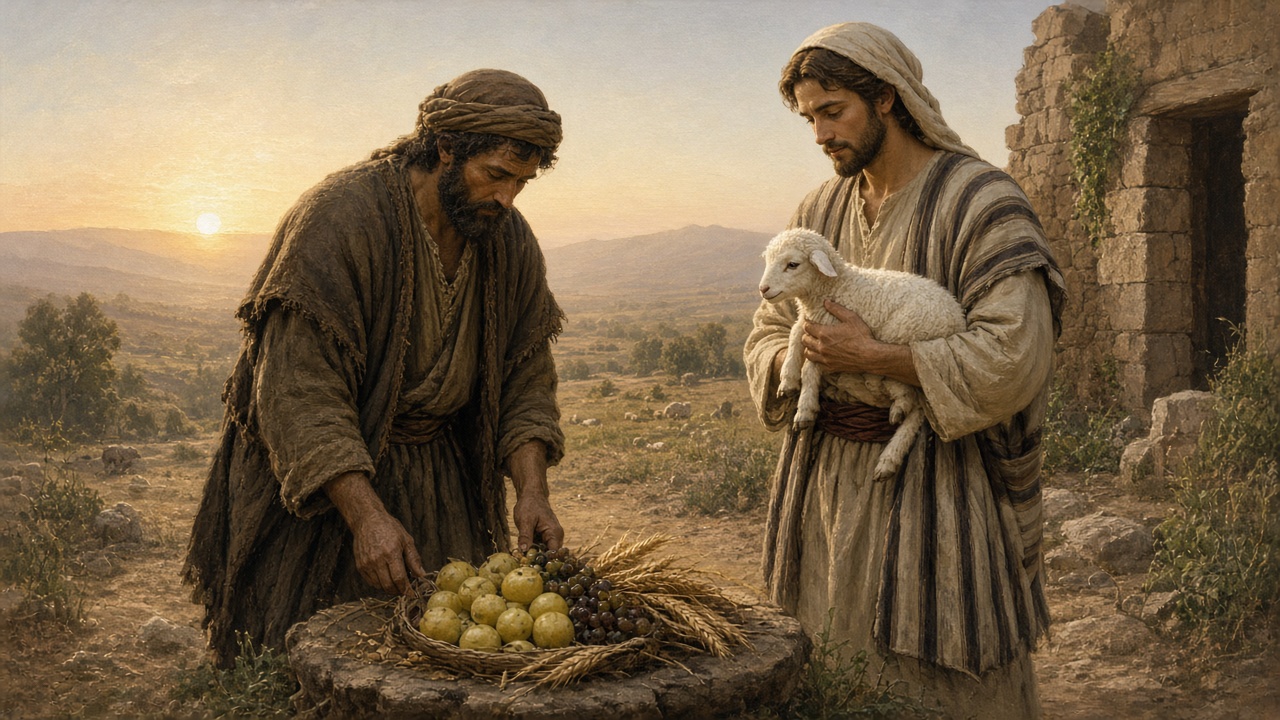
- Abel’s Hebrew name means “breath” or “vanity.” He kept sheep, while his brother Cain tilled the soil: Abel brought the best portions of the firstborn of his flock, and Cain brought fruit of the ground. Easton's Bible Dictionary (1897) reads the phrase “in process of time” (margin, “at the end of days”) as probably referring to the Sabbath.Sources: Abel · Cain · the Bible text itself
- After Abel’s death, Cain settled in the land of Nod, east of Eden, a name meaning exile, wandering, or unrest. There he built a city and named it after his son Enoch. Easton's Bible Dictionary notes that this is the first city mentioned in Scripture.Sources: Nod · Enoch (son of Cain) · the Bible text itself
- Lamech, fifth in descent from Cain, married two women, Adah and Zillah. Easton's Bible Dictionary calls his address to them the only extant example of antediluvian poetry, sometimes known as “Lamech’s sword-song.” Their children are tied to early ways of life: Jabal with tents and livestock, Jubal with the harp and flute, and Tubal-cain with forging bronze and iron.Sources: Lamech (descendant of Cain) · Adah (wife of Lamech) · Zillah · the Bible text itself
Notes written with AI assistance from open sources (Theographic Bible Metadata, CC BY-SA 4.0; Easton’s Bible Dictionary, public domain) and reviewed before publishing.
Credits and license for this translation
Nacom Pejume Diwesi po diwesi pena jume diwesi xua Jesucristo yabara tinatsi
New Testament in Guambiano
copyright © 2010 Wycliffe Bible Translators, Inc.
Language: Guambiano
Translation by: Wycliffe Bible Translators, Inc.
Copyright Information
© 2010, Wycliffe Bible Translators, Inc. All rights reserved.
This translation text is made available to you under the
terms of the Creative Commons License: Attribution-Noncommercial-No Derivative Works.
( http://creativecommons.org/licenses/by-nc-nd/3.0/ )
In addition, you have permission to port the text to different file formats, as long as you
do not change any of the text or punctuation of the Bible.
You may share, copy, distribute, transmit, and extract portions
or quotations from this work, provided that you include the above copyright
information:
You must give Attribution to the work.
You do not sell this work for a profit.
You do not make any derivative works that change any of the actual words or punctuation of the Scriptures.
Permissions beyond the scope of this license may be
available if you contact
us with your request.
The New Testament
in Guambiano
© 2010, Wycliffe Bible Translators, Inc. All rights reserved.
This translation is made available to you under the terms of the
Creative Commons Attribution-Noncommercial-No Derivatives license 4.0.
You may share and redistribute this Bible translation or extracts from it in any format, provided that:
You include the above copyright and source information.
You do not sell this work for a profit.
You do not change any of the words or punctuation of the Scriptures.
Pictures included with Scriptures and other documents on this site are licensed just for use with those Scriptures and documents.
For other uses, please contact the respective copyright owners.
2014-04-25
Source: http://ebible.org/gum/ · eBible.org