Genesis 1
Nacom Pejume Diwesi po diwesi pena jume diwesi xua Jesucristo yabara tinatsi · Tap a verse to see its cross-references.
About this book
About Genesis
- Among Jews the book is called Bereshith, meaning in the beginning, from its first word; Christians know it as Genesis, the Greek name used in the Septuagint, meaning creation or generation, because it tells of the origin of all things. It is the first of the five books that Jews call the Torah, the law, and that are collectively known as the Pentateuch, a Greek term for the five-fold book. Easton thinks the division into five books probably came from the Greek translators, and that the familiar book names are Greek.Sources: Easton: Genesis
- Easton's Bible Dictionary (1897) attributes Genesis to Moses and allows that he may have used older documents or traditions already current in his time. It gives no date of composition. By what Easton calls the usual computation, the narrative spans about 2,369 years.Sources: Easton: Genesis
- Easton divides Genesis into two principal parts. Chapters 1-11 give a general history of humankind down to the Dispersion; chapters 12-50 give the early history of Israel down to the death and burial of Joseph. Five figures organize the successive periods: Adam, Noah, Abraham, Isaac, and Jacob.Sources: Easton: Genesis
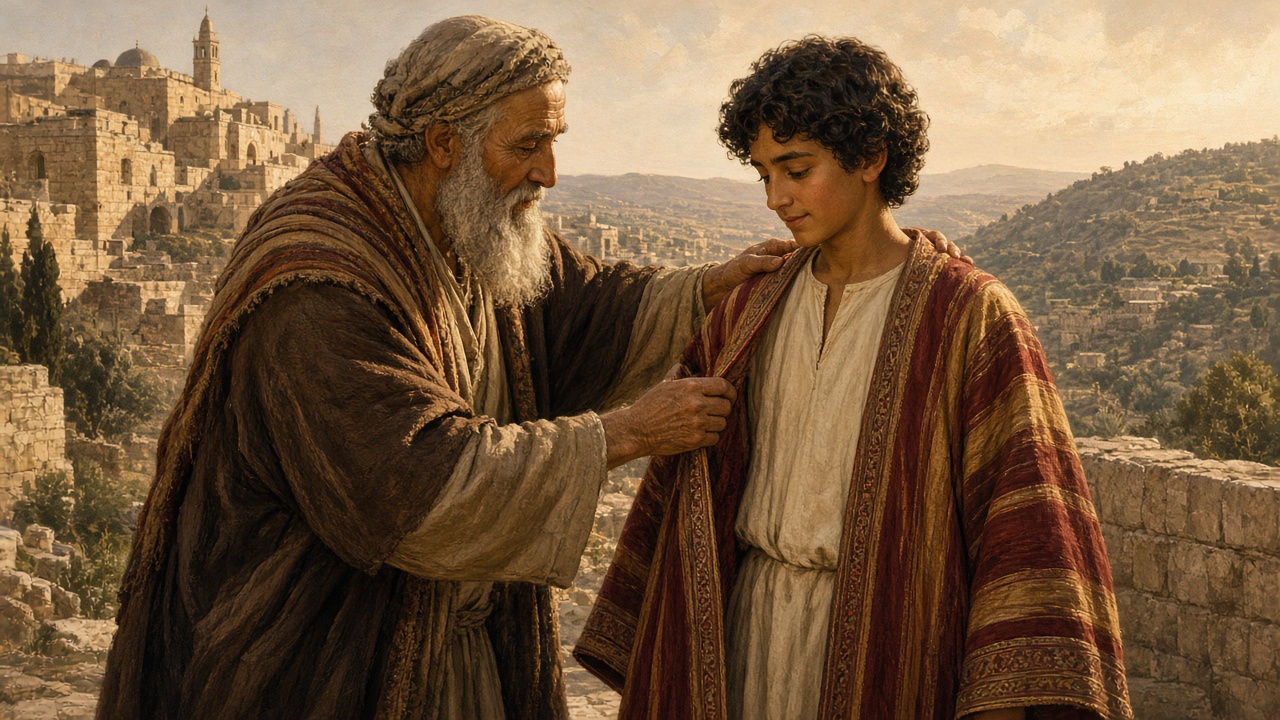
- Abram sojourned in Chaldea until he left Ur and traveled some three hundred miles north to Haran. Jacob later fled to Laban's house at Haran in Mesopotamia and married Laban's daughters, Leah and Rachel. The narrative then reaches Egypt: Easton takes Joseph's Pharaoh to be probably Apopi, the last Hyksos king, while some argue for the reign of Thothmes III.Sources: Abraham · Laban · Pharaoh (of Joseph)
- Easton notes that Sarah, Abraham's wife, died at one hundred and twenty-seven, the only woman's age recorded in Scripture, and that her death led Abraham to buy the cave of Machpelah as a family burial place.Sources: Sarah
Notes written with AI assistance from open sources (Theographic Bible Metadata, CC BY-SA 4.0; Easton’s Bible Dictionary, public domain) and reviewed before publishing.
Srøsrø Pølbasrig
1Ke srøtø chigucha chigaaben, Tiusbe srømbalameranba, pirøwanba marig køn. 2Pirøbe mumay kuinguen asamgaig chiguchagaig pasrøben, pimerabe purø trømbø løstiig pinøgasraig pasrabig køn. Inchen Tiuswei Espíritube pi palawan llirabig køn. 3Tiusbe trenchibig køn: “Tør kønrrain” cha. Inchen tørbe misrøbig køn. 4Incha Tiusbe tørwane tab kui asha, tørwane løstøyugurri nuingui mendamarøbig køn. 5Tiusbe tørwane “kwaløm” cha wamappe, løstiigwane “yem” cha wamabig køn. Inchen maabenba løtsøba købig køn, tru srøsrø kwaløm.
6Katø Tiusbe trenchibig køn: “Larrø lendiig chiguchagaig kønrrain cha, tru pimeran nuingui, nuingui tarømartrabig tøbøtag pasrønrrai.” 7Incha Tiusbe tru larrø lendiig chiguchagaigwan marøbig køn, tru pimeran tarømarøbigwan. Tru pimera pala købelanba, umbu købelanba nuingui tarømarig kørrømisrtrai. 8Incha Tiusbe tru larrø lendiig chiguchagaigwane “srømbala” cha wamabig køn. Inchen maabenba, løtsøba køben, pa kwaløm købig køn.
9Katø Tiusbe trenchibig køn: “Srømbalamerai umbu pimera købeløbe kanbalatø misrtrain cha, pur kenamisrtrai.” Inchen treeg kuig køn. 10Incha purwane Tiusbe “pirø” cha wamappe, pimera kanbalatø misrigwane “marmera” cha wamig køn. Incha Tiusbe tabig kui asig køn. 11Incha Tiusbe trenchibig køn: “Pirøbe misringarubash cha, pilli puzheelø chi kaumera køppe, treeg yellzheelø tøgar, mamig nigab tusrmera, chi tusr køppe, treeg yell truyu tøgar pirau treeg kønrrai. Inchen treeg kuig køn. 12Inchen pirøbe pilli puzheelø chi kaumera køppe, treeg yellzhig nigar, mamig nigab tusrmera yellzheelø truyu nigar misrøbig køn, nø chi tusr køppe, treekke. Inchen Tiusbe tabig kui asig køn. 13Inchen maaben misra, løtsøgualmaben, pøn kwaløm købig køn.
14Tiusbe katø trenchibig køn: “Tru srømbala larrø lendiig chiguchagaigube pilabelø kønrrain cha, kwalømwanba, yemwanba tarømartrabelø, iiløbe chi utømera køben amrrubelan ashib kømig kønrrai, kwalømmerawan, pilamerawan.” 15Incha truiløbe srømbalasrø larrø lendiig chiguchagaigu pilabelø kønrrain cha, pirøwan pilønrrabelø.” Inchen treeg kuig køn. 16Tiusbe pagatø pilabelø nørreelan marig køn: tru pilabig larrø tøriibe kwaløm piløben, pilabig tre tør kømíibe yem piløben inchai, katø nøbe kønchabiimeragucha marig køn. 17Tiusbe tru srømbalamera larrø lendiig chiguchagaigu iilan pønsrøppe, pirøwan pilønrrai pønsraig køn. 18Kwalømwan lata, yemwan lata pilamburab pilabeløbe nøm pønrrønrrai marig køn, tørwanba, løstiigwanba tarømartrabelø. Incha Tiusbe tabig kui asig køn. 19Inchen maaben misra, løtsøgualmaben pib kwaløm købig køn. 20Incha Tiusbe trenchibig køn: “Pimerabe chigurrimbunø øsiguelø tøgagøbash cha, katø illimera tru pirøbalawan llirabeløgucha kønrrain cha, tru larrø lendiig chiguchagaigu srømbalamerawan amøñibelø.” 21Incha Tiusbe piyu ushamera kwaaramdø nørreelø marig køn. Chigurrimbunø øsiguelø kønab purrønrrabelanba, chitøgucha nøm chimera køppe, treelø kønrrai pimerabe treeg misringaruig køn, katø chigurrimbunø kwaldzariimera tøgargucha nøm chi køppe, treeløtøwein kønrrai. Incha Tiusbe tabig kui asig køn. 22Incha Tiusbe truilane mayanguen tabig kønrrai marabe, trenchibig køn: “Larrø nørrø tøgagøb, larrø nørrø larrøbitchigay cha, marmerayu netsab, katø illimeragucha larrø nørrø larrøbitchigay” cha. 23Inchen maaben misra, løtsøgualmaben, truibe trattrø kwaløm købig køn.
24Incha Tiusbe trenchibig køn: “Pirøbe øsiguelø misringarubash cha, kusreeg ushamera køben, namig ushamera køben, srala ambubelø køben, nøm chimera køppe, treelø kønraingue.” Inchen treeg kuig køn. 25Tiusbe namig ushamera nøm chimera køppe, treelø kønrrai marøb, katø kusreeg ushamera nøm chimera køppe, treelø kønrrai marøb, maya ushamera pirau sralig ambubelø nøm chimera køppe, treelø kønrrai marøbig køn. Incha Tiusbe tabig kui asig køn.
26Incha Tiusbe trenchibig køn: “Møg misag margun cha, nam mailø køben ke tre lataitøwein køb, katø nam lataitøwei isub, marøbelø kønrrai. Incha maryu piyaumeran, srømbala amøñib illimeran, kusreeg ushameran, namig ushameran, pirau sralig ambub ushameran, truilø nun chinchaingaig, nø ashib tøga pasrønrrain” cha.
27Incha Tiusbe møwan marøppe nø maig køben ke tre lataitøwein kønrrai marig køn. Pøs nøbe tre lataitøwein kønrrai marig køn. Møg misag, ishug misag treeg marig køn.
28Incha Tiusbe mayanguen tabig nebuilø kønrrigay chib, trenchibig køn: “Srøig larrøbitchabig yellmera tøgagøb, srøitø srøitø larrø nørrø nemisrtrigay cha. Ñimbe pirøwan netsøgana, pirøwane ñim ashib tøga pønrramisra, chinchaingaig ñim ashib karunrrigay cha, maryu piyaumeran, pala amøñib illimeran, katø maya ushamera pirau srala ambubelan købengue.”
29Incha Tiusbe trenchibig køn: “Asay cha, nabe ñimune pirau mamig nigab kauzheelø yellmera tøgartø kønrrai tranar cha. Katø maya tusrmera mamig nigabelø, yell tøgarmera tranar cha, iibe kerriguba ñim mab kømig kønrrai.” 30Inchen pirau namig ushameranba, pala amøñib illimeranba, katø maya ushamera pirau srala ambubelanba, truilane pilli puzhigwan mab kømig tranar cha. Inchen treeg kuig køn.
31Incha kerrigu Tius nø mariilan ashabe, truba truba tabig kui ashibig køn. Inchen maaben misra, løtsøgualmaben, trattrø y kan kwaløm købig køn.
Did you know?
The creation of heaven and earth
- The chapter tells the making of the heavens and the earth over six days, and each day closes with the same refrain: there was evening, and there was morning. Light is brought into being on the first day and named “day,” while the darkness is named “night.” Only on the fourth day are two great lights and the stars set in the expanse of the sky, to separate day from night and to mark seasons, days, and years.Sources: the Bible text itself
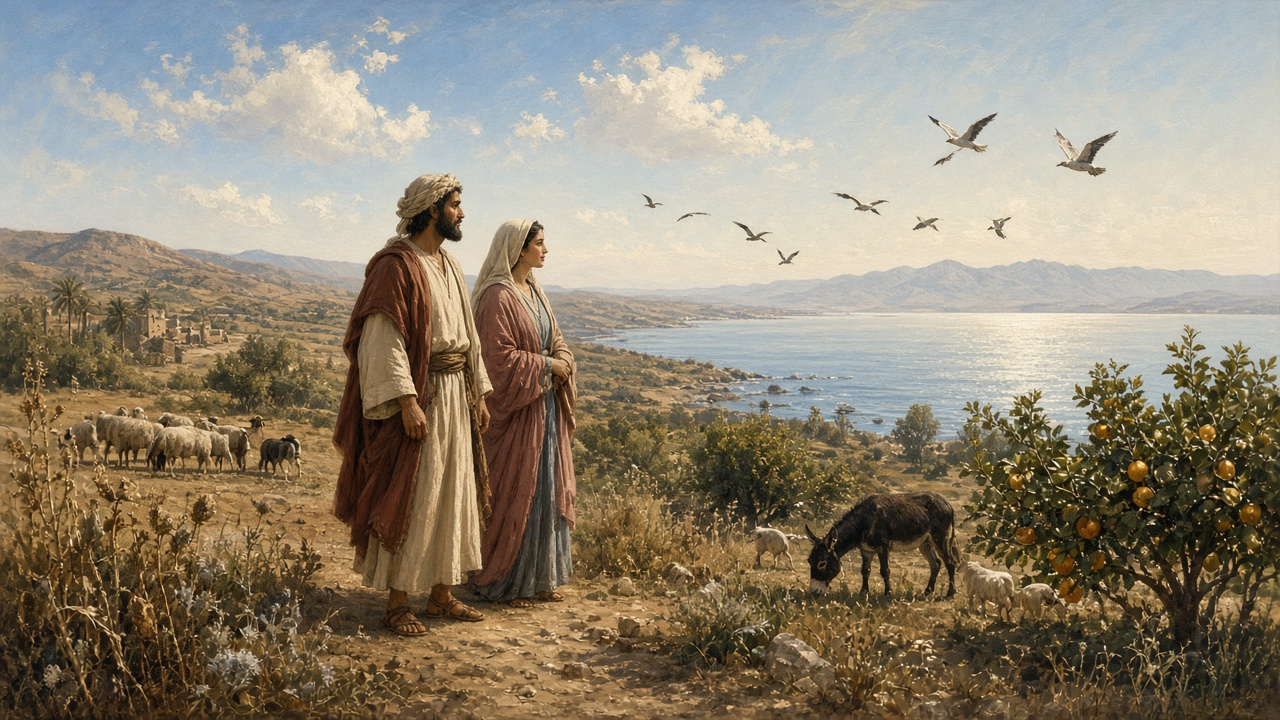
- The story opens on an earth that is formless and void, with darkness over the surface of the deep and the Spirit of God hovering over the waters. God makes an expanse and calls it “sky,” separating the waters above from the waters below. The waters under the sky are gathered into one place so that dry land, called “earth,” and the seas appear, and the earth brings forth seed-bearing plants and fruit trees.Sources: the Bible text itself
- On the sixth day livestock, land crawlers, and beasts of the earth are made, and human beings are created male and female in the image of God, blessed, and told to fill the earth and rule the other creatures. Seed-bearing plants and fruit trees are given to them for food, and every green plant to every creature that has the breath of life, and God looks at all that has been made and calls it very good. One event chronology places the start of the creation of all things in 4003 BC and gives it a duration of seven days.Sources: the Bible text itself · Creation of all things
Notes written with AI assistance from open sources (Theographic Bible Metadata, CC BY-SA 4.0; Easton’s Bible Dictionary, public domain) and reviewed before publishing.
Credits and license for this translation
Nacom Pejume Diwesi po diwesi pena jume diwesi xua Jesucristo yabara tinatsi
New Testament in Guambiano
copyright © 2010 Wycliffe Bible Translators, Inc.
Language: Guambiano
Translation by: Wycliffe Bible Translators, Inc.
Copyright Information
© 2010, Wycliffe Bible Translators, Inc. All rights reserved.
This translation text is made available to you under the
terms of the Creative Commons License: Attribution-Noncommercial-No Derivative Works.
( http://creativecommons.org/licenses/by-nc-nd/3.0/ )
In addition, you have permission to port the text to different file formats, as long as you
do not change any of the text or punctuation of the Bible.
You may share, copy, distribute, transmit, and extract portions
or quotations from this work, provided that you include the above copyright
information:
You must give Attribution to the work.
You do not sell this work for a profit.
You do not make any derivative works that change any of the actual words or punctuation of the Scriptures.
Permissions beyond the scope of this license may be
available if you contact
us with your request.
The New Testament
in Guambiano
© 2010, Wycliffe Bible Translators, Inc. All rights reserved.
This translation is made available to you under the terms of the
Creative Commons Attribution-Noncommercial-No Derivatives license 4.0.
You may share and redistribute this Bible translation or extracts from it in any format, provided that:
You include the above copyright and source information.
You do not sell this work for a profit.
You do not change any of the words or punctuation of the Scriptures.
Pictures included with Scriptures and other documents on this site are licensed just for use with those Scriptures and documents.
For other uses, please contact the respective copyright owners.
2014-04-25
Source: http://ebible.org/gum/ · eBible.org