Luke 16
Nuevo Testamento Guaraní Pe · Tap a verse to see its cross-references.
Tembiócuai iya imbaembae omongata vae
1Jare Jesús jei jemimboe reta pe:
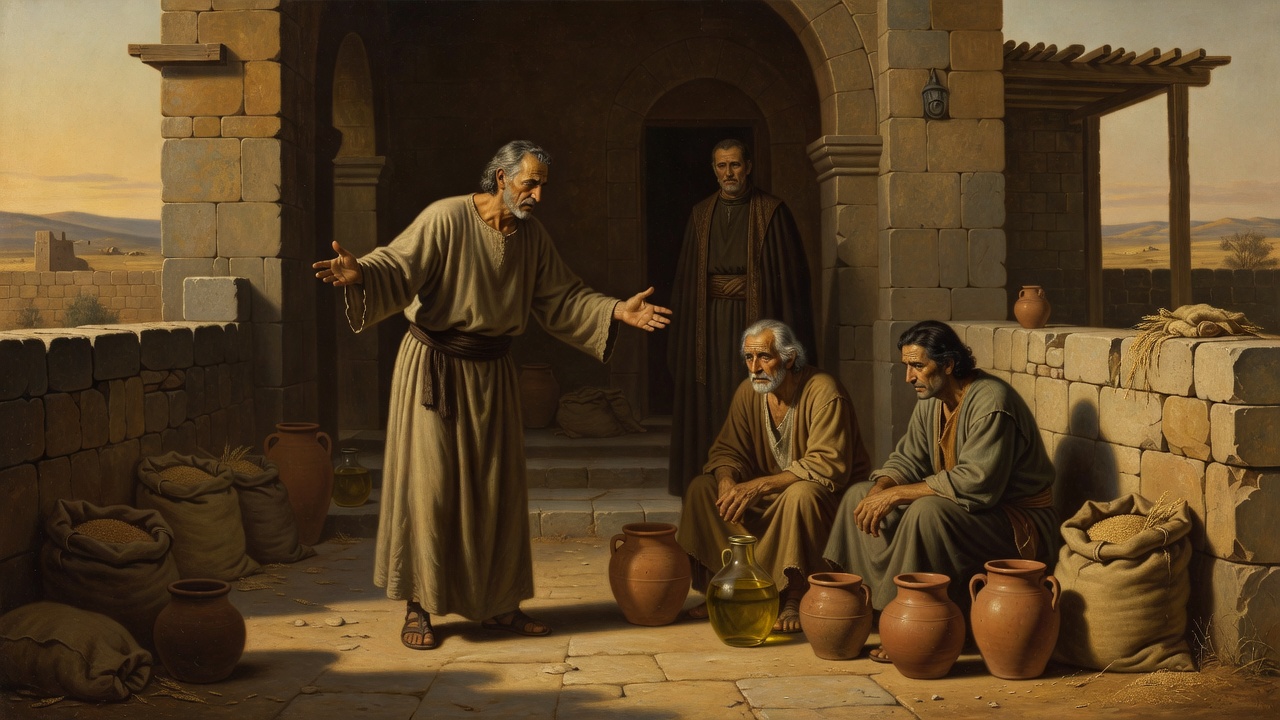
—Oico metei cuimbae oicocatu vae jare jembiócuai vi. Jeracua cuimbae pe quirai jembiócuai omongata imbaembae —jei—. 2Jayave cuimbae oeni jembiócuai jare jei chupe: ¿Mbae pa co cuae nereracua cheve vae? Emombeu cheve mbae reyapo opaete chembaembae ndive vae. Echa romoeta co —jei, jei—. 3Jayave tembiócuai jei iyeupe ipɨa pe: ¿Mbae ra ayapota? Echa cheya chemoeta. Mbaeti chepuere ayoo ɨvɨ corepoti amongana vaera. Mbaeti vi chepuere ayerure iru vae reta pe mbaembae re. Echa chemarata co —jei, jei—. 4Aicuaa ma mbae ayapota vae. Corai ayapo yave, cheya chemoe ma yave, iru vae reta oñangarecota cheré —jei, jei—. 5Jayave omondo omombeu vaera opaete iya pe mbae re ipía vae reta yogüeru vaera ipɨri. Jayave oparandu metei vae pe: ¿Mbovɨ pa ndepía cheya pe? —jei, jei—. 6Cien litro aceite —jei, jei—. Jayave tembiócuai jei chupe: Co oi ndetupapire. Eguapɨ voi jare eicuatía cincuenta litro —jei, jei—. 7Jayave oparandu iru vae pe: ¿Mbovɨ pa ndepía cheya pe? —jei, jei—. Cien arroba trigo —jei, jei—. Jayave tembiócuai jei chupe: Co oi ndetupapire. Eicuatía ochenta arroba —jei, jei—. 8Jare cuimbae oicocatu vae jei jembiócuai jupi mbae vae oyapo vae pe: Icavi yae reyapo ndeyeupe. Ndearacuaa co —jei, jei—. Echa cuae ɨvɨ pegua reta iyaracuaa yae corepoti re Tumpa pe oyeócuai vae reta güi —jei—.
9Jeta vese corepoti oyeporu icavi mbae vae oyeapo vaera. Erei che jae peve, peiporu pecorepoti peyapo vaera peamingo retara. Echa pemano yave, peeyata pecorepoti mbaeti peiporu vae. Erei peyapo yave peamingo retara, jae reta pemboresiveta perenta opa mbae vae pe —jei Jesús chupe reta—. 10Oime yave quia ñandepuere yarovia catu mbae michi vae re vae, ñandepuere vi yarovia catu mbae tuicha vae re. Jae ramiño vi oime yave quia oporombotavɨ mbae michi vae re vae, oporombotavɨta vi mbae tuicha vae re —jei—. 11Jae rambue mbaeti yave Tumpa ipuere pererovia catu corepoti re - echa jeta vese corepoti oyeporu icavi mbae vae oyeapo vaera - ngaraa vi pererovia catu mbaembae icavi vae ara pegua re —jei—. 12Jare oime yave quia mbaeti ñandepuere yarovia catu iru vae icorepoti re vae, ngaraa ñamee chupe corepoti güɨnoi vaera iyeupeguara —jei—.
13Metei tembiócuai oipota yave oyeócuai mócoi iya pe, omotareɨta metei iya jare oaɨuta iru iya, ani oparavɨquɨ cavita metei iya pe jare güɨroɨrota iru iya. Mbaeti pepuere peyeócuai Tumpa pe corepoti peaɨu reve —jei.
14Jare fariseo reta cuae oendu yave, oyóyai Jesús. Echa jae reta oipota yae corepoti. 15Jayave Jesús jei chupe reta:
—Pe reta peñembojupi iru vae reta jovaque. Erei Tumpa oicuaa pepɨa pe oi vae. Jare yepe tei iru vae reta pemboete yae, erei Tumpa oicuaa peyapo vae icavi mbae yae co —jei—.
Mboroócuai jare Tumpa iporoocuaia
16Ndei Juan ou mbove, Tumpa omombeu ñandeve yayapo vaera mboroócuai jare Tumpa iñee aracae omombeu vae reta jeigüe. Erei Juan omboɨpɨ omombeu ñee icavi vae Tumpa iporoocuaia regua, jare opaete vae oipota yae oique Tumpa iporoocuaia pe —jei—. 17Ara jare ɨvɨ opata. Erei mbaeti etei ñandepuere ñamboai mboroócuai —jei—.
Omombo jembireco vae
18Oime yave quia omombo jembireco vae, güɨreco yave iru vae jembirecora, oñuvanga menda re. Jare oime yave quia oñemombo ma vae güɨreco vae, jae vi oñuvanga menda re —jei—.
Cuimbae oicocatu vae jare Lázaro
19Oico metei cuimbae oicocatu vae temimonde ipora yae vae güɨnoi vae. Jecuaeño oñemonde cavi yae jare ara ñavo oyapo arete —jei—. 20Jare oico vi iru cuimbae Lázaro jee vae. Cuae cuimbae jecuaeño oyerure iru vae reta pe mbaembae re. Lázaro icaracha yae. Ara ñavo iru vae reta omoñeno Lázaro cuimbae oicocatu vae jonque jóvai —jei—. 21Lázaro oipota jou tembíu iperasoraso cuimbae oicocatu vae imesa güi oa vae. Jare ñaɨmba reta yogüeru oere Lázaro icaracha reta —jei—. 22Jare metei ara cuimbae jecuaeño oyerure iru vae reta pe mbaembae re vae omano, jare araɨgua reta güɨraja Abraham oia pe. Jae ramiño vi cuimbae oicocatu vae omano jare oñeotɨuca —jei—. 23Jare cañɨtei pe cuimbae oicocatuse vae oiporara yae oi. Jayave jovaɨva jare oecha Abraham mombɨrɨ oi chugüi. Oecha vi Lázaro Abraham ndive —jei—. 24Jayave iñeeata reve jei: Cheru Abraham, cheparareco. Embou Lázaro oñono vaera ipoacaapɨ ɨ pe omoaquɨ vaera checu. Echa aiporara yae ai cuae tata pe —jei, jei—. 25Erei Abraham jei chupe: Cheraɨ, nemaendúa quirai nde reico ɨvɨ pe rambueve, nde renoi mbaembae icavi vae. Jae ramiño vi Lázaro oico ɨvɨ pe rambueve, mbaembae icavi mbae vae oyeapo chupe. Erei añave jae ipɨacatu oi jare nde reiporara rei —jei, jei—. 26Jae ramiño vi oime ñanepau pe mbaeti etei ñandepuere yaasa vae. Jae rambue roipota yave rojo pepɨri, mbaeti orepuere. Jae ramiño vi peipota yave peyu orepɨri, mbaeti pepuere —jei, jei—. 27Jayave cuimbae oicocatuse vae jei ye Abraham pe: Cuae jeco pegua ayerure ndeve, cheru, remondo vaera Lázaro cheru jenta pe —jei, jei—. 28Echa che oime anoi cinco cherɨvɨ. Emondo omombeu vaera chupe reta, agüɨye vaera jae reta vi yogüeru cuae roiporaraa pe —jei, jei—. 29Jayave Abraham jei chupe: Oime güɨnoi Moisés iporoócuai jare Tumpa iñee aracae omombeu vae reta oicuatiagüe vae. Tomongueta reta jocuae —jei, jei—. 30Jayave cuimbae oicocatuse vae jei Abraham pe: Ngaraa omongueta reta, cheru Abraham. Erei oyecuaa yave chupe reta omanogüe vae, oeya retata iñemongueta icavi mbae vae ipɨa pe oi vae —jei, jei—. 31Jayave Abraham jei ye chupe: Mbaeti yave oipota oyeapɨsaca Moisés iporoócuai jare Tumpa iñee aracae omombeu vae reta oicuatiagüe vae re, ngaraa oyapo Tumpa jei oyapo vaera vae yepe tei quia oicove ye ojo chupe reta omanogüe vae reta ipɨte güi —jei, jei.
Did you know?
Wealth, two masters, and Lazarus
- In Jesus' words about the rich man and Lazarus, the rich man cries out, 'Father Abraham,' and Abraham answers, 'Child.' Easton's Bible Dictionary (1897) explains the name Abraham as 'Father of a multitude' and describes him as the heir of the promises.Sources: the Bible text itself · Abraham
- Speaking to Pharisees who were scoffing at him, Jesus says that the Law and the Prophets were proclaimed until John, and that since then the gospel of the kingdom of God is being preached. Easton's Bible Dictionary (1897) calls John the Baptist the 'forerunner of our Lord,' says that his mission was the subject of prophecy, including Isaiah 40:3 and Malachi 3:1, and states that his birth took place six months before that of Jesus.Sources: the Bible text itself · John the Baptist
- A manager accused of wasting his master's possessions is told to turn in an account and give up his position. He has the debtors rewrite their bills, reducing a hundred measures of olive oil to fifty and a hundred measures of wheat to eighty, and the master commends the dishonest manager because he had acted shrewdly. Jesus then says that no servant can serve two masters, and that no one can serve both God and money.Sources: the Bible text itself
Notes written with AI assistance from open sources (Theographic Bible Metadata, CC BY-SA 4.0; Easton’s Bible Dictionary, public domain) and reviewed before publishing.
Credits and license for this translation
Nuevo Testamento Guaraní Pe
New Testament in Guaraní, Eastern Bolivian (BL:gui:Guaraní, Eastern Bolivian)
copyright © 2012 Wycliffe Bible Translators, Inc.
Language: Guaraní, Eastern Bolivian
Translation by: Wycliffe Bible Translators, Inc.
Guaraní, Eastern Bolivian [gui], Bolivia
Copyright Information
© 2012, Wycliffe Bible Translators, Inc. All rights reserved.
This translation text is made available to you under the
terms of the Creative Commons License: Attribution-Noncommercial-No Derivative Works.
( http://creativecommons.org/licenses/by-nc-nd/3.0/ )
In addition, you have permission to port the text to different file formats, as long as you
do not change any of the text or punctuation of the Bible.
You may share, copy, distribute, transmit, and extract portions
or quotations from this work, provided that you include the above copyright
information:
You must give Attribution to the work.
You do not sell this work for a profit.
You do not make any derivative works that change any of the actual words or punctuation of the Scriptures.
Permissions beyond the scope of this license may be
available if you contact
us with your request.
The New Testament
in Guaraní, Eastern Bolivian
© 2012, Wycliffe Bible Translators, Inc. All rights reserved.
This translation is made available to you under the terms of the
Creative Commons Attribution-Noncommercial-No Derivatives license 4.0.
You may share and redistribute this Bible translation or extracts from it in any format, provided that:
You include the above copyright and source information.
You do not sell this work for a profit.
You do not change any of the words or punctuation of the Scriptures.
Pictures included with Scriptures and other documents on this site are licensed just for use with those Scriptures and documents.
For other uses, please contact the respective copyright owners.
2014-04-25
Source: http://ebible.org/guiNT/ · eBible.org