Acts 20
Nuevo Testamento Guaraní Pe · Tap a verse to see its cross-references.
Pablo ojo Macedonia jare Grecia pe
1Opa ma tecorai yave, Pablo oeni oporogüɨrovia vae reta. Jayave opa omboaracuaa reta yave, oicuava jare ojo chugüi reta Macedonia cotɨ. 2Jare oguata opaete jocuae tenta reta rupi omboaracuaa cavi reve oporogüɨrovia vae reta. Jayave ojo ovae ɨvɨ Grecia pe. 3Jare opɨta joco pe mboapɨ yasɨ. Jare ɨ guasu rupi ojota yave joco güi Siria cotɨ, judío reta oñomboemboe oyapo vaera icavi mbae vae chupe. Jae rambue Pablo jei ojota Macedonia rupi. 4Jare yogüɨraja jae jupíe Sópater Berea pegua, Aristarco jare Segundo Tesalónica pegua reta, Gayo Derbe pegua, Timoteo, jare Tíquico jare Trófimo Asia pegua reta. 5Cuae reta yogüɨraja orerenonde, jare oreraro Troas pe. 6Erei arete mbɨyape ovu mbae vae pegua oasa yave, ore rojo ɨ guasu rupi Filipos güi, jare cinco ara pe rojo rovae Troas pe. Joco pe roñovae iru reta ndive, jare ropɨta joco pe siete ara.
Pablo opou Troas pe
7Jare semana iara tenondegua vae pe oporogüɨrovia vae reta oñemboatɨ tembíu omboyao vaera oyoupe. Jayave Pablo pɨareve pe ojota rambue, ipɨare catu imiari chupe reta. 8Jare jeta tembipe ñogüɨnoi jocuae o ɨvate vae pe yatɨ ñogüɨnoia pe. 9Jare jocuae o co mboapɨa ɨvate. Jare metei cunumi Eutico jee vae oguapɨ oi ventana pe, jare tanta oque oi. Jare Pablo jecuae imiari oi rambueve, cunumi oque oi rambue, oa joco güi icatu cotɨ ɨvɨ pe. Jare iru vae reta yogüɨraja oupi yave, oecha omano ma. 10Jayave Pablo ogüeyɨ jare oñaɨvɨ cunumi iárambue. Jayave oicuava jare jei:
—Agüɨye pepɨatɨtɨ. Oicoveño co oi.
11Jayave Pablo oyeupi ye, jare joco pe ñogüɨnoi vae reta omboyao oyoupe tembíu, jare ocaru reta. Jayave Pablo icoe imiari. Jayave ojo chugüi reta. 12Jare joco pe yatɨ vae reta güɨraja cunumi oicove ye vae, jare ipɨacatu yae reta.
Troas güi Mileto pe
13Jare ore rani rojo roasa ɨ guasu rupi tenta Asón pe. Roipota roñovae Pablo ndive joco pe, jae jei rami. Echa jae oipota ojo ɨvɨ rupi. 14Jare roñovae yave jae ndive Asón pe, Pablo oyeupi buque pe, jare rojo pave ɨvɨ Mitilene pe. 15Jare joco güi rojo ye ɨ guasu rupi, jare pɨareve pe rojo rovae ɨvɨ Quío jóvai. Pɨareve pe rojo rovae ɨvɨ Samos pe. Jayave ropɨta ɨvɨ Trogilio pe, jare pɨareve pe rojo rovae tenta Mileto pe. 16Pablo iquɨreɨ oasa güɨrae Efeso güi, agüɨye vaera oñemboavai Asia pe. Echa jae iñangueco yae oi vaera Jerusalén pe Pentecostés iara pe, ipuere yave.
Pablo imiari Mileto pe
17Jayave Mileto güi Pablo omondo Efeso pe oeniuca oporogüɨrovia vae reta itenondegua reta. 18Jare jae reta yogüeru ovae yave Pablo oia pe, jae jei chupe reta:
—Pe reta peicuaa catu co quirai aico pe reta ndive tenonde ete Asia pe ayu güive. 19Ayeócuai ñandeYa pe añemomichi reve jare ayaeo reve. Judío reta chemboavai yae. Echa jecuaeño iquɨreɨ reta oyapo icavi mbae vae cheve —jei—. 20Mbaeti aipoɨu amombeu vaera peve opaete icavi pevegua vae. Jare pomboe jeta vae ipɨte pe jare pero rupi vi. 21Jare amombeu judío reta jare judío mbae vae reta pe oeya vaera iñemongueta icavi mbae vae ipɨa pe oi vae jare oyerova vaera Tumpa cotɨ, jare güɨrovia vaera ñandeYa Jesucristo re —jei chupe reta—. 22Jare añave aja Jerusalén cotɨ, metei tembipɨɨ oyereraja rami. Jare mbaeti aicuaa mbae ra oyeapota cheve joco pe —jei—. 23Erei tenta ñavo pe Espíritu Santo omombeu cheve iru vae reta cheñonota co tembipɨɨrɨru pe jare aiporarata. 24Erei mbaeti aquɨye. Mbaeti etei añemongueta ayeepɨ vaera. Jaeño aipota amboapɨ cheguata Tumpa cotɨ vae ayerovia reve. Aipota ayapo mbaravɨquɨ ñandeYa Jesús omee cheve vae. Echa jecuaeño aipota amombeu iru vae reta pe ñee icavi vae Tumpa ipɨacavi regua —jei Pablo chupe reta—. 25Amombeu ma pepɨte rupi Tumpa iporoocuaia regua, jare añave aicuaa catu co pe reta ngaraa ma cherecha ye. 26Jae rambue añave amombeu peve che mbaeti etei co anoi teco pecotɨ —jei—. 27Echa mbaeti etei aipoɨu amombeu vaera peve opaete Tumpa jei vae. 28Jae rambue peñeandu, jare peñangareco opaete oporogüɨrovia vae reta re, metei vecha reta iñangarecoa vecha reta re oñangareco rami. Echa Espíritu Santo co peparavo peñangareco vaera jese reta. Jare pemombeu Tumpa iñee ñandeYa re güɨrovia vae reta pe, metei vecha reta iñangarecoa vecha reta omongaru rami. Echa ñandeYa oepɨ reta jae jugüɨ ae pe —jei—. 29Che aicuaa catu co che aja ma yave, yogüeruta pepɨte pe iru vae reta. Cuae reta oyapota icavi mbae vae oporogüɨrovia vae reta pe, aguarañaɨmba jou vecha reta rami —jei—. 30Jare pepɨte güi etei oimeta cuimbae moromboe pochɨi vae re oporomboeta vae reta. Cuae reta güɨrajata jae reta ndive oporogüɨrovia vae reta. 31Jae rambue peñeandu, jare pemaendúa quirai cheyaeo reve pomboaracuaa vae re. Mboapɨ año ma jocorai ayapo, ara rupi jare pɨtu rupi —jei—.
32Añave ayerure Tumpa pe oñangareco vaera peré, jare aeya pe reta ndive iñee ipɨacavi regua. Echa cuae ñee ipuere pemomɨrata jare omee peve pembaera opaete jocuae iru oñeñono tee Tumpa peguara vae reta ndive —jei Pablo—. 33Mbaeti aipota anoi iru vae icorepoti, ioro, jare jemimonde. 34Pe reta peicuaa catu co quirai chepo pe etei aparavɨquɨ, mbaembae oata cheve vae anoi vaera, jare amee vaera cheiru reta pe —jei—. 35Opaete rupi aicuauca ma peve quirai icavi co yaparavɨquɨ vaera, ñamborɨ vaera mbae oata chupe vae reta. Ñanemaendúa ñandeYa Jesús etei jei vae re. Echa jae jei: Tumpa omboyerovia yaeta mbae omeeiño vae mbae omboresive vae güi —jei, jei Pablo.
36Jare cuae opa ma jei yave, Pablo oyeatɨca jare oyerure Tumpa pe opaete jae reta ndive. 37Jayave opaete joco pe ñogüɨnoi vae reta oyaeo, jare oicuava reta Pablo jare oiyurupɨte reta. 38Jare jae reta ipɨatɨtɨ yae, Pablo jei chupe reta ngaraa ma oecha ye rambue. Jayave jae reta yogüɨraja jae jupíe buque pe.
Did you know?
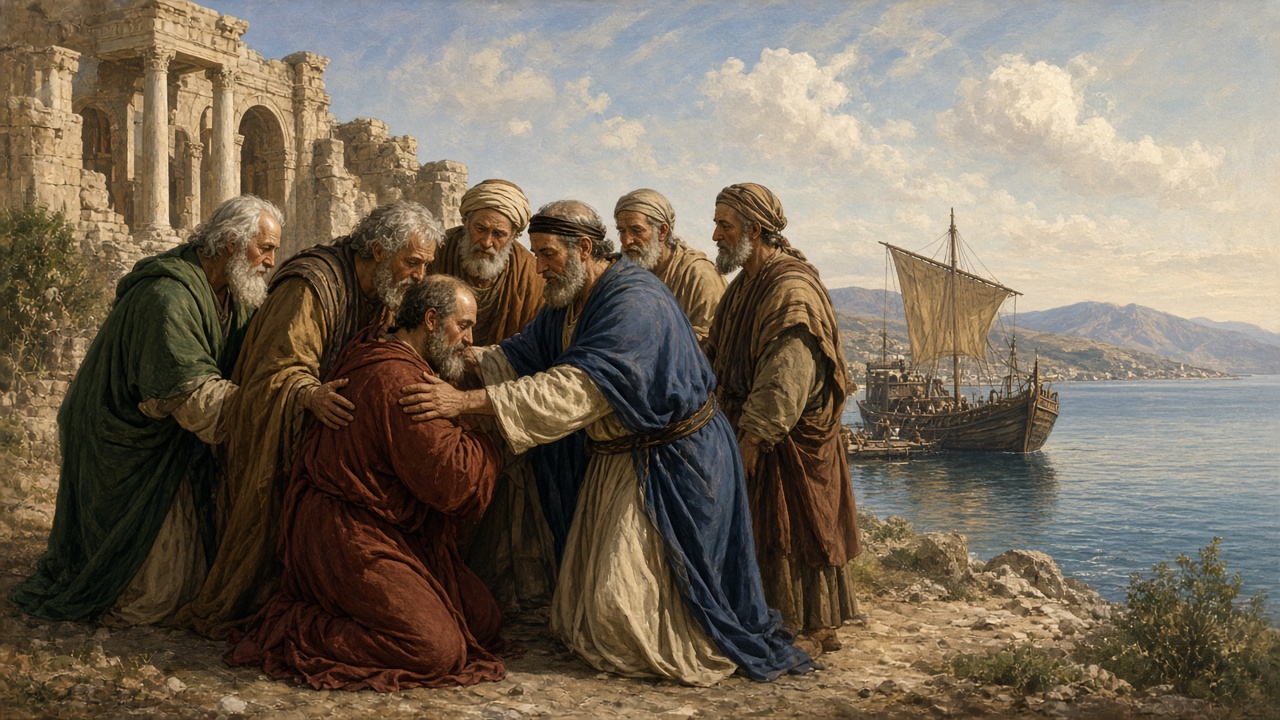
Farewell on the way to Jerusalem
- Leaving Troas, Paul sent his companions ahead by ship and walked to Assos along the Roman road. Assos was a seaport of Proconsular Asia in Mysia, on the north shore of the Gulf of Adramyttium; the walk was about 20 miles, the sea route about 30, and the island of Lesbos lay about 7 miles offshore.Sources: the Bible text itself · Assos
- Paul sailed past Ephesus to avoid spending time in the province of Asia—the Roman province in western Asia Minor, with Ephesus as its capital—because he hoped, if possible, to reach Jerusalem by the day of Pentecost. He stopped at Miletus, a seaport and the ancient capital of Ionia about 36 miles south of Ephesus, and summoned the elders of the Ephesian church.Sources: the Bible text itself · Asia · Miletus
- Seven men traveled with him: Sopater of Berea, Aristarchus and Secundus of Thessalonica, Gaius of Derbe, Timothy, and Tychicus and Trophimus from Asia. Aristarchus of Thessalonica later shared Paul’s imprisonment in Rome, and Trophimus, an Ephesian, accompanied him on this part of the journey and was with him in Jerusalem.Sources: the Bible text itself · Aristarchus · Trophimus
Notes written with AI assistance from open sources (Theographic Bible Metadata, CC BY-SA 4.0; Easton’s Bible Dictionary, public domain) and reviewed before publishing.
Places in this chapter
- Macedonia · 41.600, 22.540 · verses 1, 3, 6
- Greece · 37.972, 23.727 · verse 2
- Syria · Today: Syria 2 · 33.511, 36.306 · verse 3
- Asia · 38.400, 28.300 · verses 4, 16, 18
- Berea · Today: Veria · 40.518, 22.200 · verse 4
- Thessalonica · Today: Thessaloniki · 40.638, 22.946 · verse 4
- Troas · Today: Alexandria Troas · 39.752, 26.159 · verses 5, 6
- Philippi · 41.012, 24.285 · verse 6
- Assos · 39.491, 26.337 · verses 13, 14
- Mitylene · Today: ancient theater at Mitylene · 39.110, 26.547 · verse 14
- Chios · 38.373, 26.137 · verse 15
- Miletus · 37.531, 27.276 · verses 15, 17
- Samos · 37.750, 26.833 · verse 15
- Trogyllium · Today: Cape Mycale · 37.659, 27.003 · verse 15
- Ephesus · 37.939, 27.341 · verses 16, 17
- Jerusalem · 31.777, 35.234 · verses 16, 22
Only places identified with high confidence are shown (90% or more according to the scholarly sources compiled by OpenBible). Period map: DARE (Digital Atlas of the Roman Empire), CC BY 4.0; modern map: © OpenStreetMap contributors; places: OpenBible.info (CC BY 4.0).
Credits and license for this translation
Nuevo Testamento Guaraní Pe
New Testament in Guaraní, Eastern Bolivian (BL:gui:Guaraní, Eastern Bolivian)
copyright © 2012 Wycliffe Bible Translators, Inc.
Language: Guaraní, Eastern Bolivian
Translation by: Wycliffe Bible Translators, Inc.
Guaraní, Eastern Bolivian [gui], Bolivia
Copyright Information
© 2012, Wycliffe Bible Translators, Inc. All rights reserved.
This translation text is made available to you under the
terms of the Creative Commons License: Attribution-Noncommercial-No Derivative Works.
( http://creativecommons.org/licenses/by-nc-nd/3.0/ )
In addition, you have permission to port the text to different file formats, as long as you
do not change any of the text or punctuation of the Bible.
You may share, copy, distribute, transmit, and extract portions
or quotations from this work, provided that you include the above copyright
information:
You must give Attribution to the work.
You do not sell this work for a profit.
You do not make any derivative works that change any of the actual words or punctuation of the Scriptures.
Permissions beyond the scope of this license may be
available if you contact
us with your request.
The New Testament
in Guaraní, Eastern Bolivian
© 2012, Wycliffe Bible Translators, Inc. All rights reserved.
This translation is made available to you under the terms of the
Creative Commons Attribution-Noncommercial-No Derivatives license 4.0.
You may share and redistribute this Bible translation or extracts from it in any format, provided that:
You include the above copyright and source information.
You do not sell this work for a profit.
You do not change any of the words or punctuation of the Scriptures.
Pictures included with Scriptures and other documents on this site are licensed just for use with those Scriptures and documents.
For other uses, please contact the respective copyright owners.
2014-04-25
Source: http://ebible.org/guiNT/ · eBible.org