Psalms 69
Tupàn ze'eg · Tap a verse to see its cross-references.
Amo awa iàmàtyry'ym pyr uze'eg Tupàn pe
Zegar haw Tawi hemiapo kwer
1O Tupàn, hepyro pe nehe,
Ta'e azeapypyk etea'i 'y pupe ihe kury xe.
2Apyta tekoko to'om ohoete ma'e pupe.
Naheta kwaw ywytàtà hepu'àmaw romo.
'Y ohoete ma'e pupe aixe.
'Y hereraha hezuka etea'i pà uwyryk mehe a'e.
3Heze'eg myaw ihe, ta'e ahapukaz tetea'u ihe xe.
He'az uxinigahy ihewi.
Hereha ikene'o, ta'e aikar tuwe hezar tuweharupi ihe xe.
Àro hepyro àwàm.
4Amo na'iakatuwawahy e kwaw herehe a'e wà. Heta tetea'u wà.
Waneta haw uhua'u wera'u he'aw heàkàg rehe har wanuwi wà.
Heàmàtyry'ymar umume'u temu'emaw herehe wà.
Ikàg a'e wà. Ipuruzuka wer herehe wà.
— Nemunar ma'e rehe. Emuzewyr kar a'e ma'e izarer pe nehe, i'i ihewe wà. Nahemunar kwaw ma'e rehe ihe.
5O Tupàn, napuner kwaw heremiapo kwer ikatu 'ym ma'e imimaw rehe newi ihe.
Erekwaw iranaiw ma'e romo hereko awer.
6O hezar, tupàn Tuweharupi Wiko Ma'e ikàg wera'u ma'e.
Emumaranugar kar zo nerehe uzeruzar ma'e ne wà nehe,
Heremiapo kwer rehe ne wà nehe.
O Tupàn Izaew wazar ne,
Erur kar zo heaiw paw nemuwete katu har wanupe nehe.
7Teko uze'eg zemueteahy herehe a'e wà, ta'e aiko neremiruze'eg romo ihe xe.
Hemaranugar ihe no.
8Aiko amo ae ywy rehe har ài heryky'yr wanupe ihe, herywyr wanupe ihe.
Aiko ikwaw pyr 'ym ài heànàm wanupe.
9Neràpuzuhu iamutar katu haw ukaz hepy'a pe tata ài.
Nerehe uze'eg zemueteahy ma'e wanemiapo kwer iaiw ma'e u'ar herehe wà.
10Apytu'u hemai'u re 'ar tetea'u imumaw pà ihe. Azemuigo kar ikàg 'ym ma'e ài.
Uze'eg zemueteahy herehe wà.
11Amunehew kamir umàno ma'e kwer rehe zai'o haw rehe har ihe.
Upuka herehe wà.
12Uze'eg herehe nahu rupi wà.
Uka'u ma'e uzapo ze'eg puràg herehe har wà. Umume'u umyrypar wanupe herehe upuka pà wà.
13Nezewe rehe we, o Tupàn Tuweharupi Wiko Ma'e, aze'eg newe.
O Tupàn, ewazar heze'eg ihewe 'ar newe ikatu ma'e rehe nehe,
Ta'e heamutar katu pe ne xe.
Hepyro pe nehe neze'eg awer rupi katete nehe.
14Hemukàzym kar zo pe to'om pupe nehe.
Hepyro pe heàmàtyry'ymar wanuwi nehe.
Hemunyryk kar pe màno haw 'y typya'u ma'e zàwenugar wi nehe.
15Hereraha kar zo pe ykotok pe nehe.
Hemukàzym kar zo pe 'y typya'u ma'e pupe nehe.
Tuwe tywypaw nahemukun kwaw nehe.
16O Tupàn Tuweharupi Wiko Ma'e. Ewazar heze'eg ihewe nehe, ta'e nekatu ne xe, ta'e erepuruamutar katu ne xe.
Hepytywà pe nehe, ta'e nepurupuhareko haw uhua'u a'e xe.
17Ezeàmim zo neremiruze'eg wi nehe, ihewi nehe.
Ewazar heze'eg ihewe kury, ta'e apuraraw ma'erahy tetea'u ihe kury xe.
18Ezur hepyro pà nehe.
Hepyro heàmàtyry'ymar wanuwi nehe.
19Erexak heàmàtyry'ymar wanereko paw rupi ne wà.
Erekwaw herehe waze'eg zemueteahy awer ne.
Hemaranugar awer erekwaw. Erekwaw ma'e ikàg 'ym ma'e ài hereko awer no.
20Herehe waze'eg zemueteahy awer upei'ài'àg hepy'a a'e.
Nàro kwaw hepyro àwàm kury.
— Aze ru'u amo hepuhareko putar wà nehe, a'e wanupe. Àro e hepuhareko àwàm.
Ni amo nahepuhareko kwaw wà.
— Aze ru'u amo hemurywete kar putar wà wà nehe, a'e wanupe. Àro e hemurywete kar àwàm.
Ni amo nuhem kwaw heruwake wà.
21Hema'uhez mehe umur puruzuka haw ihewe heremi'u romo wà.
Heiwez mehe umur win hazahy ma'e ihewe wà.
22Tuwe wamai'u hawhu umuaiw waneko haw nehe.
Tuwe tupàn a'ua'u wamuwete haw rehe wanurywete haw umumaw wà nehe.
23Emuigo kar hehàpyhà 'ym ma'e romo ne wà nehe.
Ezo'ok wakàgaw paw wanuwi nehe no.
24Ezakook nekwahy haw wanehe 'y ài nehe.
Tuwe nekwahy haw uhem wanupe tata ài nehe.
25Tuwe wanemiruze'eg zauxiapekwer waneko haw uzeapo teko heta 'ymaw romo nehe.
Tuwe naheta kwaw ni pitài zauxiapekwer wikuwe ma'e wanàpuzràn pupe wà nehe.
26Erezepyk amo teko wanehe. A'e zauxiapekwer oho a'e teko wanaikweromo wà.
Erekutuk amo teko ne wà. A'e zauxiapekwer uze'eg urywahyahy neremikutuk kwer wanehe wà.
27Uzapo ikatu 'ym ma'e wà. A'e rupi ezepyk wanehe nehe.
Epyro zo ne wà nehe.
28Emunàn kar waner pape wikuwe ma'e waner hereko har wi ne wà nehe.
Emuapyk kar zo waner pape teko ikatu ma'e waner hereko har rehe ne wà nehe.
29Apuraraw ma'erahy iteko. Nàro kwaw hepyro haw.
O Tupàn, hemupu'àm pe nehe. Hepyro pe nehe.
30Amume'u putar Tupàn ikatu haw amo zegar haw imuzàg pà nehe.
Amume'u putar uhua'u haw nehe, ta'e ikatuahy ihewe xe.
31Nezewe haw ikatu wera'u putar Tupàn Tuweharupi Wiko Ma'e pe nehe,
Henataromo tapi'ak awa tua'u ma'e izuka haw wi nehe.
32Aze ma'erahy ipuraraw par wexak a'e ma'e wà nehe, hurywete putar wà nehe.
Tupàn imuwete katu har hurywete putar wà nehe.
33Ta'e Tupàn Tuweharupi Wiko Ma'e wenu ma'e hereko 'ymar a'e wà xe.
— Napupytywà kwaw nehe, ni'i kwaw zemunehew paw pe imunehew pyrer wanupe.
34Pemume'u Tupàn ikatu haw nehe, o ywak, o ywy, o yryhu.
O ywak rehe har paw wà, o ywy rehe har paw wà, o yryhu pupe har wà.
35Upyro putar Tupàn Zeruzarez tawhu nehe.
Umupu'àm kar wi tawhu Zuta ywy rehe arer wà nehe no.
Hemiaihu wikuwe putar a'e pe wà nehe. Wiko putar ywy imume'u pyrer izar romo wà nehe.
36Tupàn hemiruze'eg wazuapyapyr wiko putar ko ywy izar romo wà nehe.
Iamutar katu har wikuwe putar hehe nehe.
Did you know?
A Cry from Deep Waters
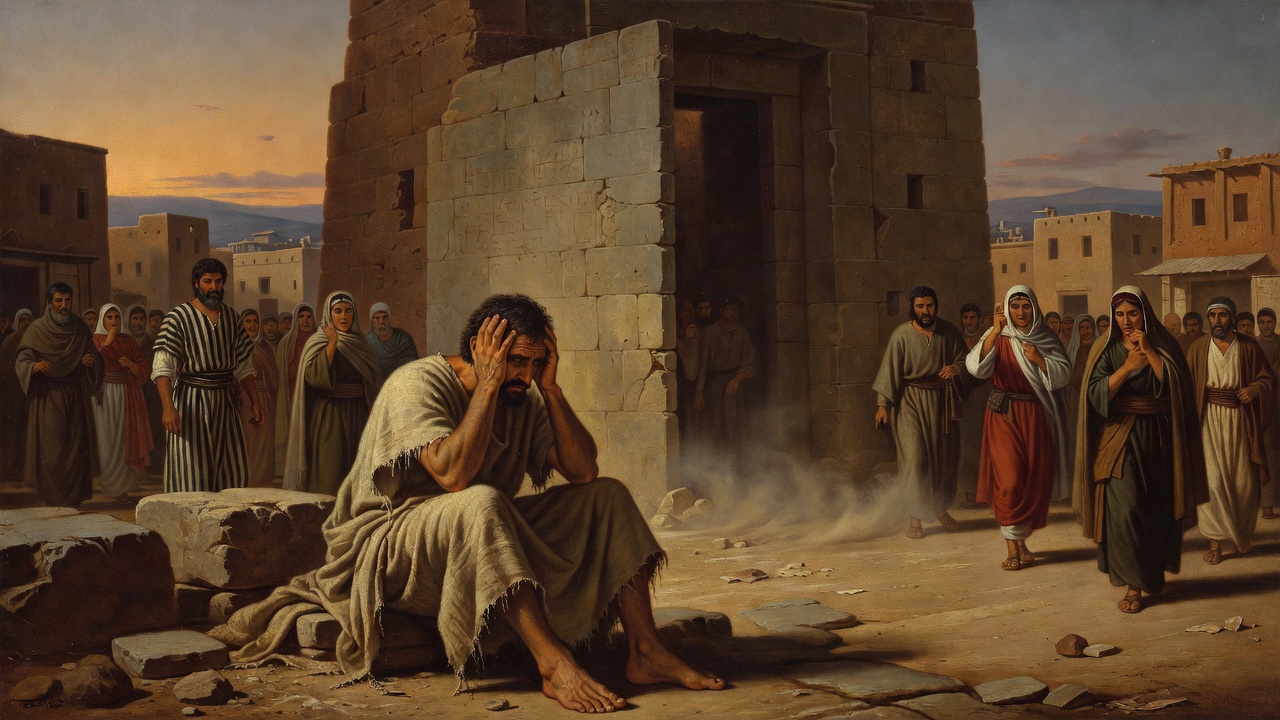
- Psalm 69 employs vivid metaphors of drowning in deep waters and sinking into bottomless mud to depict overwhelming distress and the pressure of unprovoked enemies.Sources: the Bible text itself
- The speaker describes profound social alienation, noting that his fasting and wearing of sackcloth made him an object of public ridicule among those sitting at the city gate and the subject of drinking songs.Sources: the Bible text itself
- The psalm concludes with hope for restoration, anticipating that God will save Zion—the southeastern hill of Jerusalem—and rebuild the cities of Judah for His servants to inhabit.Sources: Zion · the Bible text itself
Notes written with AI assistance from open sources (Theographic Bible Metadata, CC BY-SA 4.0; Easton’s Bible Dictionary, public domain) and reviewed before publishing.
Places in this chapter
- Zion · Today: Jerusalem · 31.777, 35.234 · verse 35
Only places identified with high confidence are shown (90% or more according to the scholarly sources compiled by OpenBible). Period map: DARE (Digital Atlas of the Roman Empire), CC BY 4.0; modern map: © OpenStreetMap contributors; places: OpenBible.info (CC BY 4.0).
Credits and license for this translation
Tupàn ze'eg
Bible without Deuterocanon in Guajajára (BR:gub:Guajajára)
copyright © 2007 Wycliffe Bible Translators, Inc.
Language: Guajajára
Translation by: Wycliffe Bible Translators, Inc.
Guajajára [gub], Brazil
Copyright Information
© 2007, Wycliffe Bible Translators, Inc. All rights reserved.
This translation text is made available to you under the
terms of the Creative Commons License: Attribution-Noncommercial-No Derivative Works.
( http://creativecommons.org/licenses/by-nc-nd/3.0/ )
In addition, you have permission to port the text to different file formats, as long as you
do not change any of the text or punctuation of the Bible.
You may share, copy, distribute, transmit, and extract portions
or quotations from this work, provided that you include the above copyright
information:
You must give Attribution to the work.
You do not sell this work for a profit.
You do not make any derivative works that change any of the actual words or punctuation of the Scriptures.
Permissions beyond the scope of this license may be
available if you contact
us with your request.
Printed book ISBN 9788531109713
The Bible without Deuterocanon
in Guajajára
© 2007, Wycliffe Bible Translators, Inc. All rights reserved.
This translation is made available to you under the terms of the
Creative Commons Attribution-Noncommercial-No Derivatives license 4.0.
You may share and redistribute this Bible translation or extracts from it in any format, provided that:
You include the above copyright and source information.
You do not sell this work for a profit.
You do not change any of the words or punctuation of the Scriptures.
Pictures included with Scriptures and other documents on this site are licensed just for use with those Scriptures and documents.
For other uses, please contact the respective copyright owners.
2020-03-30
Source: http://ebible.org/gubBl/ · eBible.org