Proverbs 7
Tupàn ze'eg · Tap a verse to see its cross-references.
1Hera'yr. Nema'enukwaw heze'eg rehe nehe. Nereharaz zo hepureruze'egaw wi nehe. 2Ezapo heremiapo kar haw nehe. A'e mehe ereikuwe putar nehe. Erezekaiw katu nereha rehe. Nezewegatete ezekaiw katu heremiapo kar haw rehe nehe no. 3Emonokatu hepurumu'e haw nepy'a pe nehe. 4Erereko ma'e kwaw katu haw nereinyr ài. Ereko ma'e kwaw paw nemyrypar neremiamutar wera'u ài nehe no. 5Nemonokatu putar muite kuzàwyzài wanuwi a'e wà nehe. Agwer kuzà uze'egatu awa wanupe wamur kar pà upuhe a'e wà. Ma'e kwaw katu haw nemonokatu putar agwer kuzà wanuwi wà nehe.
Kuzà ikatu 'ym ma'e
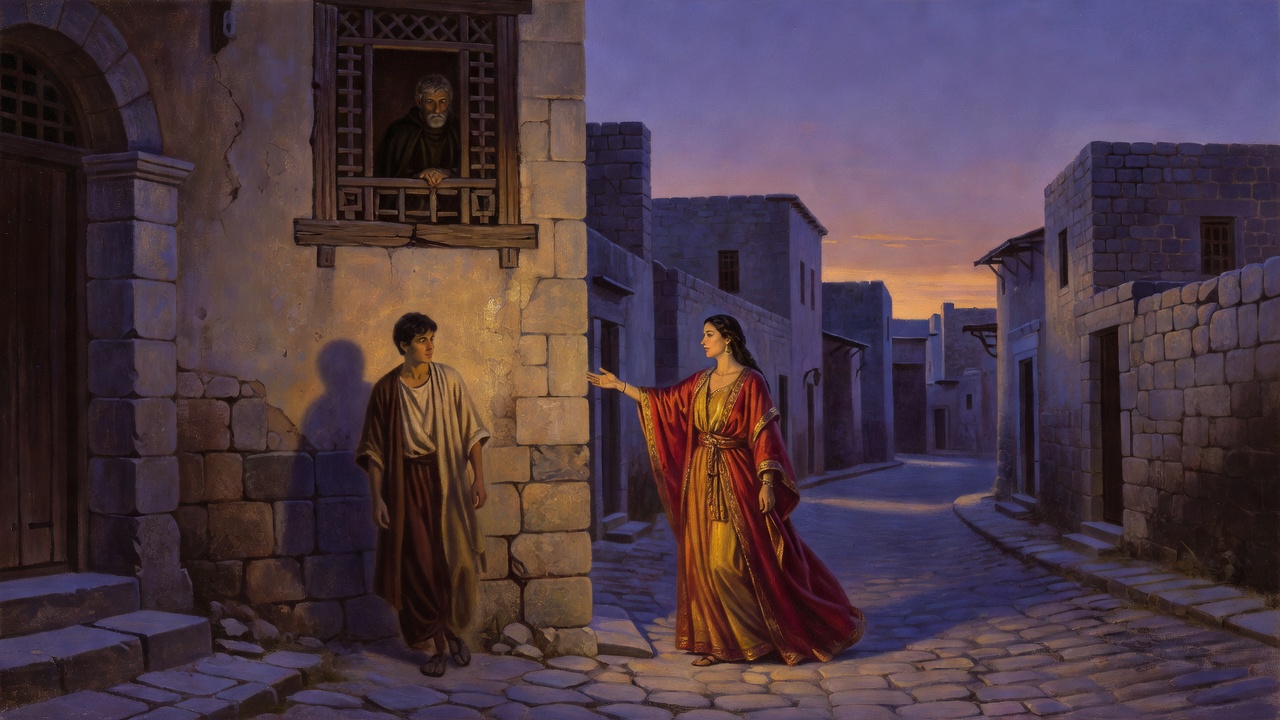
6Amo 'ar mehe ame'e heràpuz hukenaw ywate har rupi ihe. 7Aexak kwàkwàmo tetea'u ma'e kwaw par 'ym nahu rupi ihe wà. Amo pitài iranaiw tuwe a'e. 8A'e kwàkwàmo wata oho iko nahu rupi amo kuzà hàpuz huwake pe za'akaw huwake a'e. Ukwaw hàpuz huwakea'i. 9Pyhaw kury. Ipytun kury. 10A'e kuzà oho huwàxi pà kury. Hopoz nuzawy kwaw kuzàwyzài hopoz. Ipureraha wer a'e kwàkwàmo rehe uker haw pe. 11Uze'egahy a'e. Nuweruzar kwaw tuwihaw ze'eg wà. Tuweharupi wata oho nahu rupi no. 12Upyta amo pe za'akaw rehe awa hàro pà. Amo 'ar rehe wàro amo pe rupi. Amo 'ar rehe wàro teko wazemono'ogaw pe katu pe. 13Na'e uhem kwàkwàmo huwake kury. Uzurupyter. Na'e ume'e hehe umaranugar 'ym pà izupe uze'eg pà kury. 14— Azuka kar ma'ea'yr kwez Tupàn henataromo ihe. Ho'o kwer ipehegwer amonokatu heràpuz me.
15A'e rupi ahem tuwà nerekar pà kury. Hepuruàwàxi wer nerehe. Ereiko xe. 16Amupuràg herupaw ihe, ipuràgeteahy ma'e Ezit wi herur pyrer pupe ipyk pà ihe. 17Amono na'iruz kàpuhàg hyàkwegatu ma'e hehe no: miha, aroe, kaner iputyr. 18Ezur herupi nehe. Ximumaw pytun gatu a'e ma'e iapo pà nehe. Zanerurywete putar zanezeàzuwàzuwàn pà nehe. Ximumaw amo 'ar nezewe nehe. 19Hemen nuiko kwaw heràpuz me. Muite wata oho. 20Weraha wemetarer tetea'u uzeupi. Xo amo 'ar pawire uzewyr putar nehe, i'i kuzà kwàkwàmo pe.
21Nezewe wagaw upuràg eteahy haw pupe. Ize'eg ikatu izupe. 22Na'arewahy oho hupi kury. Nuzawy kwaw tapi'ak uzuka àwàm pe oho ma'e. Nuzawy kwaw miar uzemi'ikar ma'e kutyr oho ma'e. 23U'yw uzywà putar ma'ea'yr izà'à nehe. Nuzawy kwaw wiràmiri upyhykaw pupe wixe ma'e. Wiràmiri nukwaw kwaw umàno etea'i àwàm.
24Ezeapyaka katu heze'eg rehe kury, hera'yr. Ezekaiw katu heremimume'u ràm rehe nehe. 25Emono zo nepy'a agwer kuzà wanupe nehe. Eata zo haikweromo nehe, ekar zo nehe. 26Ta'e umuaiw awa tetea'u waneko haw a'e xe. Uzuka kar awa tetea'u a'e wà no. Teko nupuner kwaw waneta haw ipapar haw rehe wà. 27Aze ereho a'e kuzà hàpuz me nehe, umàno ma'e kwer wapyta haw pe oho ma'e romo ereiko putar nehe. Pe iaikwera'i ma'e rupi oho ma'e ài ereiko putar nehe.
Did you know?
The Trap of Seduction
- The narrator observes the scene through the lattice of a house window, watching the street below as twilight fades into the dark of night. This literary perspective presents the story as an eyewitness account warning against wandering into places of temptation.Sources: the Bible text itself
- The seductress mentions that she has paid her vows and offered peace offerings, meaning she had meat from sacrifices prepared for a feast. She further appeals to luxury by mentioning colored linen imported from Egypt and perfumes of myrrh, aloes, and cinnamon.Sources: the Bible text itself
- To counter the allure of the stranger, the teacher urges the youth to embrace wisdom as a sister and understanding as a close relative. Cultivating an intimate, familial relationship with wisdom is framed as the vital defense against deceptive speech.Sources: the Bible text itself
Notes written with AI assistance from open sources (Theographic Bible Metadata, CC BY-SA 4.0; Easton’s Bible Dictionary, public domain) and reviewed before publishing.
Places in this chapter
- Egypt · 30.129, 31.308 · verse 16
Only places identified with high confidence are shown (90% or more according to the scholarly sources compiled by OpenBible). Period map: DARE (Digital Atlas of the Roman Empire), CC BY 4.0; modern map: © OpenStreetMap contributors; places: OpenBible.info (CC BY 4.0).
Credits and license for this translation
Tupàn ze'eg
Bible without Deuterocanon in Guajajára (BR:gub:Guajajára)
copyright © 2007 Wycliffe Bible Translators, Inc.
Language: Guajajára
Translation by: Wycliffe Bible Translators, Inc.
Guajajára [gub], Brazil
Copyright Information
© 2007, Wycliffe Bible Translators, Inc. All rights reserved.
This translation text is made available to you under the
terms of the Creative Commons License: Attribution-Noncommercial-No Derivative Works.
( http://creativecommons.org/licenses/by-nc-nd/3.0/ )
In addition, you have permission to port the text to different file formats, as long as you
do not change any of the text or punctuation of the Bible.
You may share, copy, distribute, transmit, and extract portions
or quotations from this work, provided that you include the above copyright
information:
You must give Attribution to the work.
You do not sell this work for a profit.
You do not make any derivative works that change any of the actual words or punctuation of the Scriptures.
Permissions beyond the scope of this license may be
available if you contact
us with your request.
Printed book ISBN 9788531109713
The Bible without Deuterocanon
in Guajajára
© 2007, Wycliffe Bible Translators, Inc. All rights reserved.
This translation is made available to you under the terms of the
Creative Commons Attribution-Noncommercial-No Derivatives license 4.0.
You may share and redistribute this Bible translation or extracts from it in any format, provided that:
You include the above copyright and source information.
You do not sell this work for a profit.
You do not change any of the words or punctuation of the Scriptures.
Pictures included with Scriptures and other documents on this site are licensed just for use with those Scriptures and documents.
For other uses, please contact the respective copyright owners.
2020-03-30
Source: http://ebible.org/gubBl/ · eBible.org