Numbers 19
Tupàn ze'eg · Tap a verse to see its cross-references.
'Y purumukatu haw
1— Pemume'u ko heze'eg Izaew wanupe nehe, 2i'i Tupàn Tuweharupi Wiko Ma'e Moizez pe Àràw pe. — Perur tapi'ak kuzà ipiràg ma'e ikatu 'ymaw hereko 'ymar ko pe uma'ereko 'ym ma'e xe nehe. 3Pemono xaxeto Ereazar pe nehe. Weraha putar katu pe teko waker haw wi nehe. Uzuka putar waker haw henataromo nehe. 4Na'e Ereazar upyhyk putar huwykwer nehe. Umupiripirik putar 7 haw ukwà pupe tàpuzràn Tupàn pe imonokatu pyrer kutyr nehe. 5Na'e hehe we har wapy putar tapi'ak kuzà henataromo nehe. Ukaz putar ipehegwer nehe: ipirer, ho'o kwer, huwykwer, hie kwer. 6Xaxeto upyhyk putar ywyràkàxigyw ipehegwer imonohok pyrer nehe. Upyhyk putar pitài ixop hàkàgwer nehe no. Upyhyk putar àràpuhàràn hawer imupiràg pyrer nehe no. Weityk putar a'e ma'e paw tata tapi'ak hapy haw pupe nehe. 7Na'e uhez putar uma'e wemimunehew nehe. Uzahak putar nehe no. A'e re upuner teko waker haw pupe wixe haw rehe nehe. Nezewe rehe we wiko putar ikatu 'ym ma'e romo Tupàn henataromo nehe. Xo kwarahy heixe re zo ikatu putar henataromo nehe. 8Tapi'ak hapy har uhez putar uma'e wemimunehew nehe no. Uzahak putar nehe no. Nezewe rehe we wiko putar ikatu 'ym ma'e romo Tupàn henataromo nehe. Xo kwarahy heixe re zo ikatu putar henataromo nehe. 9Amo awa Tupàn henataromo ikatu ma'e omono'og putar tanimuk tapi'ak hapy awer rehe har nehe. Weityk putar katu pe teko waker haw wi nehe, ywy pehegwer Tupàn henataromo ikatu ma'e rehe nehe. Teko Izaew uzekaiw katu hehe a'e pe wà nehe. 'Y purumukatu ma'e imuhyk mehe teko omono putar a'e tanimuk ipupe wà nehe. A'e tapi'ak izuka haw umunàn teko wanemiapo kwer ikatu 'ym ma'e a'e. 10Tanimuk imono'ogar uhez putar uma'e wemimunehew nehe. Nezewe rehe we wiko putar ikatu 'ym ma'e romo Tupàn henataromo nehe. Xo kwarahy heixe re zo ikatu putar henataromo nehe. Peruzar ko ze'eg tuweharupi nehe. Izaew weruzar putar wà nehe. Amo ywy rehe arer Izaew wainuinuromo har weruzar putar tuweharupi wà nehe no.
Ze'eg umàno ma'e kwer rehe ipokokaw rehe har
11Aze amo opokok umàno ma'e kwer rehe nehe, umumaw putar 7 'ar Tupàn henataromo ikatu 'ym ma'e romo nehe. 12Na'iruz haw 'ar mehe nehe, 7 haw 'ar mehe nehe no, uzemukatu putar 'y purumukatu har pupe nehe. Ikatu putar Tupàn henataromo nehe. Aze nuzemukatu kar kwaw 3 haw 'ar mehe nehe, 7 haw 'ar mehe nehe, nuiko kwaw Tupàn henataromo ikatu ma'e romo nehe. 13Wyzài umàno ma'e kwer rehe opokok ma'e nehe, aze nuzemukatu kwaw Tupàn henataromo nehe, wiko putar ikatu 'ym ma'e romo Tupàn henataromo nehe, ta'e nuzakook kwaw 'y purumukatu ma'e uzehe xe. Umuaiw tàpuzràn Tupàn pe imonokatu pyrer a'e. A'e teko nuiko kwaw Izaew romo a'e nehe.
14Aze amo umàno tàpuzràn pupe nehe, ipupe wixe ma'e wiko putar ikatu 'ym ma'e Tupàn henataromo nehe. Umumaw putar 7 'ar ikatu 'ym ma'e romo nehe. 15Ywy'a ipyk 'ym pyr uzeapo putar ikatu 'ym ma'e romo henataromo nehe. 16Aze amo opokok izuka pyrer rehe nehe, aze ru'u opokok umàno e ma'e kwer rehe nehe, aze ru'u opokok teko ikagwer rehe nehe, aze ru'u opokok hetekwer itym awer rehe nehe, umumaw putar 7 'ar ikatu 'ym ma'e romo Tupàn henataromo nehe.
17Pemukatu putar a'e ikatu 'ym ma'e nezewe nehe: pepyhyk tanimuk tapi'ak ipiràg ma'e katu 'ygwer imunàn kar haw romo hapy pyrer nehe. Pemono ywy'a pupe nehe. Pezuhez 'y ikatu ma'e hehe nehe. 18Aze umukatu putar umàno ma'e kwer rehe opokok ma'e wà nehe, awa Tupàn henataromo ikatu ma'e upyhyk putar ixop hàkàgwer nehe. Umuàkym putar hàkàgwer a'e 'y pupe nehe. Umupiripirik putar a'e 'y tàpuzràn rehe nehe, ipupe har nànàn nehe no, teko ipupe har nànàn nehe no. Aze amo opokok teko ikagwer rehe nehe, aze ru'u itym awer rehe nehe, amo teko Tupàn henataromo ikatu ma'e umupiripirik putar a'e 'y imukatu pyrer a'e teko rehe nehe. 19Na'iruz haw 'ar mehe nehe, 7 haw 'ar mehe nehe no, Tupàn henataromo ikatu ma'e umupiripirik putar a'e 'y teko ikatu 'ym ma'e rehe nehe. 7 haw 'ar mehe a'e teko ikatu putar henataromo nehe. Uhez putar uma'e wemimunehew nehe. Uzahak putar nehe no. Kwarahy heixe mehe ikatu putar Tupàn henataromo nehe.
20Aze amo na'ikatu kwaw Tupàn henataromo nehe, aze nuzemukatu kwaw nehe, wiko wiwi putar ikatu 'ym ma'e romo nehe, ta'e amo numupirik kwaw 'y purumukatu ma'e hehe a'e xe. A'e teko umuaiw tàpuzràn Tupàn Tuweharupi Wiko Ma'e pe imonokatu pyrer a'e. A'e rupi a'e teko nuiko kwaw Izaew izuapyr romo nehe. 21Peruzar ko ze'eg tuweharupi nehe. 'Y purumukatu ma'e imupiripirikar uhez putar uma'e wemimunehew nehe. Aze amo opokok a'e 'y rehe nehe, wiko putar ikatu 'ym ma'e romo Tupàn henataromo nehe. Xo kwarahy heixe re ikatu putar nehe. 22Aze amo teko Tupàn henataromo ikatu 'ym ma'e opokok amo ma'e rehe nehe, a'e ma'e uzeapo putar ikatu 'ym ma'e romo henataromo nehe no. Aze amo opokok a'e teko rehe nehe, wiko putar ikatu 'ym ma'e romo Tupàn henataromo nehe no. Xo kwarahy heixe re ikatu putar nehe.
Did you know?
The Red Heifer and Purification from Death
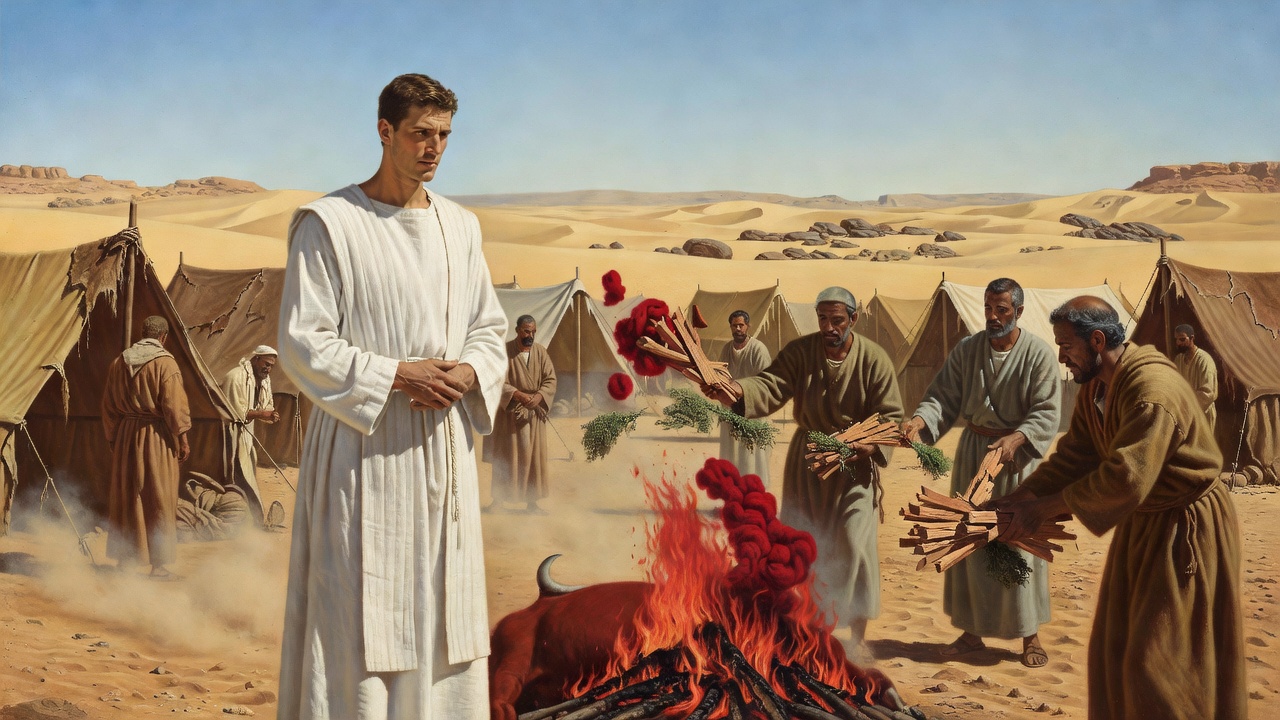
- Unlike typical sacrifices offered at the tabernacle altar, the unblemished red heifer that had never worn a yoke was taken outside the camp. There it was slaughtered in the presence of the priest Eleazar and burned whole along with cedar wood, hyssop, and scarlet wool.Sources: the Bible text itself · Eleazar
- The ashes of the heifer were stored outside the camp to prepare the water of purification. Paradoxically, while this mixture purified individuals who were defiled by death, everyone who handled the burning heifer, gathered its ashes, or sprinkled the water became temporarily unclean until evening.Sources: the Bible text itself
- Contact with a corpse, a human bone, a grave, or merely being inside a tent where someone died caused seven days of ceremonial uncleanness. To be restored, the person had to be sprinkled with the purification water on the third and seventh days and wash their clothes and body.Sources: the Bible text itself
Notes written with AI assistance from open sources (Theographic Bible Metadata, CC BY-SA 4.0; Easton’s Bible Dictionary, public domain) and reviewed before publishing.
Credits and license for this translation
Tupàn ze'eg
Bible without Deuterocanon in Guajajára (BR:gub:Guajajára)
copyright © 2007 Wycliffe Bible Translators, Inc.
Language: Guajajára
Translation by: Wycliffe Bible Translators, Inc.
Guajajára [gub], Brazil
Copyright Information
© 2007, Wycliffe Bible Translators, Inc. All rights reserved.
This translation text is made available to you under the
terms of the Creative Commons License: Attribution-Noncommercial-No Derivative Works.
( http://creativecommons.org/licenses/by-nc-nd/3.0/ )
In addition, you have permission to port the text to different file formats, as long as you
do not change any of the text or punctuation of the Bible.
You may share, copy, distribute, transmit, and extract portions
or quotations from this work, provided that you include the above copyright
information:
You must give Attribution to the work.
You do not sell this work for a profit.
You do not make any derivative works that change any of the actual words or punctuation of the Scriptures.
Permissions beyond the scope of this license may be
available if you contact
us with your request.
Printed book ISBN 9788531109713
The Bible without Deuterocanon
in Guajajára
© 2007, Wycliffe Bible Translators, Inc. All rights reserved.
This translation is made available to you under the terms of the
Creative Commons Attribution-Noncommercial-No Derivatives license 4.0.
You may share and redistribute this Bible translation or extracts from it in any format, provided that:
You include the above copyright and source information.
You do not sell this work for a profit.
You do not change any of the words or punctuation of the Scriptures.
Pictures included with Scriptures and other documents on this site are licensed just for use with those Scriptures and documents.
For other uses, please contact the respective copyright owners.
2020-03-30
Source: http://ebible.org/gubBl/ · eBible.org