Leviticus 24
Tupàn ze'eg · Tap a verse to see its cross-references.
Tatainyhu hàkà ma'e
1Tupàn Tuweharupi Wiko Ma'e umume'u ko uze'eg Moizez pe kury.
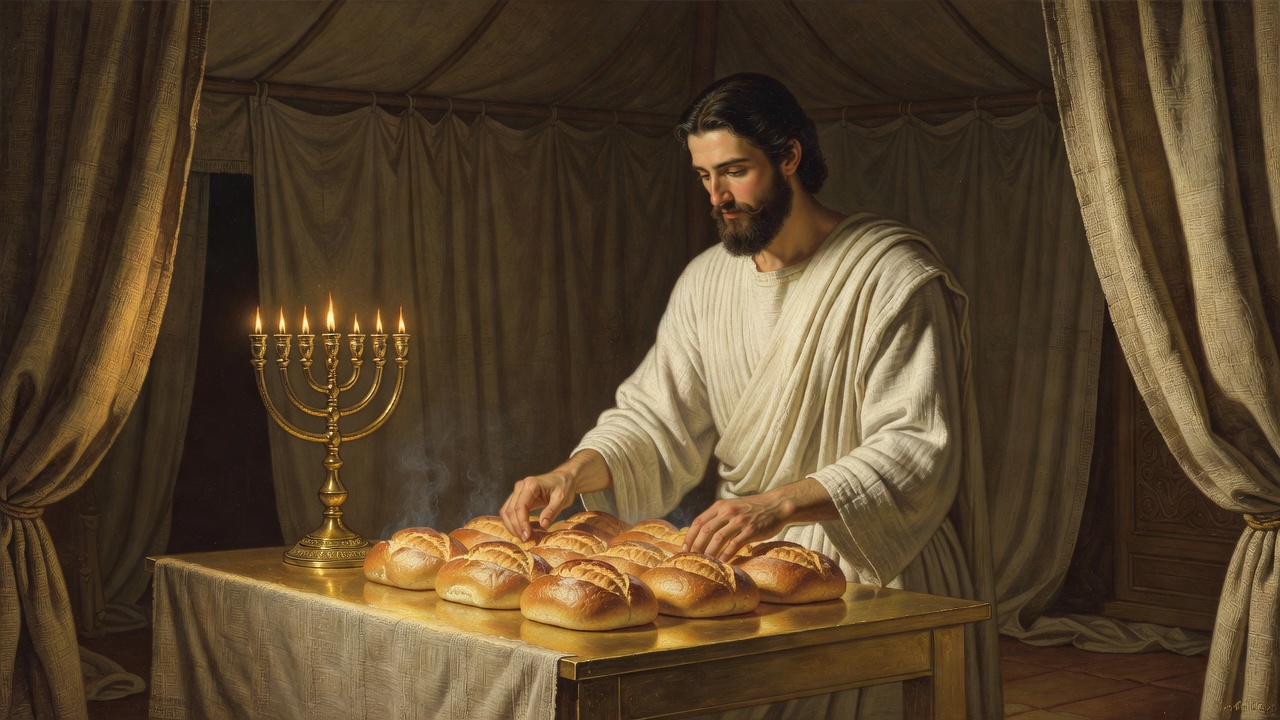
2— Emume'u ko ma'e Izaew wanupe nehe. — Perur uri kawer ikatu wera'u ma'e nehe. Pemunyk tatainy henaw rehe har tàpuzràn Tupàn pe imonokatu pyrer pupe har nehe. Pemuwew kar pixik zo nehe. 3Tuweharupi karuk mehe Àràw umunyk putar tatainy henaw rehe har nehe. Tatainy umumaw putar pytun gatu uhyape pà nehe, a'e pe Tupàn Tuweharupi Wiko Ma'e henataromo nehe. Henaw upyta katu pe pànuhu huwake Tupàn Ze'eg Hyru henataromo a'e. Pe nehe, pezuapyapyr wà nehe no, peruzar putar ko heze'eg tuweharupi nehe, pepytu'u 'ym pà nehe. 4Àràw uzekaiw putar tatainy ihàm rehe nehe. Henaw or ikatuahy ma'e iapo pyrer romo a'e. Nezewe mehe nuwew kwaw Tupàn Tuweharupi Wiko Ma'e henataromo nehe.
Typy'ak imonokatu pyr
5Pemuzar 12 typy'ak nehe. Heta putar mokoz kir arozràn imuku'i pyrer pe pitàitàigatu nehe. 6Heta ywyrapew zàwenugar Tupàn Tuweharupi Wiko Ma'e henataromo. Or ikatuahy ma'e iapo pyrer romo a'e. Pemono a'e typy'ak a'e ywyrapew zàwenugar rehe nehe. Pemono typy'ak amo typy'ak i'aromo mokoz ywytyra'i iapo pà nehe. 6 typy'ak upyta putar xe wà nehe. Inugwer upyta putar pe pe wanuwake wà nehe no. 7Pemono putar yhyk zàwenugar ikatuahy ma'e a'e typy'ak mokoz ywytyra'i romo iapo pyrer i'aromo nehe. Nezewe mehe — Ximono 'àg typy'ak paw Tupàn Tuweharupi Wiko Ma'e pe temi'u romo zane, peze putar pezeupeupe nehe. 8Mytu'u haw 'ar nànàn nehe, tuweharupi nehe, xaxeto wanuwihaw omonokatu putar typy'ak ywyrapew zàwenugar rehe Tupàn Tuweharupi Wiko Ma'e henataromo nehe. Tuweharupi Wiko Ma'e uzapokatu uze'egaw teko Izaew izuapyapyr wanehe we. A'e typy'ak zanemuma'enukwaw kar a'e ze'eg rehe. 9Xaxeto Àràw izuapyapyr wiko putar izar romo tuweharupi wà nehe. A'e typy'ak ikatuahy Tupàn henataromo. Ta'e temi'u Tuweharupi Wiko Ma'e pe imono pyr romo a'e xe. A'e rupi xaxeto u'u putar ywypehegwer Tupàn pe imonokatu pyrer rehe wà nehe.
Ikatu 'ygwer rehe zepykaw
10Amo awa amo Ezit ywy rehe har ta'yr wiko Izaew wainuromo a'e. Wereko kuzà Izaew tazyr wemireko romo. Xerumit kuzà her romo a'e. Nimiri tazyr romo Nà izuapyr romo hekon. Amo 'ar mehe Izaew waneko haw pupe imen uzàmàtyry'ym amo Izaew izuapyr. Omono uze'egaiw hehe. Uze'eg zemueteahy Tupàn Tuweharupi Wiko Ma'e her rehe no. Weraha a'e awa Moizez pe wà. 12Umunehew a'e pe wà. — Tuweharupi Wiko Ma'e umume'u putar izupe zaneremiapo ràm a'e nehe, i'i uzeupeupe wà. 13Tupàn Tuweharupi Wiko Ma'e uze'eg Moizez pe.
14— Peraha a'e awa katu pe muite teko waneko haw wi nehe. Ihewe ize'eg zemueteahy mehe amo wenu wà. Henu arer omono putar opo iàkàg rehe wà. A'e re teko paw uzapizapi putar ita tetea'u pupe wà nehe, izuka pà wà nehe. 15Emume'u wi ko heze'eg teko wanupe nehe. — Aze amo omono uze'egaiw Tupàn rehe nehe, Tupàn uzepyk putar hehe ize'eg awer hekuzaromo nehe. 16Teko uzapizapi putar ita tetea'u pupe wà nehe, izuka pà wà nehe. Aze wiko Izaew izuapyr romo nehe, aze ru'u amo ywy rehe arer romo nehe, pezuka nehe. Pezuka Tupàn Tuweharupi Wiko Ma'e her rehe uze'egaiw imono arer nehe.
17Aze amo uzuka amo nehe, pezuka izuka arer nehe. 18Aze amo uzuka ma'ea'yr weimaw 'ym nehe, omono putar amo ma'ea'yr izarer pe hekuzaromo nehe. Tuwe ma'ea'yr izuka pyrer hekuzar nuzawy kwaw ma'ea'yr imono pyràm hekuzar nehe. 19Aze amo ukutuk amo nehe, pekutuk ikutuk arer nezewegatete nehe. Aze ukixi nehe, pekixi ikixi arer nezewegatete nehe no. 20Aze uzuhaw izywa nehe, pezuhaw izuhaw arer izywa nezewegatete nehe. Aze ozo'ok hàz nehe, pezo'ok izo'ok arer hàz nezewegatete nehe. Aze umugaz nehe, pemugaz imugaz arer nezewegatete nehe. 21Aze amo uzuka amo heimaw nehe, izuka arer omono putar amo ma'ea'yr izarer pe hekuzaromo nehe. Aze amo uzuka amo teko nehe, pezuka izuka arer nehe. 22Peruzar ko heze'eg nehe. Amo ywy rehe arer peinuromo har weruzar putar ko heze'eg nezewegatete a'e wà nehe no. Aiko Tuweharupi Wiko Ma'e romo pezar romo ihe.
23Na'e Moizez umume'u a'e ma'e paw Izaew wanupe. Na'e upyhyk awa Tupàn her rehe uze'egaiw imono arer wà kury. Weraha katu pe weko haw wi wà. Uzapizapi ita tetea'u pupe izuka pà a'e pe wà kury. Nezewe uzapo Tupàn Tuweharupi Wiko Ma'e Moizez pe hemiapo kar wà.
Did you know?
Tabernacle Lamps, Showbread, and Equal Justice
- Aaron was commanded to tend the golden lampstand outside the veil of the Testimony every evening until morning, using pure oil of pressed olives brought by the Israelites. Beside the lampstand stood a pure gold table holding twelve loaves of bread arranged in two rows with pure frankincense, renewed each Sabbath and eaten exclusively by Aaron and his sons in a holy place.Sources: the Bible text itself · Aaron
- A dispute in the camp involved a man whose mother, Shelomith daughter of Dibri, belonged to the tribe of Dan, while his father was Egyptian. When the man blasphemed the Name during a fight, he was held in custody until Moses received divine instruction regarding how justice should be administered.Sources: the Bible text itself · Shelomith · Dibri · Dan
- The legal ruling given in this passage established that the same legal standard applied equally to foreign residents and native-born Israelites. It also reiterated the principle of proportional justice, often summarized as fracture for fracture, eye for eye, and tooth for tooth.Sources: the Bible text itself
Notes written with AI assistance from open sources (Theographic Bible Metadata, CC BY-SA 4.0; Easton’s Bible Dictionary, public domain) and reviewed before publishing.
Credits and license for this translation
Tupàn ze'eg
Bible without Deuterocanon in Guajajára (BR:gub:Guajajára)
copyright © 2007 Wycliffe Bible Translators, Inc.
Language: Guajajára
Translation by: Wycliffe Bible Translators, Inc.
Guajajára [gub], Brazil
Copyright Information
© 2007, Wycliffe Bible Translators, Inc. All rights reserved.
This translation text is made available to you under the
terms of the Creative Commons License: Attribution-Noncommercial-No Derivative Works.
( http://creativecommons.org/licenses/by-nc-nd/3.0/ )
In addition, you have permission to port the text to different file formats, as long as you
do not change any of the text or punctuation of the Bible.
You may share, copy, distribute, transmit, and extract portions
or quotations from this work, provided that you include the above copyright
information:
You must give Attribution to the work.
You do not sell this work for a profit.
You do not make any derivative works that change any of the actual words or punctuation of the Scriptures.
Permissions beyond the scope of this license may be
available if you contact
us with your request.
Printed book ISBN 9788531109713
The Bible without Deuterocanon
in Guajajára
© 2007, Wycliffe Bible Translators, Inc. All rights reserved.
This translation is made available to you under the terms of the
Creative Commons Attribution-Noncommercial-No Derivatives license 4.0.
You may share and redistribute this Bible translation or extracts from it in any format, provided that:
You include the above copyright and source information.
You do not sell this work for a profit.
You do not change any of the words or punctuation of the Scriptures.
Pictures included with Scriptures and other documents on this site are licensed just for use with those Scriptures and documents.
For other uses, please contact the respective copyright owners.
2020-03-30
Source: http://ebible.org/gubBl/ · eBible.org