Jonah 4
Tupàn ze'eg · Tap a verse to see its cross-references.
Zon ikwahy haw, Tupàn purupuhareko haw a'e no
1A'e ma'e hexak mehe wikwahy Zon a'e kury. Na'ikatu kwaw tawhu rehe Tupàn izepyk 'ymaw izupe.
2A'e rupi uze'eg nezewe Tupàn pe kury. — O Tupàn Tuweharupi Wiko Ma'e. Heywy wi hehem 'ym mehe we amume'u ko ma'e neremiapo ràm ihe. A'e rupi hezàwehem wer newi Epàn ywy kutyr ihe. Akwaw Tupàn purupuhareko ma'e romo nereko haw ihe. Akwaw puruamutar katu ma'e romo nereko haw no. Iàrew nekwahy haw. Akwaw nereko haw. Akwaw nekatu haw. Tuweharupi nezewyr wer neze'eg wi. Nanezepyk wer kwaw purehe. Akwaw nereko haw. 3A'e rupi hezuka pe kury, Tupàn Tuweharupi Wiko Ma'e. Hemàno àwàm wi ikatu wera'u herekuwe àwàm ihewe, i'i izupe.
4Tupàn Tuweharupi Wiko Ma'e uwazar ize'eg izupe. — Zon. Aipo ikatu nezewe nekwahy haw, i'i izupe.
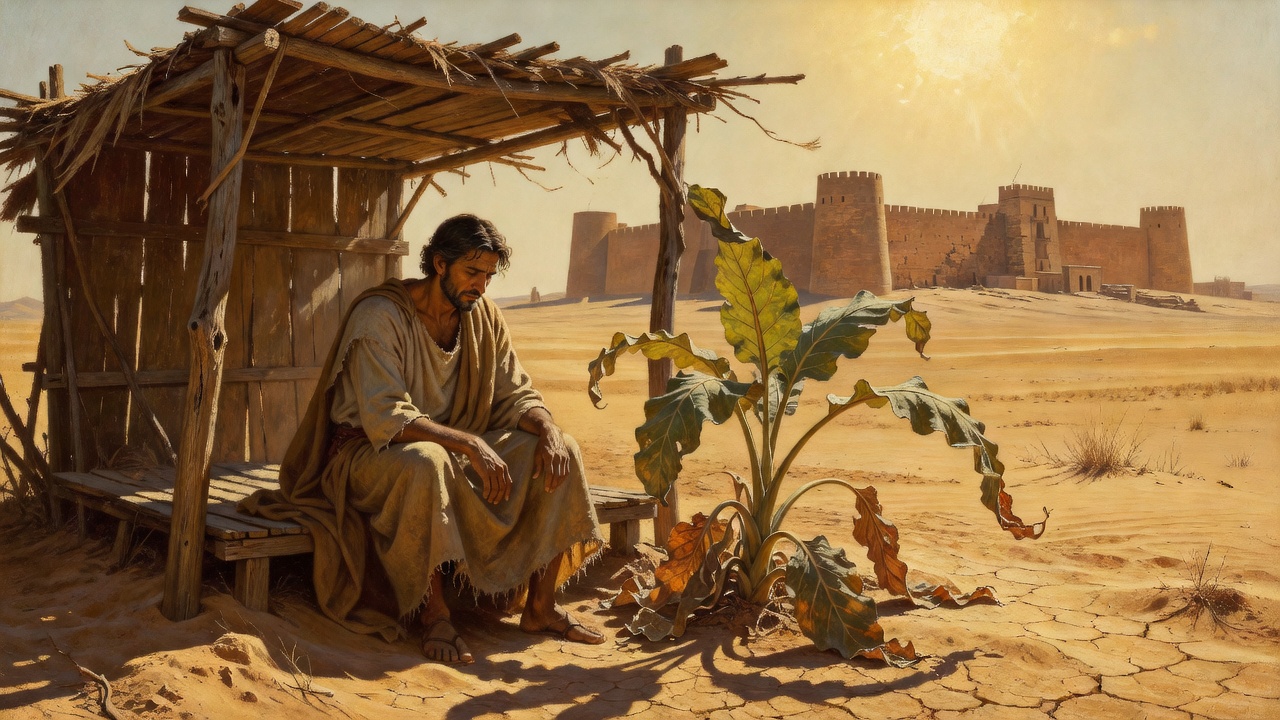
5Na'e uhem Zon Nin tawhu wi kury. Oho kwarahy hemaw kutyr. Wapyk a'e pe muitea'u tawhu wi. Na'e uzapo wàpuzràn uzeupe. Wapyk i'àgaw pe. Wàro ma'e tawhu pe uzeapo ma'e ràm in a'e pe. 6Na'e Tupàn Tuweharupi Wiko Ma'e umuezuz kar amo ka'akyr Zon i'aromo kury, i'àgaw pixika'i ma'e iapo pà izupe. Nezewe mehe nahaku wera'u kwaw kwarahy izupe. Ikatuahy a'e ka'akyr i'àgaw Zon pe. 7Iku'egwer pe kwarahy ihem etea'i mehe Tupàn omono kar amo yhok a'e ka'akyr i'u kar pà a'e. A'e rupi uxinig ka'akyr Zon wi kury. 8A'e re uhem kwarahy. Tupàn umur kar amo ywytu hakuahy ma'e kwarahy hemaw wi kury. Iàkàzym tària'i Zon kwarahy hakuahy mehe. Nuzawy kwaw iàkàg ukaz ma'e. A'e rupi imàno wer zepe kury. — Hemàno àwàm ikatu wera'u ihewe herekuwe wi àwàm wi, i'i uzeupe.
9Na'e upuranu Tupàn hehe. — Zon, aipo ikatu nekwahy haw 'àg ka'akyr rehe, i'i izupe. Uwazar Zon ize'eg izupe a'e. — Ikatu hekwahy haw. Te hemàno wer zepe hekwahy haw wi, i'i izupe.
10Na'e Tupàn Tuweharupi Wiko Ma'e uze'eg izupe kury. — Wi ka'akyr hezuz amo 'ar mehe. Te pyhaw. Iku'egwer pe ukàzym. Nerezapo kwaw ma'e imuezuz kar pà. Nezewe rehe we erepuhareko katu a'e ka'akyr. 11A'e rupi ikatu wera'u tawhu Nin rehe hezepyk 'ymaw. Heta 120.000 kwarer kuzàtàigwer wanehe we xe wà. Heta tetea'u ma'ea'yr wà no. Nuzapo pixik kwaw ikatu 'ym ma'e wà. Upaw.
Did you know?
Jonah's Anger and God's Compassion
- Jonah admits that he originally attempted to flee toward Tarshish precisely because he knew God is gracious, compassionate, slow to anger, and relents from sending disaster. His distress arose when God chose to spare Nineveh rather than destroy it.Sources: the Bible text itself · Tarshish
- Nineveh, the flourishing capital of the Assyrian empire, is described at the conclusion of the book as home to more than 120,000 people who cannot discern between their right and left hand, along with many cattle. God highlights this massive population to contrast divine compassion with Jonah's concern for a single withered plant.Sources: the Bible text itself · Nineveh
Notes written with AI assistance from open sources (Theographic Bible Metadata, CC BY-SA 4.0; Easton’s Bible Dictionary, public domain) and reviewed before publishing.
Places in this chapter
- Nineveh · 36.359, 43.153 · verse 11
Only places identified with high confidence are shown (90% or more according to the scholarly sources compiled by OpenBible). Period map: DARE (Digital Atlas of the Roman Empire), CC BY 4.0; modern map: © OpenStreetMap contributors; places: OpenBible.info (CC BY 4.0).
Credits and license for this translation
Tupàn ze'eg
Bible without Deuterocanon in Guajajára (BR:gub:Guajajára)
copyright © 2007 Wycliffe Bible Translators, Inc.
Language: Guajajára
Translation by: Wycliffe Bible Translators, Inc.
Guajajára [gub], Brazil
Copyright Information
© 2007, Wycliffe Bible Translators, Inc. All rights reserved.
This translation text is made available to you under the
terms of the Creative Commons License: Attribution-Noncommercial-No Derivative Works.
( http://creativecommons.org/licenses/by-nc-nd/3.0/ )
In addition, you have permission to port the text to different file formats, as long as you
do not change any of the text or punctuation of the Bible.
You may share, copy, distribute, transmit, and extract portions
or quotations from this work, provided that you include the above copyright
information:
You must give Attribution to the work.
You do not sell this work for a profit.
You do not make any derivative works that change any of the actual words or punctuation of the Scriptures.
Permissions beyond the scope of this license may be
available if you contact
us with your request.
Printed book ISBN 9788531109713
The Bible without Deuterocanon
in Guajajára
© 2007, Wycliffe Bible Translators, Inc. All rights reserved.
This translation is made available to you under the terms of the
Creative Commons Attribution-Noncommercial-No Derivatives license 4.0.
You may share and redistribute this Bible translation or extracts from it in any format, provided that:
You include the above copyright and source information.
You do not sell this work for a profit.
You do not change any of the words or punctuation of the Scriptures.
Pictures included with Scriptures and other documents on this site are licensed just for use with those Scriptures and documents.
For other uses, please contact the respective copyright owners.
2020-03-30
Source: http://ebible.org/gubBl/ · eBible.org