Job 29
Tupàn ze'eg · Tap a verse to see its cross-references.
IZO UZE'EG IAHYKAW RUPI A'E KURY
Uhyape Tupàn herape ihewe
1Izo uze'eg putar a'e nehe kury.
2Aze mo apuner hezewyr haw rehe hereko awer pe.
Tupàn uzekaiw katu herehe a'e 'ar mehe.
3A'e 'ar rehe Tupàn wexak kar herape ràm ihewe. Nuzawy kwaw tatainy ihewe.
A'e rupi apuner ipytun mehe heata haw rehe.
4A'e 'ar rehe hekàg hema'eahy 'ym pà. Tupàn wiko hemyrypar romo a'e.
Hemyrypar romo heko haw wiko heràpuz rehe uzekaiw katu ma'e romo.
5Tupàn upuner wera'u ma'e wiko herehe we a'e.
Hera'yr wiko heywyr wà.
6Heta tapi'ak kamykwer heràpuz me tuweharupi. Uhyk urewe.
Heta ma'e ikawer uri ita wamyter pe hezuz ma'e kwer wi henuhem pyrer no.
7Tàmuz wazemono'ogaw pe heho mehe,
Apyk tenà'àg wamytepe.
8Kwàkwàmo uwàpytymawok heho àwàm herexak mehe wà.
Tua'uhez ma'e upu'àm herexak mehe wà no.
9Teko ikàg wera'u ma'e upytu'u uze'eg ire wà.
Nuze'eg kwaw ta'e akwaw wanuwake ihe xe.
10Tuwihaw upytu'u uze'eg ire wà no.
Numume'u kwaw amo ma'e wà.
Aiko hemetarer 'ym ma'e wanu, i'i
11Heze'eg henu arer umume'u heze'eg awer ikatu haw ihewe wà.
Herexak arer uze'egatu herehe wà no.
12Ta'e apytywà hemetarer 'ym ma'e ihe wà xe, aze wenoz upytywà haw ihewe wà.
Azekaiw katu tu 'ym ma'e wanehe no, aze naheta kwaw wanehe uzekaiw ma'e.
13Teko ma'e hereko 'ymar umur uze'egatu herehe wà.
Kuzà imen umàno ma'e kwer hurywete wà, ta'e apytywà ihe wà xe.
14Hekatu haw ihe, hemunar 'ymaw ihe no, amunehew kamir ài ihe.
Nuzawy kwaw hekamir tuweharupi har ihewe.
15Aiko teha romo hehàpyhà 'ym ma'e wanupe.
Aiko pe romo wata 'ym ma'e wanupe no.
16Aiko hemetarer 'ym ma'e wanu romo.
Aiko amo ywy rehe arer wapyro har romo no.
17Amumaw imunar ma'e wapuner haw.
Apyro wanemipyhyk kwer wà no, wapoàpe wi wà no.
Teko paw uzeapyaka katu herehe wà
18Nezewe aze'eg hezeupe. — Amumaw putar kwarahy tetea'u ihe nehe.
Àmàno putar heràpuz me katu haw inuromo nehe.
19Aiko putar ywyra ài ihe nehe, hapo 'y pe uhem ma'e ài nehe.
Tuweharupi zuwiri umuàkym ywyra pyhaw. Aiko ywyra zàwe ihe.
20Teko paw uze'egatu herehe wà. Nuexak kwaw katu 'ymaw herehe wà. Tuweharupi hekàg putar nehe.
Hepuruapo wer ma'e tetea'u rehe nehe, a'e hezeupe a'e mehe.
21Teko paw ume'e herehe wà.
Wenu hepureruze'egaw uze'eg 'ym pà wà.
22— Neremu'em, ni'i kwaw ni pitài teko heze'eg pawire wà.
Heze'eg wixe waàkàg pupe.
Nuzawy kwaw 'y ywyxiguhu rehe upiripirik ma'e.
23Teko wàrogatu àmàn kwarahy haku mehe wà.
Nezewegatete paw rupi wàrogatu heze'eg wà.
24Àro kar ma'e ma'e hàro 'ymar wanupe ihe.
Herurywete ihe, a'e rupi heruwa umukàg kar teko wà.
25Aiko wanuwihaw ài.
Aiko tuwihaw teko wanemiapo ràm imume'u har ài.
Aiko tuwihawete zauxiapekwer wanenataromo har ài wanupe no.
Ma'erahy ipuraraw mehe amurywete kar ihe wà.
Did you know?
Job Recalls His Former Honor
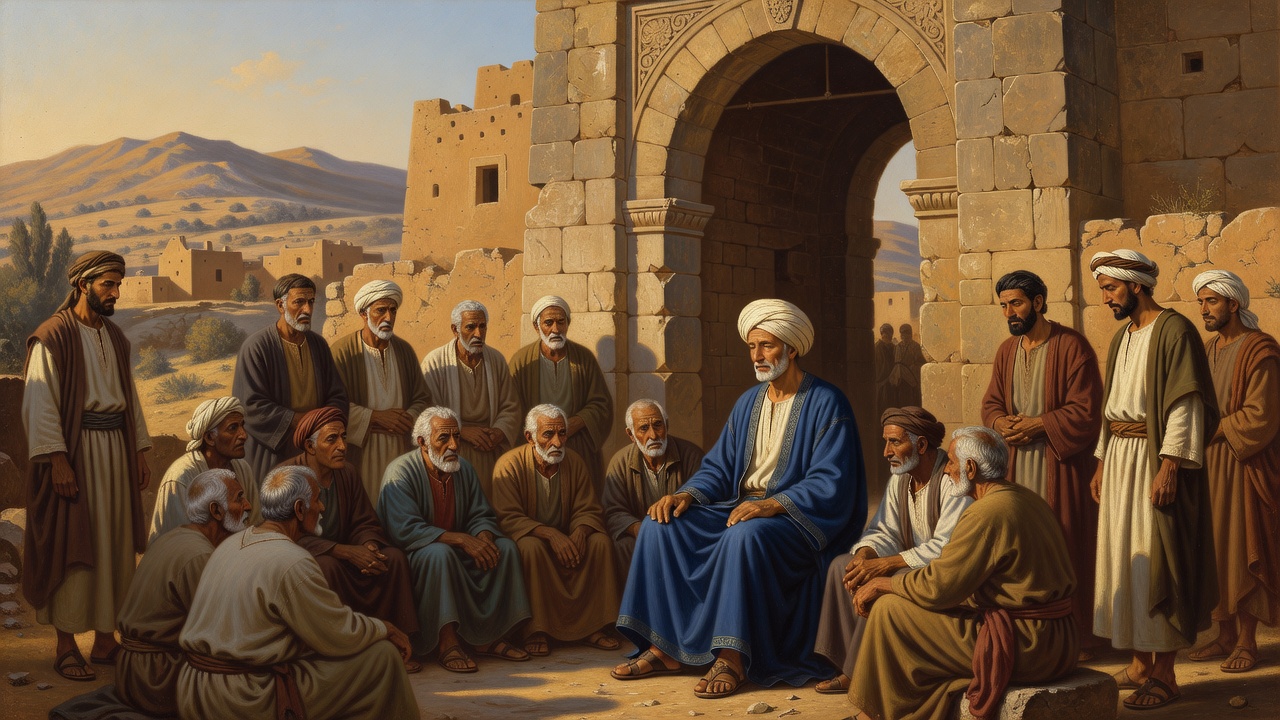
- In ancient times, the city gate and public square served as the center of community leadership, assembly, and judicial decisions. Job recalls sitting there as an honored counselor and chief, where young men stepped aside, elders stood in respect, and nobles fell silent to hear his guidance.Sources: the Bible text itself
- Job describes his former righteousness in terms of social justice and active protection of the vulnerable. He acted as an advocate and helper for the poor, the fatherless, the widow, the blind, the lame, and the stranger, while actively restraining oppressors.Sources: the Bible text itself
- Job is identified as an Arabian patriarch who resided in the land of Uz. In this chapter, he looks back with deep longing on the time before his sudden calamities, when his children were gathered around him and his household enjoyed exceptional prosperity and friendship with God.Sources: Job · the Bible text itself
Notes written with AI assistance from open sources (Theographic Bible Metadata, CC BY-SA 4.0; Easton’s Bible Dictionary, public domain) and reviewed before publishing.
Credits and license for this translation
Tupàn ze'eg
Bible without Deuterocanon in Guajajára (BR:gub:Guajajára)
copyright © 2007 Wycliffe Bible Translators, Inc.
Language: Guajajára
Translation by: Wycliffe Bible Translators, Inc.
Guajajára [gub], Brazil
Copyright Information
© 2007, Wycliffe Bible Translators, Inc. All rights reserved.
This translation text is made available to you under the
terms of the Creative Commons License: Attribution-Noncommercial-No Derivative Works.
( http://creativecommons.org/licenses/by-nc-nd/3.0/ )
In addition, you have permission to port the text to different file formats, as long as you
do not change any of the text or punctuation of the Bible.
You may share, copy, distribute, transmit, and extract portions
or quotations from this work, provided that you include the above copyright
information:
You must give Attribution to the work.
You do not sell this work for a profit.
You do not make any derivative works that change any of the actual words or punctuation of the Scriptures.
Permissions beyond the scope of this license may be
available if you contact
us with your request.
Printed book ISBN 9788531109713
The Bible without Deuterocanon
in Guajajára
© 2007, Wycliffe Bible Translators, Inc. All rights reserved.
This translation is made available to you under the terms of the
Creative Commons Attribution-Noncommercial-No Derivatives license 4.0.
You may share and redistribute this Bible translation or extracts from it in any format, provided that:
You include the above copyright and source information.
You do not sell this work for a profit.
You do not change any of the words or punctuation of the Scriptures.
Pictures included with Scriptures and other documents on this site are licensed just for use with those Scriptures and documents.
For other uses, please contact the respective copyright owners.
2020-03-30
Source: http://ebible.org/gubBl/ · eBible.org