Job 16
Tupàn ze'eg · Tap a verse to see its cross-references.
Izo uze'eg putar kury
Ze'eg tetea'u
1Izo uze'eg putar a'e nehe kury.
2Agwer ma'e ainu kwehe mehe ihe.
Nahemurywete kar kwaw pe. Hemuzemumikahy kar pe.
3Aipo ko peze'eg ywytu zàwenugar nupaw pixik kwaw nehe.
Màràzàwe tuwe napepytu'u kwaw heputupyk ire.
4Aze mo pepuraraw ma'erahy peiko hezàwe,
Apuner mo peze'egaw imume'u haw rehe.
Azeàkàgmuawawak mo ma'e kwaw katu har ài.
Apukamikamik mo heze'eg tetea'u pupe no.
5Apuner mo ze'eg purumurywete kar ma'e imume'u haw rehe.
Nezewe mehe mo ma'erahy rehe napezemumikahy iwer mo nezewe.
6Aze aze'eg, herahy haw noho kwaw ihewi.
Aze apytu'u heze'eg ire, heremipuraraw nupaw kwaw no.
Tupàn uzepyk herehe, i'i
7Ne o Tupàn ne, herezar pe kwez ikàg 'ym ma'e romo ne.
Eremumaw heànàm paw ne wà.
8Hemono pe zemunehew paw zàwenugar pupe. A'e rupi 'aw awa umume'u heremiapo kwer ikatu 'ym ma'e wà.
Xo hepir zo heta ihewe kury. Xo hekagwer zo no. A'e rupi,
— Ikatu 'ym ma'e iapo har romo ereiko, i'i amogwer ihewe wà.
9Wikwahy mehe Tupàn hereityk azeharomoete a'e.
Na'iakatuwawahy kwaw herehe ume'e mehe.
Nuzawy kwaw miar ipuruzukaiwahy ma'e. Ur heraikweromo hezuka àwàm imume'u pà.
10Upaw rupi umume'u ikatu 'ym ma'e ihewe wemiapo ràm wà.
Uwàpytymawok uzuru herehe uze'eg urywahyahy pà wà.
Ukwaukwar herehe ikàg 'ym ma'e romo hemuigo kar pà wà.
11Tupàn hemono awa iaiw ma'e wanupe.
Hemu'ar kar teko ikatu 'ym ma'e wapo pe.
12Aiko zeàmàtyry'ym 'ymaw rehe kwehe mehe. Nezewe rehe we hekamik a'e.
Hepyhyk he'az pe hezuhaw pà.
— Azywà putar a'e awa ihe nehe, i'i ihewe.
13Umàmàn u'yw pupe heywyr hezywàzywà pà.
U'yw ukutuk heku'azarer. Waxaw oho. Nahepuhareko kwaw. Nuzemumikahy kwaw herehe.
Hepy'a rupi arer uwyryk ywy rehe no.
14Tupàn ur hekutyr zauxiapekwer ài.
Werekoahy heretekwer ukwaukwar pà herehe.
15Amunehew ma'eryru pàn iànàm ma'e ma'eryru iapo pyrer, hezemumikahy haw hexak kar pà.
Ikàg 'ym ma'e romo aiko. A'e rupi ywyku'i kwer rehe apyk.
16Azai'o tetea'u. A'e rupi heruwa nuzawy kwaw ukaz ma'e kwer.
Hereha iàpyàpyzahy. Ipihupihun izywyr no.
17Nezewe rehe we naiko pixik kwaw puruzuka ma'e romo ihe.
Aze'eg Tupàn pe tuweharupi heremu'em 'ym pà.
Naheta kwaw hepytywà har, i'i
18O ywy, ezumim zo ikatu 'ym ma'e ihewe iapo pyrer nehe.
Ahapukaz hemukatu àwàm henoz pà. Ezupyk kar zo heze'eg nehe.
19Heta hekatu haw imume'u har ywak rehe. Akwaw heta haw.
Tupàn pe herekuzaromo uze'eg ma'e wiko a'e pe a'e.
20Hemyrypar uze'eg urywahyahy herehe wà.
Azewyr Tupàn pe herehay hereko pà.
21Awa umume'u umyrypar ikatu haw tàmuz wanenataromo a'e.
Nezewegatete aputar hekatu haw Tupàn henataromo imume'u àràm ihe no.
22Amumaw putar amo kwarahy hereko pà nehe. Tupàn upapar a'e hekwarahy a'e.
Aha putar iteko pe rupi ihe. Ni amo nuzewyr kwaw a'e pe rupi wà.
Did you know?
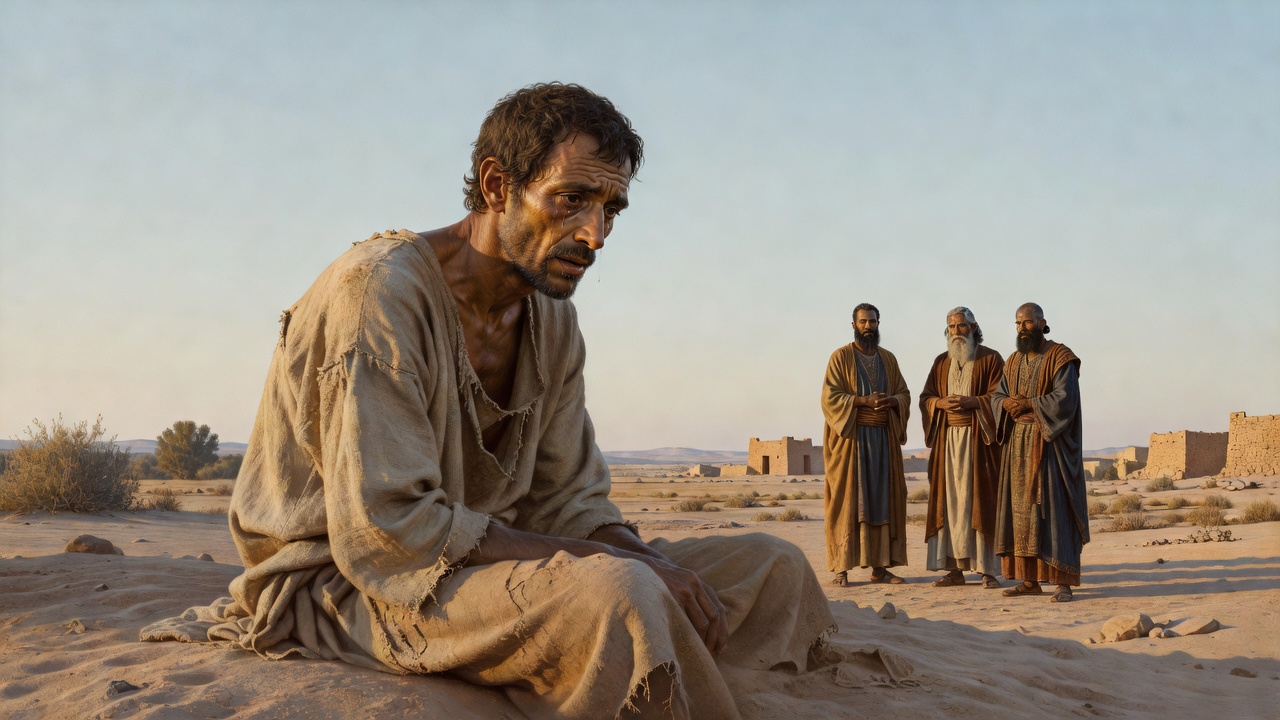
Job's Agony and Appeal to a Heavenly Witness
- Job rebukes his companions as miserable comforters whose speeches bring no relief. To express the depth of his humiliation and mourning, he notes that he has sewn sackcloth over his skin and buried his horn in the dust, using the horn as an ancient symbol of strength, honor, and dignity.Sources: the Bible text itself
- Despite suffering devastating physical and emotional anguish while surrounded by mocking companions, Job insists that his hands are free of violence and his prayer is pure. Looking beyond his earthly accusers, he expresses confidence that he has an advocate and witness in heaven to plead his case.Sources: the Bible text itself · Job
Notes written with AI assistance from open sources (Theographic Bible Metadata, CC BY-SA 4.0; Easton’s Bible Dictionary, public domain) and reviewed before publishing.
Credits and license for this translation
Tupàn ze'eg
Bible without Deuterocanon in Guajajára (BR:gub:Guajajára)
copyright © 2007 Wycliffe Bible Translators, Inc.
Language: Guajajára
Translation by: Wycliffe Bible Translators, Inc.
Guajajára [gub], Brazil
Copyright Information
© 2007, Wycliffe Bible Translators, Inc. All rights reserved.
This translation text is made available to you under the
terms of the Creative Commons License: Attribution-Noncommercial-No Derivative Works.
( http://creativecommons.org/licenses/by-nc-nd/3.0/ )
In addition, you have permission to port the text to different file formats, as long as you
do not change any of the text or punctuation of the Bible.
You may share, copy, distribute, transmit, and extract portions
or quotations from this work, provided that you include the above copyright
information:
You must give Attribution to the work.
You do not sell this work for a profit.
You do not make any derivative works that change any of the actual words or punctuation of the Scriptures.
Permissions beyond the scope of this license may be
available if you contact
us with your request.
Printed book ISBN 9788531109713
The Bible without Deuterocanon
in Guajajára
© 2007, Wycliffe Bible Translators, Inc. All rights reserved.
This translation is made available to you under the terms of the
Creative Commons Attribution-Noncommercial-No Derivatives license 4.0.
You may share and redistribute this Bible translation or extracts from it in any format, provided that:
You include the above copyright and source information.
You do not sell this work for a profit.
You do not change any of the words or punctuation of the Scriptures.
Pictures included with Scriptures and other documents on this site are licensed just for use with those Scriptures and documents.
For other uses, please contact the respective copyright owners.
2020-03-30
Source: http://ebible.org/gubBl/ · eBible.org