Jeremiah 9
Tupàn ze'eg · Tap a verse to see its cross-references.
1Aze mo heàkàg nuzawy iwer yzygwar, ikatu mo ihewe.
Nezewe mehe hereha nuzawy iwer mo tehaykwer tetea'u imuhem kar haw.
Nezewe mehe apuner mo hezai'o tetea'u haw rehe, 'aromo, pyhaw,
heànàm izuka pyrer wanehe.
2Aputar zepe hereko haw ywyxiguhu pe har.
Nezewe mehe mo apuner mo muite hereko haw rehe heànàm wanuwi.
Paw rupi nuzawy kwaw wemireko 'ym puhe oho ma'e wà.
Wiko uwihaw izuka haw iputar har uzemono'og ma'e romo wà.
3Tuweharupi ipurumume'u wer temu'emaw rehe wà.
Munar haw wiko ko ywy rehe har wanuwihaw romo.
Ze'eg azeharomoete har nuiko kwaw wanuwihaw romo.
Tupàn Tuweharupi Wiko Ma'e uze'eg kury.
— Heremiaihu uzapo ikatu 'ym ma'e amo ikatu 'ym ma'e rehe we wà.
Naheputar kwaw wà.
4Pitàitàigatu uzemupy'a umyrypar rehe wà.
Ni amo nupuner kwaw uwywyr rehe uzeruzar haw rehe wà.
Ta'e tywyr paw hemu'em umunar pà Zako ài wà xe.
Paw rupi hemu'em oho waiko umyrypar wanehe wà.
5Paw rupi hemu'em wemigwaw wanupe wà.
Ni amo numume'u kwaw ze'eg azeharomoete har wà.
Umu'e wapeku temu'emaw rehe wà.
Uzapo ikatu 'ym ma'e wà. Nuityk kwaw ikatu 'ym ma'e wemiapo wà.
6Upuraraw kar ma'erahy tetea'u amo wanupe wà.
Imunar teko tetea'u wama'e rehe wà no.
— 'Aw teko naheputar kwaw wà, i'i Tupàn.
7A'e rupi Tupàn Tuweharupi Wiko Ma'e Upuner Wera'u Ma'e uze'eg nezewe.
— Teko umupyràn itatàtà ikatu 'ymaw henuhem pà izuwi wà.
Nezewegatete azo'ok putar ikatu 'ymaw heremiaihu wanuwi ihe nehe no.
Agaw putar ihe wà nehe.
Heremiaihu uzapo ikatu 'ym ma'e wà.
Ma'e azapo putar wanupe nehe.
8Wapeku nuzawy kwaw u'yw puruzuka haw iapyr hereko har wà.
Wazuru umume'u temu'emaw wà.
Pitàitàigatu uze'egatu mua'u uzeake har wanupe wà.
Azeharomoete umuàgà'ym miar pyhykaw zàwenugar waiko uzeake har wanupe wà.
9Aipo nazepyk kwaw wanehe agwer wanemiapo kwer hekuzaromo nehe.
Aipo nazepyk kwaw agwer teko wanehe nehe.
Ihe Tupàn Tuweharupi Wiko Ma'e aiko ko ma'e imume'u har romo ihe, i'i Tupàn.
10Ihe Zeremi aze'eg ihe kury.
— Azai'o putar ywytyruhu rehe nehe.
Azemumikahy putar nehe, ta'e ka'api'i àràpuhàràn wanemi'u uxinig a'e xe.
Ni amo nuwata kwaw hupi wà.
Ni amo nuenu kwaw tapi'ak waze'egaw wà.
Wiràmiri wà, miar wà no, uzàwehem oho a'e wi a'e wà.
11Uze'eg Tupàn.
— Azapo putar Zeruzarez ywytyr ita tetea'u iapo pyrer romo ihe nehe.
Awarahu wiko putar a'e pe wà nehe.
Tawhu Zuta ywy rehe har uzeapo putar ywyxiguhu romo wà nehe no.
Ni amo nuiko kwaw a'e pe wà nehe, i'i Tupàn.
12Apuranu ihe.
— O Tupàn Tuweharupi Wiko Ma'e, màràzàwe tuwe ureywy iaiw a'e. Màràzàwe tuwe uxinig ywyxiguhu ài. Màràzàwe tuwe teko nuwahaw kwaw wà. Mo upuner ko ma'e ikwaw paw rehe wà. Aipo eremume'u ko ma'e amo pe. A'e teko upuner putar imume'u haw rehe amogwer wanupe nehe, a'e Tupàn pe hehe hepuranu pà.
13Tupàn Tuweharupi Wiko Ma'e uwazar heze'eg ihewe.
— Agwer ma'e uzeapo a'e, ta'e heremiaihu weityk hepurumu'e haw wanupe heremimono kwer a'e wà xe. Nahereruzar kwaw wà. Nuzapo kwaw heremiapo kar haw wà. 14Nan. Upytu'u hereruzar ire Ma'aw hagapaw imuwete pà wà. Wanu umu'e Ma'aw imuwete haw rehe wà. 15Ihe Tupàn Tuweharupi Wiko Ma'e Upuner Wera'u Ma'e Izaew wazar ihe azapo putar ma'e ihe nehe. Einu katu nehe. Amono putar ka'a iro ma'e heremiaihu wanupe i'u kar pà ihe nehe. Amono putar 'y puruzuka ma'e wanupe nehe no. 16Amuhàmuhàz putar heremiaihu ywy nànànar wainuinuromo ihe wà nehe.
Ni a'e ni waipy nukwaw kwaw a'e teko wà. Amur kar putar zauxiapekwer tetea'u heremiaihu wakutyr ihe wà nehe. Te umumaw kar putar tuwe wà nehe.
Zeruzarez pe har wenoz upytywà haw wà
17Uze'eg Tupàn Tuweharupi Wiko Ma'e Upuner Wera'u Ma'e a'e kury.
— Peinu katu ko heze'eg nehe.
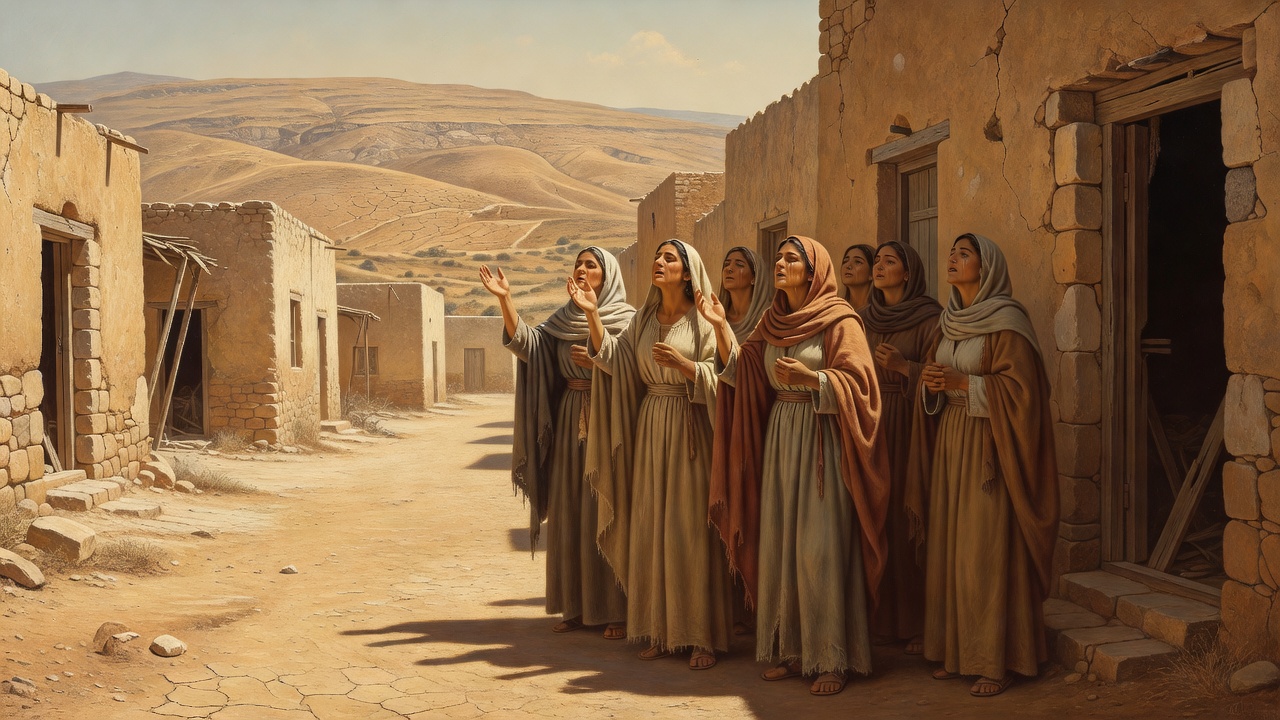
Teko omono temetarer amo kuzà wanupe wà. A'e kuzà uzai'o waànàm wamàno awer rehe wà.
Ukwaw zegar haw uzemumikahy ma'e wà. Penoz a'e kuzà wamuwà pe wà nehe kury, i'i Tupàn.
18Uze'eg teko wà.
— Tuwe a'e kuzà ur na'arewahy wà nehe.
Tuwe umuzàg amo zegar haw teko wazemumikahy mehe har zanewe wà nehe,
zanereha imumynehem kar pà tehaykwer pupe wà nehe.
Tuwe zanereha iàkym zanezai'o tetea'u haw rehe nehe, i'i wà.
19Peinu teko Xiàw pe har wazai'o mehe pe wà nehe. Uze'eg nezewe wà:
— Iaiw zanereko haw kury.
Zanemaranugarahy zane kury.
Weityk zaneràpuz wà.
Zaha putar zaneywy wi nehe kury, i'i wà.
20Aze'eg ihe.
— Kuzà wà, peinu katu Tupàn Tuweharupi Wiko Ma'e ize'eg nehe.
Pezekaiw katu ize'eg rehe nehe.
Pemu'e pememyr wazai'o haw rehe pe wà nehe.
Pemu'e pemyrypar zegar haw uzemumikahy ma'e imuzàgaw rehe pe wà nehe no.
21Màno haw uzeupir pàrirogaw rupi,
zaneràpuzuhu pupe wixe pà.
Umumaw kwarearer nahu rupi har wà.
Umumaw kwàkwàmo ma'eme'egaw pe har katu pe har wà no.
22Umàno ma'e kwer wanetekwer u'ar putar wà nehe.
Nuzawy kwaw ma'ea'yr hepuxi kaiwer pe imuhàmuhàz pyrer wà nehe.
Nuzawy kwaw haryw ipo'o har wapo wi u'ar ma'e kwer wà nehe no.
Ni amo nomono'og kwaw a'e haryw wà.
Tupàn umume'u kar a'e ze'eg ihewe a'e, a'e wanupe.
23Uze'eg Tupàn Tuweharupi Wiko Ma'e kury.
— Tuwe ma'e kwaw katu har nuiko wera'u kwaw amo wanuwi uma'e kwaw paw rehe nehe. Tuwe ikàg ma'e nuiko wera'u kwaw amo wanuwi ukàgaw rehe nehe. Tuwe hemetarer katu ma'e nuiko wera'u kwaw amo wanuwi wemetarer rehe nehe. 24Aze amo heko wera'u wer nehe, tuwe wiko wera'u hekwaw paw rehe nehe, hekwaw katu haw rehe nehe. Ta'e ihe Tupàn Tuweharupi Wiko Ma'e aiko puruamutar haw izar romo ihe xe. Azapo ikatu ma'e. Nazapo kwaw ikatu 'ym ma'e ywy rehe. Agwer ma'e ikatu ihewe. Ihe Tupàn Tuweharupi Wiko Ma'e aze'eg kwez kury, i'i Tupàn.
25Uze'eg wi Tupàn a'e.
— Uhem purehe hezepyk àwàm 'ar iko: Ezit ywy rehe har wà, Zuta ywy rehe har wà, Enom ywy rehe har wà, Amon ywy rehe har wà, Moaw ywy rehe har wà, ywyxiguhu rehe har 'aw ipinar wà. Wanehe paw azepyk putar nehe. A'e teko paw omonohok kwarer wapirera'i wà. Nezewe rehe we nuweruzar kwaw uze'eg pirer monohokaw inuromo har wà. A'e teko paw wà, teko Izaew izuapyapyr paw wà no, uzapokatu uze'egaw herehe we wà. Nuzapo kwaw ma'e a'e uze'eg rupi wà, i'i a'e.
Did you know?
A Lament over Deceit and Ruin
- In ancient Near Eastern culture, skilled professional mourning women were summoned during major calamities and funerals to lead communal laments and teach dirges to the next generation.Sources: the Bible text itself
- The passage warns against boasting in human wisdom, military power, or material riches, presenting the true knowledge of God—characterized by loving devotion, justice, and righteousness—as the only legitimate ground for confidence.Sources: the Bible text itself
- The chapter groups Judah with its regional neighbors—Egypt, Edom, Ammon, and Moab—warning that external religious marks like physical circumcision offer no protection if the heart remains uncircumcised and disobedient.Sources: the Bible text itself · Edom · Ammon · Moab
Notes written with AI assistance from open sources (Theographic Bible Metadata, CC BY-SA 4.0; Easton’s Bible Dictionary, public domain) and reviewed before publishing.
Places in this chapter
- Jerusalem · 31.777, 35.234 · verse 11
- Zion · Today: Jerusalem · 31.777, 35.234 · verse 19
- Ammon · 31.955, 35.934 · verse 26
- Edom · 30.746, 35.604 · verse 26
- Egypt · 30.129, 31.308 · verse 26
- Moab · Today: Moab 1 · 31.181, 35.701 · verse 26
Only places identified with high confidence are shown (90% or more according to the scholarly sources compiled by OpenBible). Period map: DARE (Digital Atlas of the Roman Empire), CC BY 4.0; modern map: © OpenStreetMap contributors; places: OpenBible.info (CC BY 4.0).
Credits and license for this translation
Tupàn ze'eg
Bible without Deuterocanon in Guajajára (BR:gub:Guajajára)
copyright © 2007 Wycliffe Bible Translators, Inc.
Language: Guajajára
Translation by: Wycliffe Bible Translators, Inc.
Guajajára [gub], Brazil
Copyright Information
© 2007, Wycliffe Bible Translators, Inc. All rights reserved.
This translation text is made available to you under the
terms of the Creative Commons License: Attribution-Noncommercial-No Derivative Works.
( http://creativecommons.org/licenses/by-nc-nd/3.0/ )
In addition, you have permission to port the text to different file formats, as long as you
do not change any of the text or punctuation of the Bible.
You may share, copy, distribute, transmit, and extract portions
or quotations from this work, provided that you include the above copyright
information:
You must give Attribution to the work.
You do not sell this work for a profit.
You do not make any derivative works that change any of the actual words or punctuation of the Scriptures.
Permissions beyond the scope of this license may be
available if you contact
us with your request.
Printed book ISBN 9788531109713
The Bible without Deuterocanon
in Guajajára
© 2007, Wycliffe Bible Translators, Inc. All rights reserved.
This translation is made available to you under the terms of the
Creative Commons Attribution-Noncommercial-No Derivatives license 4.0.
You may share and redistribute this Bible translation or extracts from it in any format, provided that:
You include the above copyright and source information.
You do not sell this work for a profit.
You do not change any of the words or punctuation of the Scriptures.
Pictures included with Scriptures and other documents on this site are licensed just for use with those Scriptures and documents.
For other uses, please contact the respective copyright owners.
2020-03-30
Source: http://ebible.org/gubBl/ · eBible.org