Judges 2
Tupàn ze'eg · Tap a verse to see its cross-references.
Tupàn heko haw pe har oho Moki tawhu pe a'e
1Amo Tupàn heko haw pe har oho Ziwkaw tawhu wi Moki tawhu pe a'e kury. Uze'eg a'e pe har wanupe. — Apuerur Ezit ywy wi ihe. Apumuixe kar ywy peipy wanupe heremimume'u kwer rehe ihe no. — Nazuhaw pixik kwaw peme heze'eg awer ihe nehe, a'e peme. 2— Pezapokatu zo peze'eg a'e ywy rehe har wanehe we nehe. Peityk ma'ea'yr hapy haw tupàn a'ua'u wanenataromo har nehe, a'e peme. Naperuzar kwaw heze'eg. Màràzàwe tuwe herereko pe nezewe, i'i wanupe. 3— Naperuzar kwaw heze'eg, a'e rupi namuhem kar kwaw a'e teko ko ywy rehe har penenataromo ihe wà nehe. Wiko putar peàmàtyry'ymar romo wà nehe. Pepurumuwete wer putar wazar tupàn a'ua'u wanehe nehe no, i'i wanupe.
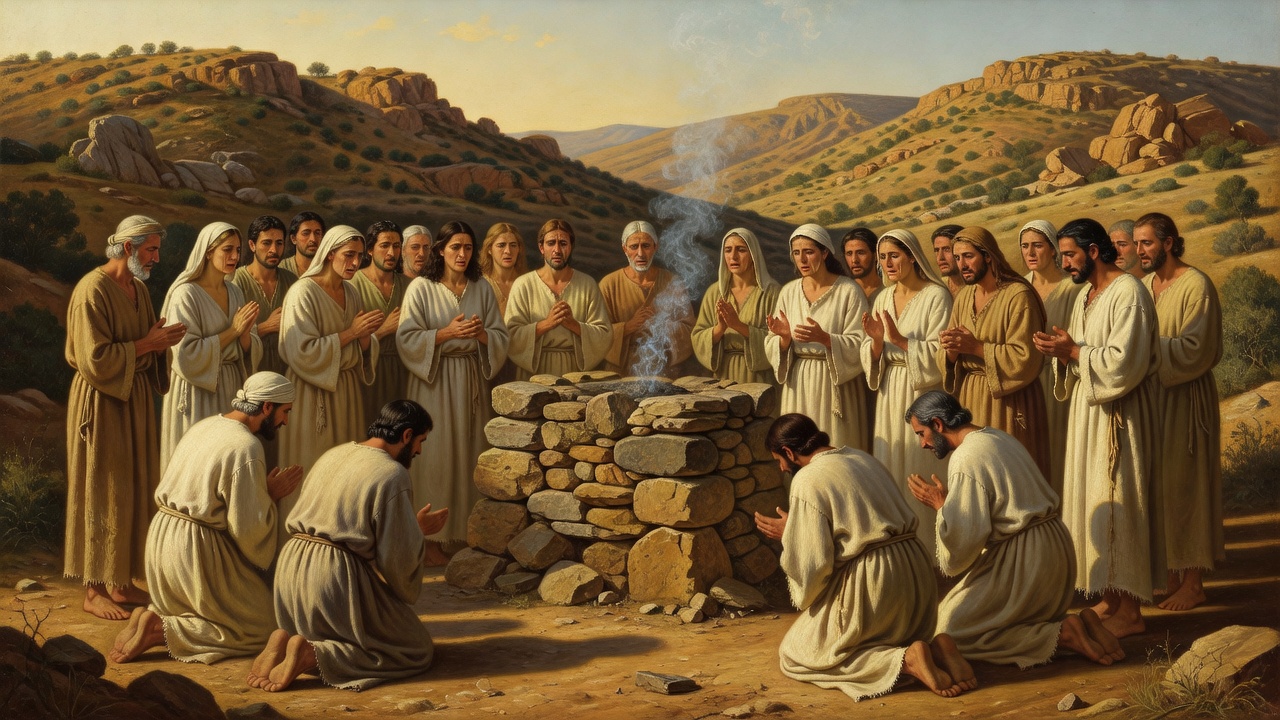
4A'e ma'e Izaew paw wanupe imume'u re teko uzai'o tetea'u tuwe a'e wà kury. 5— Moki, i'i a'e ywy pe wà. — Uzai'o ma'e wà, i'i her zaneze'eg rupi. Uzuka ma'ea'yr a'e pe Tupàn henataromo wà.
Zuzue imàno haw
6Omono kar Zuzue Izaew uzewi wà. A'e re teko oho uiwy rehe pitàitàigatu wà, weko haw iapo pà a'e pe pitàitàigatu wà. 7Zuzue heko mehe we teko weruzar Tupàn ze'eg wà. Amo tàmuz wikuwe Zuzue imàno mehe wà. A'e tàmuzgwer wexak Tupàn hemiapo kwer ikàg ma'e paw a'e wà, Izaew wanupe iapo mehe a'e wà. Teko weruzar Tupàn ze'eg waneko mehe wà no.
8Zuzue Nun ta'yr 110 kwarahy hereko mehe umàno a'e. 9Utym hetekwer iziwy Tupàn hemimur kwer rehe a'e wà. Xinater tawhu pe Eparai ywy ywytyruhu heta haw pe itym wà. Itym awer ywytyr Kaz huwake kwarahy heixe haw awyze har kutyr tuz. 10Umumaw Izaew kwarahy tetea'u a'e pe wà. Umàno Zuzue 'ar mehe arer upaw rupi wà no. Wazuapyapyr wiko a'e ywy rehe wà kury. Nukwaw kwaw Tupàn wà. Nukwaw kwaw Izaew wanupe hemiapo kwer wà.
Izaew upuir Tupàn wi wà
11Na'e Izaew uzapo iaiw ma'e Tupàn huwarupi wà. Umuwete katu tupàn ua'u Ma'aw her ma'e wà kury. Na'ikatu pixik kwaw wanemiapo kwer Tupàn pe.
12Upuir teko Tupàn wàmuzgwer wazar wi wà, Ezit ywy wi wanerur arer wi wà. Umuwete katu tupàn a'ua'u a'e ywy rehe har wazar wà, uzeake wiko ma'e wazar wà. Umuikwahy kar Tupàn wà. 13Ta'e upuir izuwi wà xe, ta'e umuwete katu Ma'aw wà xe, ta'e umuwete katu Atarot wà no xe. (Ma'aw tupàn ua'u awa romo hekon a'e. Atarot tupàn ua'u kuzà romo hekon a'e no.) 14Wikwahy tuwe Tupàn Izaew wanehe. A'e rupi umuhem kar awa iaiw ma'e Izaew waneko haw pe wà kury. A'e awa uzuka amo Izaew wà, wama'e heraha pà wà. Omono Tupàn Izaew waàmàtyry'ymar wanupe wà. A'e rupi Izaew na'ikàg kwaw wà kury. Wanuwake har upuner iaiw ma'e iapo haw rehe wanupe wà kury. 15Aze Izaew uhem oho amo teko waàmàtyry'ym pà wà, Tupàn nupytywà kwaw wà. Upytywà waàmàtyry'ymar wà, uze'eg awer rupi katete a'e. Uzemumikahy Zutew wà. Upuraraw ma'erahy tetea'u wà.
16Na'e Tupàn wexaexak amo tuwihaw teko wapyro har romo a'e kury. A'e tuwihaw upyro Izaew waàmàtyry'ymar wanuwi wà. 17Nezewe rehe we teko nuzekaiw kwaw uwihaw waze'eg rehe wà. Umuwete katu amo tupàn a'ua'u wà. Nuiko kwaw wàmuz wazàwe wà. Na'arewahy uhem oho Tupàn rape wi wà, wàmuz wanape wi wà. Nuweruzar kwaw Tupàn ze'eg wàmuz wazàwe wà. 18Teko wanupe tuwihaw hexakar mehe Tupàn wiko a'e tuwihawete rehe we a'e. A'e tuwihaw a'e wà, wikuwe mehe upyro Zutew oho waiko waàmàtyry'ymar wanuwi a'e wà. Ta'e Tupàn upuhareko katu Zutew a'e wà xe, ta'e waàmàtyry'ymar upuraraw kar ma'erahy tetea'u wanupe a'e wà xe. 19Wyzài tuwihaw imàno re teko uzewyr wemiapo kwer pe wà. Wanemiapo kwer pitàitàigatu iaiw wera'u wanu wanemiapo kwer wanuwi. Umuwete katu wi wi tupàn a'ua'u oho waiko wà, ikatu 'ym ma'e iapo pà wanenataromo wà. — Nazapytu'u kwaw a'e ma'e iapo re nehe, i'i uzeupeupe wà. 20A'e rupi Tupàn wikwahy tuwe Izaew wanehe kury. — Ko teko uhaw wàmuzgwer ze'eg awer ihewe wanemimume'u kwer wà. Nuzekaiw kwaw heze'eg rehe wà, i'i uzeupe. 21— Zuzue umuhem kar amo wà. Amogwer upyta xe wà. Namuhem kar kwaw xe wi ihe wà nehe kury, i'i uzeupe. 22— Amono kar putar a'e teko Izaew wakutyr ihe wà nehe. Agaw putar Izaew nezewe ihe wà nehe. Aze ru'u wata putar herape rupi wàmuzgwer wazàwe wà nehe. Aze ru'u nan, i'i uzeupe.
23Tupàn umupyta kar a'e teko a'e ywy rehe wà. Numuhem kar kwaw upaw rupi a'e 'ar mehe wà. Nuweityk kar kwaw Zuzue pe a'e 'ym mehe wà.
Did you know?
Israel's Cycle of Disobedience and the Judges
- The name Bochim means "weepers." The site, likely situated between Gilgal and Shiloh, received this name after the Israelites wept aloud when the angel of the Lord rebuked them for making compromises with the inhabitants of the land.Sources: Bochim · the Bible text itself
- Joshua was buried at Timnath-heres, which means "portion of the sun," located north of the hill of Gaash in the hill country of Ephraim. He had led the Israelites following the death of Moses and died at the age of 110.Sources: Timnath-heres · Gaash · Joshua · the Bible text itself
- The term Baalim is the plural form referring to local manifestations of Baal, the principal male deity of the Phoenicians. Judges 2 establishes the book's recurring cycle: Israel abandons the Lord for regional gods, suffers under enemies, and is delivered when God raises up a judge.Sources: Baal · the Bible text itself
Notes written with AI assistance from open sources (Theographic Bible Metadata, CC BY-SA 4.0; Easton’s Bible Dictionary, public domain) and reviewed before publishing.
Places in this chapter
Only places identified with high confidence are shown (90% or more according to the scholarly sources compiled by OpenBible). Period map: DARE (Digital Atlas of the Roman Empire), CC BY 4.0; modern map: © OpenStreetMap contributors; places: OpenBible.info (CC BY 4.0).
Credits and license for this translation
Tupàn ze'eg
Bible without Deuterocanon in Guajajára (BR:gub:Guajajára)
copyright © 2007 Wycliffe Bible Translators, Inc.
Language: Guajajára
Translation by: Wycliffe Bible Translators, Inc.
Guajajára [gub], Brazil
Copyright Information
© 2007, Wycliffe Bible Translators, Inc. All rights reserved.
This translation text is made available to you under the
terms of the Creative Commons License: Attribution-Noncommercial-No Derivative Works.
( http://creativecommons.org/licenses/by-nc-nd/3.0/ )
In addition, you have permission to port the text to different file formats, as long as you
do not change any of the text or punctuation of the Bible.
You may share, copy, distribute, transmit, and extract portions
or quotations from this work, provided that you include the above copyright
information:
You must give Attribution to the work.
You do not sell this work for a profit.
You do not make any derivative works that change any of the actual words or punctuation of the Scriptures.
Permissions beyond the scope of this license may be
available if you contact
us with your request.
Printed book ISBN 9788531109713
The Bible without Deuterocanon
in Guajajára
© 2007, Wycliffe Bible Translators, Inc. All rights reserved.
This translation is made available to you under the terms of the
Creative Commons Attribution-Noncommercial-No Derivatives license 4.0.
You may share and redistribute this Bible translation or extracts from it in any format, provided that:
You include the above copyright and source information.
You do not sell this work for a profit.
You do not change any of the words or punctuation of the Scriptures.
Pictures included with Scriptures and other documents on this site are licensed just for use with those Scriptures and documents.
For other uses, please contact the respective copyright owners.
2020-03-30
Source: http://ebible.org/gubBl/ · eBible.org