Isaiah 63
Tupàn ze'eg · Tap a verse to see its cross-references.
Tupàn uzepyk wemiaihu waàmàtyry'ymar wanehe
1Ur amo iko tawhu Mozira her ma'e wi ywy Enom her ma'e wi a'e kury. Mo romo hekon.
Ur amo hopozpiràg hekuzar katu ma'e imunehew har. Mo romo hekon.
Ikàg wata mehe. Upuner wata mehe. Mo romo hekon.
— Ihe, i'i Tupàn Tuweharupi Wiko Ma'e. — Heàmàtyry'ymar waneityk awer imume'u har romo aiko ihe.
Apuner purupyro haw rehe hekàgaw pupe ihe.
2— Màràzàwe tuwe neropoz ipiràg a'e.
Nuzawy kwaw uwà rehe win iapo pà upyropyrog ma'e wanopoz a'e.
3Uwazar Tupàn Tuweharupi Wiko Ma'e a'e puranu haw a'e kury.
— Apyropyrog teko ywy tetea'u rehe har wanehe ihe. Nuzawy kwaw uwà rehe ipyropyrogaw kawawhu zàwenugar pupe har.
Naheta kwaw hepytywà har hepyrog mehe wà.
Aikwahy ihe. Hekwahy haw rehe apyropyrog amo ywy rehe har wanehe ihe. Azuhazuhaw ihe wà.
Wanuwykwer upirik heropoz rehe.
Ipiràg kury.
4— Heàmàtyry'ymar wanehe hezepykaw 'ar uhem kwez kury, a'e hezeupe.
— Heremiaihu wapyro haw 'ar uhem kwez kury no, a'e hezeupe.
5Ame'e heiwyr. Naheta kwaw hepytywà har wà.
Hepytuhegatu, ta'e naheta kwaw herehe we uma'ereko ma'e wà xe.
A'e rupi ihe zutyka'i aityk heàmàtyry'ymar ihe wà.
Hekwahy haw hemynehem hekàgaw pupe.
6Apyropyrog teko wanehe hekwahy haw rehe.
Aikwahy ihe, a'e rupi azuhaw ihe wà.
Azuhezuhen wanuwykwer ywy rehe,
i'i Tupàn.
Tupàn ipuruamutar katu haw purupe
7Amume'u putar Tupàn Tuweharupi Wiko Ma'e ipuruamutar katu haw purupe ihe nehe.
Uzapo ikatu ma'e tetea'u a'e.
A'e rupi amume'u putar ikatu haw izupe nehe, ta'e Tupàn Tuweharupi Wiko Ma'e umur tuwe uze'egatu zanerehe a'e xe.
Wexak kar ukatuahy haw wemiaihu wanupe.
Ta'e upurupuhareko katu a'e xe.
Upuruamutar katu a'e no.
8Tupàn Tuweharupi Wiko Ma'e uze'eg kury.
— Wiko heremiaihu romo wà.
Hera'yr ikatu 'ym ma'e ihewe iapo pixik 'ym àràm romo wanekon wà, i'i.
9A'e rupi upyro wanemipuraraw paw wi a'e wà.
A'e ae wiko wapyro har romo a'e.
Numur kar kwaw weko haw pe har wapyro àràm romo wà. Numur kar kwaw amo wyzài wemiruze'eg.
A'e ae uzapo.
Uzamutar katu a'e wà. Upuhareko wà no. A'e rupi upyro wà.
Tuweharupi nehe, kwarahy nànàn nehe, upyhyk waneraha pà wà.
10Nezewe rehe we upytu'u heruzar ire wà.
Umuzemumikahy kar Hekwe Ikatuahy Ma'e wà no.
A'e rupi Tupàn uzeapo waàmàtyry'ymar romo a'e.
Uzypyrog wàmàtyry'ym pà.
11Na'e ima'enukwaw weko awer rehe wà.
Ima'enukwaw Moizez Tupàn hemiruze'eg kwehe arer rehe wà no.
A'e rupi upuranu uzehezehe wà.
— Ma'e pe hekon Tupàn Tuweharupi Wiko Ma'e a'e.
Kwehe mehe upyro wemiaihu yryhu wi a'e wà. Nuzawy kwaw àràpuhàràn wamono'ogar wanupe a'e. Upyro wà.
Moizez nuzawy kwaw wanehe uzekaiw ma'e a'e.
Ma'e pe hekon Wekwe Moizez pe imono arer a'e.
12Umupyta kar upuner haw uhua'u ma'e hehe tuweharupi.
Ma'e pe hekon kury.
Umuza'ak yryhu wemiaihu wanenataromo, ta'e ipurumume'u kar wer wemiapo kwer rehe purupe tuweharupi xe.
13Uwahaw kar 'y typya'u ma'e wanupe.
Nuzeapo kwaw ikatu 'ym ma'e wanupe hahaw mehe. Nuzawy kwaw kawaru hehaite ma'e uzepyapi 'ym ma'e wà.
14Nuzawy kwaw tapi'ak ywyàpyznaw pe wezyw ma'e uzàn 'ym ma'e wà.
Tupàn Tuweharupi Wiko Ma'e Hekwe weraha wemiaihu wapytu'u àwàm ikutyr wà. Ma'e pe hekon kury, i'i uzeupeupe wà.
O Tupàn Tuweharupi Wiko Ma'e, ereraha neremiaihu waho àwàm rupi nezewe ne wà. Nezewe mehe teko paw ukwaw nerer ikatu ma'e a'e wà kury.
Uze'eg upytywà haw henoz tà Tupàn pe wà
15O Tupàn, eme'e urerehe ywak wi nehe,
nereko haw ikatu ma'e ipuràg eteahy ma'e wi nehe.
Ma'e pe eremono nepuner haw. Màràzàwe tuwe nerezekaiw kwaw urerehe kury.
Ezo'ok zo ureamutar katu haw urewi nehe. Emunyryk zo urepuhareko katu haw urewi nehe,
16ta'e ereiko ureru romo ne xe.
Ureipy a'e wà, Àmàrààw a'e, Zako a'e no, nuzekaiw kwaw urerehe wà. Na'ima'enukwaw kwaw urerehe wà.
Ne Tupàn Tuweharupi Wiko Ma'e ne, ereiko ureru romo ne.
Izypy mehe arer we, — Urepyro har, uru'e newe.
17O Tupàn, màràzàwe tuwe uremupiaw kar nerape wi.
Màràzàwe tuwe eremuàtà urepy'a
newe urekyze re uremupytu'u kar pà.
Ezewyr urewe nehe, o Tupàn,
ta'e uruiko neremiruze'eg romo ure xe.
Uruiko teko neremixamixak kwer romo ure.
18Ure neremiaihu ikatu ma'e ure, urumumaw màràmàràn kwarahy neràpuzuhu izar romo urereko pà.
Ko 'ar rehe ureàmàtyry'ymar upyropyrog waiko hehe wà kury.
19Ereiko ureruwihaw romo kwehe mehe ne. Uruiko neremiruze'eg romo a'e mehe.
Ko 'ar rehe urereko pe neremiruze'eg 'ym wazàwe. Urereko pe neremiaihu romo wiko pixik 'ym ma'e wazàwe.
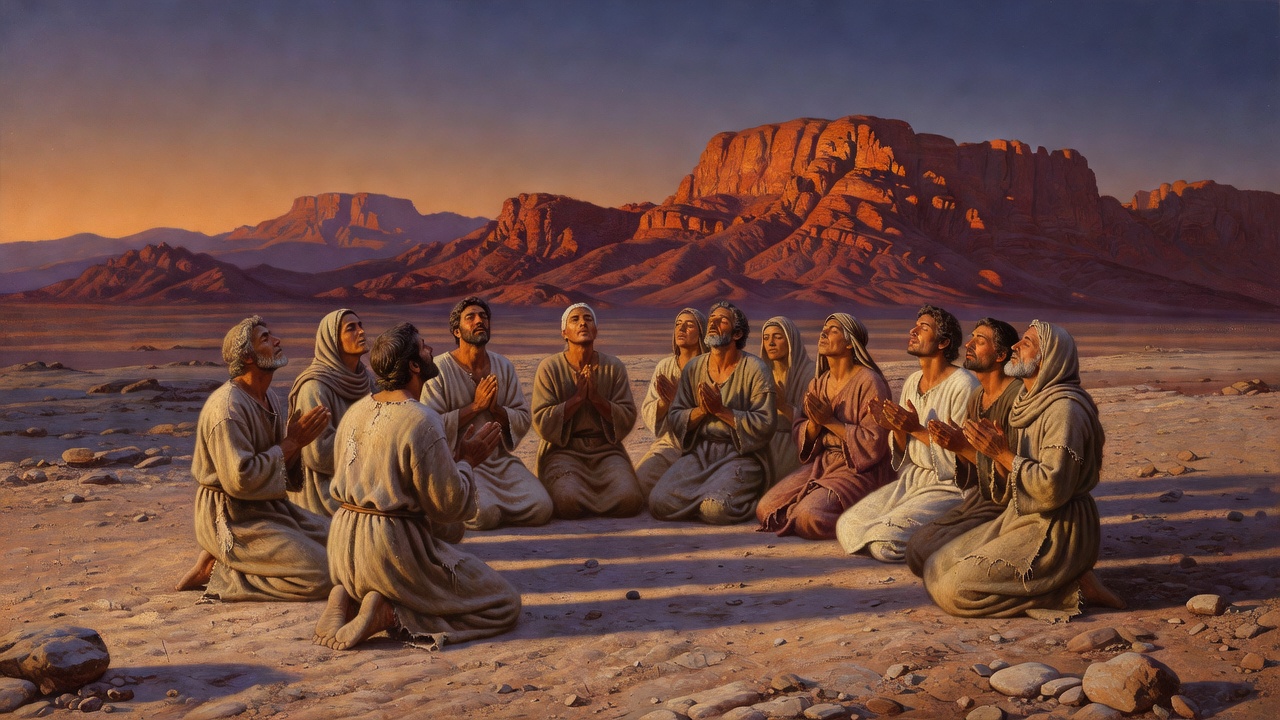
Did you know?
Judgment on Edom and a Prayer of Remembrance
- The chapter opens with a dramatic vision of a conqueror arriving from Bozrah, an ancient capital of the rugged, mountainous region of Edom. The imagery plays on the name Edom, which means red, picturing the figure dressed in crimson garments stained like those of a worker treading grapes in a winepress.Sources: Bozrah · Edom · Esau (Edom) · the Bible text itself
- The middle section of the chapter reflects on Israel's past, explicitly recalling the days of Moses when God divided the waters of the sea and guided the people through the depths by His Holy Spirit.Sources: Moses · the Bible text itself
- In their heartfelt plea, the people address God as their Father and Redeemer, confessing that even if their ancestral patriarchs Abraham and Israel were unable to acknowledge them, God remains their true protector.Sources: Abraham · the Bible text itself
Notes written with AI assistance from open sources (Theographic Bible Metadata, CC BY-SA 4.0; Easton’s Bible Dictionary, public domain) and reviewed before publishing.
Places in this chapter
Only places identified with high confidence are shown (90% or more according to the scholarly sources compiled by OpenBible). Period map: DARE (Digital Atlas of the Roman Empire), CC BY 4.0; modern map: © OpenStreetMap contributors; places: OpenBible.info (CC BY 4.0).
Credits and license for this translation
Tupàn ze'eg
Bible without Deuterocanon in Guajajára (BR:gub:Guajajára)
copyright © 2007 Wycliffe Bible Translators, Inc.
Language: Guajajára
Translation by: Wycliffe Bible Translators, Inc.
Guajajára [gub], Brazil
Copyright Information
© 2007, Wycliffe Bible Translators, Inc. All rights reserved.
This translation text is made available to you under the
terms of the Creative Commons License: Attribution-Noncommercial-No Derivative Works.
( http://creativecommons.org/licenses/by-nc-nd/3.0/ )
In addition, you have permission to port the text to different file formats, as long as you
do not change any of the text or punctuation of the Bible.
You may share, copy, distribute, transmit, and extract portions
or quotations from this work, provided that you include the above copyright
information:
You must give Attribution to the work.
You do not sell this work for a profit.
You do not make any derivative works that change any of the actual words or punctuation of the Scriptures.
Permissions beyond the scope of this license may be
available if you contact
us with your request.
Printed book ISBN 9788531109713
The Bible without Deuterocanon
in Guajajára
© 2007, Wycliffe Bible Translators, Inc. All rights reserved.
This translation is made available to you under the terms of the
Creative Commons Attribution-Noncommercial-No Derivatives license 4.0.
You may share and redistribute this Bible translation or extracts from it in any format, provided that:
You include the above copyright and source information.
You do not sell this work for a profit.
You do not change any of the words or punctuation of the Scriptures.
Pictures included with Scriptures and other documents on this site are licensed just for use with those Scriptures and documents.
For other uses, please contact the respective copyright owners.
2020-03-30
Source: http://ebible.org/gubBl/ · eBible.org