Isaiah 46
Tupàn ze'eg · Tap a verse to see its cross-references.
Mawiron ywy rehe har watupàn a'ua'u wamumaw paw
1Mokoz tupàn a'ua'u uzepepog wenaw wi ywy rehe u'ar pà a'e wà. Mew tupàn ua'u ipy her romo a'e. New inugwer her romo a'e.
Teko upir a'e tupàn a'ua'u wanagapaw kawaru wakupe pe wà.
Ipuhuz katu wà. Ikene'o kawaru wà.
2Tupàn a'ua'u uzepepog u'ar pà wà.
Nupuner kwaw uzepyro haw rehe wà.
Teko a'e teko tupàn wamuwete har waàmàtyry'ymar a'e wà, weraha tupàn a'ua'u a'e wi wà.
3Pezeapyaka katu nehe, teko Izaew wà.
Pezeapyaka katu nehe, Zako izuapyapyr umàno 'ym ma'e wà.
Pezexak kar awer 'ar henataromo apueraha ihe.
Tuweharupi azekaiw penehe.
4Petua'uhez mehe aiko tuwe nezewegatete nehe. Naiko kwaw amo ae romo nehe.
Azekaiw putar penehe pe'aw xig mehe nehe.
Apuapo ihe. Apueraha no.
Apupytywà putar nehe. Apupyro putar nehe no.
5Mo izàwe aiko ihe.
Mo wiko hezàwe a'e.
6Amo teko omono'og itazu or tetea'u wà.
Omono'og itaxig parat tetea'u wà no.
Omono temetarer ma'eragapaw iapo har pe wà.
— Epyhyk ko or nehe. Epyhyk ko parat nehe.
Ezapo amo tupàn ua'u hagapaw nehe, i'i izupe wà.
A'e re uzeamumew upenàràg rehe a'e tupàn ua'u henataromo imuwete katu pà wà.
7Na'e upir hagapaw ukupe pe heraha pà wà.
Umuapyk henaw rehe wà.
Tupàn a'u upyta a'e pe. Nupuner kwaw uzemumyz haw rehe.
— Urepytywà pe nehe, aze i'i teko izupe wà, nuenu kwaw waze'eg a'e.
Nupuner kwaw waneko haw zawaiw katu ma'e wi wapyro haw rehe.
8Ikatu 'ym ma'e iapo har wà, pema'enukwaw ko ma'e rehe nehe.
Pema'enukwaw katu ma'e rehe nehe. Peiko ma'e kwaw katu har romo nehe.
9Pema'enukwaw ma'e kwehe mehe uzeapo ma'e kwer rehe nehe.
Xo ihe zutyka'i aiko Tupàn romo ihe. Pekwaw hereko haw.
Naheta kwaw amo hezàwenugar.
10Izypy mehe arer we amume'u uzeapo ma'e ràm ihe.
Kwehe mehe amume'u ma'e uzeapo ma'e ràm.
— Uzeapo putar ma'e heze'eg rupi katete nehe, a'e purupe.
Aze hepurapo wer ma'e rehe nehe, azapo putar a'e ma'e nehe, a'e purupe kwehe mehe.
11Aenoz amo awa tekoko ihe. — Ezur kwarahy hemaw wi nehe, a'e tekoko izupe.
Ur iko na'arewahy ywy muite har wi wiràhu ài.
Uzapo putar ma'e heremiapo kar nehe.
Azapo putar ma'e heze'eg awer rupi katete nehe.
Azapo putar heremimume'u kwer nehe.
12Teko Tupàn heruzar 'ymar wà, pezeapyaka katu xe nehe.
— Urepyro àwàm iàrew putar nehe, peze peiko.
13Amuhem kar putar purupyro haw heremimume'u kwer
na'arewahy ihe nehe.
Nan kwehe tete aityk putar heàmàtyry'ymar ihe wà nehe.
Apyro putar Xiàw rehe wiko ma'e ihe wà nehe.
Amuza'aza'ak hekàg wera'u haw ipehegwer imono pà teko Izaew wanupe nehe,
i'i Tupàn.
Did you know?
The God Who Carries His People
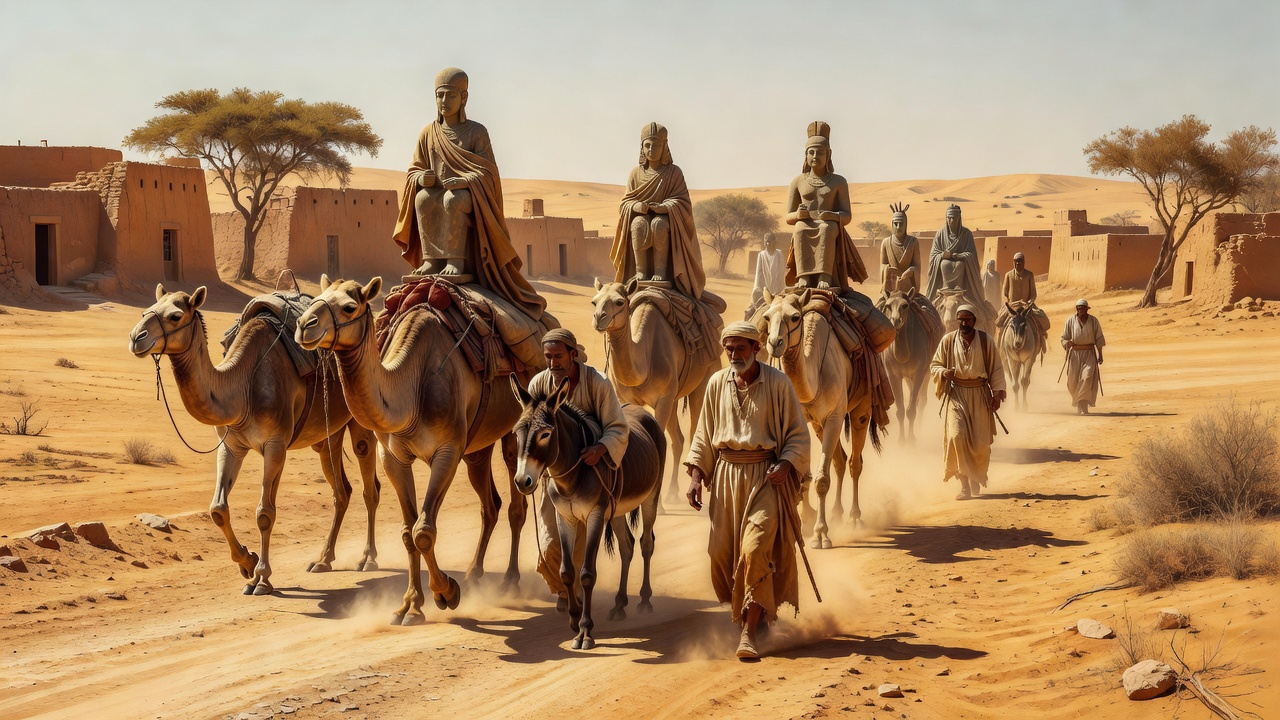
- Isaiah 46 contrasts the Babylonian gods Bel and Nebo with the God of Israel. While manufactured idols are described as dead weight that must be loaded onto weary animals and carried into captivity, God declares that He has carried and sustained the house of Jacob from birth and will continue to do so into old age.Sources: the Bible text itself
- The chapter illustrates the helplessness of idols by highlighting their human origin: people pour out gold and weigh silver to hire a goldsmith to shape a god. Once carried on human shoulders and set in place, the statue remains stationary, unable to move, answer cries, or rescue anyone from distress.Sources: the Bible text itself
- The prophecy closes with God promising to grant salvation to Zion. Zion was the south-eastern hill of Jerusalem that David captured and made into the City of David, often cited in prophetic texts as a focal point for Israel.Sources: the Bible text itself · Zion
Notes written with AI assistance from open sources (Theographic Bible Metadata, CC BY-SA 4.0; Easton’s Bible Dictionary, public domain) and reviewed before publishing.
Places in this chapter
Only places identified with high confidence are shown (90% or more according to the scholarly sources compiled by OpenBible). Period map: DARE (Digital Atlas of the Roman Empire), CC BY 4.0; modern map: © OpenStreetMap contributors; places: OpenBible.info (CC BY 4.0).
Credits and license for this translation
Tupàn ze'eg
Bible without Deuterocanon in Guajajára (BR:gub:Guajajára)
copyright © 2007 Wycliffe Bible Translators, Inc.
Language: Guajajára
Translation by: Wycliffe Bible Translators, Inc.
Guajajára [gub], Brazil
Copyright Information
© 2007, Wycliffe Bible Translators, Inc. All rights reserved.
This translation text is made available to you under the
terms of the Creative Commons License: Attribution-Noncommercial-No Derivative Works.
( http://creativecommons.org/licenses/by-nc-nd/3.0/ )
In addition, you have permission to port the text to different file formats, as long as you
do not change any of the text or punctuation of the Bible.
You may share, copy, distribute, transmit, and extract portions
or quotations from this work, provided that you include the above copyright
information:
You must give Attribution to the work.
You do not sell this work for a profit.
You do not make any derivative works that change any of the actual words or punctuation of the Scriptures.
Permissions beyond the scope of this license may be
available if you contact
us with your request.
Printed book ISBN 9788531109713
The Bible without Deuterocanon
in Guajajára
© 2007, Wycliffe Bible Translators, Inc. All rights reserved.
This translation is made available to you under the terms of the
Creative Commons Attribution-Noncommercial-No Derivatives license 4.0.
You may share and redistribute this Bible translation or extracts from it in any format, provided that:
You include the above copyright and source information.
You do not sell this work for a profit.
You do not change any of the words or punctuation of the Scriptures.
Pictures included with Scriptures and other documents on this site are licensed just for use with those Scriptures and documents.
For other uses, please contact the respective copyright owners.
2020-03-30
Source: http://ebible.org/gubBl/ · eBible.org