Amos 6
Tupàn ze'eg · Tap a verse to see its cross-references.
Tupàn uzepyk Izaew wanehe
1Zeruzarez pe har weko haw ikatuahy ma'e hereko har a'e wà nehe, Xamari pe har zeàmàtyry'ymaw ikwaw 'ymar a'e wà nehe no, ko ywy uhua'u ma'e Izaew her ma'e rehe har wanuwihaw a'e wà nehe no, upuraraw putar ma'erahy a'e 'ar mehe wà nehe. Teko wenoz putar upytywà àwàm a'e tuwihaw wanupe wà nehe. 2Peze'eg nezewe teko wanupe tuweharupi. — Peme'e peho tawhu Kawne her ma'e rehe nehe. A'e re peho tawhu Amat her ma'e pe nehe no. A'e re peho tawhu Kat her ma'e Piri ywy rehe har waiwy rehe har pe nehe no. Peme'egatu a'e tawhu pe har wanehe nehe. Aipo hemetarer katu wera'u zanewi wà. Aipo waiwy uhua'u wera'u zaneiwy wi. 3Zepykaw 'ar uhem etea'i kury. Napezeruzar wer kwaw tur àwàm rehe. Penemiapo ko 'ar rehe har umuhem kar a'e 'ar iko a'e. Teko tetea'u umàno putar a'e 'ar mehe wà nehe. Amo teko upuraraw putar ma'erahy tetea'u a'e mehe wà nehe no. 4Pe, mai'u hawhu iputar har, pe wà, pe'aw tupaw hekuzar katu ma'e rehe. Pe'u àràpuhàràn hawitu ma'e ho'o kwer ikyra katu ma'e. Pe'u tapi'aka'yr ho'o kwer ikyra katu ma'e no. Nezewe rehe we pepuraraw putar ma'erahy tetea'u nehe. 5Pezapo zegar haw tuwihawete Tawi hemiapo kwer zàwenugar. Pezegar wer wioràwiràn rehe we no. 6Pe'u win kanek uhua'u ma'e pupe. Pemono kàpuhàg hekuzar katuahy ma'e penetekwer rehe. Napezekaiw kwaw ikatu 'ym ma'e peiwy rehe uzeapo ma'e rehe. Napeme'e kwaw iaiw paw peiwy rehe har rehe. 7Pe ràgypy zauxiapekwer peneraha putar wemipyhyk kwer romo wà nehe. Peneraha putar muite peiwy wi wà nehe. Napezapo pixik kwaw a'e mai'u hawhu hurywete ma'e nehe.
8Tupàn Tuweharupi Wiko Ma'e Zanezar Ikàg Wera'u Ma'e umume'u ko uze'eg kwez a'e. — Amono putar Xamari tawhu iàmàtyry'ymar wanupe nehe. A'e zauxiapekwer weraha putar ma'e wemixak upaw rupi wà nehe. Ta'e naheakatuwawahy kwaw Izaew waneko wera'u haw rehe ihe xe. Ta'e naheakatuwawahy kwaw wanàpuzuhu hekuzar katu ma'e rehe ihe xe.
9Nezewe uzeapo putar nehe. Aze heta 10 teko amo tàpuz me wà nehe, umàno putar upaw rupi wà nehe. 10Na'e iànàm oho putar a'e tàpuz me wanetekwer wanenuhem pà wanapy pà tata pupe nehe. A'e iànàm upuranu putar nehe. — Heta we teko aipo xe wà, i'i putar nehe. Amo uwazar putar ize'eg izupe nehe. — Naheta kwaw, i'i putar izupe nehe. Na'e amo ràgypy uze'eg putar nezewe nehe. — Eze'eg zo nehe. Ni Tupàn Tuweharupi Wiko Ma'e her naximume'u kwaw nehe, i'i putar izupe nehe. 11Ta'e Tupàn Tuweharupi Wiko Ma'e uzapo kar putar ma'e a'e nehe xe. Na'e teko weityk putar tàpuz paw wamumaw pà wà nehe. Umumaw putar tàpuzuhu wà nehe. Umumaw putar tàpuz pixika'i wà nehe no.
12Aipo kawaru upuner itahu 'aromo uzànaw rehe wà. Nan. Aipo mokoz tapi'ak upuner ywy heruwakaw imuàzànaw rehe yryhu pupe wà. Nupuner kwaw wà. Nezewe rehe we — Puruzuka haw, peze ma'e rehe imunar 'ymaw rehe. — Purereko katu 'ymaw, peze purereko katu haw pe. 13Peiko wera'u kury, ta'e peityk tawhu Iro-Nemar her ma'e xe. — Xo urekàgaw rupi zo uruityk Karanai tawhu ure, peze peiko.
14Tupàn Tuweharupi Wiko Ma'e ikàg wera'u ma'e uze'eg iko nezewe. — Teko Izaew wà. Amono kar putar teko tetea'u amo ae ywy rehe har peiwy rehe ihe wà nehe. A'e zauxiapekwer oho putar penaikweromo wà nehe. Uzeagaw putar pepyhyk pà wà nehe. Uzypyrog pepyhyk pà Amat pe zeupir haw pe kwarahy heixe haw awyze har kutyr har pe wà nehe. Oho putar waiko pepyhypyhyk pà te yrykaw Arawa her ma'e pe kwarahy hemaw awyze har kutyr har pe wà nehe no.
Did you know?
Complacency and Impending Exile
- Amos addresses the ruling elite who felt secure in both Zion, the fortified hill of Jerusalem, and Mount Samaria, the capital of the northern kingdom built on an elevated summit by King Omri. Despite the natural defenses and prestige of these cities, their leaders are warned that their ease and overconfidence would end in captivity.Sources: Zion · Samaria · the Bible text itself
- The prophet challenges Israel to look at renowned foreign cities such as Calneh near the Euphrates, Hamath on the Orontes in Upper Syria, and the Philistine stronghold of Gath. These neighboring powers were neither smaller nor less protected, yet they could not escape destruction.Sources: Calneh · Hamath · Gath · the Bible text itself
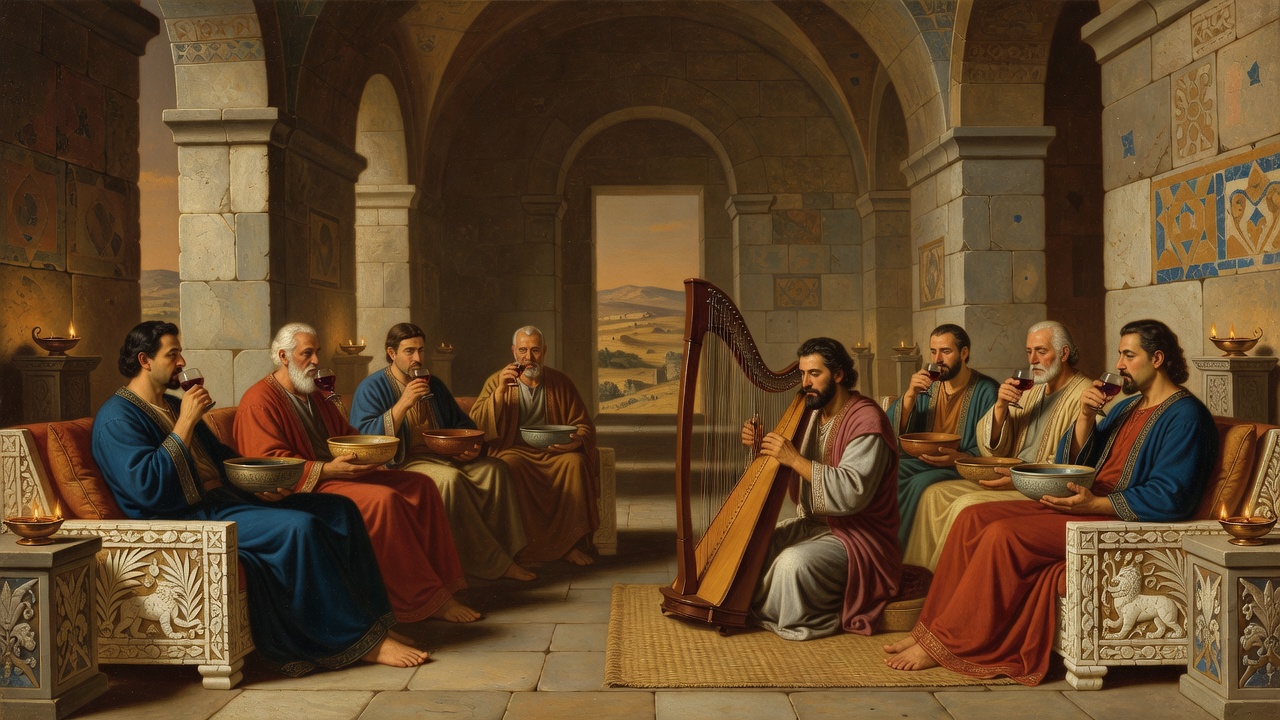
- Amos criticizes the aristocracy for indulging in extravagant banquets, resting on beds inlaid with ivory, and improvising music on harps like David, all while ignoring the impending ruin of Joseph. The name Joseph here designates the northern tribes of Israel, whose moral decay and social injustice were neglected by their wealthy leaders.Sources: David · Joseph (son of Jacob) · the Bible text itself
Notes written with AI assistance from open sources (Theographic Bible Metadata, CC BY-SA 4.0; Easton’s Bible Dictionary, public domain) and reviewed before publishing.
Places in this chapter
- Samaria · 32.276, 35.195 · verses 1, 8
- Zion · Today: Jerusalem · 31.777, 35.234 · verse 1
- Hamath · Today: Hama · 35.136, 36.750 · verse 2
- Philistia · 31.664, 34.546 · verse 2
Only places identified with high confidence are shown (90% or more according to the scholarly sources compiled by OpenBible). Period map: DARE (Digital Atlas of the Roman Empire), CC BY 4.0; modern map: © OpenStreetMap contributors; places: OpenBible.info (CC BY 4.0).
Credits and license for this translation
Tupàn ze'eg
Bible without Deuterocanon in Guajajára (BR:gub:Guajajára)
copyright © 2007 Wycliffe Bible Translators, Inc.
Language: Guajajára
Translation by: Wycliffe Bible Translators, Inc.
Guajajára [gub], Brazil
Copyright Information
© 2007, Wycliffe Bible Translators, Inc. All rights reserved.
This translation text is made available to you under the
terms of the Creative Commons License: Attribution-Noncommercial-No Derivative Works.
( http://creativecommons.org/licenses/by-nc-nd/3.0/ )
In addition, you have permission to port the text to different file formats, as long as you
do not change any of the text or punctuation of the Bible.
You may share, copy, distribute, transmit, and extract portions
or quotations from this work, provided that you include the above copyright
information:
You must give Attribution to the work.
You do not sell this work for a profit.
You do not make any derivative works that change any of the actual words or punctuation of the Scriptures.
Permissions beyond the scope of this license may be
available if you contact
us with your request.
Printed book ISBN 9788531109713
The Bible without Deuterocanon
in Guajajára
© 2007, Wycliffe Bible Translators, Inc. All rights reserved.
This translation is made available to you under the terms of the
Creative Commons Attribution-Noncommercial-No Derivatives license 4.0.
You may share and redistribute this Bible translation or extracts from it in any format, provided that:
You include the above copyright and source information.
You do not sell this work for a profit.
You do not change any of the words or punctuation of the Scriptures.
Pictures included with Scriptures and other documents on this site are licensed just for use with those Scriptures and documents.
For other uses, please contact the respective copyright owners.
2020-03-30
Source: http://ebible.org/gubBl/ · eBible.org