Acts 16
Tupàn ze'eg · Tap a verse to see its cross-references.
Ximot wata oho Pawru hupi a'e kury
1Wata Pawru oho waiko wà, Tew tawhu pe wà, Iri taw pe wà no. Amo awa uzeruzar ma'e a'e pe hekon a'e. Ximot her romo a'e. Ihy a'e no, uzeruzar ma'e romo hekon a'e no, zutew romo hekon a'e. Tu a'e, Kere ywy rehe har romo zutew 'ym romo hekon a'e. 2Uzeruzar ma'e Iri taw pe har a'e wà, Ikon taw pe har a'e wà no, uze'egatu Ximot rehe a'e wà. — Ikatuahy a'e, i'i izupe wà. 3Ipureraha wer Pawru Ximot rehe uzeupi a'e, wata mehe a'e. A'e rupi i'i izupe. — Emonohok kar nepirera'i nehe ty, i'i izupe. Nezewe uzapo kar izupe a'e, ta'e zutew a'e pe har a'e wà xe, ukwaw Ximot tu Kere ywy rehe har romo heko haw a'e wà xe. — Zutew 'ym, i'i putar newe wà nehe. A'e rupi nanekatu kwaw wanupe nehe, aze nereruzar kwaw wanàmuzgwer ze'eg nehe, i'i Pawru izupe. 4Taw nànàn oho mehe umume'u a'e Zezuz hemimono karer waze'eg awer wà, uzeruzar ma'e waneruze'egar waze'eg awer wà, Zeruzarez pe imume'u pyrer pape rehe imuapyk pyrer wà. Umume'u uzeruzar ma'e taw nànànar wanupe wà. — Peruzar ko ze'eg pe nehe ty wà, i'i oho waiko wanupe wà. 5A'e rupi uzeruzar ma'e taw nànànar a'e wà, uzeruzar wera'u Zezuz rehe wà. Ikàg wera'u wà. Tuweharupi amo uzeruzar hehe wà, ta'e wenu Pawru ize'eg a'e wà xe.
Pawru wexak ma'e upuahu pe a'e kury
6Wata oho waiko Pirizi ywy rehe wà, Karaz ywy rehe wà no, ta'e Tekwe Puràg nomono kar kwaw Az ywy rehe a'e wà xe, Tupàn ze'eg imume'u kar pà a'e pe a'e wà xe. 7Uhem wà Mizi ywy huwake wà kury. Uzeagaw oho pà Mixin ywy rehe wà. Noho kwaw wà, ta'e Zezuz Hekwe Puràg nomono kar kwaw a'e ywy rehe a'e wà xe. 8A'e rupi upyterahaw Mizi ywy oho wà, Toroaz taw pe oho pà wà. 9Pyhaw kury. Pawru upuahu uker mehe. Wexak awa upuahu pe. Maxeton ywy rehe har romo hekon a'e. Upu'àm a'e. Uze'eg iko Pawru pe. — Ezur xe Maxeton ywy rehe nehe, urepytywà pe nehe, i'i iko izupe, ipuahu pe. 10Hepuahu pawire uruzemuàgà'ym ureata haw rehe ure kury, Maxeton ywy rehe har wapyr ureho haw rehe ure kury. — Ta'e Tupàn zanemono kar iko a'e ywy rehe har wanupe a'e xe, uru'e uruiko Pawru pe ure. — Pemume'u heze'eg puràg a'e ywy rehe har wanupe nehe, i'i iko zanewe, uru'e izupe. — Aze pa, i'i urewe.
Kuzà Iri her ma'e uzeruzar Zezuz rehe a'e kury
11Uruixe kanuhu pupe kury, yryhu rehe uruata pà kury. Uruhem oroho Toroaz taw wi kury. A'e wi oroho Xamotaraz yrypypo'o pe no. Iku'egwepe uruata wi oroho kanuhu pupe te Nea taw pe no. 12Uruhem oroho kanuhu wi a'e pe. Uruata oroho ywy rehe kury, te uruhem Piri tawhu pe kury. Maxeton ywy ipehegwer ipy rehe tuz a'e. Hom tawhu pe har tetea'u a'e pe wanekon wà. Urumumaw màràn 'ar a'e pe urereko pà. 13Mytu'u haw 'ar mehe uruhem oroho taw wi yrykaw waz. — Aze ru'u zutew uzemono'og putar xe a'e wà nehe, Tupàn pe uze'eg pà a'e wà nehe, uru'e urezeupe. Uruwapyk a'e pe ure, kuzà a'e pe uzemono'og ma'e wanupe uruze'eg pà ure. 14Amo kuzà a'e pe hekon a'e. Iri her romo a'e, Xiaxir taw pe har romo hekon a'e. Pàn hekuzar katu ma'e ipihun wewer ma'e ime'egar romo hekon a'e. Tupàn rehe uzeruzar ma'e romo hekon a'e no. A'e rupi Zanezar wenu katu kar Pawru ze'eg izupe a'e kury. Uzekaiw katu ize'eg rehe. 15A'e rupi uzemuzahazahak kar. Hàpuz me wiko ma'e a'e wà no, uzemuzahazahak kar a'e wà no. A'e mehe uze'eg urewe kury. — Pezur heràpuz me nehe kyn wà, peker pà hepyr nehe kyn wà, i'i urewe. — Aze ru'u Zanezar rehe uzeruzar ma'e azeharomoete har romo aiko ihe kury, penuwa rupi ihe kury. Aze aiko tuwe uzeruzar ma'e romo penuwa rupi nehe, a'e mehe pezur heràpuz me hepyr nehe, i'i urewe. A'e rupi oroho ipyr ure kury.
Tuwihaw umunehew kar Pawru a'e wà kury
16Amo 'ar mehe Tupàn pe ze'egaw pe ureho mehe uruàwàxi amo kuzàwaza ure. Amo pe uma'ereko e ma'e romo hekon a'e. Tekwe ikatu 'ym ma'e hereko har romo hekon a'e. Hekwe ikatu 'ym ma'e umume'u kar ma'e uzeapo ma'e ràm izupe tuweharupi a'e. A'e rupi omono'og temetarer tetea'u uzar wanupe, uzeapo ma'e ràm imume'ume'u pà teko wanupe. 17Na'e ur Pawru haikweromo kury, ureraikweromo no, uhapukaz pà no. — 'Aw awa a'e wà, Tupàn Ywate Wera'u Har hemiruze'eg romo wanekon a'e wà, i'i iko urewe. — Aze peho wer Tupàn pyr nehe, 'y wà, umume'u putar penemiapo ràm peme a'e wà nehe, i'i iko urerupi wata ma'e wanupe.
18Tuweharupi nezewe ihon urerehe uze'eg pà, uhapukaz pà. Umumaw màràn 'ar nezewe uze'eg pà, ureraikwer rupi uhapukaz pà. Te, uputupyk Pawru a'e. Uzewyr Pawru oho ikutyr kury, tekwe ikatu 'ym ma'e pe uze'eg pà kury. -Aze'eg newe Zezuz Tuwihawete her rehe ihe kury, ehem eho kwez kuzà wi nehe kury, i'i izupe. Tàrityka'i uhem tekwe ikatu 'ym ma'e oho izuwi kury. 19Na'e a'e kuzàwaza izar a'e wà kury, wikwahy Pawru pe a'e wà kury. — Ma'e uruzapo putar temetarer imono'og pà ure nehe kury, i'i izupe wà. A'e rupi upyhyk Pawru a'e wà, upyhyk Xiria a'e wà no. Weraha taw mytepe wà, tuwihaw wanuwa rupi wà. 20Umupu'àm kar waneraha Hom tawhu pe har wanuwihaw wanuwa rupi wà. Uze'eg wanupe wà. — 'Aw awa a'e wà, zutew romo wanekon a'e wà, i'i wanupe wà. — Ikatu 'ym ma'e uzapo waiko xe zanereko haw pe wà, i'i mua'u wanupe wà. 21Uzapo kar ma'e waiko zaneruwihaw ze'eg ihaw kar pà teko wanupe wà. Zanemupytu'u kar zaneràmuzgwer ze'eg heruzar ire wà. Hom tawhu pe har romo uruiko ure, a'e rupi nurupuner kwaw a'e ma'e iapo haw rehe ure nehe. Nurupuner kwaw 'aw awa waneruzar haw rehe ure nehe, i'i wanupe wà.
22Teko tetea'u a'e pe uzemono'og a'e wà kury. — Azeharomoete, i'i teko tuwihaw wanupe wà no. A'e rupi tuwihaw wenuhem kar Pawru wakamir wanuwi wà kury. Upetepetek kar wà no.
23Wapetepetekahy pawire umunehew kar wamono zemunehew paw pe wà. — Emonokatu zemunehew paw pe ne wà nehe ty, emuhem kar zo a'e wi ne wà nehe ty, i'i zemunehew paw rehe uzekaiw ma'e pe wà.
24Waze'eg henu mehe a'e awa omono Pawru amo ipupyaikaw pyrer pupe kury, omono Xiria a'e pe no. Upymunehew imono ywyrapew pehegwer mytepe no. Ipuhuz katu ywyra.
25Pyaze kury. Pawru a'e, Xiria a'e no, uze'eg in Tupàn pe wà, izupe uzegar pà wà. Amogwer zemunehew paw pe har uzeapyaka katu waze'eg mehe wà, wazegar mehe wà no.
26Na'arewahy ywy uryryryryz tetea'u kury. Tàpuz uryryryryz paw rupi no. Tàrityka'i uzewàpytymawok uken paw rupi kury. Kyhàhàm uzekwaraw u'ar pà a'e pe har wanuwi paw rupi no. 27Zemunehew paw rehe uzekaiw ma'e ume'e kury. Wexak uken uzewàpytymawok mehe paw rupi a'e. — Uhem imunehew kar pyrer oho aipo xe wi paw rupi katete a'e wà kury, i'i zepe wanupe. Wenuhem utakihe imuwà. Uzezuka tàri kury. 28Pawru uze'eg wahyhawa'u izupe kury. -Nan kwaw ty, ezemugaz zo ty, aiko uruikuwe xe ure paw rupi ure ty, i'i izupe.
29Uzekaiw ma'e wenoz tatainy imuwà kury. Na'e uzàn Pawru kutyr Xiria kutyr wixe pà, wapy huwake uzeamumew pà uzemomor pà. Uryryryryz no. 30Na'e weraha katu pe a'e wà, wanehe upuranu pà a'e. — Tuwihaw wà, i'i wanupe. -Naheho wer kwaw tatahu pe nehe. Ma'e azapo putar ihe nehe, hezepyro kar pà Tupàn pe ihe nehe, i'i wanupe.
31— Ezeruzar Zanezar Zezuz rehe nehe ty, i'i izupe wà.
— A'e mehe nepyro putar nehe. Upyro putar neànàm wà nehe no, i'i izupe wà.
32Na'e umume'u Zanezar rehe ze'eg puràg izupe wà, hàpuz me har wanupe wà no. 33A'e 'ar mehe we a'e zemunehew paw rehe uzekaiw ma'e wexak waperew kury. Weraha Zezuz hemimono karer amo ipupyaikaw pyrer pupe wà, wapereperew wamugaz tawer ihez pà wà. A'e 'ar mehe uzemuzahazahak kar Pawru pe kury. Iànàm uzemuzahazahak paw rupi wà no. 34Umuzewyr kar wi Pawru heraha wàpuz me. Weraha Xiria no. Omono temi'u wanupe, wamumai'u kar pà. Hurywete kury, iànàm hurywete paw rupi wà no, ta'e uzeruzar Tupàn rehe a'e wà kury xe. (Uzewyr wi oho zemunehew paw pe wà kury.)
35Ku'em mehe Hom tawhu pe har wanuwihaw omono kar zauxiapekwer a'e pe a'e wà, zemunehew paw pe a'e wà.
— Emuhem kar a'e mokoz awa ne wà nehe ty, i'i izupe wà. 36A'e rupi uzekaiw ma'e uze'eg oho Pawru pe kury. — Tuwihaw umur kar uze'eg ihewe wà kury, xe wi pemuhem kar pà ihewe wà kury, i'i wanupe. — A'e rupi pepuner pehemaw rehe xe wi nehe kury. Zauxiapekwer nuzapo kwaw ma'e peme wà nehe kury, i'i wanupe.
37Uze'eg Pawru wanupe kury, zauxiapekwer wanuwihaw wanupe kury. -Tuwihaw numume'u kwaw ikatu 'ym ma'e ureremiapo kwer urewe a'e wà. Urepetepetek kar e a'e wà, teko wanuwa rupi a'e wà. Hom tawhu pe har wanuwihaw ikàg wera'u ma'e hemiruze'eg romo aiko ihe. A'e rupi napepuner kwaw urepetepetekaw rehe nezewe pe. Uremunehew kar a'e wà no. Kutàri iporomono kar wer urerehe xe wi wà, teko wanupe imume'u 'ym pà wà. Nan kwaw nezewe nehe ty wà. Hom tawhu pe har xe har wanuwihaw wà, tuwe a'e tuwe ur xe wà nehe, uremuhem kar pà xe wi wà nehe, i'i wanupe.
38Zauxiapekwer umume'u ize'eg oho uwihaw wanupe wà. — Hom tawhu pe har wanuwihaw ikàg wera'u ma'e hemiruze'eg romo wanekon a'e wà, i'i wanupe wà. Ukyze katu tuwihaw a'e wà, waze'eg henu mehe a'e wà. — Hom tawhu pe har wanuwihaw ikàg wera'u ma'e uzepyk putar ru'u zanerehe nehe, i'i uzeupeupe wà. 39A'e rupi oho Pawru wapyr wà, wanupe uze'eg pà wà. — Azeharomoete peze'eg pe. Ikatu 'ym ma'e uruzapo peme ure, pemunehew kar pà nezewe ure, i'i wanupe wà. Umuhem kar zemunehew paw wi wà. — Peho xe taw wi nehe, ty wà, i'i wanupe wà. 40Pawru a'e, Xiria a'e no, uhem oho zemunehew paw wi a'e wà kury. Oho Iri ipyr wà. A'e pe wexak amogwer uzeruzar ma'e wà, wamurywete kar pà Tupàn ze'eg imume'u pà wanupe wà. Na'e uhem oho a'e wi wanuwi wà kury.
Did you know?
From Lystra to Philippi
- At Lystra, Paul met Timothy, a disciple of whom the brothers in Lystra and Iconium spoke well, the son of a believing Jewish woman and a Greek father. Wanting him as a companion, Paul had him circumcised on account of the Jews there, who knew that his father was Greek. Easton's Bible Dictionary (1897) says Timothy probably lived in Lystra and seems to have been converted during Paul's earlier visit.Sources: the Bible text itself · Timotheus
- After being kept from speaking in the province of Asia, Paul and his companions traveled through Phrygia and Galatia. At the border of Mysia they were not permitted to enter Bithynia, so they went down to Troas, Mysia's chief port on the northwest coast of Asia Minor, a city named for ancient Troy about four miles to the north. There a night vision of a man of Macedonia pleading for help led them to sail to that Roman province north of Greece.Sources: the Bible text itself · Mysia · Troas · Macedonia
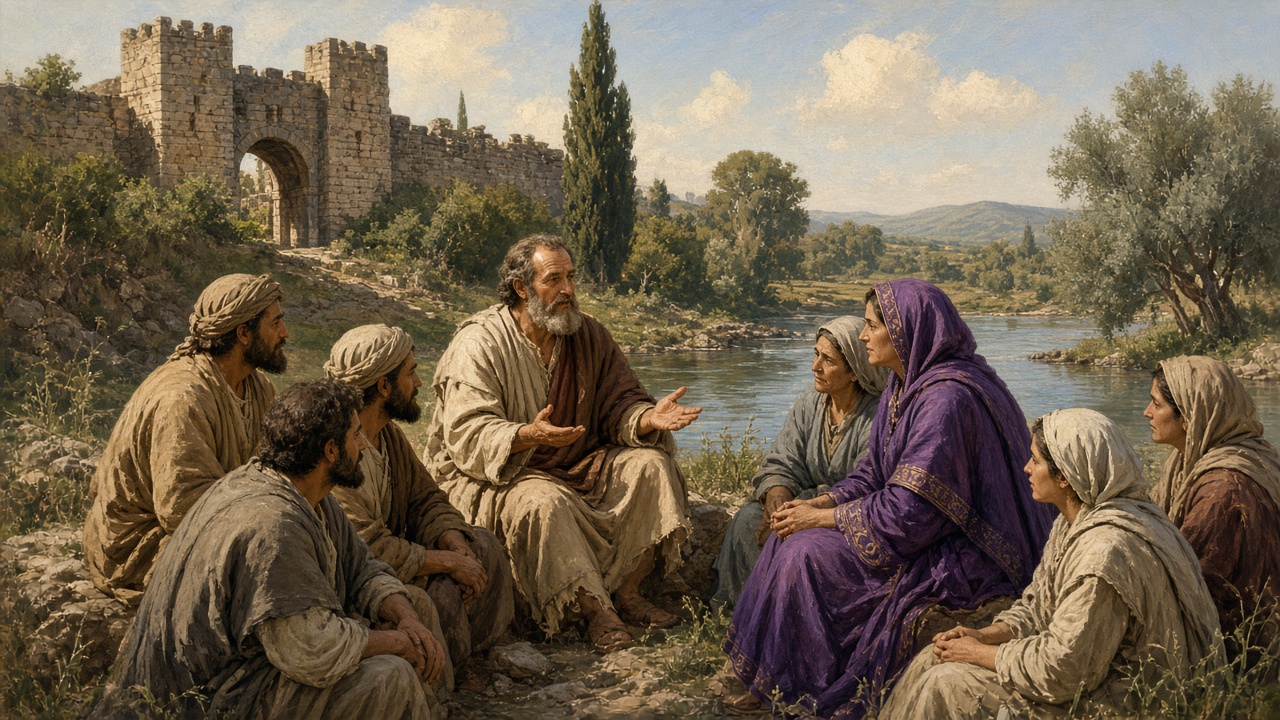
- In the Roman colony of Philippi, Paul and his companions found a customary place of prayer by the river outside the city gate, where women had gathered. Among them was Lydia, a dealer in purple cloth from Thyatira and a worshiper of God; after she and her household were baptized, she persuaded the travelers to stay at her house. Easton's Bible Dictionary (1897) describes her as a proselyte of considerable wealth and as the first person in Europe to embrace Christianity.Sources: the Bible text itself · Lydia
Notes written with AI assistance from open sources (Theographic Bible Metadata, CC BY-SA 4.0; Easton’s Bible Dictionary, public domain) and reviewed before publishing.
Places in this chapter
- Lystra · Today: Tel Lystra · 37.602, 32.338 · verses 1, 2
- Iconium · Today: Konya · 37.872, 32.492 · verse 2
- Jerusalem · 31.777, 35.234 · verse 4
- Asia · 38.400, 28.300 · verse 6
- Galatia · 39.267, 32.983 · verse 6
- Phrygia · 39.000, 31.000 · verse 6
- Bithynia · 40.500, 31.000 · verse 7
- Mysia · 40.000, 28.500 · verses 7, 8
- Troas · Today: Alexandria Troas · 39.752, 26.159 · verses 8, 11
- Greece · 37.972, 23.727 · verse 9
- Macedonia · 41.600, 22.540 · verses 9, 10, 12
- Neapolis · Today: Kavala · 40.935, 24.415 · verse 11
- Samothrace · Today: Samothraki · 40.450, 25.583 · verse 11
- Philippi · 41.012, 24.285 · verse 12
- Thyatira · Today: Akhisar · 38.920, 27.837 · verse 14
Only places identified with high confidence are shown (90% or more according to the scholarly sources compiled by OpenBible). Period map: DARE (Digital Atlas of the Roman Empire), CC BY 4.0; modern map: © OpenStreetMap contributors; places: OpenBible.info (CC BY 4.0).
Credits and license for this translation
Tupàn ze'eg
Bible without Deuterocanon in Guajajára (BR:gub:Guajajára)
copyright © 2007 Wycliffe Bible Translators, Inc.
Language: Guajajára
Translation by: Wycliffe Bible Translators, Inc.
Guajajára [gub], Brazil
Copyright Information
© 2007, Wycliffe Bible Translators, Inc. All rights reserved.
This translation text is made available to you under the
terms of the Creative Commons License: Attribution-Noncommercial-No Derivative Works.
( http://creativecommons.org/licenses/by-nc-nd/3.0/ )
In addition, you have permission to port the text to different file formats, as long as you
do not change any of the text or punctuation of the Bible.
You may share, copy, distribute, transmit, and extract portions
or quotations from this work, provided that you include the above copyright
information:
You must give Attribution to the work.
You do not sell this work for a profit.
You do not make any derivative works that change any of the actual words or punctuation of the Scriptures.
Permissions beyond the scope of this license may be
available if you contact
us with your request.
Printed book ISBN 9788531109713
The Bible without Deuterocanon
in Guajajára
© 2007, Wycliffe Bible Translators, Inc. All rights reserved.
This translation is made available to you under the terms of the
Creative Commons Attribution-Noncommercial-No Derivatives license 4.0.
You may share and redistribute this Bible translation or extracts from it in any format, provided that:
You include the above copyright and source information.
You do not sell this work for a profit.
You do not change any of the words or punctuation of the Scriptures.
Pictures included with Scriptures and other documents on this site are licensed just for use with those Scriptures and documents.
For other uses, please contact the respective copyright owners.
2020-03-30
Source: http://ebible.org/gubBl/ · eBible.org