1 Thessalonians 4
Tupàn ze'eg · Tap a verse to see its cross-references.
Pawru uze'eg Tupàn hemimutar iapo haw rehe a'e
1Herywyr wà, hereinyr wà. Pepyr urereko mehe ikatuahy ma'e paw uruzapo kar peme ure. — Aze pezapo ikatu ma'e nehe, ureze'eg heruzar pà nehe, a'e mehe pemurywete kar putar Tupàn a'e nehe, uru'e peme. A'e rupi peruzar ureze'eg, Tupàn imurywete kar pà. Urenoz ko ma'e peme Zezuz Zanezar her rehe ure kury. -Pezapo wiwi ikatu ma'e peho peiko nehe kury, uru'e peme kury. 2Pema'enukwaw katu peme ureze'eg awer rehe. — Pezapo ikatuahy ma'e peho peiko nehe, uru'e peme. Zezuz Zanezar uremuze'eg kar nezewe peme a'e. 3Tupàn uzapo kar ko ma'e iko peme nehe kury. Petyryk ikatu 'ym ma'e wi nehe. Pezemonokatu izupe nehe no. Peho zo penemireko 'ym wapuhe nehe. Peho zo pemen 'ym wapuhe nehe. 4Uruze'eg putar awa kwer wanupe kury. Peiko zo uzeruzar 'ym ma'e wazàwe nehe. Nukwaw kwaw Tupàn a'e wà. A'e rupi oho wemireko 'ym wapuhe wà, kuzàwyzài wapuhe wà. Pe nehe no ty wà, xo penemirekoete wanupe zo peho nehe no ty wà. 6Tuwe awa nupyhyk kwaw amo ae awa hemireko izuwi a'e nehe. Ta'e na'ikatu pixik kwaw nezewe haw Tupàn pe xe. Amo 'ar mehe urumume'u ko ze'eg peme ure. — Aze teko uzapo agwer ikatu 'ym ma'e a'e wà nehe, a'e mehe Tupàn uzepyk putar wanehe a'e nehe, uru'e peme. Azeharomoete a'e ze'eg. 7Tupàn zanerenoz a'e, ikatu 'ym ma'e wi zanemunyryk kar pà a'e, zanemuzemonokatu kar pà uzeupe a'e. 8Tupàn umur kar Wekwe Puràg peme a'e. Aze teko nuzekaiw kwaw ko heze'eg rehe wà nehe, ko pape rehe imuapyk pyrer rehe wà nehe, a'e mehe nuiko kwaw Tupàn heruzar har romo wà nehe, ta'e awa numume'u kar kwaw ko ze'eg ihewe a'e wà xe. Tupàn ae umume'u kar ihewe a'e.
9Tupàn a'e, pemu'e pezeamutamutar katu haw rehe a'e. A'e rupi pezeamutar katu peiko kury. A'e rupi naze'eg kwaw pezeamutar katu haw rehe ihe nehe kury, pape rehe imuapyk pà ihe nehe kury. 10Pezamutar katu tuwe uzeruzar ma'e Maxeton rehe har paw peiko pe wà, penywyr a'e pe har pe wà, penyky'yr pe wà no. — Pezamutar katu wiwi wà nehe, uru'e peme. 11— Pezeàmàtyry'ym zo nehe. Peze'eg zemueteahy zo amogwer wanehe nehe, wama'ereko haw rehe nehe. Pema'ereko pepo pupe nehe, penemi'u pema'e imono'og pà imekuzar pà nehe, uru'e peme. 12A'e rupi penoz zo ma'e amo wanupe nehe. Aze pezapo nezewe nehe, amo Tupàn rehe uzeruzar 'ym ma'e a'e pe har a'e wà nehe, nezewe i'i putar a'e wà nehe. — Kwa, ikatuahy 'aw Zezuz rehe uzeruzar ma'e a'e wà, i'i putar uzeupeupe wà nehe, penehe uze'eg pà wà nehe.
Pawru uze'eg Zezuz tur àwàm rehe a'e
13Herywyr wà, hereinyr wà. Uruze'eg putar umàno ma'e kwer wanehe ure nehe kury, peme ure nehe kury, a'e Zezuz rehe uzeruzar ma'e umàno ma'e kwer wanehe ure nehe kury. Pezemumikahy zo wanehe nehe. Uzeruzar 'ym ma'e uzemumikahy a'e wà, ta'e nuàro kwaw Zezuz izewyr àwàm a'e wà xe. A'e rupi uzemumikahy umàno ma'e kwer wanehe wà. Zane xiàro Zezuz tur àwàm zane, a'e rupi nazazemumikahy kwaw zane. 14Zezuz a'e, ukweraw umàno haw wi a'e. Zazeruzar ikweraw pawer rehe. Tupàn a'e nehe, umuzewyr kar putar Zezuz ko ywy rehe a'e nehe. Umuzewyr kar putar umàno ma'e kwer a'e wà nehe no, Zezuz rehe uzeruzar ma'e umàno ma'e kwer ukweraw wi ma'e kwer a'e wà nehe. Zazeruzar ko ze'eg rehe paw rupi zane. Xiàro ko ma'e paw rupi zane.
15Urukwaw Zanezar tur àwàm ure. Ta'e a'e ae umume'u urewe a'e xe. Zezuz a'e nehe, ur putar azeharomoete ko ywy rehe a'e nehe. A'e 'ar mehe uzeruzar ma'e umàno ma'e kwer a'e wà nehe, a'e ràgypy oho putar huwàxi pà a'e wà nehe. A'e re wikuwe ma'e a'e wà nehe no, oho putar wanaikweromo a'e wà nehe no. 16A'e 'ar mehe nehe, wezyw putar Zezuz ywak wi nehe, uze'eg pà wahyhaw rupia'u nehe. Tupàn heko haw pe har wanuwihaw a'e nehe no, wezyw putar a'e nehe no. Tupàn upy kar putar uxi'àm weko haw pe har pe a'e nehe. Na'e uzeruzar ma'e umàno ma'e kwer a'e wà nehe, a'e ràgypy ukweraw wi putar a'e wà nehe. 17Na'e Tupàn omono'og putar amogwer uzeruzar ma'e a'e 'ar mehe wikuwe ma'e a'e wà nehe, wanupir pà ywate a'e wà nehe, umàno ma'e kwer wapyr a'e wà nehe. Xiàwàxi putar Zanezar zaha ywak rehe zane nehe. Zapyta putar ipyr tuweharupi nehe. 18Pemume'u ko ze'eg pezeupeupe nehe. A'e rupi pezemurywete kar putar nehe.
Did you know?
Holiness, Love, and Hope for the Dead
- This chapter notes that its readers were already showing love to all the brothers throughout Macedonia. In New Testament times Macedonia was a Roman province lying north of Greece, governed by a propraetor with the title of proconsul. Paul was summoned by a vision of the "man of Macedonia" to preach the gospel there.Sources: the Bible text itself · Macedonia
- The chapter speaks of the dead as people who sleep or have fallen asleep, and it asks the readers not to grieve like the rest, who have no hope. Because Jesus died and rose again, it says, God will bring with Jesus those who have fallen asleep in him; the dead in Christ will rise first, and then those still alive will be caught up with them in the clouds to meet the Lord in the air.Sources: the Bible text itself
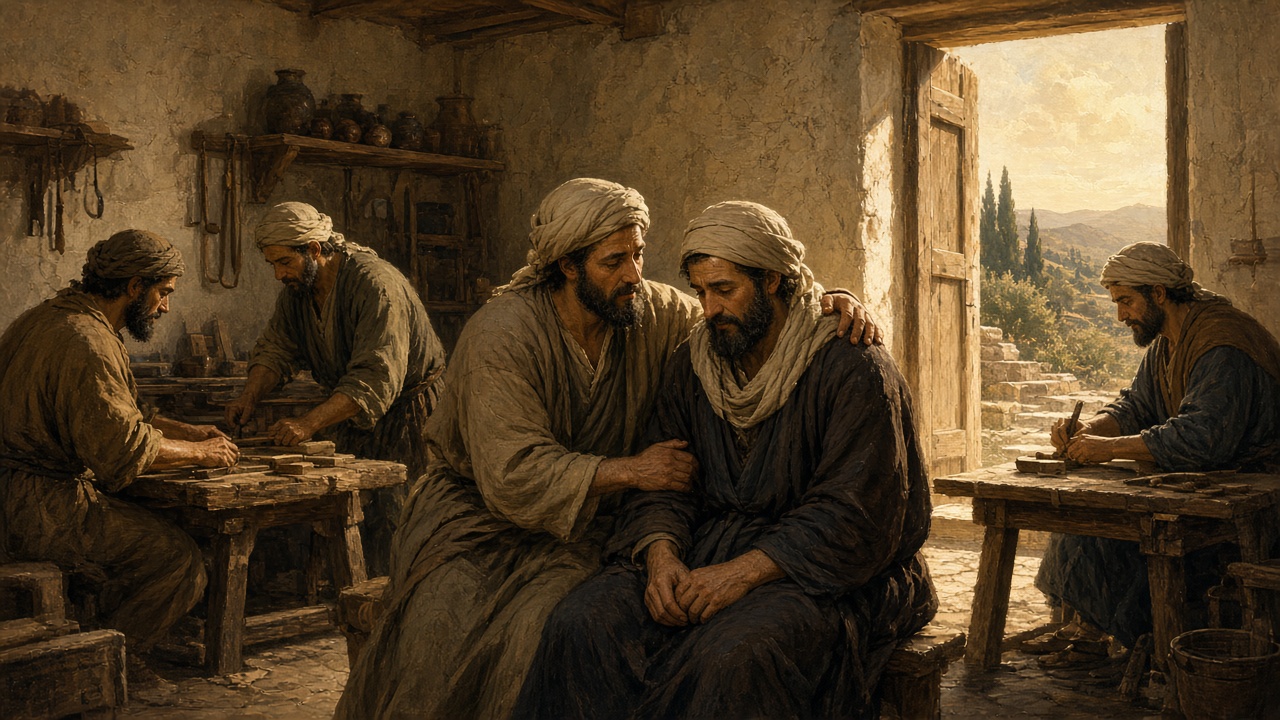
- The readers are urged to aspire to a quiet life, to attend to their own matters, and to work with their own hands, as they had already been instructed. The chapter presents this as the way to behave properly toward outsiders and to avoid being dependent on anyone.Sources: the Bible text itself
Notes written with AI assistance from open sources (Theographic Bible Metadata, CC BY-SA 4.0; Easton’s Bible Dictionary, public domain) and reviewed before publishing.
Places in this chapter
- Macedonia · 41.600, 22.540 · verse 10
Only places identified with high confidence are shown (90% or more according to the scholarly sources compiled by OpenBible). Period map: DARE (Digital Atlas of the Roman Empire), CC BY 4.0; modern map: © OpenStreetMap contributors; places: OpenBible.info (CC BY 4.0).
Credits and license for this translation
Tupàn ze'eg
Bible without Deuterocanon in Guajajára (BR:gub:Guajajára)
copyright © 2007 Wycliffe Bible Translators, Inc.
Language: Guajajára
Translation by: Wycliffe Bible Translators, Inc.
Guajajára [gub], Brazil
Copyright Information
© 2007, Wycliffe Bible Translators, Inc. All rights reserved.
This translation text is made available to you under the
terms of the Creative Commons License: Attribution-Noncommercial-No Derivative Works.
( http://creativecommons.org/licenses/by-nc-nd/3.0/ )
In addition, you have permission to port the text to different file formats, as long as you
do not change any of the text or punctuation of the Bible.
You may share, copy, distribute, transmit, and extract portions
or quotations from this work, provided that you include the above copyright
information:
You must give Attribution to the work.
You do not sell this work for a profit.
You do not make any derivative works that change any of the actual words or punctuation of the Scriptures.
Permissions beyond the scope of this license may be
available if you contact
us with your request.
Printed book ISBN 9788531109713
The Bible without Deuterocanon
in Guajajára
© 2007, Wycliffe Bible Translators, Inc. All rights reserved.
This translation is made available to you under the terms of the
Creative Commons Attribution-Noncommercial-No Derivatives license 4.0.
You may share and redistribute this Bible translation or extracts from it in any format, provided that:
You include the above copyright and source information.
You do not sell this work for a profit.
You do not change any of the words or punctuation of the Scriptures.
Pictures included with Scriptures and other documents on this site are licensed just for use with those Scriptures and documents.
For other uses, please contact the respective copyright owners.
2020-03-30
Source: http://ebible.org/gubBl/ · eBible.org