John 12
Η Καινή Διαθήκη · Tap a verse to see its cross-references.
Mary Anoints Jesus’ Feet
1Ὁ οὖν Ἰησοῦς πρὸ ἓξ ἡμερῶν τοῦ πάσχα ἦλθεν εἰς Βηθανίαν, ὅπου ἦν Λάζαρος ὁ τεθνηκώς, ὃν ἤγειρεν ἐκ νεκρῶν. 2ἐποίησαν οὖν αὐτῷ δεῖπνον ἐκεῖ, καὶ ἡ Μάρθα διηκόνει· ὁ δὲ Λάζαρος εἷς ἦν τῶν ἀνακειμένων σὺν αὐτῷ. 3ἡ οὖν Μαρία λαβοῦσα λίτραν μύρου νάρδου πιστικῆς πολυτίμου, ἤλειψε τοὺς πόδας τοῦ Ἰησοῦ, καὶ ἐξέμαξε ταῖς θριξὶν αὐτῆς τοὺς πόδας αὐτοῦ· ἡ δὲ οἰκία ἐπληρώθη ἐκ τῆς ὀσμῆς τοῦ μύρου. 4λέγει οὖν εἷς ἐκ τῶν μαθητῶν αὐτοῦ, Ἰούδας Σίμωνος Ἰσκαριώτης, ὁ μέλλων αὐτὸν παραδιδόναι, 5Διὰ τί τοῦτο τὸ μύρον οὐκ ἐπράθη τριακοσίων δηναρίων, καὶ ἐδόθη πτωχοῖς; 6εἶπε δὲ τοῦτο, οὐχ ὅτι περὶ τῶν πτωχῶν ἔμελεν αὐτῷ, ἀλλ᾽ ὅτι κλέπτης ἦν, καὶ τὸ γλωσσόκομον εἶχε, καὶ τὰ βαλλόμενα ἐβάσταζεν. 7εἶπεν οὖν ὁ Ἰησοῦς, Ἄφες αὐτήν· εἰς τὴν ἡμέραν τοῦ ἐνταφιασμοῦ μου τετήρηκεν αὐτό. 8τοὺς πτωχοὺς γὰρ πάντοτε ἔχετε μεθ᾽ ἑαυτῶν, ἐμὲ δὲ οὐ πάντοτε ἔχετε.
The Plot to Kill Lazarus
9Ἔγνω οὖν ὄχλος πολὺς ἐκ τῶν Ἰουδαίων ὅτι ἐκεῖ ἐστι· καὶ ἦλθον οὐ διὰ τὸν Ἰησοῦν μόνον, ἀλλ᾽ ἵνα καὶ τὸν Λάζαρον ἴδωσιν, ὃν ἤγειρεν ἐκ νεκρῶν. 10ἐβουλεύσαντο δὲ οἱ ἀρχιερεῖς ἵνα καὶ τὸν Λάζαρον ἀποκτείνωσιν· 11ὅτι πολλοὶ δι᾽ αὐτὸν ὑπῆγον τῶν Ἰουδαίων, καὶ ἐπίστευον εἰς τὸν Ἰησοῦν.
The Triumphal Entry
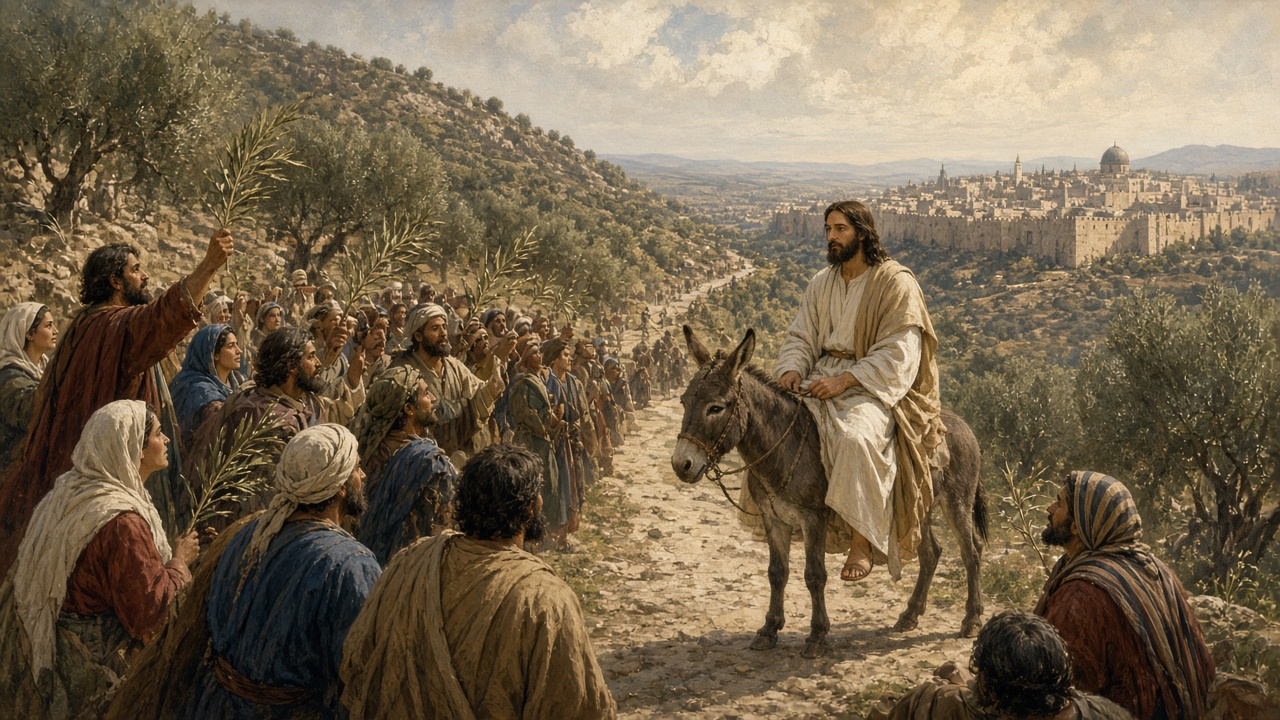
12Τῇ ἐπαύριον ὄχλος πολὺς ὁ ἐλθὼν εἰς τὴν ἑορτήν, ἀκούσαντες ὅτι ἔρχεται Ἰησοῦς εἰς Ἱεροσόλυμα, 13ἔλαβον τὰ βαΐα τῶν φοινίκων, καὶ ἐξῆλθον εἰς ὑπάντησιν αὐτῷ, καὶ ἔκραζον,
Ὡσαννά·
εὐλογημένος ὁ ἐρχόμενος ἐν ὀνόματι Κυρίου,
βασιλεὺς τοῦ Ἰσραήλ.
14εὑρὼν δὲ ὁ Ἰησοῦς ὀνάριον, ἐκάθισεν ἐπ᾽ αὐτό, καθώς ἐστι γεγραμμένον,
15Μὴ φοβοῦ, θύγατερ Σιών·
ἰδού, ὁ βασιλεύς σου ἔρχεται,
καθήμενος ἐπὶ πῶλον ὄνου.
16ταῦτα δὲ οὐκ ἔγνωσαν οἱ μαθηταὶ αὐτοῦ τὸ πρῶτον· ἀλλ᾽ ὅτε ἐδοξάσθη Ἰησοῦς, τότε ἐμνήσθησαν ὅτι ταῦτα ἦν ἐπ᾽ αὐτῷ γεγραμμένα, καὶ ταῦτα ἐποίησαν αὐτῷ. 17ἐμαρτύρει οὖν ὁ ὄχλος ὁ ὢν μετ᾽ αὐτοῦ ὅτε τὸν Λάζαρον ἐφώνησεν ἐκ τοῦ μνημείου, καὶ ἤγειρεν αὐτὸν ἐκ νεκρῶν. 18διὰ τοῦτο καὶ ὑπήντησεν αὐτῷ ὁ ὄχλος, ὅτι ἤκουσε τοῦτο αὐτὸν πεποιηκέναι τὸ σημεῖον. 19οἱ οὖν Φαρισαῖοι εἶπον πρὸς ἑαυτούς, Θεωρεῖτε ὅτι οὐκ ὠφελεῖτε οὐδέν· ἴδε ὁ κόσμος ὀπίσω αὐτοῦ ἀπῆλθεν.
Some Greeks Wish to See Jesus
20Ἦσαν δέ τινες Ἕλληνες ἐκ τῶν ἀναβαινόντων ἵνα προσκυνήσωσιν ἐν τῇ ἑορτῇ· 21οὗτοι οὖν προσῆλθον Φιλίππῳ τῷ ἀπὸ Βηθσαϊδὰ τῆς Γαλιλαίας, καὶ ἠρώτων αὐτὸν λέγοντες, Κύριε, θέλομεν τὸν Ἰησοῦν ἰδεῖν. 22ἔρχεται Φίλιππος καὶ λέγει τῷ Ἀνδρέᾳ· καὶ πάλιν Ἀνδρέας καὶ Φίλιππος λέγουσι τῷ Ἰησοῦ. 23ὁ δὲ Ἰησοῦς ἀπεκρίνατο αὐτοῖς λέγων, Ἐλήλυθεν ἡ ὥρα ἵνα δοξασθῇ ὁ υἱὸς τοῦ ἀνθρώπου. 24ἀμὴν ἀμὴν λέγω ὑμῖν, ἐὰν μὴ ὁ κόκκος τοῦ σίτου πεσὼν εἰς τὴν γῆν ἀποθάνῃ, αὐτὸς μόνος μένει· ἐὰν δὲ ἀποθάνῃ, πολὺν καρπὸν φέρει. 25ὁ φιλῶν τὴν ψυχὴν αὐτοῦ ἀπολέσει αὐτήν· καὶ ὁ μισῶν τὴν ψυχὴν αὐτοῦ ἐν τῷ κόσμῳ τούτῳ εἰς ζωὴν αἰώνιον φυλάξει αὐτήν. 26ἐὰν ἐμοὶ διακονῇ τις, ἐμοὶ ἀκολουθείτω· καὶ ὅπου εἰμὶ ἐγώ, ἐκεῖ καὶ ὁ διάκονος ὁ ἐμὸς ἔσται· καὶ ἐάν τις ἐμοὶ διακονῇ, τιμήσει αὐτὸν ὁ πατήρ.
Jesus Speaks About His Death
27Νῦν ἡ ψυχή μου τετάρακται· καὶ τί εἴπω; Πάτερ, σῶσόν με ἐκ τῆς ὥρας ταύτης. ἀλλὰ διὰ τοῦτο ἦλθον εἰς τὴν ὥραν ταύτην. 28Πάτερ, δόξασόν σου τὸ ὄνομα. ἦλθεν οὖν φωνὴ ἐκ τοῦ οὐρανοῦ, Καὶ ἐδόξασα, καὶ πάλιν δοξάσω. 29ὁ οὖν ὄχλος ὁ ἑστὼς καὶ ἀκούσας ἔλεγε βροντὴν γεγονέναι· ἄλλοι ἔλεγον, Ἄγγελος αὐτῷ λελάληκεν. 30ἀπεκρίθη Ἰησοῦς καὶ εἶπεν, Οὐ δι᾽ ἐμὲ αὕτη ἡ φωνὴ γέγονεν, ἀλλὰ δι᾽ ὑμᾶς. 31νῦν κρίσις ἐστὶ τοῦ κόσμου τούτου· νῦν ὁ ἄρχων τοῦ κόσμου τούτου ἐκβληθήσεται ἔξω. 32κἀγὼ ἐὰν ὑψωθῶ ἐκ τῆς γῆς, πάντας ἑλκύσω πρὸς ἐμαυτόν. 33τοῦτο δὲ ἔλεγε, σημαίνων ποίῳ θανάτῳ ἔμελλεν ἀποθνῄσκειν. 34ἀπεκρίθη αὐτῷ ὁ ὄχλος, Ἡμεῖς ἠκούσαμεν ἐκ τοῦ νόμου ὅτι ὁ Χριστὸς μένει εἰς τὸν αἰῶνα· καὶ πῶς σὺ λέγεις, Δεῖ ὑψωθῆναι τὸν υἱὸν τοῦ ἀνθρώπου; τίς ἐστιν οὗτος ὁ υἱὸς τοῦ ἀνθρώπου; 35εἶπεν οὖν αὐτοῖς ὁ Ἰησοῦς, Ἔτι μικρὸν χρόνον τὸ φῶς μεθ᾽ ὑμῶν ἐστι. περιπατεῖτε ἕως τὸ φῶς ἔχετε, ἵνα μὴ σκοτία ὑμᾶς καταλάβῃ· καὶ ὁ περιπατῶν ἐν τῇ σκοτίᾳ οὐκ οἶδε ποῦ ὑπάγει. 36ἕως τὸ φῶς ἔχετε, πιστεύετε εἰς τὸ φῶς, ἵνα υἱοὶ φωτὸς γένησθε.
The Unbelief of the People
Ταῦτα ἐλάλησεν ὁ Ἰησοῦς, καὶ ἀπελθὼν ἐκρύβη ἀπ᾽ αὐτῶν. 37τοσαῦτα δὲ αὐτοῦ σημεῖα πεποιηκότος ἔμπροσθεν αὐτῶν, οὐκ ἐπίστευον εἰς αὐτόν· 38ἵνα ὁ λόγος Ἡσαΐου τοῦ προφήτου πληρωθῇ, ὃν εἶπε,
Κύριε, τίς ἐπίστευσε τῇ ἀκοῇ ἡμῶν;
καὶ ὁ βραχίων Κυρίου τίνι ἀπεκαλύφθη;
39διὰ τοῦτο οὐκ ἠδύναντο πιστεύειν, ὅτι πάλιν εἶπεν Ἡσαΐας,
40Τετύφλωκεν αὐτῶν τοὺς ὀφθαλμούς,
καὶ πεπώρωκεν αὐτῶν τὴν καρδίαν·
ἵνα μὴ ἴδωσι τοῖς ὀφθαλμοῖς,
καὶ νοήσωσι τῇ καρδίᾳ, καὶ ἐπιστραφῶσι,
καὶ ἰάσωμαι αὐτούς.
41ταῦτα εἶπεν Ἡσαΐας, ὅτε εἶδε τὴν δόξαν αὐτοῦ, καὶ ἐλάλησε περὶ αὐτοῦ. 42ὅμως μέντοι καὶ ἐκ τῶν ἀρχόντων πολλοὶ ἐπίστευσαν εἰς αὐτόν· ἀλλὰ διὰ τοὺς Φαρισαίους οὐχ ὡμολόγουν, ἵνα μὴ ἀποσυνάγωγοι γένωνται. 43ἠγάπησαν γὰρ τὴν δόξαν τῶν ἀνθρώπων μᾶλλον ἤπερ τὴν δόξαν τοῦ Θεοῦ.
Jesus’ Words Will Judge the World
44Ἰησοῦς δὲ ἔκραξε καὶ εἶπεν, Ὁ πιστεύων εἰς ἐμέ, οὐ πιστεύει εἰς ἐμέ, ἀλλ᾽ εἰς τὸν πέμψαντά με· 45καὶ ὁ θεωρῶν ἐμέ, θεωρεῖ τὸν πέμψαντά με. 46ἐγὼ φῶς εἰς τὸν κόσμον ἐλήλυθα, ἵνα πᾶς ὁ πιστεύων εἰς ἐμέ, ἐν τῇ σκοτίᾳ μὴ μείνῃ. 47καὶ ἐάν τίς μου ἀκούσῃ τῶν ῥημάτων καὶ μὴ πιστεύσῃ, ἐγὼ οὐ κρίνω αὐτόν· οὐ γὰρ ἦλθον ἵνα κρίνω τὸν κόσμον, ἀλλ᾽ ἵνα σώσω τὸν κόσμον. 48ὁ ἀθετῶν ἐμὲ καὶ μὴ λαμβάνων τὰ ῥήματά μου, ἔχει τὸν κρίνοντα αὐτόν· ὁ λόγος ὃν ἐλάλησα, ἐκεῖνος κρινεῖ αὐτὸν ἐν τῇ ἐσχάτῃ ἡμέρᾳ. 49ὅτι ἐγὼ ἐξ ἐμαυτοῦ οὐκ ἐλάλησα· ἀλλ᾽ ὁ πέμψας με πατήρ, αὐτός μοι ἐντολὴν ἔδωκε, τί εἴπω καὶ τί λαλήσω. 50καὶ οἶδα ὅτι ἡ ἐντολὴ αὐτοῦ ζωὴ αἰώνιός ἐστιν· ἃ οὖν λαλῶ ἐγώ, καθὼς εἴρηκέ μοι ὁ πατήρ, οὕτω λαλῶ.
Did you know?
The Anointing at Bethany and the Entry into Jerusalem
- Bethany, where Jesus arrived six days before the Passover, lay about two miles east of Jerusalem on the southeastern slope of the Mount of Olives, along the road to Jericho, and took its name from the palm trees that grew there. It was the home of Lazarus, whom Jesus had raised from the dead after four days in the tomb, and of his sisters Martha and Mary; the chief priests planned to kill Lazarus as well, because on his account many people were believing in Jesus.Sources: the Bible text itself · Bethany · Lazarus
- At a dinner where Martha served and Lazarus reclined at the table, Mary anointed Jesus' feet with about a pint of expensive perfume made of pure nard and wiped them with her hair, so the house was filled with the fragrance. Judas Iscariot, son of Simon, whose surname means a man of Kerioth, asked why it was not sold for three hundred denarii for the poor; he was a thief who, as keeper of the money bag, used to take from what was put into it, and he was going to betray Jesus.Sources: the Bible text itself · Judas Iscariot · Simon
- The next day the great crowd that had come for the feast took palm branches and went out to meet Jesus as he came to Jerusalem, seated on a young donkey, shouting praise to the King of Israel, as it is written of the Daughter of Zion. Zion was the southeastern hill of Jerusalem, where David built a citadel and a palace after taking it, so that it became the city of David. At first his disciples did not understand these things, but after Jesus was glorified they remembered that they had also been written about him.Sources: the Bible text itself · Zion
Notes written with AI assistance from open sources (Theographic Bible Metadata, CC BY-SA 4.0; Easton’s Bible Dictionary, public domain) and reviewed before publishing.
Places in this chapter
- Jerusalem · 31.777, 35.234 · verses 11, 12, 20
- Zion · Today: Jerusalem · 31.777, 35.234 · verse 15
- Galilee · 32.760, 35.527 · verse 21
Only places identified with high confidence are shown (90% or more according to the scholarly sources compiled by OpenBible). Period map: DARE (Digital Atlas of the Roman Empire), CC BY 4.0; modern map: © OpenStreetMap contributors; places: OpenBible.info (CC BY 4.0).
Credits and license for this translation
Η Καινή Διαθήκη
The New Testament in Ancient Greek with critical text notes
Public Domain
Language: Ελληνικά (Greek, Ancient)
Translation by: Maurice A. Robinson
Contributor: Robert Adam Boyd
The Text-Critical Greek New Testament is based upon The New Testament in the Original Greek: Byzantine Textform 2018, compiled and arranged by Maurice A. Robinson and William G. Pierpont.
The following disclaimer is printed in the The New Testament in the Original Greek: Byzantine Textform 2018:
Anyone is permitted to copy and distribute this text or any portion of this text. It may be incorporated in a larger work, and/or quoted from, stored in a database retrieval system, photocopied, reprinted, or otherwise duplicated by anyone without prior notification, permission, compensation to the holder, or any other restrictions. All rights to this text are released to everyone and no one can reduce these rights at any time. Copyright is not claimed nor asserted for either the preface, notes, or the new and revised form of the Greek NT text of this edition, nor for the original form of such as initially released into the public domain by the editors, first as printed textual notes in 1979, continuous-text electronic form 1986–present, and in published editions from 1991, 2005, and 2010.
The permitted use or reproduction of the Greek text or other material contained within this volume (whether by print, electronic media, or other form) does not imply doctrinal or theological agreement by the present editors and publisher with whatever views may be maintained or promulgated by other publishers. For the purpose of assigning responsibility, it is requested that the present editors’ names and the title associated with this text as well as this disclaimer be retained in any subsequent reproduction of this material.
2026-10-02
Source: http://ebible.org/grctcgnt/ · eBible.org