John 10
Η Καινή Διαθήκη · Tap a verse to see its cross-references.
The Parable of the Good Shepherd
1Ἀμὴν ἀμὴν λέγω ὑμῖν, ὁ μὴ εἰσερχόμενος διὰ τῆς θύρας εἰς τὴν αὐλὴν τῶν προβάτων, ἀλλὰ ἀναβαίνων ἀλλαχόθεν, ἐκεῖνος κλέπτης ἐστὶ καὶ λῃστής. 2ὁ δὲ εἰσερχόμενος διὰ τῆς θύρας ποιμήν ἐστι τῶν προβάτων. 3τούτῳ ὁ θυρωρὸς ἀνοίγει, καὶ τὰ πρόβατα τῆς φωνῆς αὐτοῦ ἀκούει, καὶ τὰ ἴδια πρόβατα καλεῖ κατ᾽ ὄνομα, καὶ ἐξάγει αὐτά. 4καὶ ὅταν τὰ ἴδια πρόβατα ἐκβάλῃ, ἔμπροσθεν αὐτῶν πορεύεται· καὶ τὰ πρόβατα αὐτῷ ἀκολουθεῖ, ὅτι οἴδασι τὴν φωνὴν αὐτοῦ. 5ἀλλοτρίῳ δὲ οὐ μὴ ἀκολουθήσωσιν, ἀλλὰ φεύξονται ἀπ᾽ αὐτοῦ· ὅτι οὐκ οἴδασι τῶν ἀλλοτρίων τὴν φωνήν. 6ταύτην τὴν παροιμίαν εἶπεν αὐτοῖς ὁ Ἰησοῦς· ἐκεῖνοι δὲ οὐκ ἔγνωσαν τίνα ἦν ἃ ἐλάλει αὐτοῖς.
I Am the Good Shepherd
7Εἶπεν οὖν πάλιν αὐτοῖς ὁ Ἰησοῦς, Ἀμὴν ἀμὴν λέγω ὑμῖν ὅτι ἐγώ εἰμι ἡ θύρα τῶν προβάτων. 8πάντες ὅσοι ἦλθον κλέπται εἰσὶ καὶ λῃσταί· ἀλλ᾽ οὐκ ἤκουσαν αὐτῶν τὰ πρόβατα. 9ἐγώ εἰμι ἡ θύρα· δι᾽ ἐμοῦ ἐάν τις εἰσέλθῃ, σωθήσεται, καὶ εἰσελεύσεται καὶ ἐξελεύσεται, καὶ νομὴν εὑρήσει. 10ὁ κλέπτης οὐκ ἔρχεται εἰ μὴ ἵνα κλέψῃ καὶ θύσῃ καὶ ἀπολέσῃ· ἐγὼ ἦλθον ἵνα ζωὴν ἔχωσι, καὶ περισσὸν ἔχωσιν. 11ἐγώ εἰμι ὁ ποιμὴν ὁ καλός· ὁ ποιμὴν ὁ καλὸς τὴν ψυχὴν αὐτοῦ τίθησιν ὑπὲρ τῶν προβάτων. 12ὁ μισθωτὸς δέ, καὶ οὐκ ὢν ποιμήν, οὗ οὐκ εἰσὶ τὰ πρόβατα ἴδια, θεωρεῖ τὸν λύκον ἐρχόμενον, καὶ ἀφίησι τὰ πρόβατα, καὶ φεύγει· καὶ ὁ λύκος ἁρπάζει αὐτά, καὶ σκορπίζει τὰ πρόβατα. 13ὁ δὲ μισθωτὸς φεύγει, ὅτι μισθωτός ἐστι, καὶ οὐ μέλει αὐτῷ περὶ τῶν προβάτων. 14ἐγώ εἰμι ὁ ποιμὴν ὁ καλός, καὶ γινώσκω τὰ ἐμά, καὶ γινώσκομαι ὑπὸ τῶν ἐμῶν. 15καθὼς γινώσκει με ὁ πατήρ, κἀγὼ γινώσκω τὸν πατέρα· καὶ τὴν ψυχήν μου τίθημι ὑπὲρ τῶν προβάτων. 16καὶ ἄλλα πρόβατα ἔχω, ἃ οὐκ ἔστιν ἐκ τῆς αὐλῆς ταύτης· κἀκεῖνά με δεῖ ἀγαγεῖν, καὶ τῆς φωνῆς μου ἀκούσουσι· καὶ γενήσεται μία ποίμνη, εἷς ποιμήν. 17διὰ τοῦτο ὁ πατήρ με ἀγαπᾷ, ὅτι ἐγὼ τίθημι τὴν ψυχήν μου, ἵνα πάλιν λάβω αὐτήν. 18οὐδεὶς αἴρει αὐτὴν ἀπ᾽ ἐμοῦ, ἀλλ᾽ ἐγὼ τίθημι αὐτὴν ἀπ᾽ ἐμαυτοῦ. ἐξουσίαν ἔχω θεῖναι αὐτήν, καὶ ἐξουσίαν ἔχω πάλιν λαβεῖν αὐτήν. ταύτην τὴν ἐντολὴν ἔλαβον παρὰ τοῦ πατρός μου.
19Σχίσμα οὖν πάλιν ἐγένετο ἐν τοῖς Ἰουδαίοις διὰ τοὺς λόγους τούτους. 20ἔλεγον δὲ πολλοὶ ἐξ αὐτῶν, Δαιμόνιον ἔχει καὶ μαίνεται· τί αὐτοῦ ἀκούετε; 21ἄλλοι ἔλεγον, Ταῦτα τὰ ῥήματα οὐκ ἔστι δαιμονιζομένου· μὴ δαιμόνιον δύναται τυφλῶν ὀφθαλμοὺς ἀνοίγειν;
Jesus Is Rejected by the Jews
22Ἐγένετο δὲ τὰ Ἐγκαίνια ἐν Ἱεροσολύμοις, καὶ χειμὼν ἦν· 23καὶ περιεπάτει ὁ Ἰησοῦς ἐν τῷ ἱερῷ ἐν τῇ στοᾷ Σολομῶνος. 24ἐκύκλωσαν οὖν αὐτὸν οἱ Ἰουδαῖοι, καὶ ἔλεγον αὐτῷ, Ἕως πότε τὴν ψυχὴν ἡμῶν αἴρεις; εἰ σὺ εἶ ὁ Χριστός, εἰπὲ ἡμῖν παρρησίᾳ. 25ἀπεκρίθη αὐτοῖς ὁ Ἰησοῦς, Εἶπον ὑμῖν, καὶ οὐ πιστεύετε· τὰ ἔργα ἃ ἐγὼ ποιῶ ἐν τῷ ὀνόματι τοῦ πατρός μου, ταῦτα μαρτυρεῖ περὶ ἐμοῦ· 26ἀλλ᾽ ὑμεῖς οὐ πιστεύετε· οὐ γάρ ἐστε ἐκ τῶν προβάτων τῶν ἐμῶν, καθὼς εἶπον ὑμῖν. 27τὰ πρόβατα τὰ ἐμὰ τῆς φωνῆς μου ἀκούει, κἀγὼ γινώσκω αὐτά, καὶ ἀκολουθοῦσί μοι· 28κἀγὼ ζωὴν αἰώνιον δίδωμι αὐτοῖς· καὶ οὐ μὴ ἀπόλωνται εἰς τὸν αἰῶνα, καὶ οὐχ ἁρπάσει τις αὐτὰ ἐκ τῆς χειρός μου. 29ὁ πατήρ μου ὃς δέδωκέ μοι, μείζων πάντων ἐστί· καὶ οὐδεὶς δύναται ἁρπάζειν ἐκ τῆς χειρὸς τοῦ πατρός μου. 30ἐγὼ καὶ ὁ πατὴρ ἕν ἐσμεν.
31Ἐβάστασαν οὖν πάλιν λίθους οἱ Ἰουδαῖοι ἵνα λιθάσωσιν αὐτόν. 32ἀπεκρίθη αὐτοῖς ὁ Ἰησοῦς, Πολλὰ καλὰ ἔργα ἔδειξα ὑμῖν ἐκ τοῦ πατρός μου· διὰ ποῖον αὐτῶν ἔργον λιθάζετέ με; 33ἀπεκρίθησαν αὐτῷ οἱ Ἰουδαῖοι λέγοντες, Περὶ καλοῦ ἔργου οὐ λιθάζομέν σε, ἀλλὰ περὶ βλασφημίας, καὶ ὅτι σὺ ἄνθρωπος ὢν ποιεῖς σεαυτὸν Θεόν. 34ἀπεκρίθη αὐτοῖς ὁ Ἰησοῦς, Οὐκ ἔστι γεγραμμένον ἐν τῷ νόμῳ ὑμῶν, Ἐγὼ εἶπα, Θεοί ἐστε; 35εἰ ἐκείνους εἶπε θεούς, πρὸς οὓς ὁ λόγος τοῦ Θεοῦ ἐγένετο—καὶ οὐ δύναται λυθῆναι ἡ γραφή— 36ὃν ὁ πατὴρ ἡγίασε καὶ ἀπέστειλεν εἰς τὸν κόσμον, ὑμεῖς λέγετε ὅτι Βλασφημεῖς, ὅτι εἶπον, Υἱὸς τοῦ Θεοῦ εἰμι; 37εἰ οὐ ποιῶ τὰ ἔργα τοῦ πατρός μου, μὴ πιστεύετέ μοι· 38εἰ δὲ ποιῶ, κἂν ἐμοὶ μὴ πιστεύητε, τοῖς ἔργοις πιστεύσατε· ἵνα γνῶτε καὶ πιστεύσητε ὅτι ἐν ἐμοὶ ὁ πατήρ, κἀγὼ ἐν αὐτῷ. 39ἐζήτουν οὖν πάλιν αὐτὸν πιάσαι· καὶ ἐξῆλθεν ἐκ τῆς χειρὸς αὐτῶν.
40Καὶ ἀπῆλθε πάλιν πέραν τοῦ Ἰορδάνου εἰς τὸν τόπον ὅπου ἦν Ἰωάννης τὸ πρῶτον βαπτίζων· καὶ ἔμεινεν ἐκεῖ. 41καὶ πολλοὶ ἦλθον πρὸς αὐτόν, καὶ ἔλεγον ὅτι Ἰωάννης μὲν σημεῖον ἐποίησεν οὐδέν· πάντα δὲ ὅσα εἶπεν Ἰωάννης περὶ τούτου, ἀληθῆ ἦν. 42καὶ ἐπίστευσαν πολλοὶ ἐκεῖ εἰς αὐτόν.
Did you know?
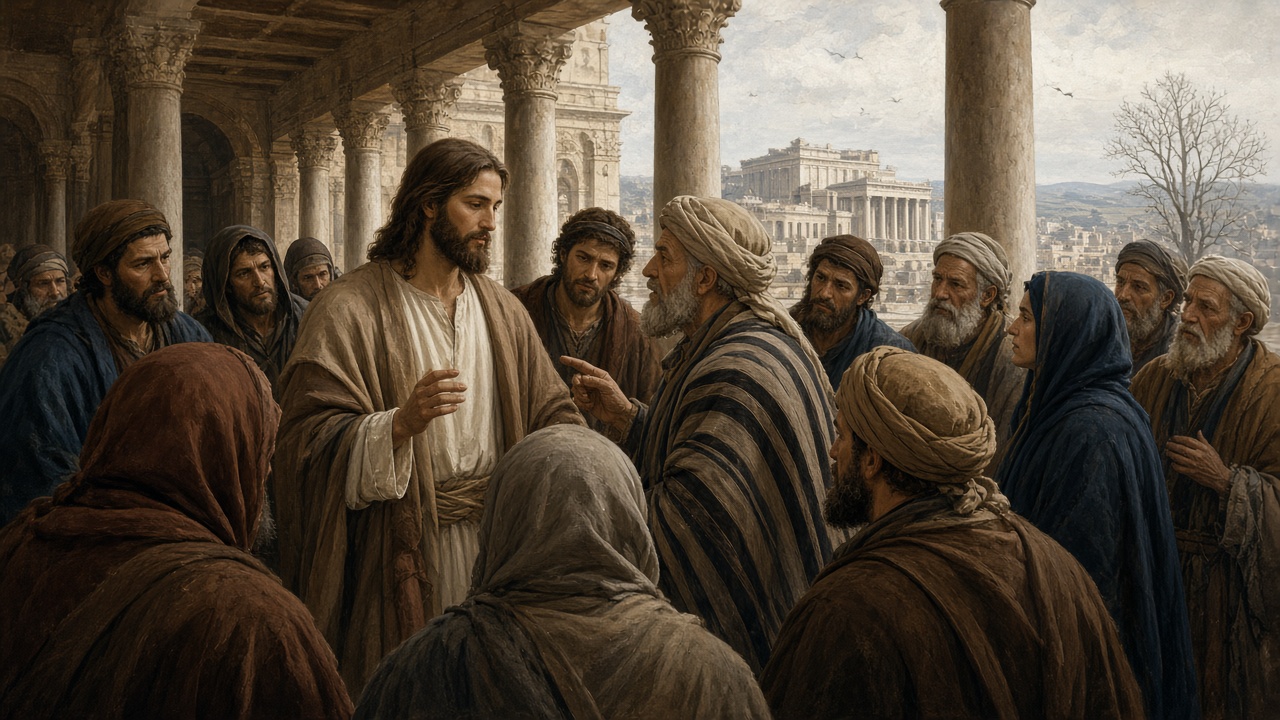
The Good Shepherd
- During the Feast of Dedication in Jerusalem it was winter, and Jesus was walking in the temple courts in Solomon's Colonnade. The name Jerusalem, in a dual form, means "possession of peace" or "foundation of peace"; that form probably refers to the mountains of Zion and Moriah, or, as some suppose, to the upper and lower city. Solomon's Hebrew name, Shelomoh, means "peaceful."Sources: the Bible text itself · Jerusalem · Solomon
- A chronology of Gospel events dates the Good Shepherd teaching to AD 29, and dates a time of teaching and healing from Perea to Jerusalem to AD 30.Sources: The Good Shepherd Teaching · Teaching and Healing in Perea to Jerusalem
- Jesus then went back across the Jordan to the place where John had first been baptizing, and many people there believed in him. John was of priestly descent: his father, Zacharias, was a priest of the course of Abia, and his mother, Elisabeth, was of the daughters of Aaron. His birth, six months before that of Jesus, was foretold by an angel; those who came said that John never performed a sign, yet everything he had said about Jesus was true.Sources: the Bible text itself · John the Baptist
Notes written with AI assistance from open sources (Theographic Bible Metadata, CC BY-SA 4.0; Easton’s Bible Dictionary, public domain) and reviewed before publishing.
Places in this chapter
- Jerusalem · 31.777, 35.234 · verse 22
- Solomon’s Portico · Today: in Jerusalem · 31.777, 35.234 · verse 23
- Jordan · Today: Jordan River · 31.761, 35.558 · verse 40
Only places identified with high confidence are shown (90% or more according to the scholarly sources compiled by OpenBible). Period map: DARE (Digital Atlas of the Roman Empire), CC BY 4.0; modern map: © OpenStreetMap contributors; places: OpenBible.info (CC BY 4.0).
Credits and license for this translation
Η Καινή Διαθήκη
The New Testament in Ancient Greek with critical text notes
Public Domain
Language: Ελληνικά (Greek, Ancient)
Translation by: Maurice A. Robinson
Contributor: Robert Adam Boyd
The Text-Critical Greek New Testament is based upon The New Testament in the Original Greek: Byzantine Textform 2018, compiled and arranged by Maurice A. Robinson and William G. Pierpont.
The following disclaimer is printed in the The New Testament in the Original Greek: Byzantine Textform 2018:
Anyone is permitted to copy and distribute this text or any portion of this text. It may be incorporated in a larger work, and/or quoted from, stored in a database retrieval system, photocopied, reprinted, or otherwise duplicated by anyone without prior notification, permission, compensation to the holder, or any other restrictions. All rights to this text are released to everyone and no one can reduce these rights at any time. Copyright is not claimed nor asserted for either the preface, notes, or the new and revised form of the Greek NT text of this edition, nor for the original form of such as initially released into the public domain by the editors, first as printed textual notes in 1979, continuous-text electronic form 1986–present, and in published editions from 1991, 2005, and 2010.
The permitted use or reproduction of the Greek text or other material contained within this volume (whether by print, electronic media, or other form) does not imply doctrinal or theological agreement by the present editors and publisher with whatever views may be maintained or promulgated by other publishers. For the purpose of assigning responsibility, it is requested that the present editors’ names and the title associated with this text as well as this disclaimer be retained in any subsequent reproduction of this material.
2026-10-02
Source: http://ebible.org/grctcgnt/ · eBible.org