Colossians 2
Η Καινή Διαθήκη · Tap a verse to see its cross-references.
1Θέλω γὰρ ὑμᾶς εἰδέναι ἡλίκον ἀγῶνα ἔχω περὶ ὑμῶν καὶ τῶν ἐν Λαοδικείᾳ καὶ ὅσοι οὐχ ἑωράκασι τὸ πρόσωπόν μου ἐν σαρκί, 2ἵνα παρακληθῶσιν αἱ καρδίαι αὐτῶν συμβιβασθέντων ἐν ἀγάπῃ καὶ εἰς πάντα πλοῦτον τῆς πληροφορίας τῆς συνέσεως, εἰς ἐπίγνωσιν τοῦ μυστηρίου τοῦ Θεοῦ καὶ πατρὸς καὶ τοῦ Χριστοῦ, 3ἐν ᾧ εἰσι πάντες οἱ θησαυροὶ τῆς σοφίας καὶ τῆς γνώσεως ἀπόκρυφοι. 4τοῦτο δὲ λέγω ἵνα μή τις ὑμᾶς παραλογίζηται ἐν πιθανολογίᾳ. 5εἰ γὰρ καὶ τῇ σαρκὶ ἄπειμι, ἀλλὰ τῷ πνεύματι σὺν ὑμῖν εἰμι, χαίρων καὶ βλέπων ὑμῶν τὴν τάξιν καὶ τὸ στερέωμα τῆς εἰς Χριστὸν πίστεως ὑμῶν.
Fullness of Life in Christ
6Ὡς οὖν παρελάβετε τὸν Χριστὸν Ἰησοῦν τὸν Κύριον, ἐν αὐτῷ περιπατεῖτε, 7ἐρριζωμένοι καὶ ἐποικοδομούμενοι ἐν αὐτῷ καὶ βεβαιούμενοι ἐν τῇ πίστει καθὼς ἐδιδάχθητε, περισσεύοντες ἐν αὐτῇ ἐν εὐχαριστίᾳ.
8Βλέπετε μή τις ὑμᾶς ἔσται ὁ συλαγωγῶν διὰ τῆς φιλοσοφίας καὶ κενῆς ἀπάτης κατὰ τὴν παράδοσιν τῶν ἀνθρώπων, κατὰ τὰ στοιχεῖα τοῦ κόσμου καὶ οὐ κατὰ Χριστόν· 9ὅτι ἐν αὐτῷ κατοικεῖ πᾶν τὸ πλήρωμα τῆς θεότητος σωματικῶς, 10καὶ ἐστὲ ἐν αὐτῷ πεπληρωμένοι, ὅς ἐστιν ἡ κεφαλὴ πάσης ἀρχῆς καὶ ἐξουσίας· 11ἐν ᾧ καὶ περιετμήθητε περιτομῇ ἀχειροποιήτῳ ἐν τῇ ἀπεκδύσει τοῦ σώματος τῶν ἁμαρτιῶν τῆς σαρκός, ἐν τῇ περιτομῇ τοῦ Χριστοῦ, 12συνταφέντες αὐτῷ ἐν τῷ βαπτίσματι, ἐν ᾧ καὶ συνηγέρθητε διὰ τῆς πίστεως τῆς ἐνεργείας τοῦ Θεοῦ τοῦ ἐγείραντος αὐτὸν ἐκ τῶν νεκρῶν. 13καὶ ὑμᾶς νεκροὺς ὄντας ἐν τοῖς παραπτώμασι καὶ τῇ ἀκροβυστίᾳ τῆς σαρκὸς ὑμῶν, συνεζωοποίησεν ὑμᾶς σὺν αὐτῷ· χαρισάμενος ἡμῖν πάντα τὰ παραπτώματα, 14ἐξαλείψας τὸ καθ᾽ ἡμῶν χειρόγραφον τοῖς δόγμασιν ὃ ἦν ὑπεναντίον ἡμῖν, καὶ αὐτὸ ἦρκεν ἐκ τοῦ μέσου προσηλώσας αὐτὸ τῷ σταυρῷ· 15ἀπεκδυσάμενος τὰς ἀρχὰς καὶ τὰς ἐξουσίας ἐδειγμάτισεν ἐν παρρησίᾳ, θριαμβεύσας αὐτοὺς ἐν αὐτῷ.
16Μὴ οὖν τις ὑμᾶς κρινέτω ἐν βρώσει ἢ ἐν πόσει ἢ ἐν μέρει ἑορτῆς ἢ νουμηνίας ἢ σαββάτων, 17ἅ ἐστι σκιὰ τῶν μελλόντων, τὸ δὲ σῶμα Χριστοῦ. 18μηδεὶς ὑμᾶς καταβραβευέτω θέλων ἐν ταπεινοφροσύνῃ καὶ θρησκείᾳ τῶν ἀγγέλων, ἃ μὴ ἑώρακεν ἐμβατεύων, εἰκῇ φυσιούμενος ὑπὸ τοῦ νοὸς τῆς σαρκὸς αὐτοῦ, 19καὶ οὐ κρατῶν τὴν κεφαλήν, ἐξ οὗ πᾶν τὸ σῶμα διὰ τῶν ἁφῶν καὶ συνδέσμων ἐπιχορηγούμενον καὶ συμβιβαζόμενον αὔξει τὴν αὔξησιν τοῦ Θεοῦ.
20Εἰ οὖν ἀπεθάνετε σὺν Χριστῷ ἀπὸ τῶν στοιχείων τοῦ κόσμου, τί ὡς ζῶντες ἐν κόσμῳ δογματίζεσθε— 21Μὴ ἅψῃ μηδὲ γεύσῃ μηδὲ θίγῃς 22(ἅ ἐστι πάντα εἰς φθορὰν τῇ ἀποχρήσει)—κατὰ τὰ ἐντάλματα καὶ διδασκαλίας τῶν ἀνθρώπων; 23ἅτινά ἐστι λόγον μὲν ἔχοντα σοφίας ἐν ἐθελοθρησκείᾳ καὶ ταπεινοφροσύνῃ καὶ ἀφειδίᾳ σώματος, οὐκ ἐν τιμῇ τινὶ πρὸς πλησμονὴν τῆς σαρκός.
Did you know?
Fullness in Christ, Not Empty Teaching
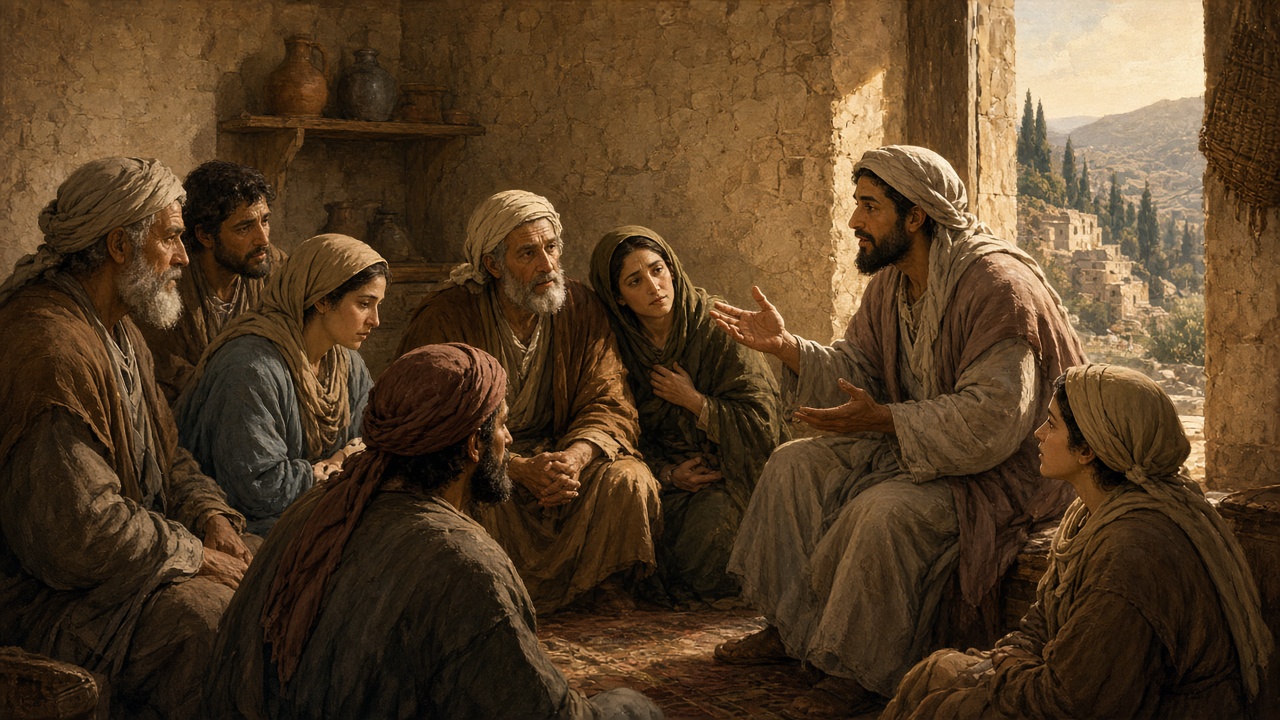
- The writer says he is struggling for the readers, for those at Laodicea, and for all who have not met him face to face. Laodicea lay on the border of Phrygia and Lydia, on the banks of the Lycus, about forty miles east of Ephesus, and was one of the most important and flourishing cities of Asia Minor.Sources: the Bible text itself · Laodicea
- He warns them not to be taken captive by philosophy and empty deception based on human tradition and the spiritual forces of the world, and not to be deceived by smooth rhetoric.Sources: the Bible text itself
- The chapter also says they should not let anyone judge them by what they eat or drink, or by a feast, a New Moon, or a Sabbath—these are called a shadow of things to come—and should resist false humility, the worship of angels, and rules against handling, tasting, and touching that rest on human commands.Sources: the Bible text itself
Notes written with AI assistance from open sources (Theographic Bible Metadata, CC BY-SA 4.0; Easton’s Bible Dictionary, public domain) and reviewed before publishing.
Places in this chapter
- Laodicea · Today: Laodicea on the Lycus · 37.836, 29.108 · verse 1
Only places identified with high confidence are shown (90% or more according to the scholarly sources compiled by OpenBible). Period map: DARE (Digital Atlas of the Roman Empire), CC BY 4.0; modern map: © OpenStreetMap contributors; places: OpenBible.info (CC BY 4.0).
Credits and license for this translation
Η Καινή Διαθήκη
The New Testament in Ancient Greek with critical text notes
Public Domain
Language: Ελληνικά (Greek, Ancient)
Translation by: Maurice A. Robinson
Contributor: Robert Adam Boyd
The Text-Critical Greek New Testament is based upon The New Testament in the Original Greek: Byzantine Textform 2018, compiled and arranged by Maurice A. Robinson and William G. Pierpont.
The following disclaimer is printed in the The New Testament in the Original Greek: Byzantine Textform 2018:
Anyone is permitted to copy and distribute this text or any portion of this text. It may be incorporated in a larger work, and/or quoted from, stored in a database retrieval system, photocopied, reprinted, or otherwise duplicated by anyone without prior notification, permission, compensation to the holder, or any other restrictions. All rights to this text are released to everyone and no one can reduce these rights at any time. Copyright is not claimed nor asserted for either the preface, notes, or the new and revised form of the Greek NT text of this edition, nor for the original form of such as initially released into the public domain by the editors, first as printed textual notes in 1979, continuous-text electronic form 1986–present, and in published editions from 1991, 2005, and 2010.
The permitted use or reproduction of the Greek text or other material contained within this volume (whether by print, electronic media, or other form) does not imply doctrinal or theological agreement by the present editors and publisher with whatever views may be maintained or promulgated by other publishers. For the purpose of assigning responsibility, it is requested that the present editors’ names and the title associated with this text as well as this disclaimer be retained in any subsequent reproduction of this material.
2026-10-02
Source: http://ebible.org/grctcgnt/ · eBible.org