Acts 9
Η Καινή Διαθήκη · Tap a verse to see its cross-references.
The Conversion of Saul
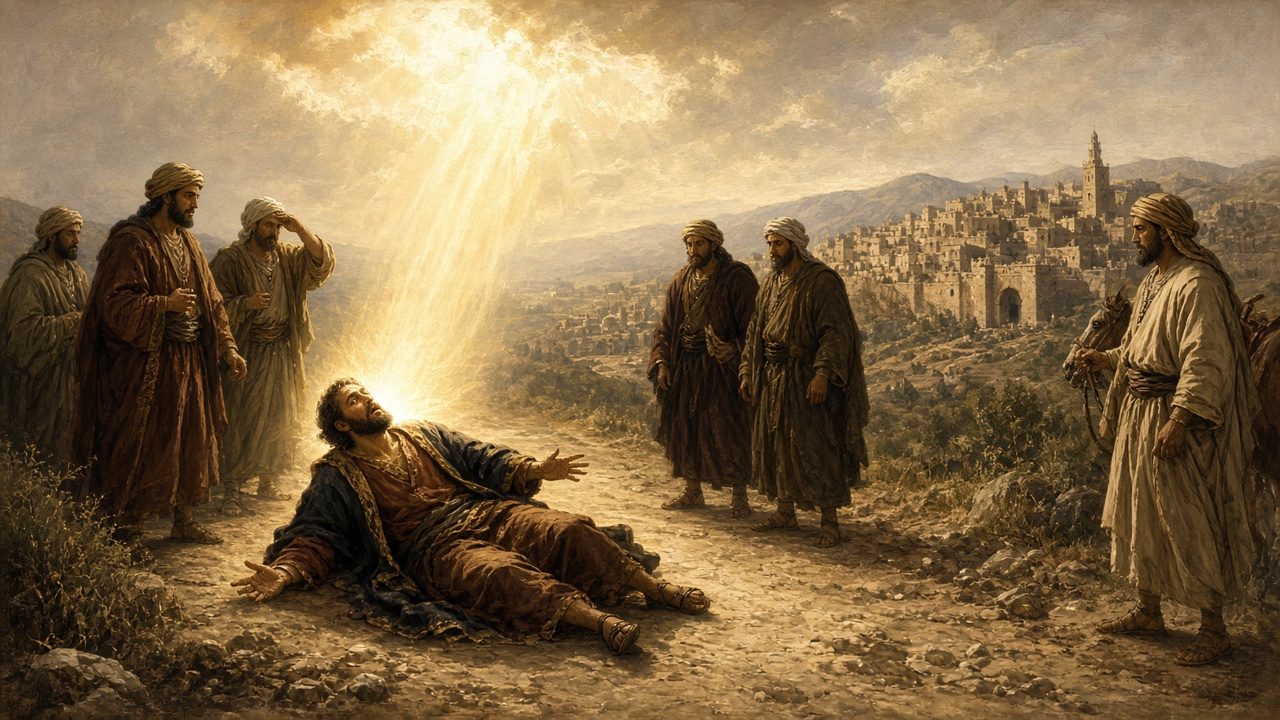
1Ὁ δὲ Σαῦλος ἔτι ἐμπνέων ἀπειλῆς καὶ φόνου εἰς τοὺς μαθητὰς τοῦ Κυρίου, προσελθὼν τῷ ἀρχιερεῖ 2ᾐτήσατο παρ᾽ αὐτοῦ ἐπιστολὰς εἰς Δαμασκὸν πρὸς τὰς συναγωγάς, ὅπως ἐάν τινας εὕρῃ τῆς Ὁδοῦ ὄντας, ἄνδρας τε καὶ γυναῖκας, δεδεμένους ἀγάγῃ εἰς Ἱερουσαλήμ. 3ἐν δὲ τῷ πορεύεσθαι ἐγένετο αὐτὸν ἐγγίζειν τῇ Δαμασκῷ, καὶ ἐξαίφνης περιήστραψεν αὐτὸν φῶς ἀπὸ τοῦ οὐρανοῦ, 4καὶ πεσὼν ἐπὶ τὴν γῆν ἤκουσε φωνὴν λέγουσαν αὐτῷ, Σαούλ, Σαούλ, τί με διώκεις; 5εἶπε δέ, Τίς εἶ, Κύριε; ὁ δὲ Κύριος εἶπεν, Ἐγώ εἰμι Ἰησοῦς ὃν σὺ διώκεις· 6ἀλλὰ ἀνάστηθι καὶ εἴσελθε εἰς τὴν πόλιν, καὶ λαληθήσεταί σοι τί σε δεῖ ποιεῖν. 7οἱ δὲ ἄνδρες οἱ συνοδεύοντες αὐτῷ εἱστήκεισαν ἐνεοί, ἀκούοντες μὲν τῆς φωνῆς, μηδένα δὲ θεωροῦντες. 8ἠγέρθη δὲ ὁ Σαῦλος ἀπὸ τῆς γῆς, ἀνεῳγμένων τε τῶν ὀφθαλμῶν αὐτοῦ οὐδένα ἔβλεπε· χειραγωγοῦντες δὲ αὐτὸν εἰσήγαγον εἰς Δαμασκόν. 9καὶ ἦν ἡμέρας τρεῖς μὴ βλέπων, καὶ οὐκ ἔφαγεν οὐδὲ ἔπιεν.
10Ἦν δέ τις μαθητὴς ἐν Δαμασκῷ ὀνόματι Ἀνανίας, καὶ εἶπε πρὸς αὐτὸν ὁ Κύριος ἐν ὁράματι, Ἀνανία. ὁ δὲ εἶπεν, Ἰδοὺ ἐγώ, Κύριε. 11ὁ δὲ Κύριος πρὸς αὐτόν, Ἀναστὰς πορεύθητι ἐπὶ τὴν ῥύμην τὴν καλουμένην Εὐθεῖαν καὶ ζήτησον ἐν οἰκίᾳ Ἰούδα Σαῦλον ὀνόματι Ταρσέα· ἰδοὺ γὰρ προσεύχεται 12καὶ εἶδεν ἐν ὁράματι ἄνδρα ὀνόματι Ἀνανίαν εἰσελθόντα καὶ ἐπιθέντα αὐτῷ χεῖρα ὅπως ἀναβλέψῃ. 13ἀπεκρίθη δὲ Ἀνανίας, Κύριε, ἀκήκοα ἀπὸ πολλῶν περὶ τοῦ ἀνδρὸς τούτου ὅσα κακὰ ἐποίησε τοῖς ἁγίοις σου ἐν Ἱερουσαλήμ· 14καὶ ὧδε ἔχει ἐξουσίαν παρὰ τῶν ἀρχιερέων δῆσαι πάντας τοὺς ἐπικαλουμένους τὸ ὄνομά σου. 15εἶπε δὲ πρὸς αὐτὸν ὁ Κύριος, Πορεύου, ὅτι σκεῦος ἐκλογῆς μοί ἐστιν οὗτος τοῦ βαστάσαι τὸ ὄνομά μου ἐνώπιον ἐθνῶν καὶ βασιλέων υἱῶν τε Ἰσραήλ· 16ἐγὼ γὰρ ὑποδείξω αὐτῷ ὅσα δεῖ αὐτὸν ὑπὲρ τοῦ ὀνόματός μου παθεῖν. 17ἀπῆλθε δὲ Ἀνανίας καὶ εἰσῆλθεν εἰς τὴν οἰκίαν καὶ ἐπιθεὶς ἐπ᾽ αὐτὸν τὰς χεῖρας εἶπε, Σαοὺλ ἀδελφέ, ὁ Κύριος ἀπέσταλκέ με, ὁ ὀφθείς σοι ἐν τῇ ὁδῷ ᾗ ἤρχου, ὅπως ἀναβλέψῃς καὶ πλησθῇς Πνεύματος Ἁγίου. 18καὶ εὐθέως ἀπέπεσον ἀπὸ τῶν ὀφθαλμῶν αὐτοῦ ὡσεὶ λεπίδες, ἀνέβλεψέ τε καὶ ἀναστὰς ἐβαπτίσθη, 19καὶ λαβὼν τροφὴν ἐνίσχυσεν.
Saul Preaches Christ in Damascus
Ἐγένετο δὲ ὁ Σαῦλος μετὰ τῶν ὄντων ἐν Δαμασκῷ μαθητῶν ἡμέρας τινάς. 20καὶ εὐθέως ἐν ταῖς συναγωγαῖς ἐκήρυσσε τὸν Χριστὸν ὅτι οὗτός ἐστιν ὁ υἱὸς τοῦ Θεοῦ. 21ἐξίσταντο δὲ πάντες οἱ ἀκούοντες καὶ ἔλεγον, Οὐχ οὗτός ἐστιν ὁ πορθήσας ἐν Ἱερουσαλὴμ τοὺς ἐπικαλουμένους τὸ ὄνομα τοῦτο, καὶ ὧδε εἰς τοῦτο ἐλήλυθεν ἵνα δεδεμένους αὐτοὺς ἀγάγῃ ἐπὶ τοὺς ἀρχιερεῖς; 22Σαῦλος δὲ μᾶλλον ἐνεδυναμοῦτο καὶ συνέχυνε τοὺς Ἰουδαίους τοὺς κατοικοῦντας ἐν Δαμασκῷ συμβιβάζων ὅτι οὗτός ἐστιν ὁ Χριστός.
Saul Escapes Death
23Ὡς δὲ ἐπληροῦντο ἡμέραι ἱκαναί, συνεβουλεύσαντο οἱ Ἰουδαῖοι ἀνελεῖν αὐτόν· 24ἐγνώσθη δὲ τῷ Σαύλῳ ἡ ἐπιβουλὴ αὐτῶν. παρετήρουν τε τὰς πύλας ἡμέρας τε καὶ νυκτὸς ὅπως αὐτὸν ἀνέλωσι· 25λαβόντες δὲ αὐτὸν οἱ μαθηταὶ νυκτὸς καθῆκαν διὰ τοῦ τείχους χαλάσαντες ἐν σπυρίδι.
Saul in Jerusalem
26Παραγενόμενος δὲ ὁ Σαῦλος ἐν Ἱερουσαλὴμ ἐπειρᾶτο κολλᾶσθαι τοῖς μαθηταῖς, καὶ πάντες ἐφοβοῦντο αὐτὸν μὴ πιστεύοντες ὅτι ἐστὶ μαθητής. 27Βαρνάβας δὲ ἐπιλαβόμενος αὐτὸν ἤγαγε πρὸς τοὺς ἀποστόλους, καὶ διηγήσατο αὐτοῖς πῶς ἐν τῇ ὁδῷ εἶδε τὸν Κύριον καὶ ὅτι ἐλάλησεν αὐτῷ καὶ πῶς ἐν Δαμασκῷ ἐπαρρησιάσατο ἐν τῷ ὀνόματι τοῦ Ἰησοῦ. 28καὶ ἦν μετ᾽ αὐτῶν εἰσπορευόμενος εἰς Ἱερουσαλὴμ καὶ παρρησιαζόμενος ἐν τῷ ὀνόματι τοῦ Κυρίου Ἰησοῦ, 29ἐλάλει τε καὶ συνεζήτει πρὸς τοὺς Ἑλληνιστάς· οἱ δὲ ἐπεχείρουν αὐτὸν ἀνελεῖν. 30ἐπιγνόντες δὲ οἱ ἀδελφοὶ κατήγαγον αὐτὸν εἰς Καισάρειαν καὶ ἐξαπέστειλαν αὐτὸν εἰς Ταρσόν.
31Αἱ μὲν οὖν ἐκκλησίαι καθ᾽ ὅλης τῆς Ἰουδαίας καὶ Γαλιλαίας καὶ Σαμαρείας εἶχον εἰρήνην οἰκοδομούμεναι, καὶ πορευόμεναι τῷ φόβῳ τοῦ Κυρίου καὶ τῇ παρακλήσει τοῦ Ἁγίου Πνεύματος ἐπληθύνοντο.
Peter Heals Aeneas
32Ἐγένετο δὲ Πέτρον διερχόμενον διὰ πάντων κατελθεῖν καὶ πρὸς τοὺς ἁγίους τοὺς κατοικοῦντας Λύδδαν. 33εὗρε δὲ ἐκεῖ ἄνθρωπόν τινα Αἰνέαν ὀνόματι ἐξ ἐτῶν ὀκτὼ κατακείμενον ἐπὶ κραββάτῳ, ὃς ἦν παραλελυμένος. 34καὶ εἶπεν αὐτῷ ὁ Πέτρος, Αἰνέα, ἰᾶταί σε Ἰησοῦς ὁ Χριστός· ἀνάστηθι καὶ στρῶσον σεαυτῷ. καὶ εὐθέως ἀνέστη. 35καὶ εἶδον αὐτὸν πάντες οἱ κατοικοῦντες Λύδδαν καὶ τὸν Ἀσσάρωνα, οἵτινες ἐπέστρεψαν ἐπὶ τὸν Κύριον.
Peter Raises Dorcas
36Ἐν Ἰόππῃ δέ τις ἦν μαθήτρια ὀνόματι Ταβιθά (ἣ διερμηνευομένη λέγεται Δορκάς)· αὕτη ἦν πλήρης ἀγαθῶν ἔργων καὶ ἐλεημοσυνῶν ὧν ἐποίει. 37ἐγένετο δὲ ἐν ταῖς ἡμέραις ἐκείναις ἀσθενήσασαν αὐτὴν ἀποθανεῖν· λούσαντες δὲ αὐτὴν ἔθηκαν ἐν ὑπερῴῳ. 38ἐγγὺς δὲ οὔσης Λύδδης τῇ Ἰόππῃ οἱ μαθηταὶ ἀκούσαντες ὅτι Πέτρος ἐστὶν ἐν αὐτῇ ἀπέστειλαν πρὸς αὐτὸν παρακαλοῦντες μὴ ὀκνῆσαι διελθεῖν ἕως αὐτῶν. 39ἀναστὰς δὲ Πέτρος συνῆλθεν αὐτοῖς· ὃν παραγενόμενον ἀνήγαγον εἰς τὸ ὑπερῷον, καὶ παρέστησαν αὐτῷ πᾶσαι αἱ χῆραι κλαίουσαι καὶ ἐπιδεικνύμεναι χιτῶνας καὶ ἱμάτια ὅσα ἐποίει μετ᾽ αὐτῶν οὖσα ἡ Δορκάς. 40ἐκβαλὼν δὲ ἔξω πάντας ὁ Πέτρος θεὶς τὰ γόνατα προσηύξατο, καὶ ἐπιστρέψας πρὸς τὸ σῶμα εἶπε, Ταβιθά, ἀνάστηθι. ἡ δὲ ἤνοιξε τοὺς ὀφθαλμοὺς αὐτῆς, καὶ ἰδοῦσα τὸν Πέτρον ἀνεκάθισε. 41δοὺς δὲ αὐτῇ χεῖρα ἀνέστησεν αὐτήν, φωνήσας δὲ τοὺς ἁγίους καὶ τὰς χήρας παρέστησεν αὐτὴν ζῶσαν. 42γνωστὸν δὲ ἐγένετο καθ᾽ ὅλης τῆς Ἰόππης, καὶ πολλοὶ ἐπίστευσαν ἐπὶ τὸν Κύριον. 43ἐγένετο δὲ ἡμέρας ἱκανὰς μεῖναι αὐτὸν ἐν Ἰόππῃ παρά τινι Σίμωνι βυρσεῖ.
Did you know?
Saul's Conversion and Peter's Ministry
- The persecutor in this chapter is called Saul, a man from Tarsus. Saul was the name he received at circumcision, his Hebrew name at home; the name Paul was probably also given to him in infancy for use in the Gentile world. Tarsus, the capital of Cilicia, a Roman province in southeast Asia Minor, stood on the river Cydnus, navigable that far, was distinguished for its wealth from trade with Mediterranean lands and central Asia Minor, and was the seat of a famous university whose schools are described as rivaling those of Athens and Alexandria.Sources: Paul · Tarsus · the Bible text itself
- Damascus, which Saul was approaching with letters from the high priest so that he could bring men and women of the Way as prisoners to Jerusalem, is described as the most ancient of the cities of the East and the capital of Syria, about 133 miles north of Jerusalem. Ananias was sent to the house of Judas, a Jew of Damascus, on the street called Straight, a long broad street running east to west for about a mile and forming the city's principal thoroughfare, unlike the narrow and irregular streets usual in towns of the East. That street is identified with the street of bazaars, where a so-called house of Judas has been pointed out.Sources: Damascus · Straight Gate · Judas (Jew of Damascus) · the Bible text itself
- Lydda, where Peter found Aeneas, paralyzed and bedridden for eight years, lay about nine miles east of Joppa, on the road from that seaport to Jerusalem. Joppa stood on a sandy promontory about thirty miles northwest of Jerusalem and was the chief seaport of Judea. There the disciple Tabitha is also called Dorcas, a Greek name meaning gazelle; she was known for works of kindness and charity, and the widows showed Peter the tunics and other clothing she had made.Sources: Lydda · Joppa · Dorcas · the Bible text itself
Notes written with AI assistance from open sources (Theographic Bible Metadata, CC BY-SA 4.0; Easton’s Bible Dictionary, public domain) and reviewed before publishing.
Places in this chapter
- Damascus · 33.511, 36.306 · verses 2, 3, 8, 10, 19, 22, 27
- Jerusalem · 31.777, 35.234 · verses 2, 13, 21, 26, 28
- Straight Street · 33.509, 36.311 · verse 11
- Tarsus · 36.913, 34.892 · verses 11, 30
- Caesarea · Today: Caesarea Maritima · 32.500, 34.892 · verse 30
- Galilee · 32.760, 35.527 · verse 31
- Judea · Today: Judea 1 · 31.777, 35.234 · verse 31
- Samaria · Today: Samaria 2 · 32.276, 35.195 · verse 31
- Lod · 31.950, 34.900 · verses 32, 35, 38
- Sharon · Today: Sharon Plain · 32.400, 34.883 · verse 35
- Joppa · Today: Jaffa · 32.054, 34.753 · verses 36, 38, 42, 43
Only places identified with high confidence are shown (90% or more according to the scholarly sources compiled by OpenBible). Period map: DARE (Digital Atlas of the Roman Empire), CC BY 4.0; modern map: © OpenStreetMap contributors; places: OpenBible.info (CC BY 4.0).
Credits and license for this translation
Η Καινή Διαθήκη
The New Testament in Ancient Greek with critical text notes
Public Domain
Language: Ελληνικά (Greek, Ancient)
Translation by: Maurice A. Robinson
Contributor: Robert Adam Boyd
The Text-Critical Greek New Testament is based upon The New Testament in the Original Greek: Byzantine Textform 2018, compiled and arranged by Maurice A. Robinson and William G. Pierpont.
The following disclaimer is printed in the The New Testament in the Original Greek: Byzantine Textform 2018:
Anyone is permitted to copy and distribute this text or any portion of this text. It may be incorporated in a larger work, and/or quoted from, stored in a database retrieval system, photocopied, reprinted, or otherwise duplicated by anyone without prior notification, permission, compensation to the holder, or any other restrictions. All rights to this text are released to everyone and no one can reduce these rights at any time. Copyright is not claimed nor asserted for either the preface, notes, or the new and revised form of the Greek NT text of this edition, nor for the original form of such as initially released into the public domain by the editors, first as printed textual notes in 1979, continuous-text electronic form 1986–present, and in published editions from 1991, 2005, and 2010.
The permitted use or reproduction of the Greek text or other material contained within this volume (whether by print, electronic media, or other form) does not imply doctrinal or theological agreement by the present editors and publisher with whatever views may be maintained or promulgated by other publishers. For the purpose of assigning responsibility, it is requested that the present editors’ names and the title associated with this text as well as this disclaimer be retained in any subsequent reproduction of this material.
2026-10-02
Source: http://ebible.org/grctcgnt/ · eBible.org