1 Corinthians 7
Η Καινή Διαθήκη · Tap a verse to see its cross-references.
Principles of Marriage
1Περὶ δὲ ὧν ἐγράψατέ μοι, καλὸν ἀνθρώπῳ γυναικὸς μὴ ἅπτεσθαι· 2διὰ δὲ τὰς πορνείας ἕκαστος τὴν ἑαυτοῦ γυναῖκα ἐχέτω, καὶ ἑκάστη τὸν ἴδιον ἄνδρα ἐχέτω. 3τῇ γυναικὶ ὁ ἀνὴρ τὴν ὀφειλομένην εὔνοιαν ἀποδιδότω, ὁμοίως δὲ καὶ ἡ γυνὴ τῷ ἀνδρί. 4ἡ γυνὴ τοῦ ἰδίου σώματος οὐκ ἐξουσιάζει ἀλλ᾽ ὁ ἀνήρ, ὁμοίως δὲ καὶ ὁ ἀνὴρ τοῦ ἰδίου σώματος οὐκ ἐξουσιάζει ἀλλ᾽ ἡ γυνή. 5μὴ ἀποστερεῖτε ἀλλήλους, εἰ μήτι ἂν ἐκ συμφώνου πρὸς καιρόν, ἵνα σχολάζητε τῇ νηστείᾳ καὶ τῇ προσευχῇ καὶ πάλιν ἐπὶ τὸ αὐτὸ συνέρχησθε, ἵνα μὴ πειράζῃ ὑμᾶς ὁ Σατανᾶς διὰ τὴν ἀκρασίαν ὑμῶν. 6τοῦτο δὲ λέγω κατὰ συγγνώμην, οὐ κατ᾽ ἐπιταγήν. 7θέλω γὰρ πάντας ἀνθρώπους εἶναι ὡς καὶ ἐμαυτόν· ἀλλ᾽ ἕκαστος ἴδιον χάρισμα ἔχει ἐκ Θεοῦ, ὃς μὲν οὕτως, ὃς δὲ οὕτως.
8Λέγω δὲ τοῖς ἀγάμοις καὶ ταῖς χήραις, καλὸν αὐτοῖς ἐστιν ἐὰν μείνωσιν ὡς κἀγώ. 9εἰ δὲ οὐκ ἐγκρατεύονται, γαμησάτωσαν· κρεῖσσον γάρ ἐστι γαμῆσαι ἢ πυροῦσθαι.
10Τοῖς δὲ γεγαμηκόσι παραγγέλλω (οὐκ ἐγὼ ἀλλ᾽ ὁ Κύριος), γυναῖκα ἀπὸ ἀνδρὸς μὴ χωρισθῆναι 11(ἐὰν δὲ καὶ χωρισθῇ, μενέτω ἄγαμος ἢ τῷ ἀνδρὶ καταλλαγήτω), καὶ ἄνδρα γυναῖκα μὴ ἀφιέναι.
12Τοῖς δὲ λοιποῖς ἐγὼ λέγω (οὐχ ὁ Κύριος), εἴ τις ἀδελφὸς γυναῖκα ἔχει ἄπιστον καὶ αὐτὴ συνευδοκεῖ οἰκεῖν μετ᾽ αὐτοῦ, μὴ ἀφιέτω αὐτήν· 13καὶ γυνὴ ἥτις ἔχει ἄνδρα ἄπιστον καὶ αὐτὸς συνευδοκεῖ οἰκεῖν μετ᾽ αὐτῆς, μὴ ἀφιέτω αὐτόν. 14ἡγίασται γὰρ ὁ ἀνὴρ ὁ ἄπιστος ἐν τῇ γυναικί, καὶ ἡγίασται ἡ γυνὴ ἡ ἄπιστος ἐν τῷ ἀνδρί· ἐπεὶ ἄρα τὰ τέκνα ὑμῶν ἀκάθαρτά ἐστι, νῦν δὲ ἅγιά ἐστιν. 15εἰ δὲ ὁ ἄπιστος χωρίζεται, χωριζέσθω· οὐ δεδούλωται ὁ ἀδελφὸς ἢ ἡ ἀδελφὴ ἐν τοῖς τοιούτοις, ἐν δὲ εἰρήνῃ κέκληκεν ἡμᾶς ὁ Θεός. 16τί γὰρ οἶδας, γύναι, εἰ τὸν ἄνδρα σώσεις; ἢ τί οἶδας, ἄνερ, εἰ τὴν γυναῖκα σώσεις;
Live the Life Assigned to You
17Εἰ μὴ ἑκάστῳ ὡς ἐμέρισεν ὁ Θεός, ἕκαστον ὡς κέκληκεν ὁ Κύριος, οὕτω περιπατείτω. καὶ οὕτως ἐν ταῖς ἐκκλησίαις πάσαις διατάσσομαι. 18περιτετμημένος τις ἐκλήθη; μὴ ἐπισπάσθω· ἐν ἀκροβυστίᾳ τις ἐκλήθη; μὴ περιτεμνέσθω. 19ἡ περιτομὴ οὐδέν ἐστι, καὶ ἡ ἀκροβυστία οὐδέν ἐστιν, ἀλλὰ τήρησις ἐντολῶν Θεοῦ. 20ἕκαστος ἐν τῇ κλήσει ᾗ ἐκλήθη, ἐν ταύτῃ μενέτω. 21δοῦλος ἐκλήθης; μή σοι μελέτω· ἀλλ᾽ εἰ καὶ δύνασαι ἐλεύθερος γενέσθαι, μᾶλλον χρῆσαι. 22ὁ γὰρ ἐν Κυρίῳ κληθεὶς δοῦλος, ἀπελεύθερος Κυρίου ἐστίν· ὁμοίως καὶ ὁ ἐλεύθερος κληθείς, δοῦλός ἐστι Χριστοῦ. 23τιμῆς ἠγοράσθητε· μὴ γίνεσθε δοῦλοι ἀνθρώπων. 24ἕκαστος ἐν ᾧ ἐκλήθη, ἀδελφοί, ἐν τούτῳ μενέτω παρὰ Θεῷ.
The Unmarried and the Widowed
25Περὶ δὲ τῶν παρθένων ἐπιταγὴν Κυρίου οὐκ ἔχω, γνώμην δὲ δίδωμι ὡς ἠλεημένος ὑπὸ Κυρίου πιστὸς εἶναι. 26νομίζω οὖν τοῦτο καλὸν ὑπάρχειν διὰ τὴν ἐνεστῶσαν ἀνάγκην, ὅτι καλὸν ἀνθρώπῳ τὸ οὕτως εἶναι. 27δέδεσαι γυναικί; μὴ ζήτει λύσιν· λέλυσαι ἀπὸ γυναικός; μὴ ζήτει γυναῖκα. 28ἐὰν δὲ καὶ γήμῃς, οὐχ ἥμαρτες· καὶ ἐὰν γήμῃ ἡ παρθένος, οὐχ ἥμαρτε. θλῖψιν δὲ τῇ σαρκὶ ἕξουσιν οἱ τοιοῦτοι, ἐγὼ δὲ ὑμῶν φείδομαι. 29τοῦτο δέ φημι, ἀδελφοί, ὁ καιρὸς συνεσταλμένος· τὸ λοιπόν ἐστιν ἵνα καὶ οἱ ἔχοντες γυναῖκας ὡς μὴ ἔχοντες ὦσι, 30καὶ οἱ κλαίοντες ὡς μὴ κλαίοντες, καὶ οἱ χαίροντες ὡς μὴ χαίροντες, καὶ οἱ ἀγοράζοντες ὡς μὴ κατέχοντες, 31καὶ οἱ χρώμενοι τῷ κόσμῳ τούτῳ ὡς μὴ καταχρώμενοι· παράγει γὰρ τὸ σχῆμα τοῦ κόσμου τούτου.
32Θέλω δὲ ὑμᾶς ἀμερίμνους εἶναι. ὁ ἄγαμος μεριμνᾷ τὰ τοῦ Κυρίου, πῶς ἀρέσει τῷ Κυρίῳ· 33ὁ δὲ γαμήσας μεριμνᾷ τὰ τοῦ κόσμου, πῶς ἀρέσει τῇ γυναικί. 34μεμέρισται καὶ ἡ γυνὴ καὶ ἡ παρθένος. ἡ ἄγαμος μεριμνᾷ τὰ τοῦ Κυρίου, ἵνα ᾖ ἁγία καὶ σώματι καὶ πνεύματι· ἡ δὲ γαμήσασα μεριμνᾷ τὰ τοῦ κόσμου, πῶς ἀρέσει τῷ ἀνδρί. 35τοῦτο δὲ πρὸς τὸ ὑμῶν αὐτῶν συμφέρον λέγω, οὐχ ἵνα βρόχον ὑμῖν ἐπιβάλω, ἀλλὰ πρὸς τὸ εὔσχημον καὶ εὐπρόσεδρον τῷ Κυρίῳ ἀπερισπάστως.
36Εἰ δέ τις ἀσχημονεῖν ἐπὶ τὴν παρθένον αὐτοῦ νομίζει, ἐὰν ᾖ ὑπέρακμος καὶ οὕτως ὀφείλει γίνεσθαι, ὃ θέλει ποιείτω· οὐχ ἁμαρτάνει· γαμείτωσαν. 37ὃς δὲ ἕστηκεν ἑδραῖος ἐν τῇ καρδίᾳ, μὴ ἔχων ἀνάγκην, ἐξουσίαν δὲ ἔχει περὶ τοῦ ἰδίου θελήματος, καὶ τοῦτο κέκρικεν ἐν τῇ καρδίᾳ αὐτοῦ, τοῦ τηρεῖν τὴν ἑαυτοῦ παρθένον, καλῶς ποιεῖ. 38ὥστε καὶ ὁ ἐκγαμίζων καλῶς ποιεῖ, ὁ δὲ μὴ ἐκγαμίζων κρεῖσσον ποιεῖ.
39Γυνὴ δέδεται νόμῳ ἐφ᾽ ὅσον χρόνον ζῇ ὁ ἀνὴρ αὐτῆς· ἐὰν δὲ καὶ κοιμηθῇ ὁ ἀνήρ, ἐλευθέρα ἐστὶν ᾧ θέλει γαμηθῆναι, μόνον ἐν Κυρίῳ. 40μακαριωτέρα δέ ἐστιν ἐὰν οὕτω μείνῃ, κατὰ τὴν ἐμὴν γνώμην· δοκῶ δὲ κἀγὼ Πνεῦμα Θεοῦ ἔχειν.
Did you know?
Counsel on marriage and the present crisis
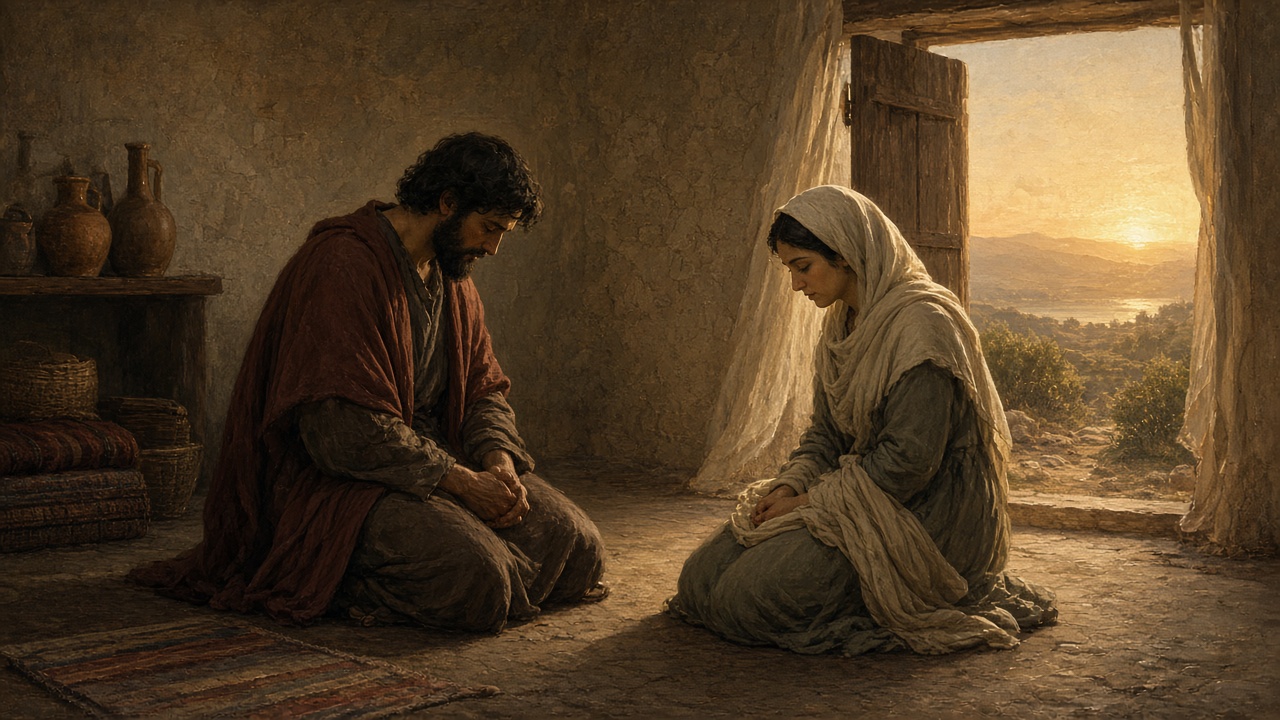
- The chapter opens as a reply to matters the readers had written about. The writer says it is good to abstain from sexual relations, yet, because there is so much sexual immorality, each man should have his own wife and each woman her own husband. He presents this as a concession, not as a command, and says that each person has their own gift from God.Sources: the Bible text itself
- In marriage, the writer says the wife does not have authority over her own body, but the husband does, and likewise the husband does not have authority over his own body, but the wife does. They should not deprive each other except by mutual consent and for a time, so they may devote themselves to prayer, and then come together again, so that Satan will not tempt them through lack of self-control. Easton's Bible Dictionary (1897) presents the name Satan as “adversary” or “accuser,” and notes that he tempted Jesus in the wilderness.Sources: the Bible text itself · Satan
- The writer distinguishes a command he attributes to the Lord—a wife must not separate from her husband, and a husband must not divorce his wife—from his own judgment where he says he, not the Lord, is speaking, including marriages with an unbeliever and questions about virgins. Because of what he calls the present crisis, and because he says the time is short and this world in its present form is passing away, he thinks it good to remain as one is. He adds that to marry is not to sin, though those who marry will face troubles in this life.Sources: the Bible text itself
Notes written with AI assistance from open sources (Theographic Bible Metadata, CC BY-SA 4.0; Easton’s Bible Dictionary, public domain) and reviewed before publishing.
Credits and license for this translation
Η Καινή Διαθήκη
The New Testament in Ancient Greek with critical text notes
Public Domain
Language: Ελληνικά (Greek, Ancient)
Translation by: Maurice A. Robinson
Contributor: Robert Adam Boyd
The Text-Critical Greek New Testament is based upon The New Testament in the Original Greek: Byzantine Textform 2018, compiled and arranged by Maurice A. Robinson and William G. Pierpont.
The following disclaimer is printed in the The New Testament in the Original Greek: Byzantine Textform 2018:
Anyone is permitted to copy and distribute this text or any portion of this text. It may be incorporated in a larger work, and/or quoted from, stored in a database retrieval system, photocopied, reprinted, or otherwise duplicated by anyone without prior notification, permission, compensation to the holder, or any other restrictions. All rights to this text are released to everyone and no one can reduce these rights at any time. Copyright is not claimed nor asserted for either the preface, notes, or the new and revised form of the Greek NT text of this edition, nor for the original form of such as initially released into the public domain by the editors, first as printed textual notes in 1979, continuous-text electronic form 1986–present, and in published editions from 1991, 2005, and 2010.
The permitted use or reproduction of the Greek text or other material contained within this volume (whether by print, electronic media, or other form) does not imply doctrinal or theological agreement by the present editors and publisher with whatever views may be maintained or promulgated by other publishers. For the purpose of assigning responsibility, it is requested that the present editors’ names and the title associated with this text as well as this disclaimer be retained in any subsequent reproduction of this material.
2026-10-02
Source: http://ebible.org/grctcgnt/ · eBible.org