1 Thessalonians 4
Η Καινή Διαθήκη · Tap a verse to see its cross-references.
1⸆ Λοιπὸν ⸋οὖν,⸌ ἀδελφοί, ἐρωτῶμεν ὑμᾶς καὶ παρακαλοῦμεν ἐν κυρίῳ Ἰησοῦ ⸆ 2 καθὼς παρελάβετε παρ᾽ ἡμῶν τὸ πῶς δεῖ ὑμᾶς περιπατεῖν καὶ ἀρέσκειν θεῷ, ⸆ 3 ἵνα περισσεύητε μᾶλλον. 2Οἴδατε γὰρ τίνας παραγγελίας ἐδώκαμεν ὑμῖν διὰ τοῦ κυρίου Ἰησοῦ. 3Τοῦτο γάρ ἐστιν θέλημα τοῦ θεοῦ, ὁ ἁγιασμὸς ὑμῶν, ἀπέχεσθαι ὑμᾶς ἀπὸ τῆς πορνείας· 4εἰδέναι ἕκαστον ὑμῶν τὸ ἑαυτοῦ σκεῦος κτᾶσθαι ἐν ἁγιασμῷ καὶ τιμῇ, 5μὴ ἐν πάθει ἐπιθυμίας, καθάπερ καὶ τὰ ἔθνη τὰ μὴ εἰδότα τὸν θεόν· 6τὸ μὴ ὑπερβαίνειν καὶ πλεονεκτεῖν ἐν τῷ πράγματι τὸν ἀδελφὸν αὐτοῦ· διότι ἔκδικος ⸋ὁ⸌ κύριος περὶ πάντων τούτων, καθὼς καὶ προείπομεν ὑμῖν καὶ διεμαρτυράμεθα. 7Οὐ γὰρ ἐκάλεσεν ἡμᾶς ὁ θεὸς ἐπὶ ἀκαθαρσίᾳ, ἀλλ᾽ ἐν ἁγιασμῷ. 8Τοιγαροῦν ὁ ἀθετῶν οὐκ ἄνθρωπον ἀθετεῖ, ἀλλὰ τὸν θεὸν τὸν ⸋καὶ⸌ ⸂δόντα⸃ τὸ πνεῦμα αὐτοῦ τὸ ἅγιον εἰς ⸂ 2ὑμᾶς.⸃
9Περὶ δὲ τῆς φιλαδελφίας οὐ χρείαν ⸂ἔχετε⸃ γράφειν ὑμῖν· αὐτοὶ γὰρ ⸋ὑμεῖς⸌ θεοδίδακτοί ἐστε εἰς τὸ ἀγαπᾷν ἀλλήλους· 10καὶ γὰρ ποιεῖτε αὐτὸ εἰς πάντας τοὺς ἀδελφοὺς ⸋τοὺς⸌ ἐν ὅλῃ τῇ Μακεδονίᾳ. Παρακαλοῦμεν δὲ ὑμᾶς, ἀδελφοί, περισσεύειν μᾶλλον, 11καὶ φιλοτιμεῖσθαι ἡσυχάζειν, καὶ πράσσειν τὰ ἴδια, καὶ ἐργάζεσθαι ταῖς ⸋ἰδίαις⸌ χερσὶν ὑμῶν, καθὼς ὑμῖν παρηγγείλαμεν· 12ἵνα περιπατῆτε εὐσχημόνως πρὸς τοὺς ἔξω, καὶ μηδενὸς χρείαν ἔχητε.
13Οὐ ⸂θέλομεν⸃ δὲ ὑμᾶς ἀγνοεῖν, ἀδελφοί, περὶ τῶν ⸂ 2κεκοιμημένων,⸃ ἵνα μὴ λυπῆσθε, καθὼς καὶ οἱ λοιποὶ οἱ μὴ ἔχοντες ἐλπίδα. 14Εἰ γὰρ πιστεύομεν ὅτι Ἰησοῦς ἀπέθανεν καὶ ἀνέστη, οὕτως καὶ ὁ θεὸς τοὺς κοιμηθέντας διὰ τοῦ Ἰησοῦ ἄξει σὺν αὐτῷ. 15Τοῦτο γὰρ ὑμῖν λέγομεν ἐν λόγῳ κυρίου, ὅτι ἡμεῖς οἱ ζῶντες οἱ περιλειπόμενοι εἰς τὴν παρουσίαν τοῦ κυρίου, οὐ μὴ φθάσωμεν τοὺς κοιμηθέντας. 16Ὅτι αὐτὸς ὁ κύριος ἐν κελεύσματι, ἐν φωνῇ ἀρχαγγέλου, καὶ ἐν σάλπιγγι θεοῦ, καταβήσεται ἀπ᾽ οὐρανοῦ, καὶ οἱ νεκροὶ ἐν χριστῷ ἀναστήσονται πρῶτον· 17ἔπειτα ἡμεῖς οἱ ζῶντες, οἱ περιλειπόμενοι, ἅμα σὺν αὐτοῖς ἁρπαγησόμεθα ἐν νεφέλαις εἰς ἀπάντησιν τοῦ κυρίου εἰς ἀέρα· καὶ οὕτως πάντοτε σὺν κυρίῳ ἐσόμεθα. 18Ὥστε παρακαλεῖτε ἀλλήλους ἐν τοῖς λόγοις τούτοις.
Did you know?
Holiness, Love, and Hope for the Dead
- This chapter notes that its readers were already showing love to all the brothers throughout Macedonia. In New Testament times Macedonia was a Roman province lying north of Greece, governed by a propraetor with the title of proconsul. Paul was summoned by a vision of the "man of Macedonia" to preach the gospel there.Sources: the Bible text itself · Macedonia
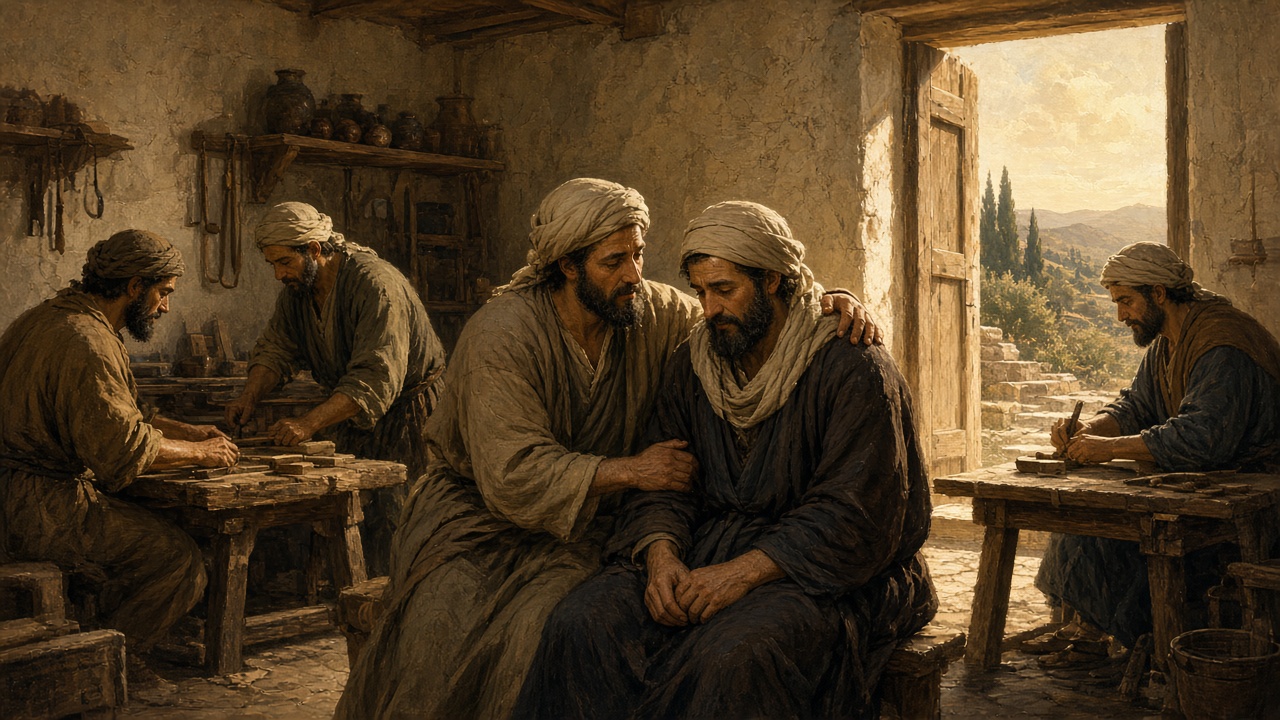
- The chapter speaks of the dead as people who sleep or have fallen asleep, and it asks the readers not to grieve like the rest, who have no hope. Because Jesus died and rose again, it says, God will bring with Jesus those who have fallen asleep in him; the dead in Christ will rise first, and then those still alive will be caught up with them in the clouds to meet the Lord in the air.Sources: the Bible text itself
- The readers are urged to aspire to a quiet life, to attend to their own matters, and to work with their own hands, as they had already been instructed. The chapter presents this as the way to behave properly toward outsiders and to avoid being dependent on anyone.Sources: the Bible text itself
Notes written with AI assistance from open sources (Theographic Bible Metadata, CC BY-SA 4.0; Easton’s Bible Dictionary, public domain) and reviewed before publishing.
Places in this chapter
- Macedonia · 41.600, 22.540 · verse 10
Only places identified with high confidence are shown (90% or more according to the scholarly sources compiled by OpenBible). Period map: DARE (Digital Atlas of the Roman Empire), CC BY 4.0; modern map: © OpenStreetMap contributors; places: OpenBible.info (CC BY 4.0).
Credits and license for this translation
Η Καινή Διαθήκη
Solid Rock Greek New Testament, Scholar's Edition
Public Domain
Language: Ελληνικά (Greek, Ancient)
Translation by: Robinson and Pierpont
Contributor: Joey McCollum and Stephen Brown
2026-10-02
Source: http://ebible.org/grcsr/ · eBible.org