Psalms 125
Η Παλαιά Διαθήκη κατά τη μετάφραση των εβδομήκοντα (Ο') | SEPTUAGINTA · Tap a verse to see its cross-references.
1ᾨδὴ τῶν ἀναβαθμῶν.
ΕΝ Τ† ἐπιστρέψαι Κύριον τὴν αἰχμαλωσίαν Σιὼν ἐγενήθημεν ὡσεὶ παρακεκλημένοι.
2τότε ἐπλήσθη χαρᾶς τὸ στόμα ἡμῶν καὶ ἡ γλῶσσα ἡμῶν ἀγαλλιάσεως. τότε ἐροῦσιν ἐν τοῖς ἔθνεσιν· ἐμεγάλυνε Κύριος τοῦ ποιῆσαι μετ᾿ αὐτῶν.
3ἐμεγάλυνε Κύριος τοῦ ποιῆσαι μεθ᾿ ἡμῶν, ἐγενήθημεν εὐφραινόμενοι.
4ἐπίστρεψον, Κύριε, τὴν αἰχμαλωσίαν ἡμῶν ὡς χειμάρρους ἐν τῷ νότῳ.
5οἱ σπείροντες ἐν δάκρυσιν ἐν ἀγαλλιάσει θεριοῦσι.
6πορευόμενοι ἐπορεύοντο καὶ ἔκλαιον βάλλοντες τὰ σπέρματα αὐτῶν· ἐρχόμενοι δὲ ἥξουσιν ἐν ἀγαλλιάσει αἴροντες τὰ δράγματα αὐτῶν.
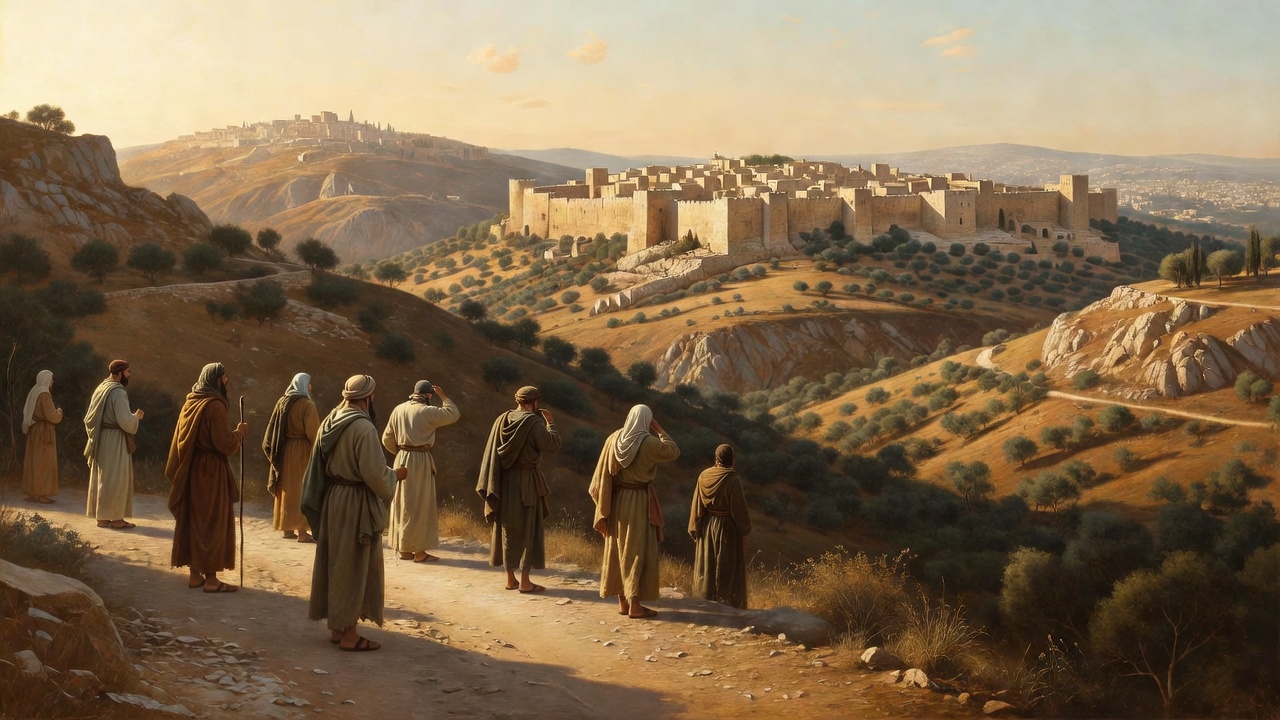
Did you know?
Unshakable Security in Jerusalem
- Psalm 125 is one of the Songs of Ascents, comparing those who trust in God to Mount Zion. Mount Zion was a naturally fortified hill in Jerusalem, surrounded by deep valleys on nearly all sides, making it a fitting symbol of permanence and stability.Sources: the Bible text itself · Mount Zion
- The psalmist draws on local geography by noting how mountains encircle Jerusalem. Built as a mountain fortress among neighboring heights, the city provided an evocative physical illustration of divine protection surrounding the community.Sources: the Bible text itself · Jerusalem
- The psalm concludes with a prayer for peace upon Israel, which resonates with the traditional interpretation of Jerusalem's Hebrew name as a foundation or possession of peace.Sources: the Bible text itself · Jerusalem
Notes written with AI assistance from open sources (Theographic Bible Metadata, CC BY-SA 4.0; Easton’s Bible Dictionary, public domain) and reviewed before publishing.
Places in this chapter
Only places identified with high confidence are shown (90% or more according to the scholarly sources compiled by OpenBible). Period map: DARE (Digital Atlas of the Roman Empire), CC BY 4.0; modern map: © OpenStreetMap contributors; places: OpenBible.info (CC BY 4.0).
Credits and license for this translation
Η Παλαιά Διαθήκη κατά τη μετάφραση των εβδομήκοντα (Ο') | SEPTUAGINTA
The Old Testament in Ancient Greek, Septuagint translation
Public Domain
℗ Orthodox Media Network
Language: Ελληνικά (Greek, Ancient)
Dialect: Koine
ORTHODOX MEDIA NETWORK-ΟΡΘΟΔΟΞΟ ΔΙΚΤΥΟ ΕΝΗΜΕΡΩΣΗΣ
A Voice from the Heart of Mount Athos to the World
Orthodox Media Network ( https://vivlos.link/DEqNY ) was founded on Mount Athos – the only monastic republic in the world – with main mission to promote the Holy Scriptures and preserve the spiritual and cultural heritage of Orthodox monasticism, using mainly the internet.
Since 2010, its founder and General Secretary, Apostolos Vavylis, has become the first person internationally to record the entire Bible in both the original ancient Greek text and its modern Greek translation. This work – unprecedented in Orthodox tradition – has reached and inspired millions:
* Over 15 million people (estimated) have listened to at least one chapter of the recorded Bible.
* Hundreds of independent accounts across nearly every digital platform, share these recordings in countless forms.
We have never claimed copyright or demanded takedowns of these reproductions — because our goal is not profit, but the free and faithful dissemination of the Word of God and the blessing it brings to the world.
We welcome anyone that would like to publicly share our work with the only condition to publish the present text as a minimum respect to our mission.
* Our vision:
To place a Bible in every Greek-speaking home, wherever it may be on earth.
There are an estimated 17 million Greeks living in nearly 100 countries.
* If you wish to support or partner with us, please contact:
* [email protected]
The Old Testament (Septuaginta)
We are a voice of Orthodoxy, a witness of the Word, and a blessing to the Nations.
2026-02-13
Source: http://ebible.org/grclxx/ · eBible.org