Numbers 1
Η Παλαιά Διαθήκη κατά τη μετάφραση των εβδομήκοντα (Ο') | SEPTUAGINTA · Tap a verse to see its cross-references.
About this book
About Numbers
- Numbers is the fourth book of the Pentateuch. In Hebrew it is called be-midbar, “in the wilderness”; the Greek Septuagint called it Numbers, the name still usual, because it records a census in the wilderness of Sinai and a later census on the plain of Moab.Sources: Easton: Numbers, Book of
- Easton's Bible Dictionary (1897) presents Numbers, like the other books of the Pentateuch, as written by Moses. The history it contains runs from the second month of the second year after the Exodus to the beginning of the eleventh month of the fortieth year, about thirty-eight years and ten months.Sources: Easton: Numbers, Book of
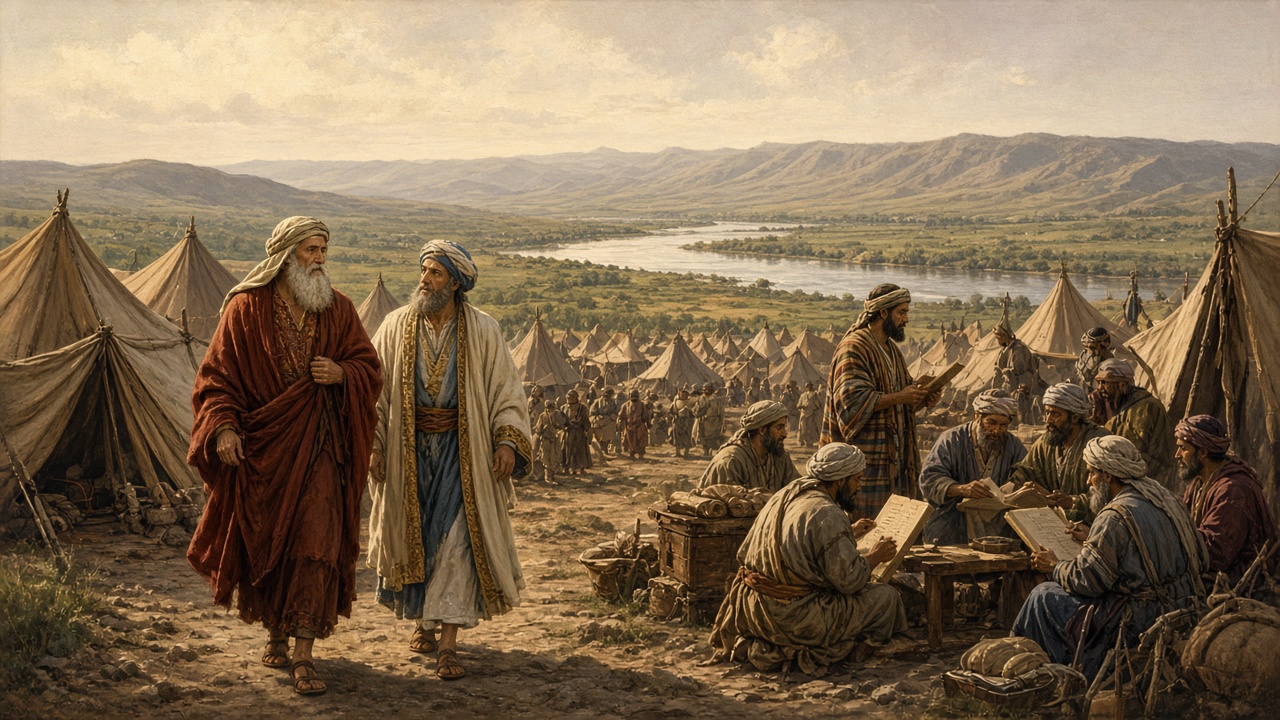
- The narrative begins at Sinai, the mountain district Israel reached in the third month after the Exodus and where they camped for about a year, and follows their route and encampments through the wilderness. It ends on the plains of Moab, east of the Jordan and the Dead Sea, opposite Jericho, their last camp before entering Canaan, the country west of the Jordan. Easton describes those years as a time of wandering in which that generation died in the wilderness, and notes that the people were fewer then than when they left Egypt.Sources: Easton: Numbers, Book of · Sinai · Moab · Canaan
- Easton divides the book into three parts: the census at Sinai and preparations to resume the march, including the Nazirite vow (1–10:10); the journey from Sinai to Moab, the sending of the spies and the report they brought back, and the people’s murmurings, eight times, at the hardships of the way (10:11–21:20); and the events on the plain of Moab before the crossing of the Jordan (21:21–36).Sources: Easton: Numbers, Book of
- While Israel was camped on the plains of Moab, Balak, son of Zippor and king of Moab, fearing them, sent to Pethor in Mesopotamia for Balaam, son of Beor, to curse them; the narrative says Balaam was unable to do so. Numbers 21:14 also cites “the book of the wars of the Lord,” a work that Easton says is uncertain, perhaps a lost writing of Israel or an Amorite record of the victories of their king Sihon.Sources: Easton: Numbers, Book of · Balaam · Balak
Notes written with AI assistance from open sources (Theographic Bible Metadata, CC BY-SA 4.0; Easton’s Bible Dictionary, public domain) and reviewed before publishing.
1ΚΑΙ ἐλάλησε Κύριος πρὸς Μωυσῆν ἐν τῇ ἐρήμῳ τῇ Σινά, ἐν τῇ σκηνῇ τοῦ μαρτυρίου, ἐν μιᾷ τοῦ μηνὸς τοῦ δευτέρου, ἔτους δευτέρου ἐξελθόντων αὐτῶν ἐκ γῆς Αἰγύπτου λέγων· 2λάβετε ἀρχὴν πάσης συναγωγῆς Ἰσραὴλ κατὰ συγγενείας, κατ' οἴκους πατριῶν αὐτῶν, κατ' ἀριθμὸν ἐξ ὀνόματος αὐτῶν, κατὰ κεφαλὴν αὐτῶν. 3πᾶς ἄρσην ἀπὸ εἰκοσαετοῦς καὶ ἐπάνω, πᾶς ὁ ἐκπορευόμενος ἐν δυνάμει Ἰσραήλ, ἐπισκέψασθε αὐτοὺς σὺν δυνάμει αὐτῶν, σὺ καὶ Ἀαρὼν ἐπισκέψασθε αὐτούς. 4καὶ μεθ' ὑμῶν ἔσονται ἕκαστος κατὰ φυλὴν ἑκάστου ἀρχόντων, κατ' οἴκους πατριῶν ἔσονται. 5καὶ ταῦτα τὰ ὀνόματα τῶν ἀνδρῶν, οἵτινες παραστήσονται μεθ' ὑμῶν· τῶν Ρουβήν, Ἐλισοὺρ υἱὸς Σεδιούρ· 6τῶν Συμεών, Σαλαμιὴλ υἱὸς Σουρισαδαί· 7τῶν Ἰούδα, Ναασσὼν υἱὸς Ἀμιναδάβ· 8τῶν Ἰσσάχαρ, Ναθαναὴλ υἱὸς Σωγάρ· 9τῶν Ζαβουλών, Ἐλιὰβ υἱὸς Χαιλών· 10τῶν υἱῶν Ἰωσήφ, τῶν Ἐφραίμ, Ἐλισαμὰ υἱὸς Ἐμιούδ, τῶν Μανασσῆ, Γαμαλιὴλ υἱὸς Φαδασούρ· 11τῶν Βενιαμίν, Ἀβιδὰν υἱὸς Γαδεωνί· 12τῶν Δάν, Ἀχιέζερ υἱὸς Ἀμισαδαΐ· 13τῶν Ἀσήρ, Φαγαϊὴλ υἱὸς Ἐχράν· 14τῶν Γάδ, Ἐλισὰφ υἱὸς Ραγουήλ· 15τῶν Νεφθαλί, Ἀχιρὲ υἱὸς Αἰνάν. 16οὗτοι ἐπίκλητοι τῆς συναγωγῆς, ἄρχοντες τῶν φυλῶν κατὰ πατριὰς αὐτῶν, χιλίαρχοι Ἰσραήλ εἰσι. 17καὶ ἔλαβε Μωυσῆς καὶ Ἀαρὼν τοὺς ἄνδρας τούτους τοὺς ἀνακληθέντας ἐξ ὀνόματος 18καὶ πᾶσαν τὴν συναγωγὴν συνήγαγον ἐν μιιᾷ τοῦ μηνὸς τοῦ δευτέρου ἔτους καὶ ἐπηξονοῦσαν κατὰ γενέσεις αὐτῶν, κατὰ πατριὰς αὐτῶν, κατὰ ἀριθμὸν ὀνομάτων αὐτῶν, ἀπὸ εἰκοσαετοῦς καὶ ἐπάνω, πᾶν ἀρσενικὸν κατὰ κεφαλὴν αὐτῶν, 19ὃν τρόπον συνέταξε Κύριος τῷ Μωυσῇ· καὶ ἐπεσκέπησαν ἐν τῇ ἐρήμῳ τοῦ Σινά.
20Καὶ ἐγένοντο οἱ υἱοὶ Ρουβὴν πρωτοτόκου Ἰσραὴλ κατὰ συγγενείας αὐτῶν, κατὰ δήμους αὐτῶν, κατ' οἴκους πατριῶν αὐτῶν, κατὰ ἀριθμὸν ὀνομάτων αὐτῶν, κατὰ κεφαλὴν αὐτῶν, πάντα ἀρσενικὰ ἀπὸ εἰκοσαετοῦς καὶ ἐπάνω, πᾶς ὁ ἐκπορευόμενος ἐν τῇ δυνάμει, 21ἡ ἐπίσκεψις αὐτῶν ἐκ τῆς φυλῆς Ρουβὴν ἓξ καὶ τεσσαράκοντα χιλιάδες καὶ πεντακόσιοι. 22τοῖς υἱοῖς Συμεὼν κατὰ συγγενείας αὐτῶν, κατὰ δήμους αὐτῶν, κατ' οἴκους πατριῶν αὐτῶν, κατὰ ἀριθμὸν ὀνομάτων αὐτῶν, κατὰ κεφαλὴν αὐτῶν, πάντα ἀρσενικὰ ἀπὸ εἰκοσαετοῦς καὶ ἐπάνω, πᾶς ὁ ἐκπορευόμενος ἐν τῇ δυνάμει, 23ἡ ἐπίσκεψις αὐτῶν ἐκ τῆς φυλῆς Συμεὼν ἐννέα καὶ πεντήκοντα χιλιάδες καὶ τριακόσιοι. 24τοῖς υἱοῖς Ἰούδα κατὰ συγγενείας αὐτῶν, κατὰ δήμους αὐτῶν, κατ' οἴκους πατριῶν αὐτῶν, κατὰ ἀριθμὸν ὀνομάτων αὐτῶν, κατὰ κεφαλὴν αὐτῶν, πάντα ἀρσενικὰ ἀπὸ εἰκοσαετοῦς καὶ ἐπάνω, πᾶς ὁ ἐκπορευόμενος ἐν τῇ δυνάμει, 25ἡ ἐπίσκεψις αὐτῶν ἐκ τῆς φυλῆς Ἰούδα τέσσαρες καὶ ἑβδομήκοντα χιλιάδες καὶ ἑξακόσιοι. 26τοῖς υἱοῖς Ἰσσάχαρ κατὰ συγγενείας αὐτῶν, κατὰ δήμους αὐτῶν, κατ' οἴκους πατριῶν αὐτῶν, κατὰ ἀριθμὸν ὀνομάτων αὐτῶν, κατὰ κεφαλὴν αὐτῶν, πάντα ἀρσενικὰ ἀπὸ εἰκοσαετοῦς καὶ ἐπάνω, πᾶς ὁ ἐκπορευόμενος ἐν τῇ δυνάμει, 27ἡ ἐπίσκεψις αὐτῶν ἐκ τῆς φυλῆς Ἰσσάχαρ τέσσαρες καὶ πεντήκοντα χιλιάδες καὶ τετρακόσιοι. 28τοῖς υἱοῖς Ζαβουλὼν κατὰ συγγενείας αὐτῶν, κατὰ δήμους αὐτῶν, κατ' οἴκους πατριῶν αὐτῶν, κατ' ἀριθμὸν ὀνομάτων αὐτῶν, κατὰ κεφαλὴν αὐτῶν, πάντα ἀρσενικὰ ἀπὸ εἰκοσαετοῦς καὶ ἐπάνω, πᾶς ὁ ἐκπορευόμενος ἐν τῇ δυνάμει, 29ἡ ἐπίσκεψις αὐτῶν ἐκ τῆς φυλῆς Ζαβουλὼν ἑπτὰ καὶ πεντήκοντα χιλιάδες καὶ τετρακόσιοι. 30τοῖς υἱοῖς Ἰωσὴφ υἱοῖς Ἐφραὶμ κατὰ συγγενείας αὐτῶν, κατὰ δήμους αὐτῶν, κατ' οἴκους πατριῶν αὐτῶν, κατὰ ἀριθμὸν ὀνομάτων αὐτῶν, κατὰ κεφαλὴν αὐτῶν, πάντα ἀρσενικὰ ἀπὸ εἰκοσαετοῦς καὶ ἐπάνω, πᾶς ὁ ἐκπορευόμενος ἐν τῇ δυνάμει, 31ἡ ἐπίσκεψις αὐτῶν ἐκ τῆς φυλῆς Ἐφραὶμ τεσσαράκοντα χιλιάδες καὶ πεντακόσιοι. 32τοῖς υἱοῖς Μανασσῆ κατὰ συγγενείας αὐτῶν, κατὰ δήμους αὐτῶν, κατ' οἴκους πατριῶν αὐτῶν, κατὰ ἀριθμὸν ὀνομάτων αὐτῶν, κατὰ κεφαλὴν αὐτῶν, πάντα ἀρσενικὰ ἀπὸ εἰκοσαετοῦς καὶ ἐπάνω, πᾶς ὁ ἐκπορευόμενος ἐν τῇ δυνάμει, 33ἡ ἐπίσκεψις αὐτῶν ἐκ τῆς φυλῆς Μανασσῆ δύο καὶ τριάκοντα χιλιάδες καὶ διακόσιοι. 34τοῖς υἱοῖς Βενιαμὶν κατὰ συγγενείας αὐτῶν, κατὰ δήμους αὐτῶν, κατ' οἴκους πατριῶν αὐτῶν, κατὰ ἀριθμὸν ὀνομάτων αὐτῶν, κατὰ κεφαλὴν αὐτῶν, πάντα ἀρσενικὰ ἀπὸ εἰκοσαετοῦς καὶ ἐπάνω, πᾶς ὁ ἐκπορευόμενος ἐν τῇ δυνάμει, 35ἡ ἐπίσκεψις αὐτῶν ἐκ τῆς φυλῆς Βενιαμὶν πέντε καὶ τριάκοντα χιλιάδες καὶ τετρακόσιοι. 36τοῖς υἱοῖς Γὰδ κατὰ συγγενείας αὐτῶν, κατὰ δήμους αὐτῶν, κατ' οἴκους πατριῶν αὐτῶν, κατὰ ἀριθμὸν ὀνομάτων αὐτῶν, κατὰ κεφαλὴν αὐτῶν, πάντα ἀρσενικὰ ἀπὸ εἰκοσαετοῦς καὶ ἐπάνω, πᾶς ὁ ἐκπορευόμενος ἐν τῇ δυνάμει, 37ἡ ἐπίσκεψις αὐτῶν ἐκ τῆς φυλῆς Γὰδ πέντε καὶ τεσσαράκοντα χιλιάδες καὶ ἑξακόσιοι καὶ πεντήκοντα. 38τοῖς υἱοῖς Δὰν κατὰ συγγενείας αὐτῶν, κατὰ δήμους αὐτῶν, κατ' οἴκους πατριῶν αὐτῶν, κατὰ ἀριθμὸν ὀνομάτων αὐτῶν, κατὰ κεφαλὴν αὐτῶν, πάντα ἀρσενικὰ ἀπὸ εἰκοσαετοῦς καὶ ἐπάνω, πᾶς ὁ ἐκπορευόμενος ἐν τῇ δυνάμει, 39ἡ ἐπίσκεψις αὐτῶν ἐκ τῆς φυλῆς Δὰν δύο καὶ ἑξήκοντα χιλιάδες καὶ ἑπτακόσιοι. 40τοῖς υἱοῖς Ἀσὴρ κατὰ συγγενείας αὐτῶν, κατὰ δήμους αὐτῶν, κατ' οἴκους πατριῶν αὐτῶν, κατὰ ἀριθμὸν ὀνομάτων αὐτῶν, κατὰ κεφαλὴν αὐτῶν, πάντα ἀρσενικὰ ἀπὸ εἰκοσαετοῦς καὶ ἐπάνω, πᾶς ὁ ἐκπορευόμενος ἐν τῇ δυνάμει, 41ἡ ἐπίσκεψις αὐτῶν ἐκ τῆς φυλῆς Ἀσὴρ μία καὶ τεσσαράκοντα χιλιάδες καὶ πεντακόσιοι. 42τοῖς υἱοῖς Νεφθαλὶ κατὰ συγγενείας αὐτῶν, κατὰ δήμους αὐτῶν, κατ' οἴκους πατριῶν αὐτῶν, κατὰ ἀριθμὸν ὀνομάτων αὐτῶν, κατὰ κεφαλὴν αὐτῶν, πάντα ἀρσενικὰ ἀπὸ εἰκοσαετοῦς καὶ ἐπάνω, πᾶς ὁ ἐκπορευόμενος ἐν τῇ δυνάμει, 43ἡ ἐπίσκεψις αὐτῶν ἐκ τῆς φυλῆς Νεφθαλὶ τρεῖς καὶ πεντήκοντα χιλιάδες καὶ τετρακόσιοι. 44αὕτη ἡ ἐπίσκεψις, ἣν ἐπεσκέψαντο Μωυσῆς καὶ Ἀαρὼν καὶ οἱ ἄρχοντες Ἰσραήλ, δώδεκα ἄνδρες· ἀνὴρ εἷς κατὰ φυλὴν μίαν, κατὰ φυλὴν οἴκων πατριᾶς ἦσαν. 45καὶ ἐγένετο πᾶσα ἡ ἐπίσκεψις υἱῶν Ἰσραὴλ σὺν δυνάμει αὐτῶν ἀπὸ εἰκοσαετοῦς καὶ ἐπάνω, πᾶς ὁ ἐκπορευόμενος παρατάξασθαι ἐν Ἰσραήλ, 46ἑξακόσιαι χιλιάδες καὶ τρισχίλιοι καὶ πεντακόσιοι καὶ πεντήκοντα.
47Οἱ δὲ Λευῖται ἐκ τῆς φυλῆς πατριᾶς αὐτῶν οὐκ ἐπεσκέπησαν ἐν τοῖς υἱοῖς Ἰσραήλ. 48καὶ ἐλάλησε Κύριος πρὸς Μωυσῆν λέγων· 49ὅρα, τὴν φυλὴν Λευὶ οὐ συνεπισκέψῃ, καὶ τὸν ἀριθμὸν αὐτῶν οὐ λήψῃ ἐν μέσῳ υἱῶν Ἰσραήλ. 50καὶ σὺ ἐπίστησον τοὺς Λευίτας ἐπὶ τὴν σκηνὴν τοῦ μαρτυρίου καὶ ἐπὶ πάντα τὰ σκεύη αὐτῆς καὶ ἐπὶ πάντα ὅσα ἐστὶν ἐν αὐτῇ· αὐτοὶ ἀροῦσι τὴν σκηνὴν καὶ πάντα τὰ σκεύη αὐτῆς, καὶ αὐτοὶ λειτουργήσουσιν ἐν αὐτῇ καὶ κύκλῳ τῆς σκηνῆς παρεμβαλοῦσι. 51καὶ ἐν τῷ ἐξαίρειν τὴν σκηνήν, καθελοῦσιν αὐτὴν οἱ Λευῖται, καὶ ἐν τῷ παρεμβάλλειν τὴν σκηνήν, ἀναστήσουσι· καὶ ὁ ἀλλογενὴς ὁ προσπορευόμενος ἀποθανέτω. 52καὶ παρεμβαλοῦσιν οἱ υἱοὶ Ἰσραήλ, ἀνὴρ ἐν τῇ ἑαυτοῦ τάξει καὶ ἀνὴρ κατὰ τὴν ἑαυτοῦ ἡγεμονίαν σὺν δυνάμει αὐτῶν. 53οἱ δὲ Λευῖται παρεμβαλλέτωσαν ἐναντίοι κύκλῳ τῆς σκηνῆς τοῦ μαρτυρίου, καὶ οὐκ ἔσται ἁμάρτημα ἐν υἱοῖς Ἰσραήλ· καὶ φυλάξουσιν οἱ Λευῖται αὐτοὶ τὴν φυλακὴν τῆς σκηνῆς τοῦ μαρτυρίου. 54καὶ ἐποίησαν οἱ υἱοὶ Ἰσραὴλ κατὰ πάντα, ἃ ἐνετείλατο Κύριος τῷ Μωυσῇ καὶ Ἀραρών, οὕτως ἐποίησαν.
Did you know?
The Census in the Wilderness of Sinai
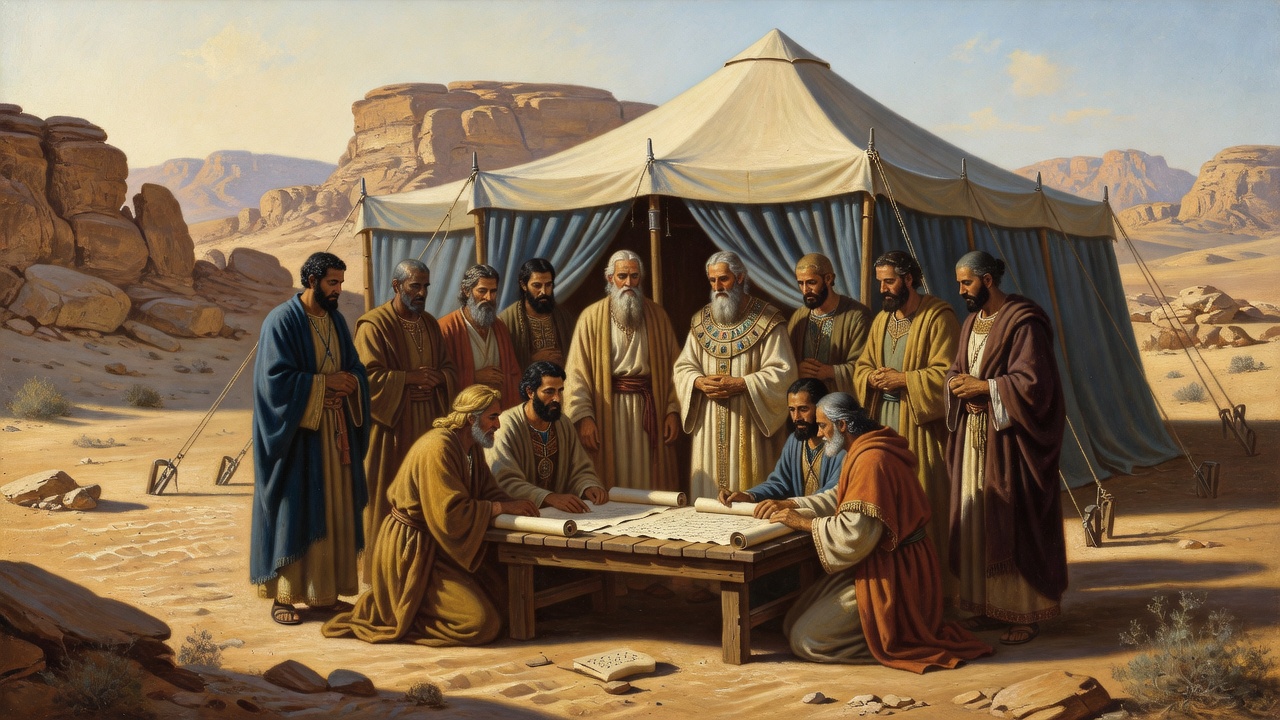
- The census was ordered in the Wilderness of Sinai on the first day of the second month in the second year after the Israelites departed Egypt. It counted every male aged twenty or older who was able to serve in the army, arriving at a total of 603,550 fighting men.Sources: the Bible text itself · Sinai
- Moses and Aaron conducted the registration alongside twelve appointed tribal leaders. Joseph was represented as two distinct tribal divisions named after his sons, Ephraim and Manasseh.Sources: the Bible text itself · Ephraim · Manasseh (son of Joseph)
- The tribe of Levi was entirely exempted from the military count. Instead, the Levites were assigned exclusively to care for, transport, assemble, and guard the tabernacle of the Testimony and its furnishings.Sources: the Bible text itself
Notes written with AI assistance from open sources (Theographic Bible Metadata, CC BY-SA 4.0; Easton’s Bible Dictionary, public domain) and reviewed before publishing.
Places in this chapter
- Egypt · 30.129, 31.308 · verse 1
- Wilderness of Sinai · Today: about 50 km around Jebel Musa · 28.540, 33.973 · verses 1, 19
Only places identified with high confidence are shown (90% or more according to the scholarly sources compiled by OpenBible). Period map: DARE (Digital Atlas of the Roman Empire), CC BY 4.0; modern map: © OpenStreetMap contributors; places: OpenBible.info (CC BY 4.0).
Credits and license for this translation
Η Παλαιά Διαθήκη κατά τη μετάφραση των εβδομήκοντα (Ο') | SEPTUAGINTA
The Old Testament in Ancient Greek, Septuagint translation
Public Domain
℗ Orthodox Media Network
Language: Ελληνικά (Greek, Ancient)
Dialect: Koine
ORTHODOX MEDIA NETWORK-ΟΡΘΟΔΟΞΟ ΔΙΚΤΥΟ ΕΝΗΜΕΡΩΣΗΣ
A Voice from the Heart of Mount Athos to the World
Orthodox Media Network ( https://vivlos.link/DEqNY ) was founded on Mount Athos – the only monastic republic in the world – with main mission to promote the Holy Scriptures and preserve the spiritual and cultural heritage of Orthodox monasticism, using mainly the internet.
Since 2010, its founder and General Secretary, Apostolos Vavylis, has become the first person internationally to record the entire Bible in both the original ancient Greek text and its modern Greek translation. This work – unprecedented in Orthodox tradition – has reached and inspired millions:
* Over 15 million people (estimated) have listened to at least one chapter of the recorded Bible.
* Hundreds of independent accounts across nearly every digital platform, share these recordings in countless forms.
We have never claimed copyright or demanded takedowns of these reproductions — because our goal is not profit, but the free and faithful dissemination of the Word of God and the blessing it brings to the world.
We welcome anyone that would like to publicly share our work with the only condition to publish the present text as a minimum respect to our mission.
* Our vision:
To place a Bible in every Greek-speaking home, wherever it may be on earth.
There are an estimated 17 million Greeks living in nearly 100 countries.
* If you wish to support or partner with us, please contact:
* [email protected]
The Old Testament (Septuaginta)
We are a voice of Orthodoxy, a witness of the Word, and a blessing to the Nations.
2026-02-13
Source: http://ebible.org/grclxx/ · eBible.org