Job 33
Η Παλαιά Διαθήκη κατά τη μετάφραση των εβδομήκοντα (Ο') | SEPTUAGINTA · Tap a verse to see its cross-references.
1ΟΥ μὴν δὲ ἀλλὰ ἄκουσον, Ἰώβ, τὰ ρήματά μου καὶ λαλιὰν ἐνωτίζου μου· 2ἰδοὺ γὰρ ἤνοιξα τὸ στόμα μου, καὶ ἐλάλησεν ἡ γλῶσσά μου. 3καθαρά μου ἡ καρδία ρήμασι, σύνεσις δὲ χειλέων μου καθαρὰ νοήσει. 4πνεῦμα θεῖον τὸ ποιῆσάν με, πνοὴ δὲ Παντοκράτορος ἡ διδάσκουσά με. 5ἐὰν δύνῃ, δός μοι ἀπόκρισιν πρὸς ταῦτα· ὑπόμεινον, στῆθι κατ᾿ ἐμὲ καὶ ἐγὼ κατὰ σέ. 6ἐκ πηλοῦ διήρτισαι σὺ ὡς καὶ ἐγώ, ἐκ τοῦ αὐτοῦ διηρτίσμεθα. 7οὐχ ὁ φόβος μού σε στροβήσει, οὐδὲ ἡ χείρ μου βαρεῖα ἔσται ἐπὶ σοί. 8πλὴν εἶπας ἐν ὠσί μου, φωνὴν ρημάτων σου ἀκήκοα, 9διότι λέγεις· καθαρός εἰμι οὐχ ἁμαρτών, ἄμεμπτός εἰμι, οὐ γὰρ ἠνόμησα. 10μέμψιν δὲ κατ᾿ ἐμοῦ εὗρεν, ἥγηται δέ με ὥσπερ ὑπεναντίον· 11ἔθετο δὲ ἐν ξύλῳ τὸν πόδα μου, ἐφύλαξε δέ μου πάσας τὰς ὁδούς· 12πῶς γὰρ λέγεις· δίκαιός εἰμι, καὶ οὐκ ἐπακήκοέ μου; αἰώνιος γάρ ἐστιν ὁ ἐπάνω βροτῶν. 13λέγεις δέ· διατί τῆς δίκης μου οὐκ ἐπακήκοέ μου πᾶν ρῆμα; 14ἐν γὰρ τῷ ἅπαξ λαλῆσαι ὁ Κύριος, ἐν δὲ τῷ δευτέρῳ 15ἐνύπνιον, ἢ ἐν μελέτῃ νυκτερινῇ, ὡς ὅταν ἐπιπίπτῃ δεινὸς φόβος ἐπ᾿ ἀνθρώπους ἐπὶ νυσταγμάτων ἐπὶ κοίτης. 16τότε ἀνακαλύπτει νοῦν ἀνθρώπων, ἐν εἴδεσι φόβου τοιούτοις αὐτοὺς ἐξεφόβησεν 17ἀποστρέψαι ἄνθρωπον ἀπὸ ἀδικίας, τὸ δὲ σῶμα αὐτοῦ ἀπὸ πτώματος ἐρρύσατο. 18ἐφείσατο δὲ τῆς ψυχῆς αὐτοῦ ἀπὸ θανάτου καὶ μὴ πεσεῖν αὐτὸν ἐν πολέμῳ. 19πάλιν δὲ ἤλεγξεν αὐτὸν ἐπὶ μαλακίᾳ ἐπὶ κοίτης καὶ πλῆθος ὀστῶν αὐτοῦ ἐνάρκησε· 20πᾶν δὲ βρωτὸν σίτου οὐ μὴ δύνηται προσδέξασθαι καὶ ἡ ψυχὴ αὐτοῦ βρῶσιν ἐπιθυμήσει, 21ἕως ἂν σαπῶσιν αὐτοῦ αἱ σάρκες καὶ ἀποδείξῃ τὰ ὀστᾶ αὐτοῦ κενά· 22ἤγγισε δὲ εἰς θάνατον ἡ ψυχὴ αὐτοῦ, ἡ δὲ ζωὴ αὐτοῦ ἐν ᾅδη. 23ἐὰν ὦσι χίλιοι ἄγγελοι θανατηφόροι, εἷς αὐτῶν οὐ μὴ τρώσῃ αὐτόν· ἐὰν νοήσῃ τῇ καρδίᾳ ἐπιστραφῆναι πρὸς Κύριον, ἀναγγείλῃ δὲ ἀνθρώπῳ τὴν ἑαυτοῦ μέμψιν, τὴν δὲ ἄνοιαν αὐτοῦ δείξῃ, 24ἀνθέξεται τοῦ μὴ πεσεῖν εἰς θάνατον, ἀνανεώσει δὲ αὐτοῦ τὸ σῶμα ὥσπερ ἀλοιφὴν ἐπὶ τοίχου, τὰ δὲ ὀστᾶ αὐτοῦ ἐμπλήσει μυελοῦ· 25ἁπαλυνεῖ δὲ αὐτοῦ τὰς σάρκας ὥσπερ νηπίου, ἀποκαταστήσει δὲ αὐτὸν ἀνδρωθέντα ἐν ἀνθρώποις. 26εὐξάμενος δὲ πρὸς Κύριον, καὶ δεκτὰ αὐτῷ ἔσται, εἰσελεύσεται προσώπῳ ἱλαρῷ σὺν ἐξηγορίᾳ· ἀποδώσει δὲ ἀνθρώποις δικαιοσύνην. 27εἶτα τότε ἀπομέμψεται ἄνθρωπος αὐτὸς ἑαυτῷ λέγον· οἷα συνετέλουν καὶ οὐκ ἄξια ἤτασέ με ὧν ἥμαρτον. 28σῶσον ψυχήν μου τοῦ μὴ ἐλθεῖν εἰς διαφθοράν, καὶ ἡ ζωή μου φῶς ὄψεται. 29ἰδοὺ ταῦτα πάντα ἐργᾶται ὁ ἰσχυρὸς ὁδοὺς τρεῖς μετὰ ἀνδρός. 30καὶ ἐρρύσατο τὴν ψυχήν μου ἐκ θανάτου, ἵνα ἡ ζωή μου ἐν φωτὶ αἰνῇ αὐτόν. 31ἐνωτίζου, Ἰώβ, καὶ ἄκουέ μου· κώφευσον, καὶ ἐγώ εἰμι λαλήσω. 32εἰ εἰσί σοι λόγοι, ἀποκρίθητί μοι· λάλησον, θέλω γὰρ δικαιωθῆναί σε. 33εἰ μή, σὺ ἄκουσόν μου· κώφευσον καὶ διδάξω σε σοφίαν.
Did you know?
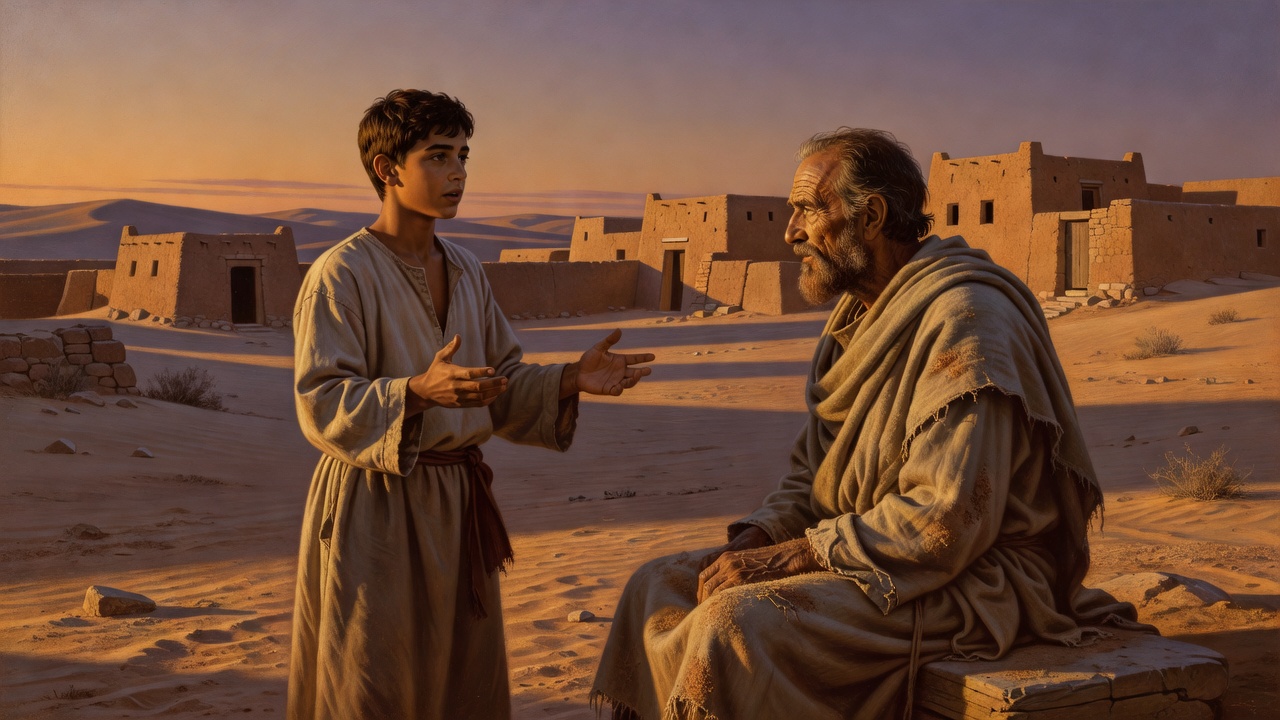
Elihu Speaks on God's Discipline and Mediation
- Elihu approaches Job not with overwhelming authority, but as a fellow mortal created by the breath of God and shaped from clay. He assures Job that he will not use intimidation or physical force to overpower him in their debate.Sources: the Bible text itself
- In response to Job's complaint that God remains silent, Elihu argues that God speaks repeatedly through nocturnal dreams, visions, and physical suffering. According to Elihu, these painful experiences serve a disciplinary purpose to turn people from pride and preserve them from the Pit.Sources: the Bible text itself
- Elihu describes the possibility of an angelic messenger or mediator who can intercede for a suffering person and declare a ransom. This divine intervention restores the person's physical vitality and enables joyful reconciliation with God.Sources: the Bible text itself
Notes written with AI assistance from open sources (Theographic Bible Metadata, CC BY-SA 4.0; Easton’s Bible Dictionary, public domain) and reviewed before publishing.
Credits and license for this translation
Η Παλαιά Διαθήκη κατά τη μετάφραση των εβδομήκοντα (Ο') | SEPTUAGINTA
The Old Testament in Ancient Greek, Septuagint translation
Public Domain
℗ Orthodox Media Network
Language: Ελληνικά (Greek, Ancient)
Dialect: Koine
ORTHODOX MEDIA NETWORK-ΟΡΘΟΔΟΞΟ ΔΙΚΤΥΟ ΕΝΗΜΕΡΩΣΗΣ
A Voice from the Heart of Mount Athos to the World
Orthodox Media Network ( https://vivlos.link/DEqNY ) was founded on Mount Athos – the only monastic republic in the world – with main mission to promote the Holy Scriptures and preserve the spiritual and cultural heritage of Orthodox monasticism, using mainly the internet.
Since 2010, its founder and General Secretary, Apostolos Vavylis, has become the first person internationally to record the entire Bible in both the original ancient Greek text and its modern Greek translation. This work – unprecedented in Orthodox tradition – has reached and inspired millions:
* Over 15 million people (estimated) have listened to at least one chapter of the recorded Bible.
* Hundreds of independent accounts across nearly every digital platform, share these recordings in countless forms.
We have never claimed copyright or demanded takedowns of these reproductions — because our goal is not profit, but the free and faithful dissemination of the Word of God and the blessing it brings to the world.
We welcome anyone that would like to publicly share our work with the only condition to publish the present text as a minimum respect to our mission.
* Our vision:
To place a Bible in every Greek-speaking home, wherever it may be on earth.
There are an estimated 17 million Greeks living in nearly 100 countries.
* If you wish to support or partner with us, please contact:
* [email protected]
The Old Testament (Septuaginta)
We are a voice of Orthodoxy, a witness of the Word, and a blessing to the Nations.
2026-02-13
Source: http://ebible.org/grclxx/ · eBible.org