Job 2
Η Παλαιά Διαθήκη κατά τη μετάφραση των εβδομήκοντα (Ο') | SEPTUAGINTA · Tap a verse to see its cross-references.
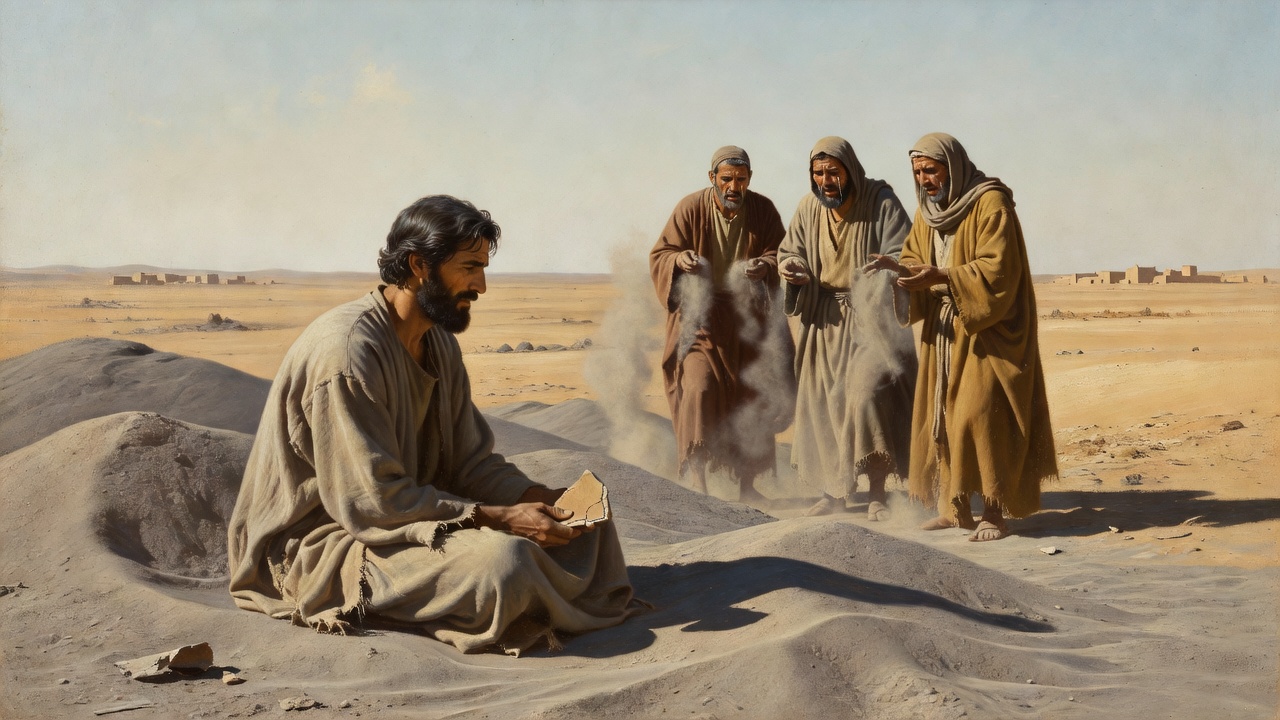
1ΕΓΕΝΕΤΟ δὲ ὡς ἡ ἡμέρα αὕτη καὶ ἦλθον οἱ ἄγγελοι τοῦ Θεοῦ παραστῆναι ἔναντι Κυρίου, καὶ ὁ διάβολος ἦλθεν ἐν μέσῳ αὐτῶν παραστῆναι ἐναντίον τοῦ Κυρίου. 2καὶ εἶπεν ὁ Κύριος τῷ διαβόλῳ· πόθεν σὺ ἔρχῃ; τότε εἶπεν ὁ διάβολος ἐνώπιον τοῦ Κυρίου· διαπορευθεὶς τὴν ὑπ᾿ οὐρανὸν καὶ ἐμπεριπατήσας τὴν σύμπασαν πάρειμι. 3εἶπε δὲ ὁ Κύριος πρὸς τὸν διάβολον· προσέσχες οὖν τῷ θέραποντί μου Ἰώβ, ὅτι οὐκ ἔστι κατ᾿ αὐτὸν τῶν ἐπὶ τῆς γῆς ἄνθρωπος ὅμοιος αὐτῷ, ἄκακος, ἀληθινός, ἄμεμπτος, θεοσεβής, ἀπεχόμενος ἀπὸ παντὸς κακοῦ; ἔτι δὲ ἔχετε ἀκακίας· σὺ δὲ εἶπας τὰ ὑπάρχοντα αὐτοῦ διακενῆς ἀπολέσαι. 4ὑπολαβὼν δὲ ὁ διάβολος εἶπε τῷ Κυρίῳ· δέρμα ὑπὲρ δέρματος· καὶ πάντα, ὅσα ὑπάρχει ἀνθρώπῳ, ὑπὲρ τῆς ψυχῆς αὐτοῦ ἐκτίσει· 5οὐ μὴν δὲ ἀλλὰ ἀποστείλας τὴν χεῖρά σου ἅψαι τῶν ὀστῶν αὐτοῦ καὶ σαρκῶν αὐτοῦ· ἦ μὴν εἰς πρόσωπόν σε εὐλογήσει. 6εἶπε δὲ ὁ Κύριος τῷ διαβόλῳ· ἰδοὺ παραδίδωμί σοι αὐτόν, μόνον τὴν ψυχὴν αὐτοῦ διαφύλαξον. 7 Ἐξῆλθε δὲ ὁ διάβολος ἀπὸ προσώπου Κυρίου καὶ ἔπαισε τὸν Ἰὼβ ἕλκει πονηρῷ ἀπὸ ποδῶν ἕως κεφαλῆς. 8καὶ ἔλαβεν ὄστρακον, ἵνα τὸν ἰχῶρα ξύῃ, καὶ ἐκάθητο ἐπὶ τῆς κοπρίας ἔξω τῆς πόλεως. 9 Χρόνου δὲ πολλοῦ προβεβηκότος εἶπεν αὐτῷ ἡ γυνὴ αὐτοῦ· μέχρι τίνος καρτερήσεις λέγων· 9α ἰδοὺ ἀναμένω χρόνον ἔτι μικρὸν προσδεχόμενος τὴν ἐλπίδα τῆς σωτηρίας μου; 9β ἰδοὺ γὰρ ἠφάνισταί σου τὸ μνημόσυνον ἀπὸ τῆς γῆς, υἱοὶ καὶ θυγατέρες, ἐμῆς κοιλίας ὠδῖνες καὶ πόνοι, οὓς εἰς τὸ κενὸν ἐκοπίασα μετὰ μόχθων· 9γ σύ τε αὐτὸς ἐν σαπρίᾳ σκωλήκων κάθησαι διανυκτερεύων αἴθριος, 9δ κἀγὼ πλανῆτις καὶ λάτρις, τόπον ἐκ τόπου περιερχομένη καὶ οἰκίαν ἐξ οἰκίας, προσδεχομένη τὸν ἥλιον πότε δύσεται, ἵνα ἀναπαύσωμαι τῶν μόχθων μου καὶ τῶν ὀδυνῶν, αἵ με νῦν συνέχουσιν· ἀλλὰ εἰπόν τι ρῆμα πρὸς Κύριον καὶ τελεύτα. 10ὁ δὲ ἐμβλέψας εἶπεν αὐτῇ· ἵνα τί ὥσπερ μία τῶν ἀφρόνων γυναικῶν ἐλάλησας οὕτως; εἰ τὰ ἀγαθὰ ἐδεξάμεθα ἐκ χειρὸς Κυρίου, τὰ κακὰ οὐχ ὑποίσομεν; ἐν πᾶσι τούτοις τοῖς συμβεβηκόσιν αὐτῷ οὐδὲν ἥμαρτεν Ἰὼβ τοῖς χείλεσιν ἐναντίον τοῦ Θεοῦ. 11ἀκούσαντες δὲ οἱ τρεῖς φίλοι αὐτοῦ τὰ κακὰ πάντα τὰ ἐπελθόντα αὐτῷ, παρεγένοντο ἕκαστος ἐκ τῆς ἰδίας χώρας πρὸς αὐτόν· Ἐλιφὰζ ὁ Θαιμανῶν βασιλεύς, Βαλδὰδ ὁ Σαυχαίων τύραννος, Σωφὰρ ὁ Μιναίων βασιλεύς, καὶ παρεγένοντο πρὸς αὐτὸν ὁμοθυμαδόν, τοῦ παρακαλέσαι καὶ ἐπισκέψασθαι αὐτόν. 12ἰδότες δὲ αὐτὸν πόρρωθεν οὐκ ἐπέγνωσαν· καὶ βοήσαντες φωνῇ μεγάλῃ ἔκλαυσαν ρήξαντες ἕκαστος τὴν ἑαυτοῦ στολήν. καὶ καταπασάμενοι γῆν 13παρεκάθισαν αὐτῷ ἑπτὰ ἡμέρας καὶ ἑπτὰ νύκτας, καὶ οὐδεὶς αὐτῶν ἐλάλησεν· ἑώρων γὰρ τὴν πληγὴν δεινὴν οὖσαν καὶ μεγάλην σφόδρα.
Did you know?
Job’s Affliction and the Arrival of His Friends
- In the Hebrew text of Job, the term translated as Satan appears with the definite article as the adversary or accuser. In this second heavenly council, the adversary argues that while Job endured the loss of his wealth and family, striking his physical flesh and bones would cause him to abandon his integrity.Sources: Satan · the Bible text itself
- Job’s companions—Eliphaz the Temanite, Bildad the Shuhite, and Zophar the Naamathite—came from distant regions associated with Arabia. Bildad's background is linked to Shuah, a son of Abraham by Keturah, while the ancient Greek Septuagint translation connects Zophar to the Mineans of southern Arabia.Sources: Bildad · Zophar · the Bible text itself
- Upon seeing Job's severe suffering, his three friends tore their garments, threw dust into the air over their heads, and sat with him on the ground in complete silence for seven days and seven nights. This shared vigil reflected ancient customs of deep mourning when sorrow was too profound for words.Sources: the Bible text itself
Notes written with AI assistance from open sources (Theographic Bible Metadata, CC BY-SA 4.0; Easton’s Bible Dictionary, public domain) and reviewed before publishing.
Credits and license for this translation
Η Παλαιά Διαθήκη κατά τη μετάφραση των εβδομήκοντα (Ο') | SEPTUAGINTA
The Old Testament in Ancient Greek, Septuagint translation
Public Domain
℗ Orthodox Media Network
Language: Ελληνικά (Greek, Ancient)
Dialect: Koine
ORTHODOX MEDIA NETWORK-ΟΡΘΟΔΟΞΟ ΔΙΚΤΥΟ ΕΝΗΜΕΡΩΣΗΣ
A Voice from the Heart of Mount Athos to the World
Orthodox Media Network ( https://vivlos.link/DEqNY ) was founded on Mount Athos – the only monastic republic in the world – with main mission to promote the Holy Scriptures and preserve the spiritual and cultural heritage of Orthodox monasticism, using mainly the internet.
Since 2010, its founder and General Secretary, Apostolos Vavylis, has become the first person internationally to record the entire Bible in both the original ancient Greek text and its modern Greek translation. This work – unprecedented in Orthodox tradition – has reached and inspired millions:
* Over 15 million people (estimated) have listened to at least one chapter of the recorded Bible.
* Hundreds of independent accounts across nearly every digital platform, share these recordings in countless forms.
We have never claimed copyright or demanded takedowns of these reproductions — because our goal is not profit, but the free and faithful dissemination of the Word of God and the blessing it brings to the world.
We welcome anyone that would like to publicly share our work with the only condition to publish the present text as a minimum respect to our mission.
* Our vision:
To place a Bible in every Greek-speaking home, wherever it may be on earth.
There are an estimated 17 million Greeks living in nearly 100 countries.
* If you wish to support or partner with us, please contact:
* [email protected]
The Old Testament (Septuaginta)
We are a voice of Orthodoxy, a witness of the Word, and a blessing to the Nations.
2026-02-13
Source: http://ebible.org/grclxx/ · eBible.org