Jeremiah 12
Η Παλαιά Διαθήκη κατά τη μετάφραση των εβδομήκοντα (Ο') | SEPTUAGINTA · Tap a verse to see its cross-references.
1ΔΙΚΑΙΟΣ εἶ, Κύριε, ὅτι ἀπολογήσομαι πρὸς σέ, πλὴν κρίματα λαλήσω πρὸς σέ· τί ὅτι ὁδὸς ἀσεβῶν εὐοδοῦται, εὐθήνησαν πάντες οἱ ἀθετοῦντες ἀθετήματα; 2ἐφύτευσας αὐτοὺς καὶ ἐρριζώθησαν· ἐτεκνοποιήσαντο καὶ ἐποίησαν καρπόν· ἐγγὺς εἶ σὺ τοῦ στόματος αὐτῶν καὶ πόρρω ἀπὸ τῶν νεφρῶν αὐτῶν. 3καὶ σύ, Κύριε, γινώσκεις με, δεδοκίμακας τὴν καρδίαν μου ἐναντίον σου· ἅγνισον αὐτοὺς εἰς ἡμέραν σφαγῆς αὐτῶν. 4ἕως πότε πενθήσει ἡ γῆ καὶ πᾶς ὁ χόρτος τοῦ ἀγροῦ ξηρανθήσεται ἀπὸ κακίας τῶν κατοικούντων ἐν αὐτῇ; ἠφανίσθησαν κτήνη καὶ πετεινά, ὅτι εἶπαν· οὐκ ὄψεται ὁ Θεὸς ὁδοὺς ἡμῶν. 5σοῦ οἱ πόδες τρέχουσι καὶ ἐκλύουσί σε· πῶς παρασκευάσῃ ἐφ' ἵπποις καὶ ἐν γῇ εἰρήνης σὺ πέποιθας; πῶς ποιήσεις ἐν φρυάγματι τοῦ Ἰορδάνου; 6ὅτι καὶ οἱ ἀδελφοί σου καὶ ὁ οἶκος τοῦ πατρός σου, καὶ οὗτοι ἠθέτησάν σε, καὶ αὐτοὶ ἐβόησαν, ἐκ τῶν ὀπίσω σου ἐπισυνήχθησαν· μὴ πιστεύσῃς ἐν αὐτοῖς, ὅτι λαλήσουσι πρός σε καλά. 7Ἐγκαταλέλοιπα τὸν οἶκόν μου, ἀφῆκα τὴν κληρονομίαν μου, ἔδωκα τὴν ἠγαπημένην ψυχήν μου εἰς χεῖρας ἐχθρῶν αὐτῆς. 8ἐγενήθη ἡ κληρονομία μου ἐμοὶ ὡς λέων ἐν δρυμῷ· ἔδωκεν ἐπ' ἐμὲ τὴν φωνὴν αὐτῆς, διὰ τοῦτο ἐμίσησα αὐτήν. 9μὴ σπήλαιον ὑαίνης ἡ κληρονομία μου ἐμοὶ ἢ σπήλαιον κύκλῳ αὐτῆς; βαδίσατε, συναγάγετε πάντα τὰ θηρία τοῦ ἀγροῦ, καὶ ἐλθέτωσαν τοῦ φαγεῖν αὐτήν. 10ποιμένες πολλοὶ διέφθειραν τὸν ἀμπελῶνά μου, ἐμόλυναν τὴν μερίδα μου, ἔδωκαν τὴν μερίδα τὴν ἐπιθυμητήν μου εἰς ἔρημον ἄβατον, 11ἐτέθη εἰς ἀφανισμὸν ἀπωλείας, δι' ἐμὲ ἀφανισμῷ ἠφανίσθη πᾶσα ἡ γῆ, ὅτι οὐκ ἔστιν ἀνὴρ τιθέμενος ἐν καρδίᾳ. 12ἐπὶ πᾶσαν διεκβολὴν ἐν τῇ ἐρήμῳ ἦλθον ταλαιπωροῦντες, ὅτι μάχαιρα τοῦ Κυρίου καταφάγεται ἀπ' ἄκρου τῆς γῆς ἕως ἄκρου τῆς γῆς, οὐκ ἔστιν εἰρήνη πάσῃ σαρκί. 13ἐσπείρατε πυροὺς καὶ ἀκάνθας θερίζετε· οἱ κλῆροι αὐτῶν οὐκ ὠφελήσουσιν αὐτούς· αἰσχύνθητε ἀπὸ καυχήσεως ὑμῶν, ἀπὸ ὀνειδισμοῦ ἔναντι Κυρίου. 14¨Οτι τάδε λέγει Κύριος περὶ πάντων τῶν γειτόνων τῶν πονηρῶν τῶν ἁπτομένων τῆς κληρονομίας μου, ἧς ἐμέρισα τῷ λαῷ μου Ἰσραήλ· ἰδοὺ ἐγὼ ἀποσπῶ αὐτοὺς ἀπὸ τῆς γῆς αὐτῶν καὶ τὸν Ἰούδαν ἐκβαλῶ ἐκ μέσου αὐτῶν. 15καὶ ἔσται μετὰ τὸ ἐκβαλεῖν με αὐτοὺς ἐπιστρέψω καὶ ἐλεήσω αὐτοὺς καὶ κατοικιῶ αὐτούς, ἕκαστον εἰς τὴν κληρονομίαν αὐτοῦ καὶ ἕκαστον εἰς τὴν γῆν αὐτοῦ. 16καὶ ἔσται ἐὰν μαθόντες μάθωσι τὴν ὁδὸν τοῦ λαοῦ μου, τοῦ ὀμνύειν τῷ ὀνόματί μου, ζῇ Κύριος, καθὼς ἐδίδαξαν τὸν λαόν μου ὀμνύειν τῇ Βάαλ, καὶ οἰκοδομηθήσονται ἐν μέσῳ τοῦ λαοῦ μου· 17ἐὰν δὲ μὴ ἐπιστρέψωσι, καὶ ἐξαρῶ τὸ ἔθνος ἐκεῖνο ἐξάρσει καὶ ἀπωλείᾳ.
Did you know?
Jeremiah's Complaint and the Nations
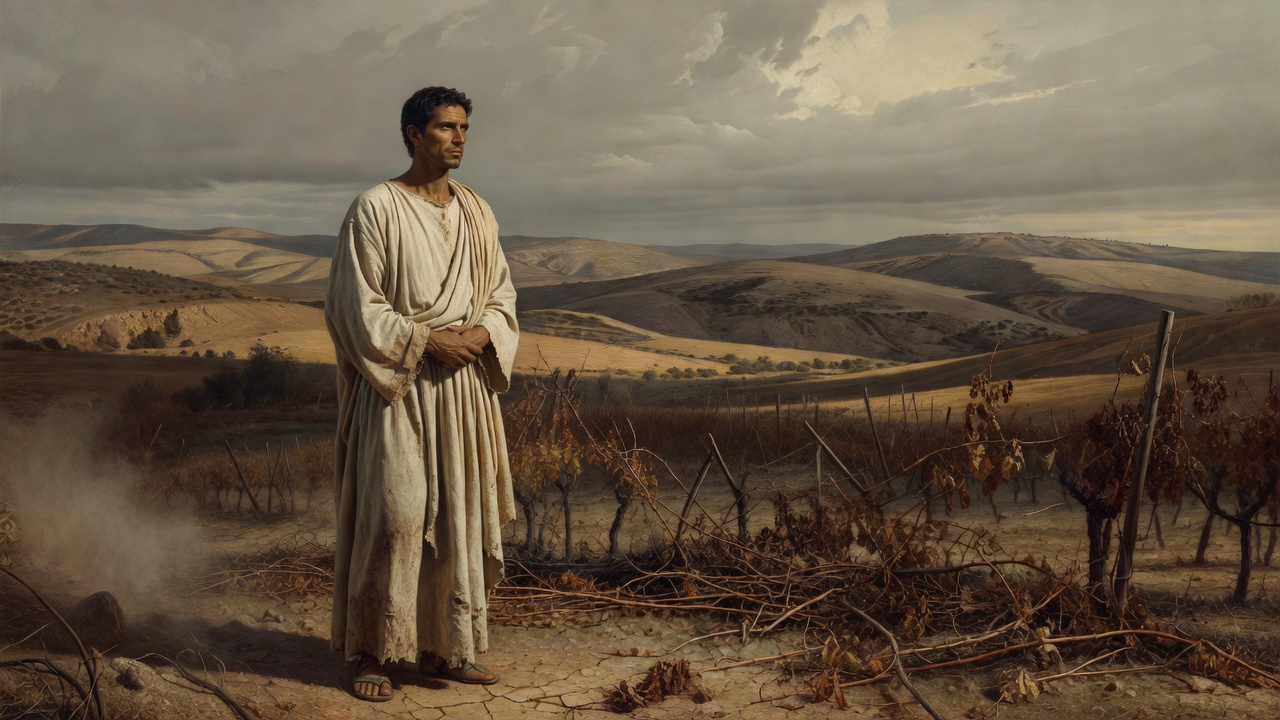
- Jeremiah wrestles with the difficult question of why the wicked prosper and live at ease while speaking of God with their lips but keeping him far from their hearts. The prophet's distress is deeply personal, as even the members of his own father's household had betrayed him and spoken against him.Sources: the Bible text itself
- God responds to Jeremiah's complaint by asking how he will compete with horses if racing with footmen tires him, and how he will manage in the thickets of the Jordan if he stumbles in a peaceful land. The Jordan River cuts through low valleys and dense, difficult terrain along its banks.Sources: the Bible text itself · Jordan
- The chapter extends hope even to hostile neighboring nations that had once taught Judah to swear by Baal, the principal male deity of the Phoenicians. If these nations turn and learn to swear by the name of the Lord, God promises to build them up among his people.Sources: the Bible text itself · Baal
Notes written with AI assistance from open sources (Theographic Bible Metadata, CC BY-SA 4.0; Easton’s Bible Dictionary, public domain) and reviewed before publishing.
Places in this chapter
- Jordan · Today: Jordan River · 31.761, 35.558 · verse 5
Only places identified with high confidence are shown (90% or more according to the scholarly sources compiled by OpenBible). Period map: DARE (Digital Atlas of the Roman Empire), CC BY 4.0; modern map: © OpenStreetMap contributors; places: OpenBible.info (CC BY 4.0).
Credits and license for this translation
Η Παλαιά Διαθήκη κατά τη μετάφραση των εβδομήκοντα (Ο') | SEPTUAGINTA
The Old Testament in Ancient Greek, Septuagint translation
Public Domain
℗ Orthodox Media Network
Language: Ελληνικά (Greek, Ancient)
Dialect: Koine
ORTHODOX MEDIA NETWORK-ΟΡΘΟΔΟΞΟ ΔΙΚΤΥΟ ΕΝΗΜΕΡΩΣΗΣ
A Voice from the Heart of Mount Athos to the World
Orthodox Media Network ( https://vivlos.link/DEqNY ) was founded on Mount Athos – the only monastic republic in the world – with main mission to promote the Holy Scriptures and preserve the spiritual and cultural heritage of Orthodox monasticism, using mainly the internet.
Since 2010, its founder and General Secretary, Apostolos Vavylis, has become the first person internationally to record the entire Bible in both the original ancient Greek text and its modern Greek translation. This work – unprecedented in Orthodox tradition – has reached and inspired millions:
* Over 15 million people (estimated) have listened to at least one chapter of the recorded Bible.
* Hundreds of independent accounts across nearly every digital platform, share these recordings in countless forms.
We have never claimed copyright or demanded takedowns of these reproductions — because our goal is not profit, but the free and faithful dissemination of the Word of God and the blessing it brings to the world.
We welcome anyone that would like to publicly share our work with the only condition to publish the present text as a minimum respect to our mission.
* Our vision:
To place a Bible in every Greek-speaking home, wherever it may be on earth.
There are an estimated 17 million Greeks living in nearly 100 countries.
* If you wish to support or partner with us, please contact:
* [email protected]
The Old Testament (Septuaginta)
We are a voice of Orthodoxy, a witness of the Word, and a blessing to the Nations.
2026-02-13
Source: http://ebible.org/grclxx/ · eBible.org