Genesis 25
Η Παλαιά Διαθήκη κατά τη μετάφραση των εβδομήκοντα (Ο') | SEPTUAGINTA · Tap a verse to see its cross-references.
1ΠΡΟΣΘΕΜΕΝΟΣ δὲ Ἁβραὰμ ἔλαβε γυναῖκα, ἧ ὄνομα Χεττούρα. 2ἔτεκε δὲ αὐτῷ τὸν Ζομβρᾶν καὶ τὸν Ἰεζὰν καὶ τὸν Μαδὰλ καὶ τὸν Μαδιὰμ καὶ τὸν Ἰεσβὼκ καὶ τὸν Σωκέ. 3Ιεζὰν δὲ ἐγέννησε καὶ τὸν Θαιμὰν τὸν Σαβὰ καὶ τὸν Δεδάν· υἱοὶ δὲ Δεδὰν ἐγένοντο Ραγουὴλ καὶ Ναβδεὴλ καὶ Ἀσσουριεὶμ καὶ Λατουσιεὶμ καὶ Λαωμείμ. 4υἱοὶ δὲ Μαδιὰμ Γεφὰρ καὶ Ἀφεὶρ καὶ Ἐνὼχ καὶ Ἀβειρὰ καὶ Ἐλδαγά. πάντες οὗτοι ἦσαν υἱοὶ Χεττούρας.
5Ἔδωκε δὲ Ἁβραὰμ πάντα τὰ ὑπάρχοντα αὐτοῦ Ἰσαὰκ τῷ υἱῷ αὐτοῦ, 6καὶ τοῖς υἱοῖς τῶν παλλακῶν αὐτοῦ ἔδωκεν Ἁβραὰμ δόματα καὶ ἐξαπέστειλεν αὐτοὺς ἀπὸ Ἰσαὰκ τοῦ υἱοῦ αὐτοῦ, ἔτι ζῶντος αὐτοῦ, πρὸς ἀνατολὰς εἰς γῆν ἀνατολῶν. 7ταῦτα δὲ τὰ ἔτη ἡμερῶν τῆς ζωῆς Ἁβραὰμ ὅσα ἔζησεν, ἑκατὸν ἑβδομηκονταπέντε ἔτη. 8καὶ ἐκλείπων ἀπέθανεν Ἁβραὰμ ἐν γήρᾳ καλῷ πρεσβύτης καὶ πλήρης ἡμερῶν καὶ προσετέθη πρὸς τὸν λαὸν αὐτοῦ. 9καὶ ἔθαψαν αὐτὸν Ἰσαὰκ καὶ Ἰσμαὴλ οἱ υἱοὶ αὐτοῦ εἰς τὸ σπήλαιον τὸ διπλοῦν, εἰς τὸν ἀγρὸν Ἐφρὼν τοῦ Σαὰρ τοῦ Χετταίου, ὅς ἐστιν ἀπέναντι Μαμβρῆ, 10τὸν ἀγρὸν καὶ τὸ σπήλαιον, ὃ ἐκτήσατο Ἁβραὰμ παρὰ τῶν υἱῶν τοῦ Χέτ, ἐκεῖ ἔθαψαν Ἁβραὰμ καὶ Σάρραν τὴν γυναῖκα αὐτοῦ. 11ἐγένετο δὲ μετὰ τὸ ἀποθανεῖν Ἁβραάμ, εὐλόγησεν ὁ Θεὸς τὸν Ἰσαὰκ υἱὸν αὐτοῦ· καὶ κατῴκησεν Ἰσαὰκ παρὰ τὸ φρέαρ τῆς ὁράσεως.
12Αὗται δέ αἱ γενέσεις Ἰσμαὴλ τοῦ υἱοῦ Ἁβραάμ, ὃν ἔτεκεν Ἄγαρ ἡ Αἰγυπτία ἡ παιδίσκη Σάρρας τῷ Ἁβραάμ. 13καὶ ταῦτα τὰ ὀνόματα τῶν υἱῶν Ἰσμαὴλ κατ᾿ ὀνόματα τῶν γενεῶν αὐτοῦ· πρωτότοκος Ἰσμαὴλ Ναβαιώθ, καὶ Κηδὰρ καὶ Ναβδεὴλ καὶ Μασσὰμ 14καὶ Μασμὰ καὶ Δουμὰ καὶ Μασσῆ 15καὶ Χοδδὰν καὶ Θαιμὰν καὶ Ἰετοὺρ καὶ Ναφὲς καὶ Κεδμά. 16οὗτοί εἰσιν οἱ υἱοὶ Ἰσμαὴλ καὶ ταῦτα τὰ ὀνόματα αὐτῶν ἐν ταῖς σκηναῖς αὐτῶν καὶ ἐν ταῖς ἐπαύλεσιν αὐτῶν· δώδεκα ἄρχοντες κατὰ ἔθνη αὐτῶν. 17καὶ ταῦτα τὰ ἔτη τῆς ζωῆς Ἰσμαήλ· ἑκατὸν τριακονταεπτὰ ἔτη· καὶ ἐκλείπων ἀπέθανε καὶ προσετέθη πρὸς τὸ γένος αὐτοῦ. 18κατῴκησε δὲ ἀπὸ Εὐϊλὰτ ἕως Σούρ, ἥ ἐστι κατὰ πρόσωπον Αἰγύπτου, ἕως ἐλθεῖν πρὸς Ἀσσυρίους· κατὰ πρόσωπον πάντων τῶν ἀδελφῶν αὐτοῦ κατῴκησε.
19Καὶ αὗται αἱ γενέσεις Ἰσαὰκ τοῦ υἱοῦ Ἁβραάμ· 20Ἁβραὰμ ἐγέννησε τὸν Ἰσαάκ. ἦν δὲ Ἰσαὰκ ἐτῶν τεσσαράκοντα, ὅτε ἔλαβε τὴν Ρεβέκκαν θυγατέρα Βαθουὴλ τοῦ Σύρου ἐκ τῆς Μεσοποταμίας Συρίας, ἀδελφὴν Λάβαν τοῦ Σύρου, ἑαυτῷ εἰς γυναῖκα. 21ἐδέετο δὲ Ἰσαὰκ Κυρίου περὶ Ρεβέκκας τῆς γυναικὸς αὐτοῦ, ὅτι στεῖρα ἦν· ἐπήκουσε δὲ αὐτοῦ ὁ Θεός, καὶ συνέλαβεν ἐν γαστρὶ Ρεβέκκα ἡ γυνὴ αὐτοῦ. 22ἐσκίρτων δὲ τὰ παιδία ἐν αὐτῇ· εἶπε δέ, εἰ οὕτω μοι μέλλει γίνεσθαι, ἵνα τί μοι τοῦτο; ἐπορεύθη δὲ πυθέσθαι παρὰ Κυρίου. 23καὶ εἶπε Κύριος αὐτῇ· δύο ἔθνη ἐν γαστρί σου εἰσί, καὶ δύο λαοὶ ἐκ τῆς κοιλίας σου διασταλήσονται· καὶ λαὸς λαοῦ ὑπερέξει, καὶ ὁ μείζων δουλεύσει τῷ ἐλάσσονι. 24καὶ ἐπληρώθησαν αἱ ἡμέραι τοῦ τεκεῖν αὐτήν, καὶ τῇδε ἦν δίδυμα ἐν τῇ κοιλίᾳ αὐτῆς. 25ἐξῆλθε δὲ ὁ πρωτότοκος πυρράκης, ὅλος ὡσεὶ δορὰ δασύς· ἐπωνόμασε δὲ τὸ ὄνομα αὐτοῦ Ἡσαῦ. 26καὶ μετὰ τοῦτο ἐξῆλθεν ὁ ἀδελφὸς αὐτοῦ, καὶ ἡ χεὶρ αὐτοῦ ἐπειλημμένη τῆς πτέρνης Ἡσαῦ· καὶ ἐκάλεσε τὸ ὄνομα αὐτοῦ Ἰακώβ. Ἰσαὰκ δὲ ἦν ἐτῶν ἑξήκοντα, ὅτε ἔτεκεν αὐτοὺς Ρεβέκκα.
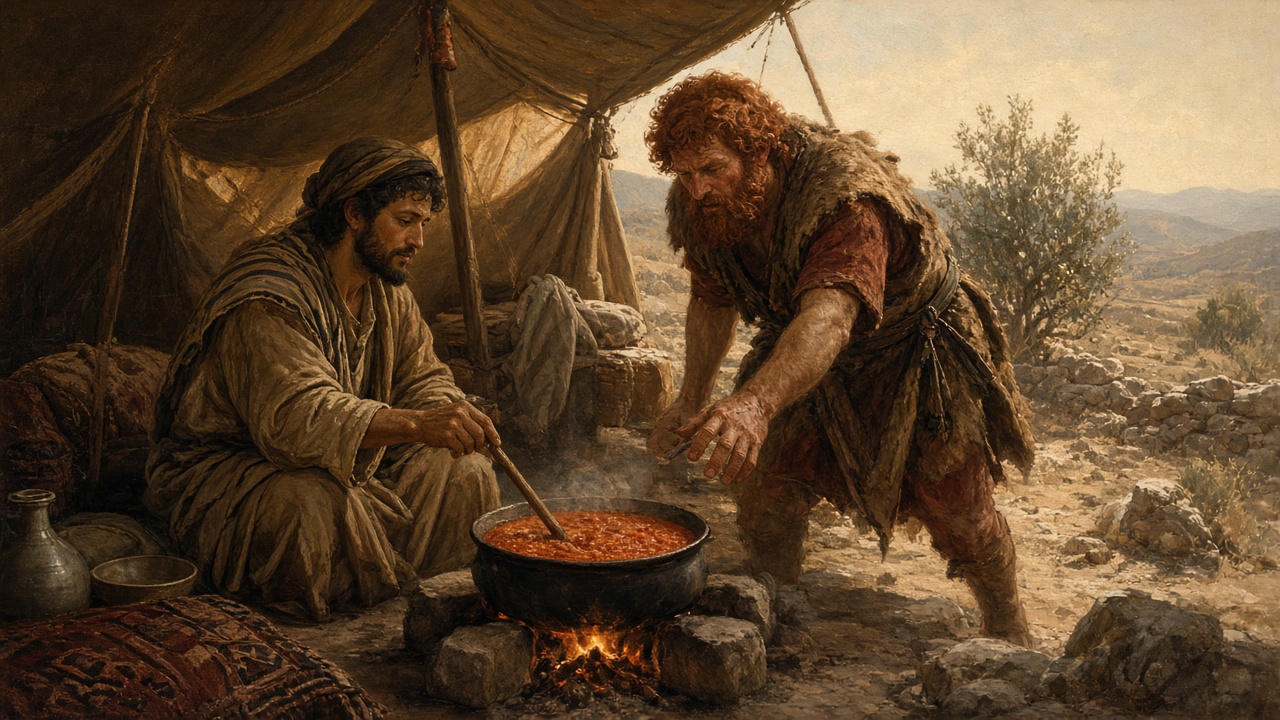
27Ηὐξήθησαν δὲ οἱ νεανίσκοι, καὶ ἦν Ἡσαῦ ἄνθρωπος εἰδὼς κυνηγεῖν, ἄγροικος, Ἰακὼβ δὲ ἄνθρωπος ἄπλαστος, οἰκῶν οἰκίαν. 28ἠγάπησε δὲ Ἰσαὰκ τὸν Ἡσαῦ, ὅτι ἡ θήρα αὐτοῦ βρῶσις αὐτῷ· Ρεβέκκα δὲ ἠγάπα τὸν Ἰακώβ. 29ἥψησε δὲ Ἰακὼβ ἕψημα· ἦλθε δὲ Ἡσαῦ ἐκ τοῦ πεδίου ἐκλείπων, 30καὶ εἶπεν Ἡσαῦ τῷ Ἰακώβ· γεῦσόν με ἀπὸ τοῦ ἑψήματος τοῦ πυρροῦ τούτου, ὅτι ἐκλείπω. διὰ τοῦτο ἐκλήθη τὸ ὄνομα αὐτοῦ Ἐδώμ. 31εἶπε δὲ Ἰακὼβ τῷ Ἡσαῦ· ἀπόδου μοι σήμερον τὰ πρωτοτόκιά σου ἐμοί. 32καὶ εἶπεν Ἡσαῦ· ἰδοὺ ἐγὼ πορεύομαι τελευτᾶν, καὶ ἵνα τί μοι ταῦτα τὰ πρωτοτόκια; 33καὶ εἶπεν αὐτῷ Ἰακώβ· ὄμοσόν μοι σήμερον. καὶ ὤμοσεν αὐτῷ· ἀπέδοτο δὲ Ἡσαῦ τὰ πρωτοτόκια τῷ Ἰακώβ. 34Ἰακὼβ δὲ ἔδωκε τῷ Ἡσαῦ ἄρτον καὶ ἕψημα φακοῦ, καὶ ἔφαγε καὶ ἔπιε καὶ ἀναστὰς ᾤχετο· καὶ ἐφαύλισεν Ἡσαῦ τὰ πρωτοτόκια.
Did you know?
Abraham’s heirs and the twin brothers
- Keturah, whose name Easton's Bible Dictionary (1897) explains as “incense,” is introduced here as another wife of Abraham. That dictionary says he probably married her after Sarah’s death, though her nationality is unknown, and notes that 1 Chronicles calls her a concubine. She bore him six sons, including Jokshan and Midian, the father of the Midianites; while Abraham was still alive he gave gifts to the sons of his concubines and sent them away from Isaac to the land of the east.Sources: Keturah · Midian · the Bible text itself
- Isaac and Ishmael together buried Abraham in the cave of Machpelah near Mamre, in the field Abraham had bought from Ephron the Hittite, where Sarah already lay. Easton's Bible Dictionary (1897) explains Machpelah as “portion” or “double cave,” set on a hillside east of Hebron and facing Mamre, a place called the oaks—or, in a margin, the terebinths—of Mamre.Sources: Machpelah · Mamre · the Bible text itself
- Esau, Rebekah’s firstborn twin, was born red and covered with hair like a fur coat. Easton's Bible Dictionary (1897) links the further name Edom, “red,” to the red lentil stew for which he sold his birthright, and explains Jacob as “one who follows on another’s heels” or “supplanter,” matching the report that Jacob was born grasping Esau’s heel. Esau grew up as a skillful hunter and a man of the field, while Jacob was a quiet man who stayed at home.Sources: Esau (Edom) · Jacob (Israel) · the Bible text itself
Notes written with AI assistance from open sources (Theographic Bible Metadata, CC BY-SA 4.0; Easton’s Bible Dictionary, public domain) and reviewed before publishing.
Places in this chapter
- East · Today: region around Amman · 31.955, 35.934 · verse 6
- Machpelah · Today: Cave of the Patriarchs · 31.525, 35.111 · verse 9
- Negeb · 31.245, 34.841 · verse 11
- Assyria · 36.359, 43.153 · verse 18
- Egypt · 30.129, 31.308 · verse 18
Only places identified with high confidence are shown (90% or more according to the scholarly sources compiled by OpenBible). Period map: DARE (Digital Atlas of the Roman Empire), CC BY 4.0; modern map: © OpenStreetMap contributors; places: OpenBible.info (CC BY 4.0).
Credits and license for this translation
Η Παλαιά Διαθήκη κατά τη μετάφραση των εβδομήκοντα (Ο') | SEPTUAGINTA
The Old Testament in Ancient Greek, Septuagint translation
Public Domain
℗ Orthodox Media Network
Language: Ελληνικά (Greek, Ancient)
Dialect: Koine
ORTHODOX MEDIA NETWORK-ΟΡΘΟΔΟΞΟ ΔΙΚΤΥΟ ΕΝΗΜΕΡΩΣΗΣ
A Voice from the Heart of Mount Athos to the World
Orthodox Media Network ( https://vivlos.link/DEqNY ) was founded on Mount Athos – the only monastic republic in the world – with main mission to promote the Holy Scriptures and preserve the spiritual and cultural heritage of Orthodox monasticism, using mainly the internet.
Since 2010, its founder and General Secretary, Apostolos Vavylis, has become the first person internationally to record the entire Bible in both the original ancient Greek text and its modern Greek translation. This work – unprecedented in Orthodox tradition – has reached and inspired millions:
* Over 15 million people (estimated) have listened to at least one chapter of the recorded Bible.
* Hundreds of independent accounts across nearly every digital platform, share these recordings in countless forms.
We have never claimed copyright or demanded takedowns of these reproductions — because our goal is not profit, but the free and faithful dissemination of the Word of God and the blessing it brings to the world.
We welcome anyone that would like to publicly share our work with the only condition to publish the present text as a minimum respect to our mission.
* Our vision:
To place a Bible in every Greek-speaking home, wherever it may be on earth.
There are an estimated 17 million Greeks living in nearly 100 countries.
* If you wish to support or partner with us, please contact:
* [email protected]
The Old Testament (Septuaginta)
We are a voice of Orthodoxy, a witness of the Word, and a blessing to the Nations.
2026-02-13
Source: http://ebible.org/grclxx/ · eBible.org