Ecclesiastes 7
Η Παλαιά Διαθήκη κατά τη μετάφραση των εβδομήκοντα (Ο') | SEPTUAGINTA · Tap a verse to see its cross-references.
1ΑΓΑΘΟΝ ὄνομα ὑπὲρ ἔλαιον ἀγαθὸν καὶ ἡμέρα τοῦ θανάτου ὑπὲρ ἡμέραν γεννήσεως. 2ἀγαθὸν πορευθῆναι εἰς οἶκον πένθους ἢ ὅτι πορευθῆναι εἰς οἶκον πότου, καθότι τοῦτο τέλος παντὸς ἀνθρώπου, καὶ ὁ ζῶν δώσει ἀγαθὸν εἰς καρδίαν αὐτοῦ. 3ἀγαθὸν θυμὸς ὑπὲρ γέλωτα, ὅτι ἐν κακίᾳ προσώπου ἀγαθυνθήσεται καρδία. 4καρδία σοφῶν ἐν οἴκῳ πένθους, καὶ καρδία ἀφρόνων ἐν οἴκῳ εὐφροσύνης. 5ἀγαθὸν τὸ ἀκοῦσαι ἐπιτίμησιν σοφοῦ ὑπὲρ ἄνδρα ἀκούοντα ᾆσμα ἀφρόνων· 6ὡς φωνὴ ἀκανθῶν ὑπὸ τὸν λέβητα, οὕτως γέλως τῶν ἀφρόνων· καί γε τοῦτο ματαιότης. 7ὅτι ἡ συκοφαντία περιφέρει σοφὸν καὶ ἀπόλλυσι τὴν καρδίαν εὐτονίας αὐτοῦ. 8ἀγαθὴ ἐσχάτη λόγων ὑπὲρ ἀρχὴν αὐτοῦ, ἀγαθὸν μακρόθυμος ὑπὲρ ὑψηλὸν πνεύματι. 9μὴ σπεύσῃς ἐν πνεύματί σου τοῦ θυμοῦσθαι, ὅτι θυμὸς ἐν κόλπῳ ἀφρόνων ἀναπαύσεται. 10μὴ εἴπῃς· τί ἐγένετο ὅτι αἱ ἡμέραι αἱ πρότεραι ἦσαν ἀγαθαὶ ὑπὲρ ταύτας; ὅτι οὐκ ἐν σοφίᾳ ἐπηρώτησας περὶ τούτου. 11ἀγαθὴ σοφία μετὰ κληρονομίας καὶ περισσεία τοῖς θεωροῦσι τὸν ἥλιον· 12ὅτι ἐν σκιᾷ αὐτῆς ἡ σοφία ὡς σκιὰ ἀργυρίου, καὶ περισσεία γνώσεως τῆς σοφίας ζωοποιήσει τὸν παρ᾿ αὐτῆς. 13ἰδὲ τὰ ποιήματα τοῦ Θεοῦ· ὅτι τίς δυνήσεται τοῦ κοσμῆσαι ὃν ἂν ὁ Θεὸς διαστρέψῃ αὐτόν; 14ἐν ἡμέρᾳ ἀγαθωσύνης ζῆθι ἐν ἀγαθῷ καὶ ἐν ἡμέρᾳ κακίας ἰδέ· καί γε σὺν τούτῳ συμφώνως τοῦτο ἐποίησεν ὁ Θεὸς περὶ λαλιᾶς, ἵνα μὴ εὕρῃ ἄνθρωπος ὀπίσω αὐτοῦ οὐδέν.
15Σὺν τὰ πάντα εἶδον ἐν ἡμέραις ματαιότητός μου. ἔστι δίκαιος ἀπολλύμενος ἐν δικαίῳ αὐτοῦ, καί ἐστιν ἀσεβὴς μένων ἐν κακίᾳ αὐτοῦ. 16μὴ γίνου δίκαιος πολύ, μηδὲ σοφίζου περισσά, μήποτε ἐκπλαγῇς. 17μὴ ἀσεβήσῃς πολὺ καὶ μὴ γίνου σκληρός, ἵνα μὴ ἀποθάνῃς ἐν οὐ καιρῷ σου. 18ἀγαθὸν τὸ ἀντέχεσθαί σε ἐν τούτῳ, καί γε ἀπὸ τούτου μὴ μιάνῃς τὴν χεῖρά σου, ὅτι φοβουμένοις τὸν Θεὸν ἐξελεύσεται τὰ πάντα.
19Ἡ σοφία βοηθήσει τῷ σοφῷ ὑπὲρ δέκα ἐξουσιάζοντας τοὺς ὄντας ἐν τῇ πόλει· 20ὅτι ἄνθρωπος οὐκ ἔστι δίκαιος ἐν τῇ γῇ, ὅς ποιήσει ἀγαθὸν καὶ οὐχ ἁμαρτήσεται. 21καί γε εἰς πάντας λόγους, οὓς λαλήσουσιν ἀσεβεῖς, μὴ θῇς καρδίαν σου, ὅπως μὴ ἀκούσῃς τοῦ δούλου σου καταρωμένου σε· 22ὅτι πλειστάκις πονηρεύσεταί σε καὶ καθόδους πολλὰς κακώσει καρδίαν σου, ὅτι ὡς καί γε σὺ κατηράσω ἑτέρους.
23Πάντα ταῦτα ἐπείρασα ἐν τῇ σοφίᾳ· εἶπα· σοφισθήσομαι, 24καὶ αὐτὴ ἐμακρύνθη ἀπ᾿ ἐμοῦ μακρὰν ὑπὲρ ὃ ἦν, καὶ βαθὺ βάθος, τίς εὑρήσει αὐτό; 25ἐκύκλωσα ἐγώ, καὶ ἡ καρδία μου τοῦ γνῶναι καὶ τοῦ κατασκέψασθαι καὶ τοῦ ζητῆσαι σοφίαν καὶ ψῆφον καὶ τοῦ γνῶναι ἀσεβοῦς ἀφροσύνην καὶ ὀχληρίαν καὶ περιφοράν. 26καὶ εὑρίσκω ἐγὼ αὐτὴν καὶ ἐρῶ πικρότερον ὑπὲρ θάνατον, σὺν τὴν γυναῖκα, ἥτις ἐστὶ θήρευμα καὶ σαγῆναι καρδία αὐτῆς, δεσμὸς εἰς χεῖρας αὐτῆς· ἀγαθὸς πρὸ προσώπου τοῦ Θεοῦ ἐξαιρεθήσεται ἀπ᾿ αὐτῆς, καὶ ἁμαρτάνων συλληφθήσεται ἐν αὐτῇ. 27ἰδὲ τοῦτο εὗρον, εἶπεν ὁ ἐκκλησιαστής, μία τῇ μιᾷ τοῦ εὑρεῖν λογισμόν, 28ὃν ἐπεζήτησεν ἡ ψυχή μου καὶ οὐχ εὗρον· καὶ ἄνθρωπον ἕνα ἀπὸ χιλίων εὗρον καὶ γυναῖκα ἐν πᾶσι τούτοις οὐχ εὗρον. 29πλὴν ἰδὲ τοῦτο εὗρον, ὃ ἐποίησεν ὁ Θεὸς σὺν τὸν ἄνθρωπον εὐθῆ, καὶ αὐτοὶ ἐζήτησαν λογισμοὺς πολλούς.
Did you know?
Wisdom, Mortality, and the Limits of Understanding
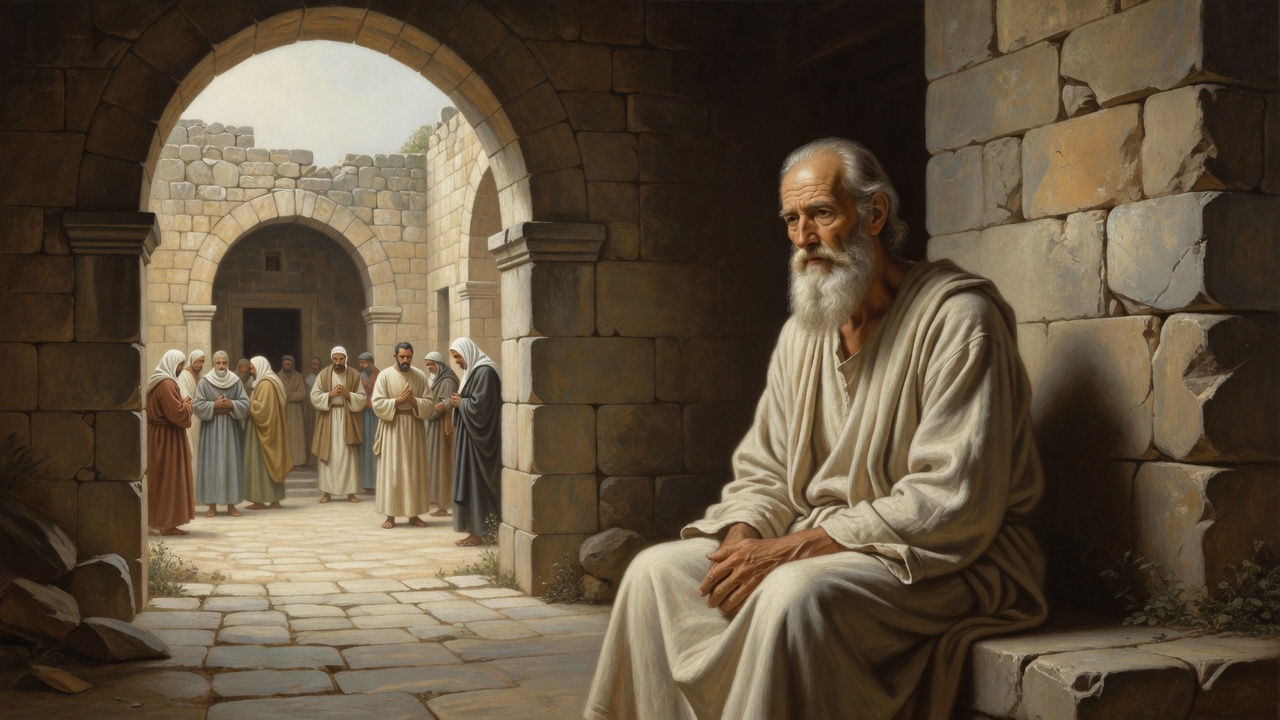
- Ecclesiastes 7 begins with a series of comparative proverbs arguing that moments of solemn reflection, such as visiting a house of mourning or facing sorrow, provide greater insight into life than superficial laughter and feast houses.Sources: the Bible text itself
- The Teacher reflects on the reality of human experience, noting that God has appointed both prosperous and adverse days so that humans cannot foresee their future, and that righteous people sometimes perish while the wicked live long.Sources: the Bible text itself
- The chapter highlights the universal limitation of human goodness, observing that there is no one on earth who does good and never sins, and concluding that while God created humanity upright, people pursue many complex schemes.Sources: the Bible text itself
Notes written with AI assistance from open sources (Theographic Bible Metadata, CC BY-SA 4.0; Easton’s Bible Dictionary, public domain) and reviewed before publishing.
Credits and license for this translation
Η Παλαιά Διαθήκη κατά τη μετάφραση των εβδομήκοντα (Ο') | SEPTUAGINTA
The Old Testament in Ancient Greek, Septuagint translation
Public Domain
℗ Orthodox Media Network
Language: Ελληνικά (Greek, Ancient)
Dialect: Koine
ORTHODOX MEDIA NETWORK-ΟΡΘΟΔΟΞΟ ΔΙΚΤΥΟ ΕΝΗΜΕΡΩΣΗΣ
A Voice from the Heart of Mount Athos to the World
Orthodox Media Network ( https://vivlos.link/DEqNY ) was founded on Mount Athos – the only monastic republic in the world – with main mission to promote the Holy Scriptures and preserve the spiritual and cultural heritage of Orthodox monasticism, using mainly the internet.
Since 2010, its founder and General Secretary, Apostolos Vavylis, has become the first person internationally to record the entire Bible in both the original ancient Greek text and its modern Greek translation. This work – unprecedented in Orthodox tradition – has reached and inspired millions:
* Over 15 million people (estimated) have listened to at least one chapter of the recorded Bible.
* Hundreds of independent accounts across nearly every digital platform, share these recordings in countless forms.
We have never claimed copyright or demanded takedowns of these reproductions — because our goal is not profit, but the free and faithful dissemination of the Word of God and the blessing it brings to the world.
We welcome anyone that would like to publicly share our work with the only condition to publish the present text as a minimum respect to our mission.
* Our vision:
To place a Bible in every Greek-speaking home, wherever it may be on earth.
There are an estimated 17 million Greeks living in nearly 100 countries.
* If you wish to support or partner with us, please contact:
* [email protected]
The Old Testament (Septuaginta)
We are a voice of Orthodoxy, a witness of the Word, and a blessing to the Nations.
2026-02-13
Source: http://ebible.org/grclxx/ · eBible.org